The best portable power stations make it easier to keep phones, laptops, appliances, medical equipment, and camping gear running when outlets are unavailable. This roundup compares 10 leading models across compact, mid-size, and high-capacity categories.
We focus on usable battery capacity, output performance, charging speed, portability, battery chemistry, and the features that matter most during travel, outages, and outdoor use.
Best 10 Portable Power Stations Picks for 2026
Best Compact High-Output Pick

- 1,500W output with 3,000W surge capacity
- 1,070Wh LFP battery in a 23.8-pound design
- App-enabled one-hour emergency charging
Best For: Lightweight camping and emergency backup
Best Fast-Charging Home Backup

- 1,800W output with 2,700W power-lifting mode
- 1,152Wh LiFePO4 battery and one-hour AC charging
- 20ms UPS switching for outage protection
Best For: Home backup and off-grid power
Best Large-Capacity Portable Station

- 2,042Wh capacity with 2,200W AC output
- 39.5-pound design for a 2kWh-class station
- 20ms UPS switching and sub-30dB silent charging
Best For: Extended backup power and demanding loads
Best Expandable Power Station

- 1,024Wh capacity with 1,800W AC output
- Expandable to 5kWh with compatible EcoFlow batteries
- Full charge in 56 minutes and 13 appliance connections
Best For: Modular home backup and off-grid use
Best High-Capacity Pick

- 2,010Wh capacity and 1,500W continuous output
- LiFePO4 battery rated for up to 10,000 cycles
- Supports up to 400W solar input
Best For: Home backup and extended off-grid power
Best Fast-Charging Option

- 1,800W output from a 1,024Wh battery
- Reaches 80% charge in about 45 minutes
- 25 pounds with 10ms UPS and app control
Best For: Fast recharging and compact backup power
Best Lightweight Camping Pick

- 292Wh capacity in a roughly 7-pound design
- 300W output with 600W peak surge
- Six-device charging and optional solar input
Best For: Lightweight camping and personal electronics
Best High-Capacity Backup
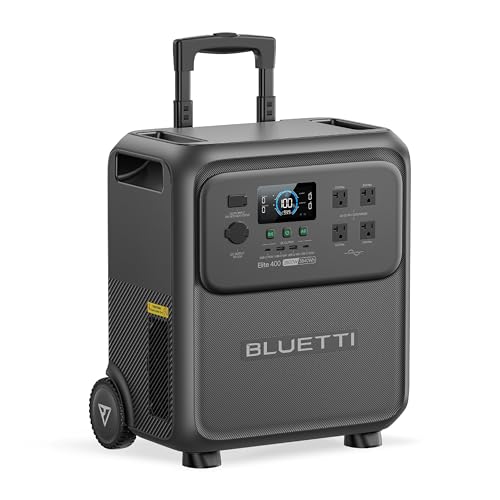
- 3,840Wh LiFePO4 battery with 2,600W output
- Rolling trolley for moving the 86-pound unit
- 80% charge in about 70 minutes with AC and solar
Best For: Home backup, RVs, emergencies, and power-hungry equipment
Best Lightweight All-Rounder

- 9.5-pound design with 288Wh capacity
- 600W output and 1,500W Power Lifting Mode
- 0–80% charging in about 45 minutes
Best For: Camping, road trips, CPAP devices, and short outages
Best Budget-Friendly Compact Pick
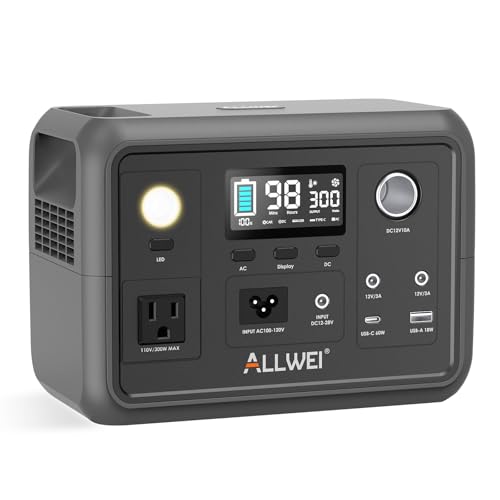
- 6.4-pound design with a 256Wh LiFePO4 battery
- 300W pure-sine output with 600W peak power
- Six output ports and AC, car, and solar charging
Best For: Car camping, road trips, electronics, and light emergency backup
Best Compact High-Output Pick – Jackery Explorer 1000 v2
The Jackery Explorer 1000 v2 is a practical choice for shoppers seeking portable power stations that balance strong output with manageable weight. Its 1,070Wh capacity, 1,500W output, and 23.8-pound design suit camping, road trips, and emergency backup.
Best For: Campers and homeowners who want a lightweight power station with fast charging and app control.
Pros:
- Runs multiple appliances with 1,500W output and 3,000W surge capacity.
- Charges from 0% to 100% in one hour with emergency charging enabled in the app.
- LFP battery is rated for more than 4,000 cycles and a lifespan exceeding 10 years.
- Offers USB-C, USB-A, DC, and three pure sine wave AC outputs.
Cons:
- One-hour charging requires activating emergency charging in the Jackery app.
- Solar charging is compatible only with Jackery solar panels.
Choose this model when portability matters as much as output. It is especially appealing for users who want a compact emergency or camping setup with quiet charging and flexible app settings.
Best Fast-Charging Home Backup – BLUETTI AC180
The BLUETTI AC180 is one of the more capable portable power stations for users who need substantial output and dependable backup power. Its 1,152Wh LiFePO4 battery, 1,800W output, and rapid recharge support make it suitable for outages, off-grid use, and outdoor activities.
Best For: Home backup users who need high output, fast charging, and UPS protection for essential devices.
Pros:
- Delivers 1,800W continuously and can reach 2,700W through the app.
- Reaches a full charge in about one hour using 1,440W AC input.
- Supports up to 500W solar input for charging in approximately 2.8 to 3.3 hours.
- UPS switching in 20 milliseconds helps keep essentials powered during outages.
Cons:
- At 37.4 pounds, it is less convenient to carry than smaller power stations.
- The higher-output design may be more than casual device charging requires.
The AC180 is a strong all-around option when backup reliability takes priority over minimum weight. Its combination of UPS functionality, solar input, and high AC output gives it broad household and outdoor usefulness.
Best Large-Capacity Portable Station – Jackery Explorer 2000 v2
The Jackery Explorer 2000 v2 is designed for shoppers who need more stored energy from their portable power stations. Its 2,042Wh capacity and 2,200W AC output can support home backup, camping, and other demanding applications while remaining relatively compact for its class.
Best For: Users needing extended runtime and high AC output for outages, outdoor trips, or demanding equipment.
Pros:
- Provides 2,042Wh of capacity and 2,200W AC output.
- Weighs 39.5 pounds, which Jackery describes as lighter and smaller than typical 2kWh LiFePO4 units.
- Charges to 80% in 66 minutes and fully in 102 minutes with emergency charging.
- Offers 20ms UPS switching and a silent charging mode below 30dB.
Cons:
- Its 39.5-pound weight is still substantial for frequent carrying.
- It has three AC ports, fewer than some competing high-capacity models.
This is the better fit when capacity and uninterrupted backup matter more than ultralight portability. The quiet charging mode and UPS capability also make it practical for indoor use during extended outages.
Best Expandable Power Station – EcoFlow DELTA 3
The EcoFlow DELTA 3 stands out among portable power stations for its expansion options and broad connectivity. It starts with a 1,024Wh battery and 1,800W output, then can expand to 5kWh with compatible EcoFlow batteries for longer emergency or off-grid use.
Best For: Buyers who want a modular backup system that can grow beyond its initial 1,024Wh capacity.
Pros:
- Reaches a full charge in 56 minutes with combined charging technology.
- Can expand from 1kWh to up to 5kWh using compatible EcoFlow battery packs.
- LiFePO4 cells provide 4,000 cycles to 80% capacity and a stated 10-year lifespan.
- Offers 13 appliance connections and IP65 battery-pack protection.
Cons:
- Expansion requires purchasing compatible extra batteries separately.
- At 12.5kg, it is not the lightest option for routine transport.
The DELTA 3 makes the most sense for buyers planning ahead. Its fast charging works well for urgent needs, while the expandable design lets the system serve as a smaller camping unit today and a larger home backup system later.
Best High-Capacity Pick – Anker SOLIX S2000
The Anker SOLIX S2000 is one of the more capable portable power stations for home backup, outages, and longer off-grid stays. Its 2,010Wh LiFePO4 battery, 1,500W continuous output, and 3,000W peak output provide substantial capacity for essential appliances, while its 35.7-pound design remains relatively manageable for a 2kWh-class unit.
Best For: Home backup, emergency preparedness, and extended camping where high capacity matters more than ultralight portability.
Pros:
- 2,010Wh capacity with 1,500W continuous and 3,000W peak output.
- LiFePO4 battery rated for up to 10,000 charge cycles and a stated 15-year lifespan.
- Supports up to 400W solar input and offers a claimed sub-10ms switchover.
- Compact dimensions and a 35.7-pound weight for its capacity class.
Cons:
- No 12V DC port.
- Its 35.7-pound weight is still substantial for frequent carrying.
- Actual appliance runtime varies by device, usage, and temperature.
Choose the S2000 when you need a large reserve for appliances such as a refrigerator and want durable LiFePO4 storage. The lack of a 12V DC port is the main connectivity limitation to consider before buying.
Best Fast-Charging Option – BLUETTI Elite 100 V2
The BLUETTI Elite 100 V2 stands out among portable power stations for its combination of fast charging, strong output, and compact size. It provides 1,024Wh of capacity and 1,800W of rated AC output, while its 45-minute 0-to-80% AC charging claim makes it useful when you need to replenish power quickly.
Best For: Campers, road trippers, and households that want a compact power station with rapid charging and UPS support.
Pros:
- 1,800W rated output with 2,700W Power Lifting capability.
- Reaches 80% charge in approximately 45 minutes using 1,200W AC charging.
- 10ms UPS switchover and silent-mode operation rated at 30dB.
- 25-pound design with Wi-Fi and Bluetooth app control.
Cons:
- Its 1,024Wh capacity is about half that of the Anker S2000 in this roundup.
- Some faster vehicle-charging functionality requires the separate BLUETTI Charger 1.
The Elite 100 V2 is a well-rounded choice when recharge speed and portability are priorities. Its 25-pound body is easier to move than larger units, but buyers needing the longest appliance runtimes may prefer a higher-capacity model.
Best Lightweight Camping Pick – Jackery Explorer 300
The Jackery Explorer 300 is a compact entry in the portable power stations category, built for camping, travel, hunting, and powering smaller electronics. Its 292Wh battery and 300W rated output are suited to laptops, cameras, drones, and similar devices, while the integrated handle and roughly 7-pound weight make it easy to pack and carry.
Best For: Campers, hikers, and travelers who need lightweight power for small electronics rather than high-demand appliances.
Pros:
- Lightweight design at about 7 to 7.5 pounds with an integrated handle.
- Six-device charging through AC, USB-C, USB-A, and a 120W car port.
- 300W rated output with 600W peak surge capacity.
- Supports solar charging, reaching about 80% in 2.8 hours with a 100W panel.
Cons:
- 292Wh capacity is limited for refrigerators and other high-demand appliances.
- Solar panels are optional rather than included.
- It cannot be delivered to only a PO Box address.
The Explorer 300 makes the most sense when portability is the deciding factor. It offers convenient charging for personal electronics and a long stated battery life, but its modest capacity and output limit it to smaller loads.
Best High-Capacity Backup – BLUETTI Elite 400
The BLUETTI Elite 400 is a substantial option among portable power stations, pairing a 3,840Wh LiFePO4 battery with 2,600W of continuous output. Its rolling trolley, fast charging, and UPS function make it suited to home outages, RV use, and demanding equipment.
Best For: Home backup, RV use, emergencies, and users who need extended runtime for appliances or power tools.
Pros:
- Large 3,840Wh capacity and 2,600W output, with up to 3,900W surge power
- Easy-roll trolley helps move the 86-pound unit
- Reaches 80% charge in about 70 minutes with AC and solar input
- Rapid 15ms UPS switchover helps keep essential devices running
Cons:
- Much heavier and less compact than portable power stations designed for day trips
- Its high-capacity design may be excessive for basic phone, laptop, or lighting needs
The Elite 400 prioritizes capacity and appliance-level power over easy lifting. Choose it when dependable, long-duration backup matters more than minimal size or weight.
Best Lightweight All-Rounder – BLUETTI Elite 30 V2
The BLUETTI Elite 30 V2 is a compact choice among portable power stations, weighing about 9.5 pounds while providing 288Wh of capacity and 600W of continuous output. Its fast charging, power-lifting mode, and UPS support give it flexibility for camping, travel, and short home emergencies.
Best For: Camping, road trips, CPAP users, laptops, small appliances, and lightweight emergency backup.
Pros:
- Portable 9.5-pound design with 288Wh of usable battery capacity
- 600W continuous output and up to 1,500W in Power Lifting Mode
- Charges from 0% to 80% in about 45 minutes and fully in about 70 minutes
- 10ms UPS switching supports devices such as routers, laptops, and CPAP machines
Cons:
- 288Wh capacity is limited for extended appliance use or multi-day backup
- Power-lifting mode does not make it equivalent to a higher-capacity power station
This model balances portability, charging speed, and useful output. It is a practical fit when you want more capability than a basic battery pack without carrying a large home-backup unit.
Best Budget-Friendly Compact Pick – ALLWEI 300W
The ALLWEI 300W is a small, lightweight option among portable power stations, offering a 256Wh LiFePO4 battery in a 6.4-pound package. It provides 300W of continuous pure-sine-wave power, multiple charging ports, and flexible recharging for camping, travel, and basic emergency needs.
Best For: Car camping, road trips, laptops, mini fridges, CPAP machines, and lightweight backup power.
Pros:
- Lightweight 6.4-pound design is easy to carry or store in a vehicle
- LiFePO4 battery is rated for 3,000 charge-discharge cycles
- Six output ports can charge multiple devices at once, including through 60W USB-C
- Supports AC, car, solar, and AC-plus-solar charging
Cons:
- 300W continuous output limits use with larger appliances
- 256Wh capacity is better for short-term use than extended backup
- Solar panel is sold separately
The ALLWEI is a sensible compact station for essential electronics and small devices. Its low weight and multiple recharge options make it especially convenient for vehicle-based trips and occasional outages.
How We Picked the Best Portable Power Stations
We evaluated these Portable Power Stations by comparing their battery capacity, continuous AC output, surge capability, recharge options, weight, and overall practicality. We also considered whether each model uses a long-lasting LiFePO4 battery, supports solar charging, includes useful USB ports, and offers enough power for its intended role.
Capacity and wattage are not the only deciding factors. A compact station may be ideal for phones and laptops, while a larger model is better suited to refrigerators, power tools, cooking appliances, or extended backup power. The right choice depends on what you need to run and how long you need to run it.
Quick Comparison
| Use case | Recommended capacity | What to prioritize |
|---|---|---|
| Phones, cameras, and small electronics | 200–400Wh | Low weight, USB-C charging, compact design |
| Camping and remote work | 700–1,200Wh | AC output, fast charging, solar compatibility |
| Home emergency backup | 1,000–2,100Wh | High inverter output, UPS features, expansion options |
| Extended backup and heavy loads | 2,000Wh or more | Large capacity, strong surge output, durable construction |
Key Buying Factors for Portable Power Stations
Battery Capacity and Usable Runtime
Watt-hours indicate how much energy a station stores. To estimate runtime, divide the battery capacity by the device’s wattage, then allow for inverter losses. For example, a 1,000Wh unit will not deliver exactly 10 hours to a 100W device. Efficiency, temperature, and charging behavior affect real-world results.
Output and Surge Performance
Check both continuous wattage and peak output. Small electronics need little power, but refrigerators, pumps, heaters, kettles, and power tools may require substantial startup power. Make sure the inverter can handle the device’s running and surge demands.
Battery Chemistry and Charging
LiFePO4 batteries generally offer longer service life and improved thermal stability compared with older lithium-ion designs. Fast AC charging is useful before a trip or outage, while solar input provides flexibility away from the grid. Check the supported solar input rather than assuming every panel will work.
Ports, Size, and Convenience
Count the outlets and USB ports you actually need, including USB-C power delivery for laptops and modern devices. Weight, handles, display quality, app support, built-in lighting, and noise can matter just as much as capacity when a station is used frequently.
Who Should Buy Which Portable Power Stations?
Choose a Compact Station for Personal Electronics
Models around 250–400Wh are best for charging phones, cameras, tablets, laptops, lights, and other small devices. They are easier to carry and make practical emergency or travel companions.
Choose a Mid-Size Station for Camping and Everyday Backup
Around 700–1,200Wh offers a useful balance of portability and capability. These units can support work-from-anywhere setups, CPAP machines, small appliances, and several days of basic device charging.
Choose a High-Capacity Model for Outages and Demanding Equipment
Stations above 2,000Wh are better for longer outages, refrigerators, multiple appliances, and higher-demand tools. They cost more and weigh considerably more, but their extra runtime and output can justify the investment for home backup.