Remote lighting control can make a home more convenient, accessible, and energy efficient. The best light switches for remote monitoring range from simple RF outlet kits to connected wall switches with app control, scheduling, dimming, and energy data.
This roundup compares 10 options across installation types, wireless range, control methods, load ratings, and smart-home compatibility so you can choose a setup that fits your wiring, lights, and monitoring needs.
Best 10 Light Switches for Remote Monitoring Picks for 2026
Simple RF Convenience
BN-LINK Wireless Remote Outlet
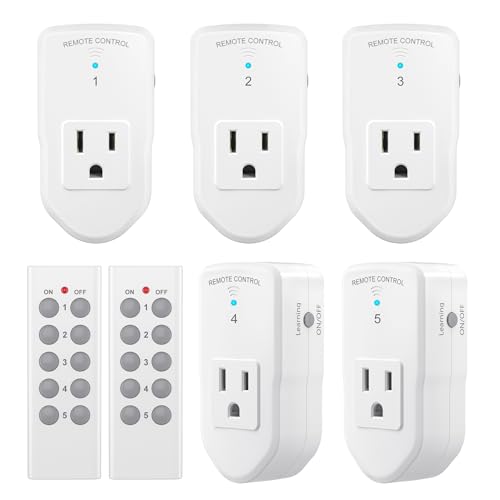
- Plug-and-play remote outlet kit
- Up to 100-foot line-of-sight range
- Expandable pairing for multiple outlets
Best For: Basic wireless control of plug-in lights and appliances
Connected Dimming Upgrade
Lutron Caseta 3-Way Smart Dimmer

- App, voice, and Pico remote control
- No neutral wire required
- Supports scenes, schedules, and geofencing with hub
Best For: Smart dimming and remote lighting automation
Energy-Aware Smart Switching
Square D X Series WiFi Energy Monitor

- Tracks real-time energy consumption
- Remote control through Schneider Home app
- Matter certified for broad compatibility
Best For: Remote lighting control with energy monitoring
Long-Range Placement Freedom
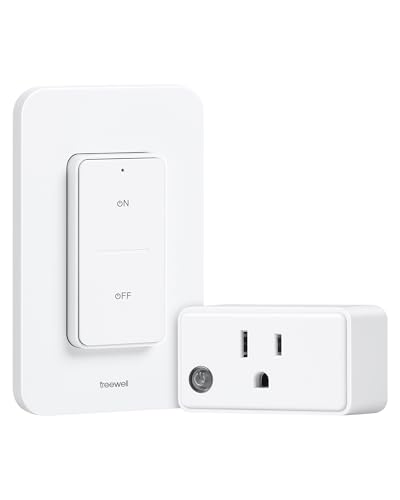
- Up to 200-foot RF range
- Detachable wall or handheld switch
- 15A/1,875W outlet rating
Best For: Flexible long-range control of plug-in lights and appliances
Best Connected Wall Switch

- Broad compatibility with major smart-home platforms
- Includes Pico remote, bracket, and wallplate
- Smart-away and app features require a hub
Best For: Wired smart-home installations needing an extra wireless control point
Best Plug-In Range
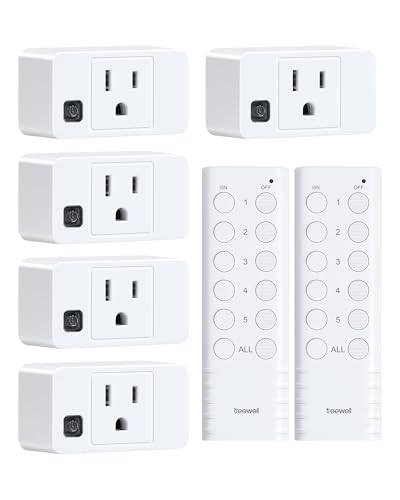
- Controls five outlets with two remotes
- RF signal rated up to 200 feet
- Plug-and-play design for lamps and appliances
Best For: Renters and anyone needing simple long-range plug-in control
Best for Scheduled Outdoor Lighting

- Supports sunset schedules and geofencing with a hub
- Offers app, voice, remote, and wall control
- Works with several bulb types within rated limits
Best For: Outdoor lights needing automated schedules and flexible control
Best No-Wiring Starter
Wireless Wall Switch Remote Outlet

- No in-wall wiring or Wi-Fi required
- 100-foot RF range through walls and doors
- Portable or wall-mounted remote design
Best For: Lamps, plug-in lighting, and hard-to-reach appliances
Best Higher-Capacity Option
Wireless Light Switch Receiver Kit

- 15A/1875W rating for lights, sockets, and fans
- 100-foot RF range through walls and doors
- Supports wireless 3-way expansion
Best For: Higher-load lighting and fan circuits with a neutral wire
Best 3-Way Upgrade
Wireless Remote Light Switch Kit

- Creates 3-way control without switch wiring
- 15A/1875W capacity
- Expandable to 4-way or 5-way setups
Best For: Retrofit projects needing wireless multi-location control
Simple RF Convenience – BN-LINK Wireless Remote Outlet
For shoppers comparing light switches for remote monitoring, this BN-LINK kit offers straightforward wireless on/off control for lamps, fans, holiday lights, and other compatible devices. It uses RF signals that can work through doors and walls, with a stated range of up to 100 feet in line of sight.
Best For: Basic remote control of multiple plug-in lights and small appliances without replacing a wall switch.
Pros:
- Includes outlets and remote batteries for a ready-to-use setup.
- Remote and outlet controls can both turn connected devices on or off.
- Multiple outlets can be paired for expanded control.
- Outlets remain off after a power outage.
Cons:
- It is a plug-in outlet system rather than a hardwired wall switch.
- It is rated for 1,200W/10A and is not compatible with shop vacs.
- Remote range is listed as up to 100 feet in line of sight.
This is a practical pick when you want uncomplicated RF control for plug-in lighting and appliances. Its outlet-based design avoids rewiring, but it does not provide app-based energy monitoring.
Connected Dimming Upgrade – Lutron Caseta 3-Way Smart Dimmer
The Lutron Caseta kit suits shoppers seeking light switches for remote monitoring with app, voice, and wireless remote control. It replaces an existing switch and includes a Pico remote that can be mounted in a new location, while remote access and automation require the Lutron Smart Hub.
Best For: Connected lighting control, three-way installations, and dimming without a neutral wire.
Pros:
- Works with Alexa, Apple HomeKit, Google Home, Ring, and other supported platforms when paired with the hub.
- Lutron app supports scheduling, scenes, geofencing, Smart Away, and timers.
- No neutral wire is required for installation.
- Supports up to 150W of LED or 600W of incandescent/halogen lighting.
Cons:
- Lutron Smart Hub is required for app and ecosystem features.
- Wallplate is sold separately.
- The included Pico bracket adds a component to install or mount.
Caseta is the more capable choice for monitored and automated lighting, especially where dimming and reliable hub-based connectivity matter. Confirm hub compatibility and the load rating before installation.
Energy-Aware Smart Switching – Square D X Series WiFi Energy Monitor
Among light switches for remote monitoring, the Square D X Series stands out for built-in Wi-Fi energy visibility. Through the Schneider Home app, you can control the switch away from home, view real-time consumption by device, and create lighting scenes. It also supports Matter-enabled ecosystems.
Best For: Homeowners who want app-based remote control and energy monitoring in a single-pole or three-way setup.
Pros:
- Provides real-time energy consumption information through the Schneider Home app.
- Supports remote control, lighting scenes, and voice control.
- Matter certification helps it work with compatible Alexa, Google Home, and Apple Home ecosystems.
- Available in a matte white rocker design with interchangeable screwless cover options.
Cons:
- A neutral wire is required for installation.
- Its load rating is 600 watts.
- Energy monitoring and remote features depend on Wi-Fi and the associated app setup.
This is the strongest fit in the group for users who specifically want energy-use insight rather than only remote on/off control. Check for a neutral wire and confirm your preferred Matter ecosystem before buying.
Long-Range Placement Freedom – Wireless Wall Switch Outlet
This remote outlet kit is a flexible option for shoppers considering light switches for remote monitoring without rewiring. Its detachable wireless switch can be mounted on a wall or used as a handheld remote, while the RF signal is rated for up to 200 feet through walls, doors, and windows.
Best For: Adding a movable control point for lamps, hard-to-reach fixtures, and plug-in appliances.
Pros:
- Detachable switch can function as a wall-mounted or handheld controller.
- Stated 200-foot range works through walls, doors, and windows without line of sight.
- Compact outlet design leaves the second wall socket available.
- Supports pairing additional kits for multi-device or multi-switch control.
Cons:
- It controls plug-in devices rather than replacing a hardwired switch.
- It provides RF remote control, not app-based monitoring or energy reporting.
- Installation still requires choosing a suitable location and pairing the switch and outlet.
Choose this kit when range and flexible switch placement are more important than smart-home app features. Its 15A/1,875W rating broadens device compatibility, but verify the connected appliance’s requirements.
Best Connected Wall Switch – Claro 3-Way Smart Switch Kit
The Lutron Claro kit is a strong choice for shoppers seeking light switches for remote monitoring through a compatible smart-home setup. It includes a wall switch, Pico remote, wall-mount bracket, and wallplate, while hub-based control adds app access, scheduling, scenes, and smart-away features.
Best For: Homeowners who want a polished wired switch with a wireless second control point and broad smart-home compatibility.
Pros:
- Works with Alexa, Apple Home, Google Home, Ring, and Sonos when paired with the required hub.
- Includes a Pico paddle remote and bracket for adding control without pulling new wire.
- Supports smart-away operation and app-based features with the Lutron hub.
- Uses a familiar Claro-style rocker design with an LED indicator.
Cons:
- Requires a neutral wire.
- The smart hub is sold separately.
- Designed for on/off control rather than dimming.
Choose this kit if appearance, ecosystem support, and flexible remote control matter more than a quick plug-in installation. Its hub requirement and wiring needs make it better suited to planned wall-switch upgrades.
Best Plug-In Range – 200-Foot RF Remote Outlet Kit
This plug-in kit offers a simple approach to light switches for remote monitoring and control without replacing a wall switch. Two remotes operate five compact outlets individually or together, using an RF signal rated for up to 200 feet through walls, doors, and windows.
Best For: Renters and households that need affordable wireless control for lamps, lights, or other plug-in appliances.
Pros:
- Controls five outlets with two remotes, either separately or together.
- RF range is rated up to 200 feet and can work through walls, doors, and windows.
- Compact outlets leave the second wall socket available.
- ETL- and FCC-listed, with a 15A/1,875W rating and fire-resistant casing.
Cons:
- Controls plug-in devices rather than permanently wired lights.
- Remote-only operation does not provide the app, voice, or scheduling features listed for smart switches.
- The outlets use a one-way plug-in design.
This is the practical pick when installation simplicity and range are priorities. It provides broad device compatibility and expandable pairing, but shoppers seeking smartphone monitoring or smart-home integration should consider a hub-based switch instead.
Best for Scheduled Outdoor Lighting – Caseta 3-Way Smart Switch Kit
The Lutron Caseta kit is built for shoppers comparing light switches for remote monitoring and scheduled control of porch, patio, deck, and other lights. With the required Caseta Smart Hub, it supports smartphone, voice, remote, and direct switch control, along with sunset schedules and geofencing.
Best For: Outdoor lighting setups where automatic schedules, dusk activation, and multiple control methods are useful.
Pros:
- Supports sunset-based schedules that adjust as seasons change.
- Offers control through a smartphone, voice assistants, the included remote, or the wall switch.
- Works with existing LED, incandescent, and halogen bulbs within its stated ratings.
- Includes a wallplate adapter, wallplate, and bracket for flexible three-way installation.
Cons:
- The Caseta Smart Hub is required and sold separately.
- Requires a neutral wire.
- Provides on/off functionality rather than dimming.
This kit stands out for homeowners who want outdoor lights to follow sunset or occupancy routines instead of relying solely on a handheld remote. Confirm the neutral-wire requirement and hub cost before installation.
Best No-Wiring Starter – Wireless Wall Switch Remote Outlet
The Suraielec Wireless Wall Switch Remote Control Outlet is a practical option for adding remote control without in-wall wiring, Wi-Fi, or fixture replacement. Its RF signal reaches up to 100 feet through walls and doors, making it useful when selecting light switches for remote monitoring in hard-to-reach areas.
Best For: Renters, lamps, plug-in lighting, and spaces where installing traditional wiring is inconvenient.
Pros:
- Installs without in-wall wiring or Wi-Fi.
- Works through walls and doors up to 100 feet away.
- Can be mounted as a wall switch or used as a portable remote.
- Expandable for multiple remotes, receivers, and wireless 3-way setups.
Cons:
- Limited to 10A/1250W and compatible indoor plug-in devices.
- Provides RF remote control rather than app-based monitoring.
- The outlet receiver occupies one wall socket.
This kit is a straightforward choice when you want remote on/off control without opening walls. Its lower 10A rating makes checking the connected load especially important.
Best Higher-Capacity Option – Wireless Light Switch Receiver Kit
The Suraielec Wireless Light Switch Kit adds a remote-controlled wall switch without disrupting existing systems or replacing fixtures. With a 15A/1875W rating, 100-foot RF range, and a compact receiver designed for control boxes, it is a capable pick for light switches for remote monitoring where a higher load rating is useful.
Best For: Lights, sockets, and fans requiring up to 15A/1875W, especially when adding or relocating a wall switch.
Pros:
- Supports loads up to 15A/1875W.
- Works through walls and doors up to 100 feet away.
- Enables wireless 3-way configurations and system expansion.
- Dynamic codes help multiple kits operate independently.
Cons:
- Installation requires a neutral wire.
- The receiver must be installed between power and the lamps inside a control box.
- Remote RF control does not provide app-based monitoring.
Choose this model when capacity and a more integrated receiver installation matter. Confirm that the installation location has a neutral wire and that the connected device stays within the rating.
Best 3-Way Upgrade – Wireless Remote Light Switch Kit
The Suraielec 3 Way Wireless Remote Light Switch Kit creates a 3-way control point without running wire between the light and switch. It offers up to 100 feet of RF range through walls and doors, making it a strong fit for light switches for remote monitoring across hallways, stairwells, basements, and similar spaces.
Best For: Adding wireless 3-way control to ceiling lights, lamps, or fans when running new switch wiring is impractical.
Pros:
- Adds 3-way control without wiring between the light and switch.
- Supports up to 15A/1875W.
- Can expand to 4-way or 5-way arrangements.
- IP65-rated components and RF operation work without line of sight.
Cons:
- Installation requires a neutral wire.
- Designed for on/off control rather than app-based monitoring.
- Replacing an existing wall switch may require electrical installation experience.
This is the most specialized option of the three for multi-location control. Its 3-way design and expandable system suit retrofit projects, provided the electrical box has the required neutral wire.
How We Picked These Light Switches for Remote Monitoring
We selected products that cover the main ways shoppers remotely control lighting: plug-in receiver outlets, wireless wall-switch kits, and permanently installed smart switches. We considered wireless range, remote and app functionality, dimming support, three-way compatibility, energy monitoring, installation demands, load ratings, and ecosystem support.
Because these products are not interchangeable, the right choice depends first on whether you are controlling a plug-in lamp or replacing a hardwired wall switch. We also looked for options suited to renters, retrofit projects, multi-location control, and connected homes.
Quick Comparison
| Best For | Look For | Most Suitable Type |
|---|---|---|
| Plug-in lamps | Receiver outlet and handheld RF remote | Wireless outlet kit |
| Renters or temporary setups | No rewiring and adhesive or screw-mounted switch | Wireless wall-switch kit |
| Smart-home control | Wi-Fi, app access, voice control, or Matter | Connected wall switch |
| Hallways and stairways | Three-way support and remote control | Three-way smart kit |
| Lower energy use | Scheduling, usage reports, or energy monitoring | Energy-monitoring smart switch |
Key Buying Factors for Light Switches for Remote Monitoring
Installation and Wiring
Plug-in receivers require no electrical-box work, while wall switches may require a neutral wire, a compatible electrical box, and basic electrical knowledge. Turn off power at the breaker and follow the manufacturer’s instructions. Hire a qualified electrician if you are unsure about wiring or local code requirements.
Control Method and Remote Access
RF remotes are simple and often work through walls, but they generally do not provide internet access, notifications, or usage history. Wi-Fi and Matter-compatible switches can support app control, schedules, scenes, and voice assistants, although some features may depend on a hub or cloud service.
Range, Load, and Light Compatibility
Check the stated wireless range for the construction of your home, not just open-air distance. Confirm the switch’s amperage and wattage limits, especially for LED, fan, or motor loads. If you want dimming, verify that both the switch and bulbs are dimmer-compatible.
Three-Way and Smart-Home Features
For two-location control, choose a kit specifically labeled for three-way installations rather than combining unrelated switches. Matter support can improve cross-platform compatibility, while energy monitoring is valuable when tracking consumption is more important than basic on/off control.
Who Should Buy Which Light Switches for Remote Monitoring?
- Choose a wireless outlet kit for lamps, seasonal lighting, and small plug-in appliances when you want the simplest installation.
- Choose a wireless wall-switch kit for renter-friendly control or locations where running new wall wiring is impractical.
- Choose a Lutron-style smart three-way kit for dependable multi-location control, dimming, and a polished permanent installation.
- Choose an energy-monitoring Wi-Fi switch if consumption data, schedules, app access, and broader smart-home integration are priorities.
- Choose a basic RF remote switch when long range and low complexity matter more than internet-based monitoring.
Before buying, match the product to the load, installation location, wiring, and control platform you already use. That check prevents the most common compatibility problems and helps ensure remote lighting control remains reliable after installation.