A tankless water heater can free up floor space in a small home, but a compact footprint does not guarantee enough hot water. The right size depends on how many fixtures you use at once, your incoming water temperature, and the power or fuel available.
These 10 options span smaller electric units, higher-output electric models, and indoor gas heaters. Use the guide below to narrow the field before checking installation requirements with a qualified professional.
Best 10 Tankless Water Heaters for Small Homes Picks for 2026
Best for Higher Demand
APUS 27kW Electric Tankless Water Heater
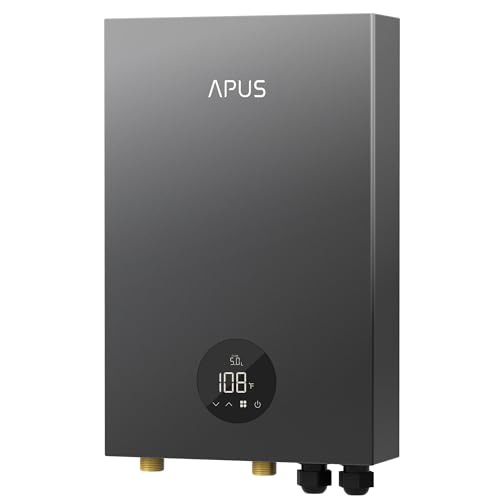
- Up to 6.5 GPM advertised flow
- Self-modulating, 86–140°F control
- Requires three 40A breakers
Best For: Multi-fixture homes with adequate electrical capacity
Best Smart Controls
Westinghouse 14kW Wi-Fi Electric Tankless Heater

- App and voice temperature control
- 3.4 GPM at stated temperature rise
- Dedicated 60A circuit required
Best For: Smart-enabled small homes with moderate hot-water demand
Best Natural Gas Option
APUS 95,000 BTU Indoor Tankless Heater
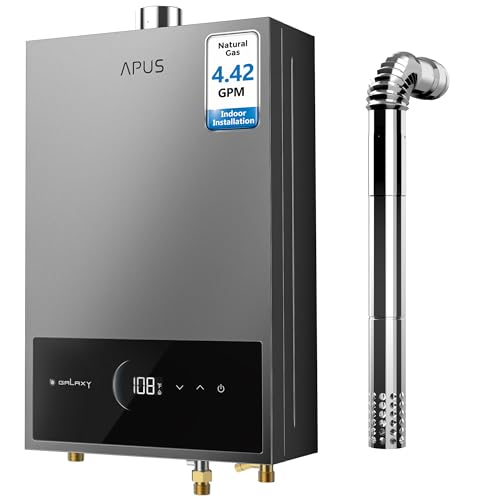
- Natural gas; advertised 4.42 GPM
- 95–140°F touchscreen setting
- Requires venting and 120V power
Best For: Gas-equipped homes with overlapping fixture use
Best Propane Option
Ranein 3.6 GPM Indoor Tankless Heater

- Propane; advertised 3.6 GPM
- Four presets and child lock
- Not recommended above 2,000 feet
Best For: Propane-equipped homes below 2,000 feet
Higher-Flow Pick
ORBEK 14kW Electric Tankless Water Heater

- Up to 3.38 GPM stated flow
- 86°F–140°F LED temperature setting
- Needs 240V/60A circuit and 150A panel capacity
Best For: Small homes with two or three hot-water outlets and suitable electrical service
Lower-Amp Pick
Rheem RTEX-11 11kW Electric Water Heater
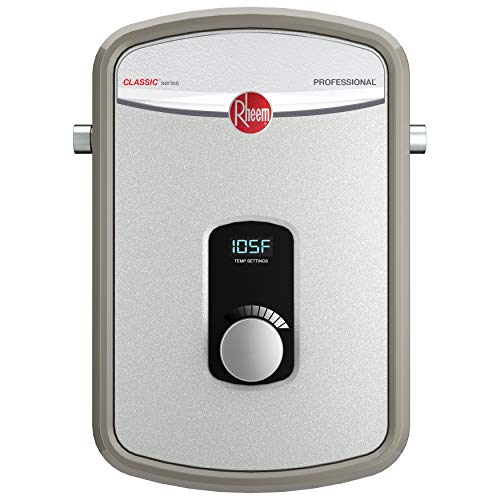
- Up to 2.68 GPM stated flow
- 80°F–140°F digital thermostat
- Requires 240V/50A circuit
Best For: Modest hot-water loads with suitable 50A circuit capacity
Compact Two-Outlet Pick
Ranein 13kW Electric Tankless Heater

- Up to 3.1 GPM stated flow
- Compact 10.7 × 7.9 × 2.8-inch body
- Needs a 240V/60A circuit
Best For: One or two outlets in a space-constrained small home
Best for WiFi Control
WINTEMP WN18 18kW Electric Tankless Heater

- WiFi temperature control
- Up to 4.3 GPM stated maximum
- Requires two 40-amp double-pole breakers
Best For: Homes wanting remote controls and meeting the electrical requirements
Best for Higher Hot-Water Demand
Rheem RTEX-24 24kW Electric Heater
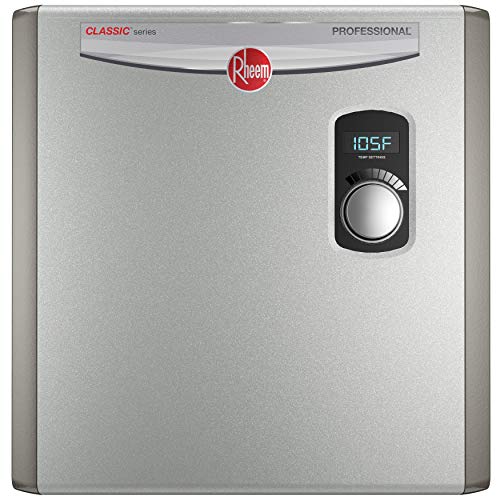
- Up to 5.9 GPM stated maximum
- 1°F digital temperature adjustments
- Recommended minimum 200-amp service
Best For: Multiple-fixture homes with suitable electrical capacity
Best for Serviceable Heating Elements
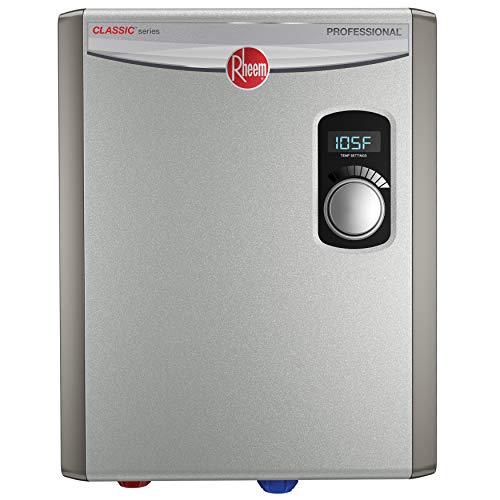
- Up to 4.4 GPM stated flow rate
- Field-serviceable copper elements
- Self-modulating with digital controls
Best For: Buyers prioritizing serviceable components in an 18kW unit
Best for Higher Demand – APUS 27kW Electric Tankless Water Heater
Among tankless water heaters for small homes, this 27kW APUS is worth considering when several fixtures may run at once. Its advertised output reaches up to 6.5 GPM, though actual flow depends on incoming water temperature and the temperature you select.
Best For: Small homes with multiple simultaneous hot-water uses and electrical capacity for a 27kW heater.
Pros:
- Up to 6.5 GPM advertised flow for multi-fixture use.
- Self-modulating heating and adjustable 86–140°F temperature control.
- Slim, wall-mounted body saves floor space.
Cons:
- Requires hardwiring at 240V with three 40A breakers and the specified wiring.
- Maximum flow will fall when a larger temperature rise is needed.
Check your electrical panel and expected winter inlet-water temperature before choosing it; the compact unit has substantial power requirements.
Best Smart Controls – Westinghouse 14kW Wi-Fi Electric Tankless Heater
For shoppers comparing tankless water heaters for small homes, this compact Westinghouse combines 14kW electric heating with app and voice controls. The listed 3.4 GPM flow applies when 62°F inlet water is heated to 105°F, so colder water may reduce available flow.
Best For: Apartments or small homes seeking smart controls and roughly two simultaneous water points under the stated conditions.
Pros:
- Wi-Fi app control plus Alexa and Google Home compatibility.
- Compact wall-mounted design with no floor-space requirement.
- ETL certification and a removable inlet filter for cleaning.
Cons:
- Needs a dedicated 240V, 60A double-pole breaker and 6 AWG wire.
- Requires at least 0.53 GPM flow to start heating.
It is a practical pick if remote temperature adjustment matters more than maximizing simultaneous flow. Confirm that your wiring and expected temperature rise match its requirements.
Best Natural Gas Option – APUS 95,000 BTU Indoor Tankless Heater
If natural gas is available, this APUS model offers another route among tankless water heaters for small homes. Its 95,000 BTU rating and advertised 4.42 GPM flow suit multiple fixtures, although usable flow depends on the required temperature rise.
Best For: Natural-gas homes needing hot water at two or more fixtures without a storage tank.
Pros:
- Advertised 4.42 GPM flow and 0.66 GPM activation threshold.
- Adjustable 95–140°F temperature setting with LED touchscreen.
- Wall-mounted indoor design; vent pipe included.
Cons:
- Requires natural gas, venting and 120V power.
- Must be drained when freezing conditions or extended disuse pose a risk, per the supplied instructions.
Choose it for a gas-equipped home where several fixtures may overlap, and plan the venting and freeze precautions before installation. Despite a stray propane reference in the notes, this listing specifies natural gas.
Best Propane Option – Ranein 3.6 GPM Indoor Tankless Heater
For propane-powered tankless water heaters for small homes, the Ranein offers an advertised 3.6 GPM and 80,000 BTU of heating capacity. Its stated support for two to three water points makes it a candidate for modest simultaneous demand, subject to incoming water temperature.
Best For: Propane-equipped small homes wanting preset temperature modes and indoor installation.
Pros:
- Adjustable 95–149°F range and four preset modes.
- Child lock and listed overheat, dry-burn and exhaust-blockage protections.
- Includes a vent pipe for indoor installation.
Cons:
- Requires licensed professional installation and 120V AC power.
- Not recommended for elevations above 2,000 feet.
- Draining is recommended below 23°F or before extended disuse.
The presets may appeal to families, but installation limits matter here: verify your elevation, venting plan and cold-weather needs before buying.
Higher-Flow Pick – ORBEK 14kW Electric Tankless Water Heater
Among tankless water heaters for small homes, the ORBEK 14kW model is worth considering when a bathroom and kitchen may need hot water at the same time. Its stated maximum flow is 3.38 GPM, though actual performance depends on the incoming water temperature and desired temperature rise.
Best For: Small homes with two or three hot-water outlets and an electrical panel that meets the installation requirements.
Pros:
- Up to 3.38 GPM, with the manufacturer specifying support for two to three points of use.
- Compact wall-mounted unit measures 14.2 by 9.5 by 3.1 inches.
- LED temperature setting from 86°F to 140°F; ETL certification and listed leakage, over-temperature, and dry-heating protections.
Cons:
- Requires a 240V, 60A two-pole breaker, 6 AWG wiring, and at least 150A total household panel capacity.
- Its maximum flow rating may not translate to simultaneous full-flow use in colder climates.
Choose this one for its higher stated flow and compact footprint, but verify the electrical service and required temperature rise before treating it as a whole-home solution.
Lower-Amp Pick – Rheem RTEX-11 11kW Electric Water Heater
For shoppers comparing tankless water heaters for small homes, the Rheem RTEX-11 offers a stated maximum of 2.68 GPM with a 50A circuit requirement. It is a compact, wall-mounted option for appropriately sized multiple-fixture or point-of-use applications.
Best For: Smaller hot-water loads where a 240V, 50A circuit and a recommended minimum 100A household panel are available.
Pros:
- Digital thermostat adjusts from 80°F to 140°F in 1-degree increments.
- Compact 8.25-by-12.63-inch wall-mounted design saves floor space.
- Electric operation requires no gas venting.
Cons:
- Its stated 2.68 GPM maximum is lower than the other models in this selection.
- Requires a dedicated 240V, 50A double-pole breaker and #8 AWG copper conductors with ground.
The RTEX-11 makes sense when modest demand and electrical requirements are a better match than maximum flow. Check the expected temperature rise before counting on it to serve multiple fixtures simultaneously.
Compact Two-Outlet Pick – Ranein 13kW Electric Tankless Heater
The Ranein 13kW model is a compact choice among tankless water heaters for small homes, with a stated maximum flow of 3.1 GPM. The manufacturer positions it for one or two points of use, such as a sink and shower, rather than unrestricted whole-home demand.
Best For: Apartments or small homes needing hot water at one or two outlets with space for a dedicated 240V, 60A circuit.
Pros:
- Up to 3.1 GPM stated flow for one or two usage points.
- Measures 10.7 by 7.9 by 2.8 inches, making it suitable for tight utility areas.
- Knob control and LED display offer 1°F adjustments from 86°F to 131°F.
Cons:
- Requires a 240V supply and one 60A circuit breaker.
- The stated 3.1 GPM is a maximum; colder inlet water can limit usable flow at shower temperatures.
This is a practical fit when installation space is tight and demand is limited to one or two outlets. Confirm circuit capacity and local water temperatures before choosing it for a sink-and-shower combination.
Best for WiFi Control – WINTEMP WN18 18kW Electric Tankless Heater
Among tankless water heaters for small homes, the WINTEMP WN18 stands out if you want remote temperature control in a compact, wall-mounted unit. Its 18kW rating and stated maximum output of 4.3 GPM make it worth considering for showers and everyday hot-water use, provided it is properly sized for your home’s conditions.
Best For: Homes with suitable electrical service that want WiFi temperature control and a space-saving electric heater.
Pros:
- WiFi control lets you adjust the temperature remotely.
- Self-modulating operation adjusts power to water flow and incoming temperature.
- Compact 11.1-by-19.2-by-4-inch wall-mounted design; ETL certified.
Cons:
- Requires two 40-amp double-pole breakers and two runs of 8/2 AWG wiring; the manufacturer recommends 150-amp household service.
- The stated 4.3 GPM is a maximum, so actual hot-water flow depends on conditions.
The WiFi feature is a useful differentiator, but check the electrical requirements with a qualified electrician before choosing this model.
Best for Higher Hot-Water Demand – Rheem RTEX-24 24kW Electric Heater
If you’re comparing tankless water heaters for small homes with multiple fixtures, the Rheem RTEX-24 offers a stated maximum of 5.9 GPM. Its 24kW output gives it more rated capacity than the 18kW options here, but the substantial electrical requirements deserve an early check.
Best For: Homes with multiple hot-water fixtures and electrical service suited to a 24kW heater.
Pros:
- Stated maximum output of 5.9 GPM for multiple-fixture applications.
- Digital temperature adjustment in 1°F increments from 80°F to 140°F.
- Wall-mounted design saves floor space, and electric operation requires no venting.
Cons:
- Requires three 40-amp double-pole breakers and three sets of #8 AWG copper conductors with ground.
- Rheem recommends a minimum 200-amp household electrical service panel.
This is the capacity-focused pick of the three, provided your electrical setup and expected demand justify the installation.
Best for Serviceable Heating Elements – Rheem RTEX-18 18kW Heater
For shoppers considering tankless water heaters for small homes, the Rheem RTEX-18 pairs an 18kW rating with a stated flow rate of up to 4.4 GPM. Its practical distinction is its pair of field-serviceable copper immersion heating elements.
Best For: Buyers who value serviceable heating elements and straightforward digital temperature control in an 18kW unit.
Pros:
- Self-modulation adjusts power to hot-water demand.
- External digital thermostatic control with an LED display and stated ±1°F accuracy.
- Two field-serviceable copper immersion heating elements.
- Bottom 3/4-inch NPT water connections.
Cons:
- Its stated flow rate tops out at 4.4 GPM; verify sizing against your fixtures and incoming water temperature.
- The supplied notes do not specify breaker, wiring, or household service requirements, so confirm them before purchase.
Choose this model for its serviceable components and simple controls, while allowing for a proper electrical and hot-water sizing check.
How We Picked These Tankless Water Heaters for Small Homes
We focused on the practical differences among the 10 selected models: electric capacity from 11 to 27 kW, natural-gas and propane options, published maximum flow rates where available, and installation demands. We also considered whether features such as Wi-Fi or an LED display add value for a particular buyer. This is a comparison of listed specifications and use cases, not a claim that every unit was independently tested. Always confirm current specifications, certifications, warranty terms, and local-code compliance before ordering.
Quick Comparison: Match the Heater to the Job
For a modest single-fixture setup or a small home with little simultaneous hot-water use, start by comparing the Rheem 11 kW with the 13–14 kW Ranein, ORBEK, and Westinghouse electric models. The 18 kW electric options offer a middle ground, while the Rheem RTEX-24 and APUS 27 kW merit a look when demand is higher and the electrical system can support them. The APUS natural-gas and Ranein propane models provide alternatives for homes with the appropriate fuel supply and indoor venting options.
Treat advertised GPM figures as maximums, not guaranteed shower performance. Actual flow at your preferred temperature falls as the required temperature rise increases; a cold-climate home may get substantially less hot-water flow than a warm-climate one.
Key Buying Factors for Small Homes
Temperature Rise and Simultaneous Flow
Estimate the flow needed when fixtures run together, then subtract your cold-water inlet temperature from your desired hot-water temperature. Check the manufacturer’s flow-rate chart at that temperature rise rather than choosing by a headline GPM number. If a shower and kitchen sink often run at once, size for both—or plan to stagger use.
Electrical Capacity or Gas Installation
Electric models can require substantial dedicated breaker capacity, wiring, and available panel space, especially at 18–27 kW. A smaller home does not necessarily have a panel that can accommodate one. Gas models need the correct fuel supply, adequate gas-line capacity, approved venting, and proper combustion-air provisions. Have a qualified electrician or plumber assess the site and required permits before purchase.
Space, Controls, and Ongoing Costs
Check mounting clearances, plumbing connections, and access for maintenance. Digital controls and Wi-Fi may be convenient, but they do not increase heating capacity. Compare local electricity, natural-gas, and propane prices alongside any panel, gas-line, or venting upgrades. Follow the manufacturer’s descaling guidance, particularly in hard-water areas.
Who Should Buy Which Tankless Water Heaters for Small Homes?
Choose an 11–14 kW electric model if your measured temperature rise and flow needs fit its performance chart and installation capacity is limited. Consider an 18 kW model for greater demand, or a 24–27 kW model only after confirming the electrical service and expected flow at your inlet temperature. If your home already has a suitable gas setup, compare the APUS natural-gas and Ranein propane units against your required flow and venting layout. For any of these Tankless Water Heaters for Small Homes, a correctly sized unit matters more than the highest advertised GPM.