Heating off-grid is a power-budget decision as much as a comfort decision. A small 12V electric heater may suit a localized task, while warming a cabin or camper generally calls for a properly installed fuel-burning heater.
These five options span diesel air heaters and compact PTC ceramic units. The right choice depends on how much heat you need, what power source you have, and where the heater can safely run.
Best 5 Low Voltage Heaters for Off Grid Use Picks for 2026
Best for High-Altitude Trips
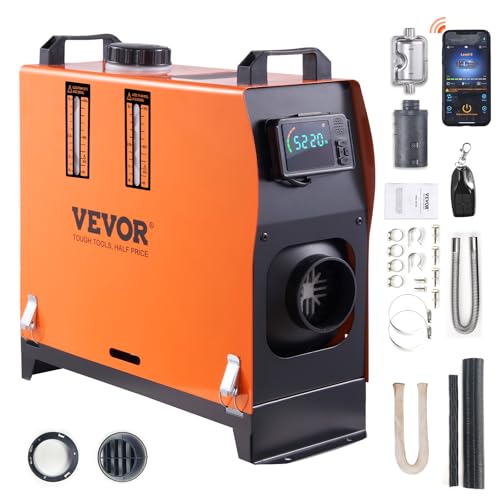
- 12V-powered diesel heater
- App, remote, and LCD controls
- Automatic altitude compensation
Best For: High-altitude vehicle or camping setups
Best Compact Heating Component

- 12V DC, 200W rating
- Compact body with mounting holes
- Listed 16.67A draw
Best For: Compatible DIY equipment-heating projects
Best Flexible Power Options
8KW Multi-Voltage Diesel Heater

- 12V or 24V battery support
- Included 110V/120V adapter
- App, remote, and LCD controls
Best For: Switching between vehicle and household power
Best for Tiny Enclosures

- 12V, 50W nominal rating
- Built-in fan for warm airflow
- Designed for spaces up to 0.5 m³
Best For: Small 12V-powered compartments
Best for DIY Installations

- Accepts 12V AC/DC power
- Automatic constant-temperature operation
- Component for equipment integration
Best For: DIY 12V heating assemblies
Best for High-Altitude Trips – VEVOR 8KW 12V Diesel Heater
Among low voltage heaters for off grid use, this VEVOR unit pairs a 12V electrical supply with diesel heat for a vehicle, boat, or camping setup. Its all-in-one design avoids a separate heater installation, though safe venting still needs planning.
Best For: Campers and vehicle owners who want diesel heat with automatic altitude compensation.
Pros:
- Rated at 8KW for a stated 215–269 sq. ft. coverage area.
- Bluetooth app, remote, and LCD offer three control options.
- Automatic altitude compensation is specified for elevations up to 18,045 feet.
Cons:
- Requires diesel as well as a 12V electrical supply.
- The 5L tank is rated for up to eight hours, so longer stays require refueling.
This is a practical pick when electrical power is limited but diesel is available; check how you will route combustion exhaust before using it in an enclosed space.
Best Compact Heating Component – 12V 200W PTC Ceramic Heater
If you are comparing low voltage heaters for off grid use, this 12V PTC ceramic element is a compact option for a compatible air-moving or equipment project. It is a 200W component, not a complete diesel heater or a stated whole-room heating solution.
Best For: DIY equipment heating where a suitable 12V supply and installation are already planned.
Pros:
- Runs on 12V DC with a listed 200W heat output.
- Compact, approximately 4.7 × 2.0 × 1.0 inches, with mounting holes.
- PTC ceramic design is listed for applications including dryers and automotive equipment.
Cons:
- Draws a listed 16.67A, which may be substantial for a small off-grid battery.
- Requires checking compatibility with the intended equipment before purchase.
Choose this for a defined heating project rather than as a plug-and-play cabin heater; size the wiring and power source for its stated current draw.
Best Flexible Power Options – 8KW Multi-Voltage Diesel Heater
For buyers comparing low voltage heaters for off grid use who also want an AC option, this 8KW diesel heater accepts a compatible 12V or 24V vehicle battery and includes an adapter for 110V or 120V outlets. Diesel supplies the heat; the electrical connection powers heater operation.
Best For: Moving one diesel heater between a vehicle or campsite and a location with household power.
Pros:
- Supports 12V and 24V battery connections plus the included AC adapter.
- Offers app, remote, and built-in LCD control, with a 0.5–24-hour timer.
- Includes a 5L tank and setup parts such as ducting, exhaust pipe, and silencer.
Cons:
- Still needs diesel fuel and an appropriate electrical source.
- Exhaust and intake components require a suitable installation plan.
Its power-source flexibility is the main advantage over a 12V-only option. Budget space for the included venting components rather than treating the all-in-one housing as a vent-free heater.
Best for Tiny Enclosures – 12V 50W PTC Fan Heater
Among low voltage heaters for off grid use, this 12V, 50W PTC fan heater is a compact option for warming or dehumidifying a small enclosure. The maker specifies spaces up to 0.5 cubic meters, so it is not a substitute for a room heater.
Best For: Small 12V-powered compartments that need modest, localized warmth.
Pros:
- Compact 60 × 60 × 42 mm design fits confined spaces.
- Built-in fan moves warm air; the maker says hot air is noticeable within 30 seconds.
- Reinforced nylon shell provides insulation around the heating assembly.
Cons:
- 50W rated power is limited to small-space heating.
- The stated 50W rating has a ±25% tolerance, so power draw can vary.
Choose this model when its integrated fan and small footprint matter more than heating area. At a nominal 4.17A on 12V, account for its draw when planning an off-grid power supply.
Best for DIY Installations – 12V 50W PTC Heating Element
If you are comparing low voltage heaters for off grid use in a DIY project, this 12V, 50W PTC ceramic element is a component to consider rather than a ready-to-use space heater. Its ceramic heater and aluminum tube are designed to transfer heat in equipment such as electric heaters, dryers, and humidifiers.
Best For: Integrating a 12V heating component into a compatible DIY appliance or enclosure.
Pros:
- Specified for 12V AC/DC power.
- PTC element provides automatic constant-temperature operation.
- Slim 0.98 × 1.22 × 3.7-inch dimensions suit compact assemblies.
Cons:
- Sold as a heating element, not a complete plug-in heater.
- No built-in fan is specified; airflow depends on the installation.
This is the more flexible choice for someone building a heating setup, provided the installation supplies suitable wiring, mounting, and any needed airflow. Its listed current is 4.17A, an important consideration for a 12V off-grid power system.
How We Picked the Best Low Voltage Heaters for Off Grid Use
We focused on the practical distinctions among the five selected products: two diesel air heaters intended for larger spaces, one 200W 12V PTC heater, and two 50W PTC options. The comparison emphasizes power demand, likely heating role, installation needs, and safety considerations—not just advertised heat output. Check the current listing and manufacturer instructions before buying, especially for electrical input and included components.
Quick Comparison
For a camper or small cabin: Start with the VEVOR 8KW diesel heater or the all-in-one 8KW diesel heater if you can accommodate fuel storage, combustion-air intake, and exhaust routing. Treat the 8KW figures as advertised ratings rather than a guarantee of delivered heat in your particular installation.
For localized 12V heat: The 200W PTC unit draws substantially more electricity than either 50W option but may provide more useful heat for a small enclosure or directed airflow. The 50W units are better considered for narrowly targeted warming, not room heating. One 50W listing specifies 12V AC/DC; verify its actual input requirements before connecting it to a battery system.
Key Buying Factors for Low Voltage Heaters for Off Grid Use
Heat Demand Versus Electrical Budget
At 12V, a 200W heater draws about 16.7A and a 50W heater about 4.2A before wiring or conversion losses. Running the 200W unit for five hours requires roughly 1,000Wh; the 50W unit needs roughly 250Wh. Compare those figures with your battery’s usable capacity and the energy you need for lights, refrigeration, and charging. A diesel heater uses fuel for most of its heat but still needs electricity for controls, the fuel pump, and the fan.
Installation and Safety
Diesel heaters require a sound exhaust installation, appropriate combustion-air routing, and clearances specified by the manufacturer. Use a carbon monoxide alarm wherever a combustion heater serves an occupied space. For electric units, size wiring and fuses for the expected current, keep airflow openings clear, and confirm whether a fan or other parts must be supplied separately. Never assume a bare heating element is ready to use in an occupied room.
Input Voltage and Controls
Check whether a heater accepts 12V DC, 24V DC, AC power, or multiple inputs; a multi-voltage listing does not mean every connection works the same way. App and remote controls can make a diesel heater easier to operate, but reliable heat, correct installation, and a suitable power source matter more than convenience features.
Who Should Buy Which Low Voltage Heaters for Off Grid Use?
Choose a diesel model if your goal is sustained warmth in a properly ventilated camper or cabin and you can install it as directed. Choose the 200W 12V PTC option for a small, directed heating job when your battery and wiring can support the draw. Choose a 50W PTC unit for modest, localized warming where conserving electricity matters most. If you need whole-room heat without fuel or shore power, calculate the battery requirement first: these compact electric options are unlikely to meet that need.