Choosing the right heat exchanger can make or break a radiant system’s performance, especially when you need reliable heat transfer between separate water loops.
This roundup of plate heat exchangers for radiant heating focuses on practical sizing, port compatibility, and build quality so you can narrow the field fast.
Best 10 Plate Heat Exchangers for Radiant Heating Picks for 2026
Compact High-Capacity Pick
4x12 30-Plate Hydronic Exchanger

- 30 plates for higher heat transfer capacity
- 316L stainless steel with copper brazing
- Good fit for floor heating and snow melting
Best For: Larger radiant heating systems and wood boiler applications
Small Footprint Versatility
50-Plate 3/4 MPT Brazed Exchanger
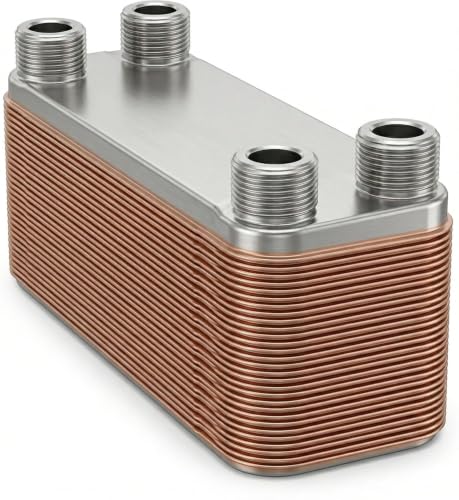
- 50 plates with herringbone plate design
- Compact 3" x 8" body
- UL listed with 1-year warranty
Best For: Compact radiant floor heating and outdoor wood furnace systems
Heavy-Duty Large-Connection Option
5x12 20-Plate Hydronic Exchanger

- 20 plates in a 5" x 12" body
- 1 1/4" MPT ports for larger systems
- 316L stainless steel with copper brazing
Best For: Hydronic systems needing larger 1 1/4" connections
Budget-Friendly Standard Size
4x12 20-Plate Floor Heating Exchanger

- 20 plates in a standard 4" x 12" size
- 316L stainless steel with copper brazing
- Works for floor heating and snow melting
Best For: Standard residential radiant floor heating and moderate hydronic loads
High-Capacity Choice
VEVOR 20-Plate Brazed Heat Exchanger

- 20 plates with a 5 x 12 in heat-transfer area
- 316 stainless steel with vacuum-brazed joints
- Good fit for radiant floors, boilers, and snow melt
Best For: Higher-output hydronic and radiant floor heating systems
Budget-Friendly Pick
AB 3x8 20-Plate Heat Exchanger

- Compact 3 x 8 in body with 20 plates
- 316L stainless steel and copper brazing
- Rated for 130,000 to 180,000 BTU applications
Best For: Small to mid-size radiant and hydronic heating systems
Heavy-Duty Option
30-Plate SS316L Brazed Exchanger

- 30 plates for high heat-transfer performance
- 1 in MNPT ports for higher flow systems
- Built with SS 316L plates and copper brazing
Best For: Large radiant, hydronic, and domestic hot water systems
Compact Hydronic Pick
20-Plate 316L Brazed Heat Exchanger

- 316L stainless steel with copper brazing
- 3" x 8" compact body with 3/4" ports
- Fish-bone plates help improve heat transfer
Best For: Compact radiant floor and domestic water heating
High-Flow Radiant Option
20-Plate 4x12 316L Brazed Exchanger
- 20 plates for fast hydronic heat transfer
- 1" MNPT ports support higher flow rates
- 316L stainless steel with copper brazing
Best For: Higher-flow radiant floor and domestic hot water systems
Largest Capacity Choice
50-Plate 5x12 316L Brazed Exchanger

- 50 plates for the highest exchange capacity
- 1-1/4" MNPT ports for high-flow systems
- 316L stainless steel with copper brazing
Best For: Large radiant heating and boiler systems
Compact High-Capacity Pick – 4×12 30-Plate Hydronic Exchanger
If you’re comparing plate heat exchangers for radiant heating, this 30-plate water-to-water model is built for bigger transfer capacity in a compact 4″ x 12″ body. Its 316L stainless plates and copper brazing are aimed at durable, leak-resistant performance for floor heating, snow melting, and other hydronic setups.
Best For: Larger radiant heating systems, wood boilers, and buyers who want a compact unit with higher BTU capacity.
Pros:
- 30 brazed plates for strong heat transfer capacity
- 316L stainless steel construction with 99.9% copper brazing
- Designed for floor heating, snow melting, and hydronic heating
- No electricity consumption and no oxygen consumption
Cons:
- 1″ MPT ports may require the right fittings for your system
- Higher-capacity build may be more exchanger than small jobs need
Overall, this is a practical choice when thermal capacity matters and you still want a relatively compact exchanger. It suits buyers prioritizing rugged construction and broad hydronic compatibility.
Small Footprint Versatility – 50-Plate 3/4 MPT Brazed Exchanger
For buyers looking at plate heat exchangers for radiant heating in tighter mechanical spaces, this 50-plate unit keeps a small 3″ x 8″ footprint while offering efficient thermal transfer. The herringbone plate design is intended to increase turbulence and improve heat exchange without requiring a large installation.
Best For: Compact radiant floor heating installs, outdoor wood furnaces, and mixed-use hydronic projects.
Pros:
- 50-plate design with high-efficiency thermal transfer
- Compact 3″ x 8″ body for easier placement
- 316L stainless steel with 99.9% copper brazing
- UL listed and backed by a 1-year manufacturer warranty
Cons:
- 3/4″ MPT ports may be less suitable for larger plumbing runs
- Compact size may not match systems needing higher connection sizes
This model stands out if you want strong heat transfer in a small package. It is a sensible fit for residential and light commercial hydronic applications where standard 3/4″ connections are convenient.
Heavy-Duty Large-Connection Option – 5×12 20-Plate Hydronic Exchanger
If your radiant heating setup needs a larger connection size, this plate heat exchanger for radiant heating offers a 5″ x 12″ body with 1 1/4″ MPT ports and a 20-plate stainless steel build. It is positioned for hydronic heating jobs where durability, simple hookup, and strong BTU output matter.
Best For: Systems that need larger 1 1/4″ connections for hydronic, floor heating, or wood boiler applications.
Pros:
- 20 brazed plates in a compact 5″ x 12″ format
- 1 1/4″ MPT connections for larger plumbing systems
- 316L stainless steel with 99.9% copper brazing
- Rated for a wide range of uses, including floor heating and snow melting
Cons:
- Fewer plates than higher-count models in the lineup
- Large ports may be unnecessary for smaller residential loops
This is a straightforward choice when you want a bigger port size without moving to a much larger unit. It suits buyers who want a rugged exchanger that stays versatile across common hydronic uses.
Budget-Friendly Standard Size – 4×12 20-Plate Floor Heating Exchanger
This 20-plate unit is a practical option if you want plate heat exchangers for radiant heating in a standard 4″ x 12″ size. With 1″ MPT connections and a 316L stainless steel body brazed with copper, it is designed for efficient water-to-water heat transfer in floor heating, snow melting, and similar hydronic uses.
Best For: Standard residential radiant floor heating and other moderate-capacity hydronic projects.
Pros:
- Standard 4″ x 12″ footprint for easier planning
- 20 brazed plates for up to 250,000 BTU capacity
- 316L stainless steel with copper brazing for durability
- Suitable for floor heating, solar heating, and wood boiler setups
Cons:
- Lower plate count than the 30-plate version in the same size class
- 1″ MPT connections may limit compatibility with larger piping
For many home systems, this model offers a useful balance of size and output. It is a good fit when you need a familiar footprint and broad hydronic compatibility without stepping up to a larger exchanger.
High-Capacity Choice – VEVOR 20-Plate Brazed Heat Exchanger
If you’re comparing plate heat exchangers for radiant heating, this VEVOR model is built for higher-output water-to-water systems. Its 20-plate, 5 x 12 in brazed design uses counterflow turbulence to improve heat transfer efficiency, and the 316 stainless steel construction is aimed at demanding boiler and hydronic applications.
Best For: Radiant floor heating setups, boiler loops, and other water-to-water heating jobs that need solid thermal capacity.
Pros:
- 20 plates and a large 5 x 12 in transfer area for efficient heat exchange
- 316 stainless steel construction with vacuum brazed, leak-tested joints
- Rated for a wide operating temperature range and humid environments
- Suitable for radiant floor heating, domestic hot water, snow melting, and solar heating
Cons:
- Filter installation is recommended
- Not suitable for viscous liquids
- Larger form factor may be more than needed for smaller heating loops
Overall, this is a strong pick when you want a rugged brazed plate exchanger with broad heating versatility and a focus on thermal efficiency. The tradeoff is that it makes the most sense in systems that can take advantage of its capacity.
Budget-Friendly Pick – AB 3×8 20-Plate Heat Exchanger
This AB unit is a compact option among plate heat exchangers for radiant heating, especially if you want a simple water-to-water exchanger with strong stated capacity. Its 20 brazed plates, 316L stainless steel body, and copper brazing are designed for efficient transfer in floor heating, wood boiler, and snow-melt applications.
Best For: Compact radiant floor, hydronic, and wood-boiler heating systems that need a straightforward 20-plate exchanger.
Pros:
- 20 plates in a compact 3 x 8 in body
- 316L stainless steel with copper-brazed construction for durability
- Stated 130,000 to 180,000 BTU capacity depending on application
- 3/4 in MPT threads make hookup quick and flexible
Cons:
- Smaller size may limit output in larger systems
- Designed for specific water heating and cooling uses, not all fluids
- Thread size may not suit every existing installation
For smaller mechanical spaces or simpler hydronic installs, this model offers a practical mix of capacity and compact sizing. It stands out most when you need an efficient exchanger without stepping up to a larger 4 x 12 style unit.
Heavy-Duty Option – 30-Plate SS316L Brazed Exchanger
For buyers comparing plate heat exchangers for radiant heating with more capacity, this 30-plate model is built for demanding hydronic jobs. The 4 x 12 in brazed plate design, 1 in MNPT ports, and SS 316L construction are aimed at strong flow, durability, and efficient transfer in boiler and radiant floor systems.
Best For: Larger radiant heating, domestic hot water, and hydronic systems that benefit from a higher-plate-count exchanger.
Pros:
- 30-plate design for rapid heat transfer
- SS 316L plates with copper brazing for corrosion resistance
- 1 in MNPT ports support higher flow rates and lower pressure drop
- Works well for radiant floors, snow melt, geothermal, solar thermal, and oil cooling
Cons:
- Heavier and larger than smaller 20-plate units
- Vertical mounting only, which may affect placement options
- Likely more exchanger than needed for modest residential loops
This is the strongest fit when you want extra thermal headroom and wider connection sizing for a serious heating setup. Its compact footprint helps for the output it offers, but it is best matched to systems that can use the added capacity.
Compact Hydronic Pick – 20-Plate 316L Brazed Heat Exchanger
If you need plate heat exchangers for radiant heating in a compact setup, this ALECOIL 20-plate unit is built for water-to-water transfer with a 316L stainless steel body and copper brazing. Its fish-bone plate pattern is designed to increase turbulence and improve heat transfer while helping reduce pressure drop on the secondary side, which can ease pump demand in hydronic systems.
Best For: Small-to-medium radiant floor, domestic hot water, and hydronic heating installations that benefit from a compact exchanger.
Pros:
- 316L stainless steel construction with copper brazing for durability
- Asymmetric fish-bone plates aim for strong turbulence and efficient heat transfer
- Compact 3″ x 8″ 20-plate format with 3/4″ port connections
- UL certificated and backed by a 1-year warranty
Cons:
- Smaller port size may not suit higher-flow installations
- Best fit for compact applications rather than large mechanical rooms
With a stated 198,000 BTU/h capacity and 2.85 sq. ft. of heat transfer area, this model is positioned as a durable, space-saving option for heating and light commercial hydronic uses. It is a practical pick when efficiency and size matter more than maximum port size.
High-Flow Radiant Option – 20-Plate 4×12 316L Brazed Exchanger
For buyers comparing plate heat exchangers for radiant heating, this 20-plate brazed model offers a larger 4″ x 12″ footprint and 1″ MNPT ports for higher flow hydronic applications. The SS 316L plates and copper brazing are aimed at long service life, while the design is intended to deliver fast heat transfer in radiant floor, domestic hot water, and snow-melt systems.
Best For: Residential or light commercial radiant floor and hydronic systems that need higher flow capacity.
Pros:
- 20-plate design for efficient heat transfer
- 316L stainless steel construction with copper brazing
- 1″ MNPT ports support higher flow rates
- Compact 4″ x 12″ form factor for boiler rooms and tight installs
Cons:
- Heavier than smaller exchanger options at 8.2 pounds
- Vertical mount requirement may limit placement flexibility
With a stated 250,000 BTU output and 5 sq. ft. heat transfer area, this exchanger is built for demanding hydronic work where throughput matters. It makes sense for installations that want a balance of compact size and stronger port capacity.
Largest Capacity Choice – 50-Plate 5×12 316L Brazed Exchanger
If your project calls for plate heat exchangers for radiant heating with more capacity, this 50-plate brazed exchanger is the largest option in the group. Its 5″ x 12″ SS 316L plate stack and 1-1/4″ MNPT ports are designed for high flow hydronic applications, including radiant floor heat, domestic hot water, and snow-melt systems.
Best For: Larger radiant heating systems and boiler installations that need higher flow and more exchange area.
Pros:
- 50-plate design offers the most exchange area of the three
- 1-1/4″ MNPT ports suit high-flow hydronic setups
- 316L stainless steel plates with copper brazing
- Suitable for boilers, geothermal, solar thermal, and oil cooling
Cons:
- Larger and heavier at 19.1 pounds
- May be more exchanger than small residential jobs require
This model is the most robust pick here when you want more thermal capacity and bigger connections. It is a strong choice for installations where a compact footprint still needs to support a more demanding heating load.
How We Picked the Best Plate Heat Exchangers for Radiant Heating
We prioritized Plate Heat Exchangers for Radiant Heating that match common hydronic use cases: floor loops, boiler isolation, wood boiler setups, and water-to-water transfer. The most important factors were plate count, port size, stainless steel grade, brazed construction, and overall fit for typical residential heating loads.
Quick Comparison
In general, more plates and larger ports support higher flow and heat transfer, while smaller units are often better for compact installs or lower-demand zones. A 3/4-inch port model may suit smaller systems, while 1-inch and 1-1/4-inch options are more appropriate for higher-flow radiant applications. Size also affects pressure drop, so bigger is not always better if your pump capacity is limited.
Key Buying Factors for Plate Heat Exchangers for Radiant Heating
Capacity and Plate Count
Plate count is one of the fastest ways to compare models, but it should be matched to your temperature difference, flow rate, and load. More plates typically improve heat transfer and reduce the risk of underperformance in larger radiant zones.
Port Size and System Flow
Check both the supply and secondary loop connections. If your plumbing uses 3/4-inch, 1-inch, or 1-1/4-inch fittings, choose a heat exchanger that minimizes adapters and restriction. Good flow balance matters as much as raw heat transfer.
Materials and Corrosion Resistance
For hydronic use, 316L stainless steel is a strong choice because it handles water-side corrosion better than lower-grade materials. Brazed construction also helps keep the unit compact and durable.
Installation Space and Mounting
Measure carefully. Some Plate Heat Exchangers for Radiant Heating are compact enough for tight mechanical rooms, while larger models need more clearance for piping, service access, and insulation.
Who Should Buy Which Plate Heat Exchangers for Radiant Heating?
If you’re heating a small radiant floor zone or a compact boiler loop, a smaller 20-plate, 3/4-inch unit may be the easiest fit. For average residential systems, 4-inch by 12-inch models with 20 to 30 plates often offer a strong balance of size and output. If you’re working with outdoor wood boilers, larger homes, or higher-flow setups, step up to a 50-plate model with bigger ports for added capacity.
For the best result, match the exchanger to your actual heating load, pump capability, and plumbing layout rather than choosing by size alone. That simple step helps ensure stable output, easier installation, and better long-term efficiency.
