Waterdrop G3P800 review buyers usually come to for two reasons: they want a tankless under-sink reverse osmosis system, and they want it to keep up with daily family use.
On paper, this model is built for both.
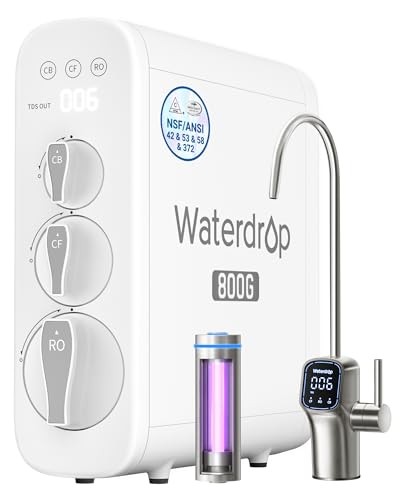
G3P800 Review Summary
The Waterdrop G3P800 is a strong fit for households that want a compact RO system with high output, lower under-sink clutter, and a more modern user experience than a basic tank-based setup.
Its headline strengths are clear: 800 GPD capacity, a 3:1 pure-to-drain ratio, 10-stage filtration, and a smart faucet that surfaces water quality information at a glance.
That makes it especially appealing for busy kitchens where filtered water is used constantly, not occasionally.
It also makes sense for buyers who care about reduced installation bulk and a cleaner cabinet layout.
The tradeoff is straightforward: this is a more specialized system than a simple pitcher or faucet filter, and it still requires the buyer to accept a proper under-sink installation with two drilled holes.
Review Scorecard
| Category | Score | Rationale |
|---|---|---|
| Filtration depth | 9/10 | The listing supports a 10-stage RO setup with broad contaminant reduction claims. |
| Daily convenience | 9/10 | Fast output and tankless delivery are a strong match for frequent use. |
| Space efficiency | 10/10 | The tankless design saves cabinet space and reduces clutter under the sink. |
| Water efficiency | 8/10 | A 3:1 pure-to-drain ratio is efficient for an RO system in this class. |
| User feedback features | 8/10 | The smart faucet adds TDS visibility and a more informative daily experience. |
| Installation simplicity | 6/10 | It is still a real under-sink RO install and requires drilling for faucet and drain. |
Key Features and Specifications of G3P800
The G3P800 is a tankless reverse osmosis system built for under-sink installation.
Waterdrop says the unit uses 10-stage filtration and is certified to NSF/ANSI 42, 53, 58, and 372 standards, with IAPMO R&T certification against NSF/ANSI 58 for TDS reduction and NSF 372 for lead-free materials.
The listing also highlights reduction claims for PFAS, fluoride, heavy metals such as lead and chromium, nitrate, chloride, and several other contaminants.
The output capacity is one of its biggest differentiators: Waterdrop lists the system at 800 gallons per day.
In practice, that is positioned as a high-flow RO solution that can fill a cup in about five seconds.
For families that drink filtered water all day, the practical value is less about a spec sheet brag and more about not waiting around for each refill.
The system also uses a 3:1 pure-to-drain ratio, which is a meaningful efficiency point for RO buyers.
It will still create wastewater, as all RO systems do, but the ratio is better than many older designs that waste more water per gallon of clean output.
The smart faucet is another core feature.
It shows TDS level and water quality information, and the LED function is described as long-lasting and automatically activated during water flow.
That makes the system feel more modern than a plain faucet spout, while still staying focused on the one job that matters: making filtered water easy to access.
- 10-stage RO filtration
- 800 GPD claimed capacity
- 3:1 pure-to-drain ratio
- Smart faucet with TDS display
- Tankless under-sink layout
- Two-hole installation requirement
Pros and Cons of G3P800
Pros
- Strong flow for a family kitchen. The 800 GPD capacity is the clearest sign that this system is built for frequent use.
- Tankless design saves space. Cabinet storage matters more than many buyers expect, and the compact layout is a real advantage.
- Broad filtration claims. The listing supports a deep set of reduction targets, including PFAS, fluoride, heavy metals, and salts.
- Helpful faucet readout. The smart faucet makes the system feel more informative and easier to monitor.
- Better water efficiency than many RO units. The 3:1 ratio is a sensible selling point for an RO buyer trying to avoid waste.
Cons
- Installation is not trivial. Buyers need to be ready for under-sink work, including drilling two holes.
- It is still an RO system. That means wastewater is part of the deal, even if the ratio is relatively efficient.
- More system than a casual buyer may need. If someone only wants light filtered-water use, this is probably more than necessary.
- Listing claims are strong but still listing claims. The specs are compelling, but they are not the same thing as hands-on testing in your home.
Who Should Buy G3P800?
The Waterdrop G3P800 makes the most sense for buyers who want a permanent kitchen upgrade rather than a temporary water fix.
If you already know you want reverse osmosis, care about under-sink space, and want a system that can support a busy household, this is squarely in your lane.
It is also a good match for families that use filtered water for drinking, cooking, coffee, and filling bottles throughout the day.
The high capacity and fast delivery are practical benefits, not just technical talking points.
You should probably skip it if you want a simple low-maintenance option, if you do not want to drill or install under-sink hardware, or if your water use is too light to justify a full RO system.
In those cases, a simpler carbon filter or pitcher may be the smarter buy.
Tankless RO Design and Daily Use
Why tankless matters
The biggest day-to-day advantage of the G3P800 is not just filtration depth.
It is the fact that the system avoids the bulky reservoir format that can crowd an under-sink cabinet.
For buyers with limited storage, that is a meaningful quality-of-life improvement.
It also gives the setup a cleaner, more modern feel.
Why flow rate matters
An RO system can be technically excellent and still feel annoying if it dispenses too slowly.
Waterdrop’s 800 GPD claim is meant to solve that problem.
For a family kitchen, that means filling glasses, bottles, and cooking containers with less waiting and less friction.
The real benefit is consistency: filtered water becomes the easy default, not a chore.
What the smart faucet adds
The faucet is not just decorative.
By showing TDS information and water quality status, it gives users a quick way to keep an eye on the system.
That does not replace good maintenance habits, but it does make the whole system feel more transparent than a plain spout.
What buyers should not ignore
The tradeoff for convenience is that this is still a full under-sink RO system.
Installation matters, cabinet access matters, and the buyer needs to be comfortable with a more involved setup than a countertop filter.
That is not a flaw so much as a category reality.
Alternatives to G3P800
If you want a comparable under-sink RO option, look at APEC RO systems, which are a familiar choice for buyers who want a traditional RO setup with a long track record.
Another credible alternative is iSpring reverse osmosis systems, especially if you want to compare tank-style and under-sink formats with different feature mixes.
For shoppers who want a simpler Waterdrop ecosystem comparison, Waterdrop RO systems are worth checking side by side, since the brand offers multiple configurations with different installation and output profiles.
If you do not need full RO purification, under-sink water filter systems may be a better fit.
That route can be less complex while still improving taste and everyday convenience.
Is G3P800 Worth It?
The Waterdrop G3P800 is worth it for buyers who want a serious under-sink RO system with fast output, a space-saving tankless design, and convenience features that make daily use easier.
Its best case is a busy household that will actually use the capacity and appreciates the smart faucet and cabinet-friendly footprint.
If you want the simplicity of a basic filter, this is more system than you need.
If you want a modern RO setup that is built around convenience, flow, and compact installation, the G3P800 is a sensible buy.
