Choosing the right expansion tank helps keep a radiant heating system quiet, stable, and protected from pressure swings. The best option depends on system volume, operating pressure, and connection size.
Below, we focus on practical picks for closed-loop hydronic systems so you can match the tank to your setup with less guesswork.
Best 10 Boiler Expansion Tanks for Radiant Heating Picks for 2026
Reliable High-Capacity Option
Watts ETX-30 4.7-Gallon Expansion Tank

- 4.7-gallon volume for closed-loop hydronic systems
- Carbon steel body with epoxy finish
- Pre-charged at 12 psi with 1/2" MNPT connection
Best For: Larger radiant heating systems needing a durable, high-volume tank
Trusted Classic Pick
Amtrol EX-30 Extrol Expansion Tank
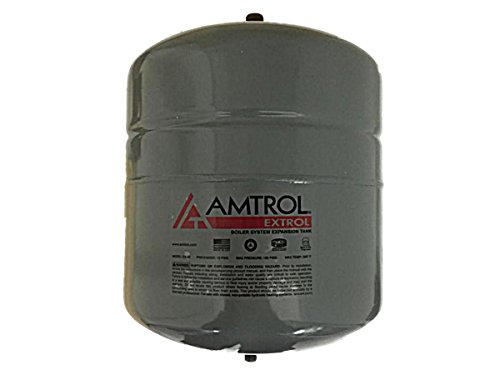
- Inline design for hydronic expansion control
- Butyl/EPDM diaphragm for long service life
- Factory pre-charged and 100% tested
Best For: Shoppers who want a proven inline expansion tank with a durable diaphragm
Compact Loop-Saver Choice
Watts ETX-15 2.1-Gallon Expansion Tank

- 2.1-gallon capacity for smaller hydronic loops
- Carbon steel tank with epoxy finish
- Pre-charged at 12 psi and mounts to supply piping
Best For: Smaller radiant heating systems needing a compact closed-loop tank
Heavy-Duty Budget-Friendly Fit
Amtrol 30 Boiler Expansion Tank

- 1/2" NPTM connection for boiler loops
- 2.5-gallon max acceptance
- 100 psig maximum working pressure
Best For: Straightforward hydronic systems that need a higher pressure rating
Closed-Loop Hydronic Pick
Watts ETX-90 6-Gallon Expansion Tank

- 6-gallon carbon steel tank for closed-loop hydronic systems
- Pre-charged at 12 psi with 1/2 inch MNPT connection
- Epoxy finish and membrane design support longer service life
Best For: Residential or light commercial radiant heating systems needing a standard 6-gallon tank
High-Capacity Standard
AMTROL 90 Extrol Expansion Tank

- 11.3-gallon capacity for larger hydronic systems
- Fully adjustable up to 100 psi working pressure
- Can eliminate the need for a separate automatic fill valve
Best For: Larger radiant heating systems needing higher expansion volume and adjustable fill control
Compact Replacement
Hydronic Expansion Tank 2.1 Gallon ETX-15
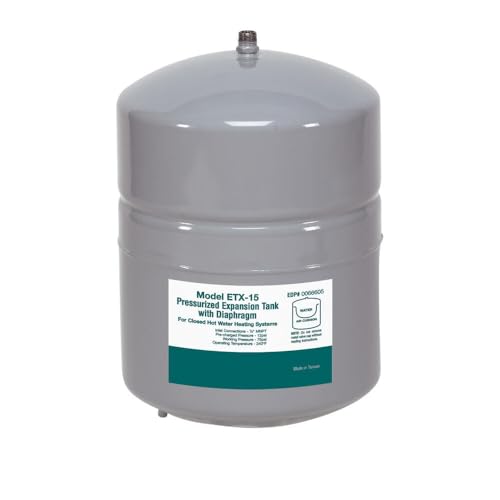
- Compact 2.1-gallon tank for closed-loop hydronic systems
- Pre-charged at 12 psi with 1/2 inch MNPT connection
- Steel shell with butyl diaphragm for non-potable use
Best For: Small radiant heating systems and ETX-15-style replacements in tight spaces
Compact Residential Boiler Tank
2-Gallon Extrol-Compatible Hydronic Expansion Tank

- 2-gallon capacity for compact residential systems
- Pre-charged to 12 PSI for immediate use
- ½" NPT connections and 100 PSI working pressure
Best For: Replacing a compact Extrol-style tank in a home hydronic system
Stainless Water-Heating Tank
2.1-Gallon Thermal Expansion Tank

- 2.1-gallon tank with 4.5-gallon option available
- 304 stainless steel 3/4" MIP connection
- UPC certified, NSF/ANSI 61 compliant, and lead-free
Best For: Managing hot-water expansion in residential or light commercial systems
Boiler Air Vent Essential
1/8-Inch NPT Automatic Float Air Vent

- Automatically releases trapped air in heating systems
- 1/8-inch NPT connection for compatible installs
- Stainless steel build for high-pressure, high-temperature use
Best For: Hydronic systems that need air venting and flow support
Reliable High-Capacity Option – Watts ETX-30 4.7-Gallon Expansion Tank
If you’re comparing boiler expansion tanks for radiant heating, the Watts ETX-30 is built for closed-loop hydronic systems that need steady pressure control as water expands. Its larger 4.7-gallon volume, carbon steel body, and 1/2″ MNPT connection make it a practical pick for residential or commercial installs where durability matters.
Best For: Larger closed-loop radiant heating systems that need a rugged, high-volume expansion tank.
Pros:
- 4.7-gallon tank volume helps handle expanded water in hydronic systems
- Carbon steel construction with epoxy finish for durable service
- Pre-charged at 12 psi with a membrane designed to minimize air charge loss
- Mounts directly to the supply piping with a 1/2″ MNPT connection
Cons:
- Designed for non-potable closed-loop systems only
- Bulkier than smaller expansion tanks
- Maximum pressure rating is listed as 60 psi in the notes, which is lower than the 75 psi title spec
For buyers prioritizing capacity and straightforward installation, this Watts tank offers a solid closed-loop heating solution. It focuses on pressure control and long-term membrane performance rather than extra features.
Trusted Classic Pick – Amtrol EX-30 Extrol Expansion Tank
The Amtrol EX-30 is a familiar choice for boiler expansion tanks for radiant heating when you want a proven inline design with simple compatibility. Its watertight reservoir, heavy-duty diaphragm, and factory pre-charge are aimed at stable expansion control in hydronic systems.
Best For: Buyers who want a classic inline expansion tank design with a heavy-duty diaphragm.
Pros:
- Watertight reservoir built for expanded water in hydronic systems
- Thick Butyl/EPDM diaphragm for long service life
- Factory pre-charged and 100% tested
- Strong deep-drawn steel tank construction
Cons:
- Notes do not provide a detailed gallon capacity figure beyond the model name
- No installation accessory details are listed in the supplied notes
- Less feature-specific than some newer product descriptions
This is a straightforward tank for buyers who value a recognizable boiler accessory with durable internal components. It keeps the focus on reliable pressure accommodation rather than extras.
Compact Loop-Saver Choice – Watts ETX-15 2.1-Gallon Expansion Tank
For smaller boiler expansion tanks for radiant heating, the Watts ETX-15 gives you a compact 2.1-gallon option for closed-loop hydronic systems. It is built to control thermal expansion, maintain pressure below the relief valve setting, and fit neatly on supply piping.
Best For: Smaller radiant heating loops that need a compact, easy-to-mount expansion tank.
Pros:
- 2.1-gallon volume suits smaller closed-loop hydronic systems
- Carbon steel construction with epoxy finish
- Pre-charged at 12 psi for on-site setup
- 1/2″ MNPT connection and supply-piping mount simplify installation
Cons:
- Smaller capacity may not suit larger radiant systems
- Non-potable use only
- Maximum pressure is 75 psi, so it is still a utility-focused tank rather than a high-end feature model
If you need a compact hydronic tank and don’t require large reserve volume, this Watts model is an efficient fit. It keeps the design simple while still addressing expansion and pressure control.
Heavy-Duty Budget-Friendly Fit – Amtrol 30 Boiler Expansion Tank
Amtrol 30 Extrol Boiler System Expansion Tank, 4.4 gal Volume, 11" Diameter, 15" Height
Check Price On AmazonThe Amtrol 30 is another practical option if you’re shopping boiler expansion tanks for radiant heating and want a simple closed-system tank with a traditional form factor. The supplied notes highlight a 1/2″ NPTM connection, a 2.5-gallon max acceptance, and a 100 psig maximum working pressure for hydronic use.
Best For: Hydronic systems that need a straightforward expansion tank with a higher working-pressure rating.
Pros:
- 1/2″ NPTM connection for system hookup
- 2.5-gallon max acceptance helps handle expansion in boiler loops
- 100 psig maximum working pressure
- Compact round form factor with listed 11″ diameter and 15″ height
Cons:
- Supplied notes are brief and do not mention pre-charge details
- No construction material details are provided in the notes
- Acceptance volume is modest compared with larger tanks
This model fits buyers who want a no-frills expansion tank with a clear pressure rating and familiar boiler-tank sizing. It is best viewed as a functional hydronic component rather than a feature-rich upgrade.
Closed-Loop Hydronic Pick – Watts ETX-90 6-Gallon Expansion Tank
If you’re comparing boiler expansion tanks for radiant heating, the Watts ETX-90 is built for closed-loop hydronic systems where pressure control matters. Its 6-gallon capacity, 12 psi pre-charge, and 1/2 inch MNPT connection make it a straightforward fit for residential or light commercial boiler setups.
Best For: Closed-loop radiant and hydronic heating systems that need a durable 6-gallon tank with standard connections.
Pros:
- 6-gallon carbon steel tank designed for closed-loop hydronic heating systems
- Pre-charged at 12 psi for standard system setups
- Epoxy finish and expansion membrane help support long service life
- 1/2 inch MNPT connection suits common boiler piping
Cons:
- Non-potable use only
- May be larger than needed for compact mechanical spaces
- Requires on-site charging adjustment if your system needs a different pre-charge
Overall, the ETX-90 is a practical choice when you want a proven closed-loop expansion tank with enough volume for many radiant heating applications. It balances standard compatibility with durable construction and pressure-control features.
High-Capacity Standard – AMTROL 90 Extrol Expansion Tank
For boiler expansion tanks for radiant heating, the AMTROL 90 Extrol stands out when you want a higher-capacity hydronic tank with adjustable fill control. Its 11.3-gallon capacity and fully adjustable pressure up to 100 psi make it a flexible option for a wide range of closed-loop heating systems.
Best For: Larger hydronic heating systems that benefit from higher capacity and adjustable pressure control.
Pros:
- 11.3-gallon capacity provides more room for thermal expansion
- Fully adjustable up to 100 psi working pressure
- Designed to control system fill without a separate automatic fill valve
- Universal fit and lightweight 4-pound build
Cons:
- Plastic exterior finish may not feel as rugged as steel-shell alternatives
- More capacity than small radiant systems may need
- Exact installation requirements depend on the system layout
The Extrol 90 is a strong pick if your radiant loop needs extra expansion volume and adjustable pressure settings. It offers a practical blend of capacity and control for system builders who want flexibility during setup.
Compact Replacement – Hydronic Expansion Tank 2.1 Gallon ETX-15
If you need a compact option among boiler expansion tanks for radiant heating, this 2.1-gallon hydronic expansion tank is aimed at closed-loop systems that need thermal expansion control in tight spaces. It ships pre-charged at 12 psi, uses a standard 1/2 inch MNPT connection, and is sized as a direct ETX-15 replacement.
Best For: Smaller closed-loop radiant or boiler systems where space is limited and an ETX-15-style replacement is needed.
Pros:
- Compact 2.1-gallon size fits small mechanical areas
- Pre-charged at 12 psi for common hydronic setups
- 1/2 inch MNPT connection for standard installation compatibility
- Butyl diaphragm and steel shell are built for closed-loop use
Cons:
- Non-potable water only
- Smaller capacity may not suit larger radiant systems
- Replacement-style sizing may limit it to similar applications
This tank makes sense when you want a straightforward replacement with compact dimensions and common fittings. It is best treated as a space-saving solution for smaller hydronic systems rather than a high-capacity upgrade.
Compact Residential Boiler Tank – 2-Gallon Extrol-Compatible Hydronic Expansion Tank
Hydronic Heating Expansion Tank 102-1 Fits Amtrol Extrol Residential Boiler Systems. OEM
Check Price On AmazonIf you need boiler expansion tanks for radiant heating in a compact residential setup, this 2-gallon unit is built for small hydronic systems that need steady pressure control. It comes pre-charged to 12 PSI, uses a durable steel shell with a butyl diaphragm, and is sized to fit Amtrol Extrol residential boiler systems and compatible home hydronic loops.
Best For: Homeowners and installers replacing an Extrol-style expansion tank in a compact radiant or boiler system.
Pros:
- 2-gallon size keeps it compact for residential heating systems
- Pre-charged to 12 PSI for immediate use
- ½" NPT inlet/outlet and up to 100 PSI working pressure
- Steel shell with butyl diaphragm for long-lasting performance
Cons:
- Smaller capacity may not suit larger hydronic systems
- Designed around residential boiler compatibility rather than universal use
This is a practical replacement-style tank for smaller radiant heating loops where fit and pressure control matter more than extra capacity. If you want a compact, pre-charged option for an Amtrol Extrol-style setup, this one is straightforward and purpose-built.
Stainless Water-Heating Tank – 2.1-Gallon Thermal Expansion Tank
For buyers comparing boiler expansion tanks for radiant heating-related plumbing protection, this 2.1-gallon thermal expansion tank is aimed at managing pressure created by hot water expansion. It uses a 304 stainless steel connection, a heavy-duty cold-rolled steel tank, and a 100% butyl rubber diaphragm with a polypropylene liner for durable residential or light commercial use.
Best For: Homes and small commercial systems that need thermal expansion control at the water heater.
Pros:
- 2.1-gallon capacity with 4.5-gallon option available
- 304 stainless steel 3/4" MIP connection
- Butyl rubber diaphragm with polypropylene liner
- UPC certified, NSF/ANSI 61 compliant, and lead-free
Cons:
- Designed for water heaters, not specifically listed as a boiler tank
- Wall mounting bracket kit is optional, not included
This is a solid pick when the goal is pressure absorption and plumbing protection rather than a boiler-specific replacement part. Its certified materials and standard connection make it easy to evaluate for common residential installs.
Boiler Air Vent Essential – 1/8-Inch NPT Automatic Float Air Vent
This automatic float air vent is not an expansion tank, but it can be a useful accessory in boiler expansion tanks for radiant heating setups that need trapped air removed from circulating loops. With a standard 1/8-inch NPT connection and stainless steel construction, it is designed to help maintain smooth water flow and reduce airlocks in hot water boiler systems.
Best For: Circulating heating systems that need a reliable air vent to help with air release and flow stability.
Pros:
- Automatically releases trapped air in circulating heating systems
- Standard 1/8-inch NPT thread for compatible installs
- Stainless steel construction for high-pressure, high-temperature use
- Simple inline design for quick integration
Cons:
- Not an expansion tank, so it does not provide pressure storage
- Best suited to compatible boiler and hydronic components
If your priority is venting air rather than replacing a tank, this is a straightforward maintenance part for boiler systems. It complements a hydronic loop by helping reduce air-related performance issues, but it should be viewed as an accessory, not a substitute for an expansion tank.
How We Picked the Best Boiler Expansion Tanks for Radiant Heating
For Boiler Expansion Tanks for Radiant Heating, we prioritized compatibility with closed-loop hydronic systems, diaphragm or bladder construction, common residential sizes, and clear connection details. We also favored options that are widely used as direct replacements for popular boiler and extrol-style systems.
Quick Comparison
The smallest tanks in this roundup are better for compact radiant loops or replacement use where space is limited. Mid-size 4.4-gallon models suit many residential boiler systems, while larger 6-gallon tanks are a better fit when the system has more water volume or multiple zones. Stainless-steel thermal expansion tanks and float-style air vents serve different roles, so make sure you are buying the correct component for your system type.
Key Buying Factors for Boiler Expansion Tanks for Radiant Heating
System Volume and Tank Capacity
Match the tank to the total water volume in the boiler, piping, manifolds, and emitters. Undersizing can cause pressure relief events, while oversizing is usually less risky but may be unnecessary.
Connection Size and Orientation
Check whether your system needs 1/2-inch MNPT, 3/4-inch MNPT, or another fitting size. Also confirm whether the tank mounts vertically, horizontally, or in a specific service location.
Water Compatibility
Most radiant heating systems are closed-loop and non-potable, so use a tank rated for hydronic heating. A water-heater expansion tank is not always the right substitute unless the application and materials match your system.
Build Materials and Diaphragm Quality
Steel tanks with a durable internal diaphragm are common in hydronic systems because they handle pressure changes well. Look for corrosion-resistant construction and a precharge that suits boiler use.
Replacement Versus New Installation
If you are replacing a failed tank, the safest choice is often a like-for-like match in size and connection style. For a new install, sizing and total system demand matter more than brand similarity.
Who Should Buy Which Boiler Expansion Tanks for Radiant Heating?
Choose a smaller replacement tank if you have a compact radiant loop, a single-zone system, or a direct swap with limited space. Choose a mid- or large-capacity model if you run several zones, have a higher water volume, or want more pressure stability. If you are troubleshooting air issues, confirm whether you need an expansion tank or a venting component instead. In other words, the best Boiler Expansion Tanks for Radiant Heating are the ones that match your system size, connection type, and loop design—not just the biggest or most popular option.
