Condensing tankless water heaters with recirculation pumps can deliver hot water faster while helping reduce standby waste. They’re a smart fit for busy homes that want comfort and efficiency together.
Below, we’ve narrowed the field to standout options for different household sizes, fuel types, and installation needs so you can compare with confidence.
Best 10 Condensing Tankless Water Heaters with Recirculation Pumps Picks for 2026
Smart-Circ Whole-Home Pick
Rinnai RXP199iN 11.1 GPM with pump

- 11.1 GPM output for larger homes
- Built-in Smart-Circ recirculation pump
- Indoor or outdoor installation support
Best For: Large households needing high output and flexible install options
High-Capacity Recirc Choice

- 10.0 GPM flow for 3–4 bath homes
- Integrated hot water recirculation pump
- Commercial-grade 316L stainless steel
Best For: Multi-bath homes wanting steady flow and a built-in recirc pump
Wi‑Fi Recirculation Option

- 11.2 GPM with 199,900 BTUs
- Built-in recirculation with Wi‑Fi controls
- Compact body with outdoor conversion option
Best For: Tech-focused homeowners wanting app control and efficient recirculation
Compact Propane Recirc Pick

- Built-in Smart-Circ recirculation
- Compact indoor propane design
- 6.1 GPM for moderate household demand
Best For: Smaller propane homes wanting a compact recirculating tankless
Best Whole-Home Efficiency
Rheem Prestige 11.0 GPM Built-In Recirculation
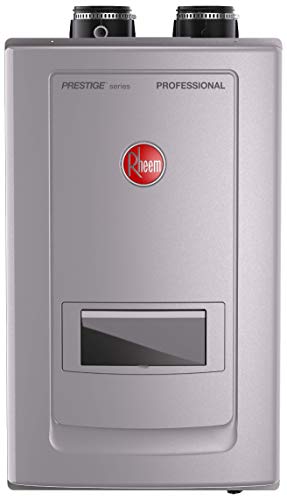
- Built-in recirculation reduces hot water wait time.
- 11.0 GPM and 199,000 BTU output suit whole-home use.
- Compact indoor design works well for tank replacement.
Best For: Homeowners wanting a high-efficiency indoor natural gas unit with recirculation.
Smart Propane Pick
Rheem IKONIC 11.2 GPM Wi-Fi Recirculation
- Built-in recirculation saves water and reduces wait time.
- 11.2 GPM capacity supports multiple fixtures.
- EcoNet Wi-Fi adds remote control and usage tracking.
Best For: Propane users who want smart control and recirculation in a high-capacity heater.
Compact Smart-Circ Choice
Rinnai REP160iN 6.1 GPM Recirculation
- Smart-Circ learns usage patterns for scheduled recirculation.
- Compact indoor design saves space.
- 6.1 GPM supports up to five fixtures at once.
Best For: Smaller homes needing a compact natural gas unit with intelligent recirculation.
Whole-Home Capacity Pick
Rinnai RU160iN 9 GPM Indoor Condensing
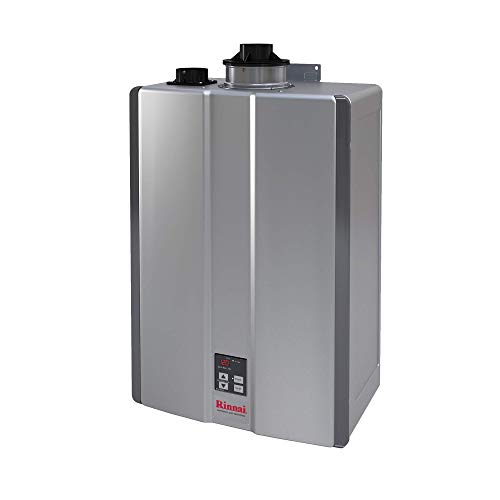
- Circ-Logic supports an external recirculation pump
- Up to 9 GPM for whole-home demand
- ENERGY STAR qualified, UEF 0.97
Best For: Larger homes needing high-flow indoor hot water with pump compatibility
Smart Built-In Recirculation Pick
Rinnai RXP160iN Smart Sense 9 GPM

- Built-in Smart-Circ internal pump
- Learns usage patterns for scheduled recirculation
- Indoor or outdoor install; NG or propane
Best For: Buyers who want integrated recirculation and flexible installation
Compact Value Pick
ThermoMate 5.28 GPM Condensing NG

- 0.86 UEF condensing unit with dual heat exchanger
- Compact indoor design with LED touchscreen
- Up to 5.28 GPM for smaller households
Best For: Small households wanting an efficient, space-saving condensing unit
Smart-Circ Whole-Home Pick – Rinnai RXP199iN 11.1 GPM with pump
If you’re comparing condensing tankless water heaters with recirculation pumps for a larger home, the Rinnai RXP199iN stands out for its high 11.1 GPM flow rate, built-in Smart-Circ pump, and flexible indoor or outdoor installation. It’s designed to reduce hot-water wait time while still delivering the compact footprint and efficiency buyers expect from a premium tankless unit.
Best For: Larger households that want a high-output condensing tankless with built-in recirculation and installation flexibility.
Pros:
- Up to 11.1 GPM can support multiple fixtures at once.
- Smart-Circ intelligent recirculation learns usage patterns for efficiency and convenience.
- Indoor or outdoor install support adds setup flexibility.
- High UEF .98 efficiency and Quick Flush feature support easier maintenance.
Cons:
- Professional installation is recommended.
- Outdoor installation requires the RX-OVC vent cap.
- Wi-Fi control needs the separate Control-R module.
For shoppers who want a top-tier condensing tankless water heater with recirculation pumps, this Rinnai brings strong output, smart scheduling, and a compact design in one package. It makes the most sense when hot-water demand is high and installation flexibility matters.
High-Capacity Recirc Choice – A. O. Smith ATI-540P-N 10 GPM
The A. O. Smith ATI-540P-N is a practical option if you want condensing tankless water heaters with recirculation pumps for a home with multiple bathrooms. Its integrated hot water recirculation pump helps cut the wait for hot water, while the 199K BTU output and 10 GPM flow rate make it a strong fit for steady whole-home demand.
Best For: Homes with 3 to 4 bathrooms that want dependable hot water delivery and a built-in recirc pump.
Pros:
- 10.0 GPM continuous flow suits larger residential demand.
- Integrated recirculation pump helps deliver hot water on demand.
- Commercial-grade 316L stainless steel materials add durability.
- 15-year heat exchanger warranty offers long-term coverage.
Cons:
- Recirculation may require a bypass valve, which is not included.
- Professional installation by a licensed plumber is recommended.
- Indoor natural gas only, so it’s less flexible than dual-fuel models.
This A. O. Smith model is a solid fit when your priority is a reliable condensing tankless with recirculation and enough capacity for a busy household. It favors straightforward indoor natural-gas installations over extra feature complexity.
Wi‑Fi Recirculation Option – Rheem IKONIC 11.2 GPM
The Rheem IKONIC is worth a look if you want condensing tankless water heaters with recirculation pumps plus app-based control. Its built-in recirculation can save water by reducing hot-water wait time, and the EcoNet Wi-Fi system lets you adjust settings, monitor usage, and receive maintenance alerts from your phone.
Best For: Buyers who want smart controls, recirculation, and high hot-water output in a compact unit.
Pros:
- 11.2 GPM and 199,900 BTUs support whole-house demand.
- Built-in recirculation can save an average 11,000 gallons of water per year.
- EcoNet Wi-Fi enables remote control and usage tracking.
- Compact design includes quick hang bracket and outdoor conversion capability.
Cons:
- Outdoor use requires an outdoor conversion kit.
- Professional installation is implied by the complexity of the system.
- Natural gas only, so it won’t fit propane setups.
For shoppers who want technology-forward condensing tankless water heaters with recirculation pumps, this Rheem combines strong capacity with useful connected features. It’s especially appealing when you want to tune comfort and efficiency from your phone.
Compact Propane Recirc Pick – Rinnai REP160iP 6.1 GPM
If you’re shopping condensing tankless water heaters with recirculation pumps for a smaller indoor propane setup, the Rinnai REP160iP is a space-saving option. It uses Smart-Circ technology to learn water-use patterns and schedule recirculation for better efficiency and convenience, while still offering compact tankless performance.
Best For: Smaller homes or propane users who want a compact indoor unit with built-in recirculation.
Pros:
- Built-in Smart-Circ recirculation helps reduce hot-water wait times.
- Compact size fits a wide array of spaces.
- 6.1 GPM is suitable for up to about five fixtures at once.
- Includes strong warranty coverage when registered properly.
Cons:
- Non-condensing design, unlike the other units in this roundup.
- Lower 6.1 GPM output than larger whole-home models.
- Wi-Fi control requires the separate Control-R module.
This Rinnai makes sense if you want built-in recirculation in a compact propane tankless without overspending on extra capacity. It’s the most space-conscious pick here, but it’s better suited to moderate demand than large multi-bath households.
Best Whole-Home Efficiency – Rheem Prestige 11.0 GPM Built-In Recirculation
If you’re comparing condensing tankless water heaters with recirculation pumps, the Rheem Prestige RTGH-RH11DVLN is built to cut wait time while keeping operating costs low. Its built-in recirculation, compact indoor design, and high-efficiency performance make it a practical fit for replacing a tank-style heater in a space-conscious home.
Best For: Homeowners who want a high-efficiency indoor tankless heater with built-in recirculation and strong whole-home capacity.
Pros:
- Built-in recirculation helps deliver hot water without the wait or waste.
- 11.0 GPM flow rate and 199,000 BTU output support whole-home demand.
- Compact, space-saving design is well suited for tank replacement.
- Water and gas leak detection can shut the unit down and show an error code.
Cons:
- Requires professional installation and indoor setup.
- Uses natural gas only, so it won’t suit propane households.
Overall, this Rheem model focuses on efficiency, protection features, and the convenience of built-in recirculation. It’s a strong option when you want a premium tankless upgrade that emphasizes savings and steady hot water delivery.
Smart Propane Pick – Rheem IKONIC 11.2 GPM Wi-Fi Recirculation
The Rheem IKONIC RECTGH-SR11iP is a strong choice if you want one of the condensing tankless water heaters with recirculation pumps that also adds app-based control. It combines 11.2 GPM capacity, built-in recirculation, and an ultra-low NOx design to deliver instant hot water with a home-friendly footprint.
Best For: Propane households that want high capacity, built-in recirculation, and Wi-Fi control in a compact indoor unit.
Pros:
- Built-in recirculation helps save water by reducing the wait for hot water.
- 11.2 GPM flow rate supports multiple simultaneous uses.
- EcoNet Wi-Fi lets you monitor usage, alerts, temperature, and recirculation settings.
- Ultra-low NOx burner is designed for better emissions performance.
Cons:
- Liquid propane model limits use to LP installations.
- Indoor install and quick-hang mounting still call for a proper setup plan.
This IKONIC model stands out for blending convenience features with serious hot-water output. If control, efficiency, and propane compatibility matter, it’s an easy model to shortlist.
Compact Smart-Circ Choice – Rinnai REP160iN 6.1 GPM Recirculation
The Rinnai REP160iN is aimed at buyers who want a compact tankless unit with a built-in recirculation pump that helps reduce hot-water wait times. Its Smart-Circ technology learns water-use patterns and schedules recirculation for better convenience and efficiency, making it a practical fit for smaller indoor installations.
Best For: Smaller households that want a compact indoor natural gas tankless heater with intelligent recirculation.
Pros:
- Built-in recirculation pump with Smart-Circ scheduling helps improve convenience.
- Compact, suitcase-sized design saves space.
- 6.1 GPM output can serve up to five fixtures at once.
- Backed by a 15-year heat exchanger warranty when registered on time.
Cons:
- Non-condensing design may be less efficient than condensing alternatives.
- Wi-Fi control requires a separate Controlr module, which is not included.
For buyers focused on space savings and smart recirculation rather than maximum flow, this Rinnai is a well-rounded option. It offers the convenience of learned pump scheduling in a compact package.
Whole-Home Capacity Pick – Rinnai RU160iN 9 GPM Indoor Condensing
Rinnai RU160iN Condensing Tankless Hot Water Heater, 9 GPM, Natural Gas, Indoor Installation
Check Price On AmazonIf you want condensing tankless water heaters with recirculation pumps to shorten hot-water wait times, the Rinnai RU160iN is built for that setup with Circ-Logic support for pairing an external pump. It’s a strong fit for whole-home use, combining up to 9 GPM flow with a compact wall-mounted design and ENERGY STAR efficiency.
Best For: Larger households that want a high-flow indoor tankless unit with external recirculation-pump compatibility.
Pros:
- Circ-Logic supports pairing with an external recirculation pump to reduce wait time.
- Up to 9 GPM can support as many as 6 appliances at once.
- Condensing, ENERGY STAR qualified design with a UEF of 0.97.
- Compact wall-mount format saves space versus a tank heater.
Cons:
- Professional installation is recommended.
- WiFi monitoring requires the separately sold Controlr module.
Overall, the RU160iN is a practical choice when you want a proven condensing tankless system and plan to add recirculation for faster delivery at the tap. Its best case is a larger home that needs high flow without sacrificing efficiency.
Smart Built-In Recirculation Pick – Rinnai RXP160iN Smart Sense 9 GPM
Among condensing tankless water heaters with recirculation pumps, the Rinnai RXP160iN stands out because the pump is built in and Smart-Circ learns household usage patterns. That makes it a strong option if you want less waiting for hot water without adding an external pump or a complicated setup.
Best For: Homeowners who want an all-in-one tankless unit with built-in intelligent recirculation.
Pros:
- Built-in internal pump with Smart-Circ recirculation technology.
- Learns water usage patterns and schedules recirculation for efficiency.
- Up to 9 GPM and 160,000 BTU for whole-home use.
- Indoor/outdoor capable with natural gas or propane support.
Cons:
- Outdoor installation requires the RX-OVC vent cap.
- Professional installation is recommended.
This model is a strong fit if your priority is convenience, because the recirculation system is integrated and designed to automate hot-water delivery. It also adds flexibility with dual-fuel and indoor/outdoor installation options.
Compact Value Pick – ThermoMate 5.28 GPM Condensing NG
The ThermoMate is a compact condensing tankless option for buyers comparing condensing tankless water heaters with recirculation pumps, especially if the goal is efficient on-demand hot water in a smaller home. It doesn’t include recirculation features, but it offers a high-efficiency condensing design, straightforward controls, and a space-saving footprint.
Best For: Smaller households that want a compact, efficient indoor tankless water heater.
Pros:
- 0.86 UEF condensing design with a dual heat exchanger.
- Up to 5.28 GPM can handle two showers at once under stated conditions.
- Compact 21″H x 13″W x 7″D footprint saves space.
- LED touchscreen shows temperature and diagnostic info.
Cons:
- Recirculation pump support is not listed in the supplied notes.
- Lower flow rate than the larger Rinnai models.
- Condensate must be drained, and a neutralizer kit is recommended.
For smaller homes, this ThermoMate offers an efficient condensing setup with useful safety and diagnostic features in a very compact package. It is less about built-in recirculation and more about delivering solid on-demand performance with minimal space requirements.
How We Picked These Condensing Tankless Water Heaters with Recirculation Pumps
We focused on models that combine high efficiency with practical recirculation features, strong output, and solid whole-home capability. Key factors included BTU input, flow rate, fuel type, indoor installation support, and whether the recirculation system is built in or designed to help cut wait times.
We also favored units that make sense for real-world homes: larger families, multi-bath layouts, and buyers who want instant comfort without oversizing unnecessarily.
Quick Comparison: What Stands Out
In this roundup, the strongest all-around picks are typically the higher-flow 199K BTU models for larger homes, while midrange 160K BTU units suit smaller households or tighter demand patterns. Natural gas models are more common, but propane versions are useful where gas service is not available.
If your priority is faster hot water at distant fixtures, look closely at models with built-in recirculation or smart-circulation features rather than standard tankless units without that function.
Key Buying Factors for Condensing Tankless Water Heaters with Recirculation Pumps
Flow Rate and Household Size
Match the unit’s GPM to your peak demand. Homes with multiple showers, laundry, and dishwasher use at once usually need higher flow, while smaller households can often save money with a lower-capacity model.
BTU Input and Recovery
Higher BTU ratings generally support stronger hot water output, especially in colder incoming-water regions. For Condensing Tankless Water Heaters with Recirculation Pumps, BTU matters because the system must heat water quickly while maintaining efficiency.
Recirculation Method
Built-in recirculation is convenient, but some systems rely on smart-circ logic or paired plumbing loops. Consider whether you want on-demand convenience, scheduled circulation, or a setup that minimizes energy use between draws.
Fuel Type and Installation
Choose natural gas or propane based on what your home already supports. Indoor units may require venting and professional installation, so factor in both equipment and labor costs.
Efficiency and Operating Cost
Condensing designs usually offer better efficiency than non-condensing alternatives. That can help offset higher upfront cost, especially in homes with frequent hot water use.
Who Should Buy Which Condensing Tankless Water Heaters with Recirculation Pumps?
Large households and multi-bath homes should prioritize higher-GPM, high-BTU models with built-in recirculation. Smaller homes, cabins, or lower-demand users can save by choosing a more compact unit with adequate output and efficiency.
If your main goal is to reduce hot water wait time at far-away fixtures, choose one of the recirculating models first; if your main goal is lowering fuel use, balance recirculation convenience against efficiency ratings and control options.
