High-capacity portable power stations provide dependable electricity when the grid is unavailable, you’re camping away from hookups, or you need portable backup for demanding appliances.
We compared 10 leading models by battery capacity, output, charging options, portability, and expansion potential to help you choose the right balance of runtime and convenience.
Best 10 High Capacity Portable Power Stations Picks for 2026
Best High-Output Value

- 3,600W output with 3,072Wh LiFePO4 capacity
- 13 ports and fast two-hour AC charging
- UPS protection and expandable storage
Best For: Home backup, RVs, camping, and heavy-duty appliances
Best for Extended Home Backup
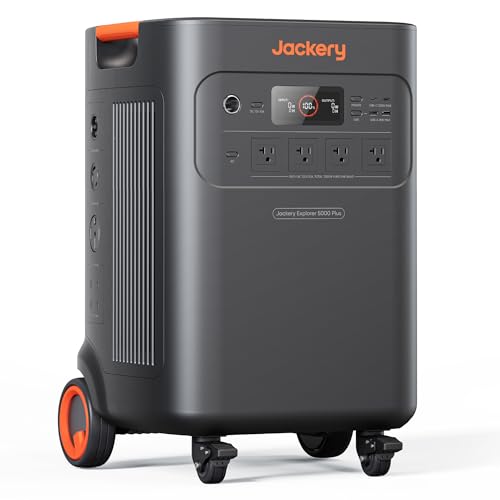
- 5,040Wh capacity and 7,200W rated output
- 120V/240V support for major appliances
- Expandable to 60kWh with up to 4,000W solar input
Best For: Long-duration residential outage backup
Best Rolling Midrange Backup
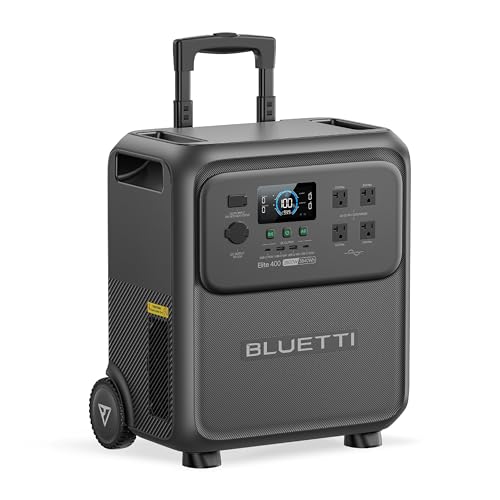
- 3,840Wh LiFePO4 battery with 2,600W output
- Trolley design helps move the 86-pound unit
- 80% charge in about 70 minutes with AC and solar
Best For: Mobile home backup, RV use, and emergency power
Best Lightweight 3.6kWh Home Backup

- 3,584Wh capacity with 3,600W AC output
- Wheels and telescoping handle improve portability
- Expandable storage and four charging options
Best For: Portable household backup with home-integration potential
Best High-Output Pick

- 2048Wh LiFePO4 capacity with 2400W output
- 3400W X-Boost for high-demand appliances
- 0–80% charging in about 1.13 hours
Best For: Home backup, RV use, camping, and high-demand appliances
Best Lightweight 2kWh Option

- 2042Wh capacity with 2200W AC output
- 39.5-pound compact 2kWh design
- Quiet charging below 30dB
Best For: Portable home backup, camping, and quiet operation
Best Expandable Value

- 1024Wh capacity with 1800W AC output
- Expandable up to 5kWh with extra batteries
- Full charge in about 56 minutes
Best For: Expandable home backup, camping, and multi-device power
Fast-Charging Expandable Powerhouse

- 1,024Wh capacity with 2,000W continuous output
- 0–80% AC charging in about 36 minutes
- Expandable up to 5,120Wh with extra batteries
Best For: Professional backup, off-grid work, and growing power needs
Maximum Capacity for Whole-Home Backup

- 3,600Wh LFP battery with 3,600W AC output
- Expandable up to 25kWh
- 15 output methods and five charging options
Best For: Extended home backup, RVs, and commercial applications
Compact Quiet Backup Choice

- 1,024Wh capacity with 1,800W AC output
- 25-pound design with 30dB silent mode
- 0–80% charging in about 45 minutes
Best For: Camping, road trips, quiet indoor backup, and everyday essentials
Best High-Output Value – PECRON F3000LFP
For shoppers comparing high capacity portable power stations, the PECRON F3000LFP combines a 3,072Wh LiFePO4 battery with 3,600W of pure sine wave output. It is designed for home backup, camping, RV use, and demanding appliances, while its 13 ports support multiple devices at once.
Best For: Home emergency backup, RV owners, campers, and users who need high output for refrigerators, air conditioners, or power tools.
Pros:
- 3,600W output and 3,072Wh capacity can support heavy-duty appliances and 2–3 days of essential home use.
- Fast 1,800W AC charging reaches a full charge in about 2 hours.
- 13 ports, app monitoring, and 8–20ms UPS switching add flexibility for everyday devices and sensitive electronics.
Cons:
- At 63.3 pounds, it is substantial to move.
- Expansion to 10,752Wh requires a separately sold cascade cable.
The F3000LFP is a strong all-around choice when output, port variety, and fast recharge matter more than minimal weight. Its expansion setup is worth planning for before purchase.
Best for Extended Home Backup – Jackery Explorer 5000 Plus
The Jackery Explorer 5000 Plus stands out among high capacity portable power stations for extended outage coverage. Its 5,040Wh battery and 7,200W rated output support large appliances, while 120V/240V operation and expansion up to 60kWh make it suitable for more substantial home backup needs.
Best For: Homeowners seeking long-duration outage backup for major appliances, essential circuits, or high-demand equipment.
Pros:
- 7,200W output with 14,400W surge capacity handles demanding appliances.
- Supports both 120V and 240V loads, including a 5-ton air conditioner or water heater.
- 5,040Wh capacity can expand to 60kWh and recharge with up to 4,000W solar input.
Cons:
- At 134.5 pounds, it is considerably less portable than smaller stations.
- The listed configuration has only two power outlets.
- A smart transfer switch is needed for circuit-level home integration.
This is better viewed as a powerful home backup system than a grab-and-go camping battery. Its high output, dual-voltage capability, and substantial expansion potential justify the larger footprint for serious outage preparedness.
Best Rolling Midrange Backup – BLUETTI Elite 400
The BLUETTI Elite 400 offers a useful balance of storage and mobility for shoppers evaluating high capacity portable power stations. Its 3,840Wh LiFePO4 battery supplies 2,600W continuously, and the built-in trolley system makes this 86-pound unit easier to position around a home, RV, or campsite.
Best For: Users who want substantial emergency capacity with wheels for easier movement between a basement, garage, RV, or campsite.
Pros:
- 3,840Wh capacity and 2,600W output can run refrigerators, power tools, and other common loads.
- AC and solar input can deliver an 80% charge in about 70 minutes.
- 15ms UPS switching helps keep devices such as Wi-Fi equipment, security cameras, and pet feeders running.
Cons:
- Its 2,600W output is lower than some similarly large backup stations.
- The 86-pound weight still limits easy lifting, despite the trolley design.
- Only nine total ports are provided.
The Elite 400 is a practical pick when moving a large battery matters almost as much as capacity. Its fast hybrid charging and UPS response strengthen its home-backup credentials, while the lower output may rule it out for the largest appliances.
Best Lightweight 3.6kWh Home Backup – Jackery HomePower 3600 Plus
The Jackery HomePower 3600 Plus is a compact option in the high capacity portable power stations category, pairing 3,584Wh of storage with 3,600W AC output. Its wheels and telescoping handle improve portability, while parallel operation, dual-voltage support, and home transfer-switch compatibility make it suited to household backup.
Best For: Households wanting a relatively lightweight 3.6kWh station that can roll into place and support home backup through an appropriate transfer setup.
Pros:
- 3,600W output can run pumps, heaters, dryers, and other demanding loads.
- Capacity expands to 21kWh per unit or 43kWh with multiple units.
- Hybrid AC+DC charging reaches 100% in about 2 hours, with four charging methods available.
Cons:
- The listed unit has two outlets, limiting direct device connections.
- Home integration requires pairing with an MTS.
- Parallel configurations add equipment and planning complexity.
For a 3.6kWh station, the HomePower 3600 Plus emphasizes easier handling and home-oriented expansion. It is a compelling fit for users who value rolling portability and long-term battery durability, provided they plan around the limited outlet count.
Best High-Output Pick – EcoFlow DELTA 3 Max
For shoppers comparing high capacity portable power stations, the EcoFlow DELTA 3 Max stands out with a 2048Wh LiFePO4 battery, 2400W output, and up to 3400W X-Boost capability. Its fast charging and rapid transfer time make it suitable for both home backup and mobile power needs.
Best For: Home backup, RV use, camping, and high-demand appliances.
Pros:
- Reaches 0–80% charge in about 1.13 hours with X-Stream charging.
- 3400W X-Boost can power many high-demand appliances and tools.
- Less-than-10ms transfer time supports backup use for sensitive electronics.
- LiFePO4 battery, five-year service, and app-based monitoring add long-term convenience.
Cons:
- Solar panels are optional rather than included.
- Its 2400W output and 2048Wh capacity may be more than casual users need.
The DELTA 3 Max is a strong choice when output headroom and fast recharge times matter more than minimal size. It is especially practical for users who want one unit for emergency backup and outdoor power.
Best Lightweight 2kWh Option – Jackery Explorer 2000 v2
The Jackery Explorer 2000 v2 combines a 2042Wh capacity with 2200W AC output in a 39.5-pound design. Among high capacity portable power stations, it is a practical option for buyers who want substantial energy storage without the bulk of many 2kWh units.
Best For: Portable home backup, camping, small-business use, and quiet operation.
Pros:
- 2042Wh capacity and three AC ports provide substantial everyday power.
- 100W USB-C PD port can charge compatible devices without an extra adapter.
- 0–80% AC charging takes about 66 minutes, with solar charging supported.
- Silent Charging mode operates below 30dB, and 20ms switching supports backup use.
Cons:
- Its 2200W output is lower than the EcoFlow DELTA 3 Max’s listed output.
- Solar panels are needed separately for solar charging.
The Explorer 2000 v2 is a compelling middle ground for users who prioritize portability and quiet charging. Its LiFePO4 battery and compact construction also suit buyers seeking a long-term, travel-friendly power source.
Best Expandable Value – EcoFlow DELTA 3
The EcoFlow DELTA 3 offers 1024Wh of storage and 1800W AC output, with expansion support up to 5kWh. It is a useful entry point for shoppers seeking high capacity portable power stations that can grow with changing backup, camping, or emergency-power needs.
Best For: Expandable home backup, camping, and users who need multiple device connections.
Pros:
- Full charging takes about 56 minutes, with 80% available in roughly 30 minutes.
- Expandable from 1kWh to 5kWh with compatible EcoFlow extra batteries.
- LiFePO4 cells provide up to 4000 cycles to 80% capacity.
- Supports up to 13 appliances and includes IP65 protection for the battery pack.
Cons:
- Its standard 1024Wh capacity is lower than the two 2kWh models here.
- Extra batteries are required to reach the maximum 5kWh capacity.
- Its 1800W AC output may not suit every high-demand appliance.
The DELTA 3 makes the most sense for buyers who want fast charging now and a clear upgrade path later. Its multiple ports, durable battery chemistry, and expansion ecosystem help balance current affordability with future flexibility.
Fast-Charging Expandable Powerhouse – OUPES Mega 1
The OUPES Mega 1 is a strong choice among high capacity portable power stations for users who want rapid recharging, substantial output, and room to expand. Its 1,024Wh LiFePO4 battery delivers 2,000W continuously, while connecting up to two extra batteries can increase total capacity to 5,120Wh.
Best For: Home backup, professional equipment, camping, off-grid use, and emergency power needs that may grow over time.
Pros:
- Reaches 80% charge in about 36 minutes through AC, or 26 minutes with AC and solar together.
- Provides 2,000W of continuous pure-sine-wave AC power with a 4,500W surge rating.
- Expandable from 1,024Wh to as much as 5,120Wh without adding another inverter.
- Includes sub-20ms UPS switching, LiFePO4 cells rated for 3,500+ cycles, and app control.
Cons:
- The extra batteries needed for maximum capacity are purchased separately.
- Its professional-grade output and expansion design may be more than casual users need.
Choose the Mega 1 if fast turnaround and future capacity expansion matter as much as raw output. It is particularly well suited to demanding backup or worksite applications where UPS protection and long-term battery durability are priorities.
Maximum Capacity for Whole-Home Backup – EcoFlow DELTA Pro 3600Wh
For shoppers comparing high capacity portable power stations, the EcoFlow DELTA Pro stands out with a 3,600Wh LFP battery and 3,600W AC output. It can expand to 25kWh with compatible extra batteries or smart generators, making it a fit for extended outages, demanding equipment, and larger outdoor setups.
Best For: Home backup, RVs, commercial use, extended emergencies, and users who need substantial expandable storage.
Pros:
- Offers 3,600Wh of capacity and up to 3,600W of standard AC output.
- Expands from 3.6kWh to 25kWh with compatible accessories.
- Supports 15 output methods, including five AC outlets, USB-C, DC, car, and Anderson ports.
- Provides multiple charging options, including EV stations, wall power, solar, car charging, and smart generators.
Cons:
- At 99 pounds, it is substantially less portable than smaller power stations.
- Some of its fastest charging configurations require higher-power outlets or additional solar equipment.
The DELTA Pro is the strongest capacity-focused option in this group. Its size and weight favor stationary or vehicle-based use, but the large battery, broad output selection, and 25kWh expansion ceiling make it compelling for serious backup planning.
Compact Quiet Backup Choice – BLUETTI Elite 100 V2
The BLUETTI Elite 100 V2 balances capacity and portability for buyers seeking high capacity portable power stations that are easier to carry. Its 1,024Wh LiFePO4 battery and 1,800W AC output can handle everyday essentials, while a compact 25-pound design makes it practical for camping, road trips, and indoor backup.
Best For: Portable home backup, camping, road trips, quiet overnight use, and everyday appliances.
Pros:
- Delivers 1,800W of AC power with 1,024Wh of LiFePO4 battery capacity.
- Reaches 80% charge in roughly 45 minutes using 1,200W TurboBoost AC charging.
- Includes a 10ms UPS function and silent operation rated at 30dB.
- Weighs 25 pounds and includes Wi-Fi and Bluetooth app control.
Cons:
- Its 1,024Wh capacity is much lower than the EcoFlow DELTA Pro’s 3,600Wh capacity.
- It does not offer the listed large-scale battery expansion capability of the other two models.
The Elite 100 V2 is a practical middle ground for users who value manageable weight and quiet operation. It provides enough output for many everyday essentials while adding fast charging and UPS protection for convenient home and travel use.
How We Picked the Best High Capacity Portable Power Stations
We focused on models with roughly 1,000Wh or more of battery capacity, while also including larger systems designed for extended outages and home backup. Our comparison considers usable power, continuous and surge output, battery chemistry, charging speed, solar compatibility, ports, expandability, weight, and intended use.
LiFePO4 batteries receive particular attention because they generally offer longer cycle life and improved durability compared with older lithium-ion chemistries. However, capacity alone does not determine performance: inverter efficiency, appliance startup demands, and charging conditions all affect real-world runtime.
Quick Comparison
- Largest capacity: The Jackery Explorer 5000 Plus offers 5,040Wh for extended backup.
- High-output home backup: The 7,200W Jackery Explorer 5000 Plus is built for demanding loads.
- Balanced midrange options: The PECRON F3000LFP, BLUETTI Elite 400, Jackery HomePower 3600 Plus, and DELTA Pro combine substantial capacity with strong output.
- More portable choices: The 1,024Wh-class models are easier to move while still supporting many electronics, appliances, and camping essentials.
Key Buying Factors for High-Capacity Portable Power Stations
Battery Capacity and Runtime
Watt-hours indicate how much energy a station stores. A 1,024Wh unit may handle phones, lights, networking equipment, and small appliances for extended periods, while 2,000Wh to 5,000Wh models are better suited to refrigerators, medical equipment, tools, or overnight backup. Expect less usable energy than the advertised figure because of inverter losses and reserve capacity.
Output and Surge Performance
Check both continuous AC output and surge capacity. Heating appliances, pumps, compressors, and power tools can require considerably more power when starting. Choose an inverter with enough headroom rather than matching your appliance’s running wattage exactly.
Charging and Solar Input
Fast AC charging minimizes downtime, while solar input determines how quickly the station can recover off-grid. Compare maximum solar wattage, voltage ranges, included adapters, and whether the unit can charge from a vehicle. Pass-through charging and UPS functionality are useful for backup applications.
Portability, Safety, and Expansion
Large batteries are heavy, so wheels, handles, and a manageable footprint matter. Look for clear displays, temperature protection, overload safeguards, app controls, and a published warranty. Expandable models can reduce the need to replace the entire system as your power requirements grow.
Who Should Buy Which High Capacity Portable Power Stations?
Choose a 1,024Wh model for weekend camping, emergency electronics, lighting, communications, and lighter portable use. Choose a 2,000Wh-class station for a stronger balance of portability and appliance support. Choose a 3,000Wh to 3,600Wh model for longer outages, refrigerators, workshops, and demanding equipment. Choose the largest expandable system if whole-home backup, high-wattage appliances, or multiple days of runtime are priorities.
Before buying, list the devices you need to run, add their wattages, estimate the desired runtime, and confirm that the station’s output, ports, and charging setup meet those requirements.