Choosing the right zone valve can make a big difference in how evenly and efficiently a hydronic heating system performs.
This roundup of 10 high flow hydronic zone valves focuses on flow capacity, wiring style, valve type, and compatibility so you can narrow down the best fit faster.
Best 10 High Flow Hydronic Zone Valves Picks for 2026
Silent Bronze Loop Valve
Taco T571-2 3/4-Inch Gold Series

- Silent heat motor for quiet operation
- Bronze 2-way valve with 3/4-inch sweat connections
- Normal flow range: 1 to 4.5 GPM
Best For: Quiet residential hydronic zoning with 3/4-inch sweat connections
Aux-Contact Zone Control
White-Rodgers 1361-104 2-Wire Hydronic Valve

- Built-in auxiliary contacts for burner or circulator relay control
- Quiet operation with stainless steel valve stem
- Designed for 1-1/4 inch tubing I.D.
Best For: Hydronic systems that need auxiliary contacts and visible valve status
Heavy-Duty NC Valve
V2323-A1S 3/4-Inch Threaded NPT

- 3.5 Cv capacity in a 2-way forged brass body
- FastFit power head for easier service
- 24 VAC with end switch support
Best For: Threaded hydronic systems that want a durable normally closed zone valve with end switch feedback
Large-Line Quiet Valve

- 3-wire hydronic zone valve for 1-inch tubing I.D.
- Built-in auxiliary contacts for relay control
- Quiet operation with stainless steel valve stem
Best For: 1-inch hydronic tubing installations that need auxiliary contacts and quiet performance
3-Way Controls

- 3-way, 1/2-inch sweat valve body
- Normally closed with 24 VAC motor
- FastFit head, metal gears, end switch
Best For: Compact hydronic systems needing a 3-way valve with end-switch feedback
Reliable Mid-Flow
Taco 570-2 1/2" 2-Way Zone Valve

- 1/2-inch sweat 2-way zone valve
- Flow range: 1 to 4.5 GPM
- 3-wire terminal block wiring
Best For: Standard hydronic heating zones needing a simple, proven valve
High-Flow Pick
1361-102 3/4" 24V 2-Wire Zone Valve
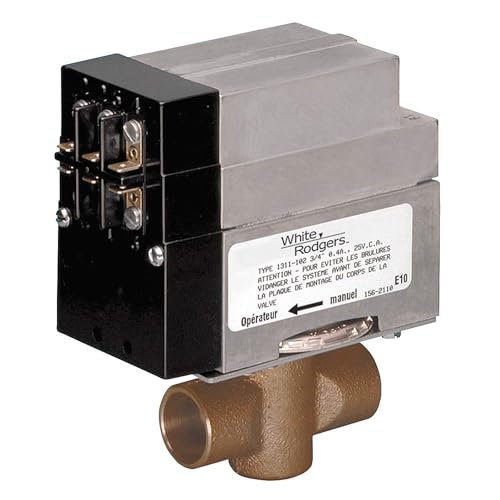
- 3/4-inch sweat valve with stainless steel body
- Listed flow rate of 23.5 GPM
- 24V, quiet-operation design
Best For: Higher-flow hydronic zones needing a 3/4-inch valve
High-Flow Straight-Through Valve

- 4.7 CV straight-through 2-way design
- 3/4-inch NPT inlet, metal body
- 34 to 203°F fluid temperature rating
Best For: Hydronic zone control systems needing a higher-flow 3/4-inch valve
Brass Honeywell-Style Replacement

- Brass body with larger inlet opening
- 3/4-inch sweat connections, 2-way
- 2-wire thermostat control with end switch
Best For: Direct replacement in Honeywell-style hydronic boiler systems
OEM-Style Valve Motor Replacement
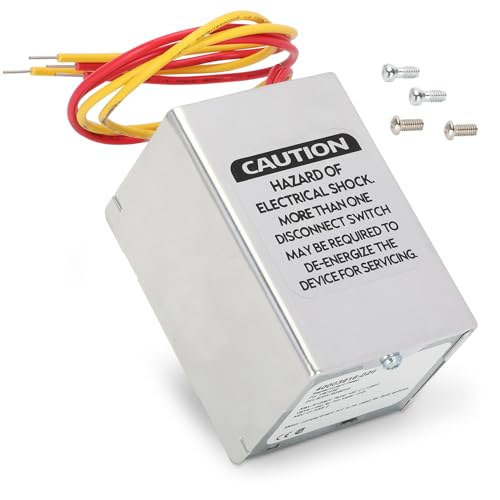
- Compatible with V8043E-series Honeywell valves
- 3/4-inch sweat, 2-way, normally closed
- 24V 4-wire motor with end switch
Best For: Repairing existing Honeywell hydronic zone valves with a compatible motor
Silent Bronze Loop Valve – Taco T571-2 3/4-Inch Gold Series
If you want a straightforward option among high flow hydronic zone valves, the Taco T571-2 is built around a silent heat motor and a simple 2-way design. Its 3/4-inch sweat connections and 1 to 4.5 GPM normal flow range make it a practical fit for smaller hydronic zones where quiet operation matters.
Best For: Quiet residential hydronic zoning with 3/4-inch sweat connections.
Pros:
- Silent heat motor for quiet operation
- Bronze body with ASME and ASTM specification support
- Two-way zone valve with 0.75-inch sweat connections
- Handles fluid temperatures up to 240°F
Cons:
- Normal flow range is listed at 1 to 4.5 GPM, so it is not the highest-capacity choice here
- Designed for 3/4-inch sweat setups only
Overall, this is a solid pick if your project values quiet, dependable zone control over maximum capacity. The bronze construction and simple two-way layout make it easy to match to common hydronic installs.
Aux-Contact Zone Control – White-Rodgers 1361-104 2-Wire Hydronic Valve
For buyers comparing high flow hydronic zone valves, the White-Rodgers 1361-104 stands out for its built-in auxiliary contacts and quiet operation. It is a 2-wire hydronic zone valve designed for 1-1/4 inch tubing I.D., with a manual operator that shows valve position at all times.
Best For: Hydronic systems that need auxiliary contacts and visible valve status.
Pros:
- Built-in auxiliary contacts to control burner or circulator relay
- Automatic recycling manual operator shows valve position
- Quiet operation with stainless steel valve stem
- Rated for maximum system pressure of 50 PSI
Cons:
- Made for 1-1/4 inch tubing I.D., so fit is application-specific
- 2-wire design may not suit every control setup
This model is especially useful when you want control feedback along with zone separation. It is less about compact sweat fittings and more about adding relay-control flexibility in a hydronic loop.
Heavy-Duty NC Valve – V2323-A1S 3/4-Inch Threaded NPT
The V2323-A1S is a strong fit for buyers looking at high flow hydronic zone valves with a more heavy-duty control-valve setup. It uses a 2-way, 3/4-inch threaded NPT body, a 24 VAC motor, and a 3.5 Cv rating, with a normally closed design and end switch support.
Best For: Threaded hydronic systems that want a durable normally closed zone valve with end switch feedback.
Pros:
- 3.5 Cv capacity with 2-way forged brass valve body
- FastFit power head removal for easier service
- Heavy-duty motor with all-metal gears and stainless steel housing
- End switch included, with optional use if feedback is not needed
Cons:
- Close-off pressure is listed at 30 psi
- Threaded NPT installation may not match sweat connection systems
In practical terms, this valve suits installations where serviceability and control features matter as much as flow. Its metal construction and modular power head design make it a confident pick for demanding hydronic jobs.
Large-Line Quiet Valve – White-Rodgers 1311-103 3-Wire
If your project calls for high flow hydronic zone valves in a larger 1-inch line, the White-Rodgers 1311-103 is built for that type of setup. It is a 3-wire hydronic zone valve with built-in auxiliary contacts, a stainless steel valve stem, and quiet operation for controlled heating loops.
Best For: 1-inch hydronic tubing installations that need auxiliary contacts and quiet performance.
Pros:
- 3-wire hydronic zone valve for 1-inch tubing I.D.
- Built-in auxiliary contacts for burner or circulator relay control
- Automatic recycling manual operator shows valve position
- Stainless steel valve stem and quiet operation
Cons:
- Maximum system pressure is limited to 50 PSI
- Threaded/NPT connection style may not suit every installation
This model is a good match when you need a larger tubing size and want clear control feedback. It keeps the focus on dependable zone operation rather than on specialty features.
3-Way Controls – V3212-A1S 1/2" NC Zone Valve
Valemo V3212-A1S Motorized Zone Valve, 3-way, 1/2" Sweat, Normally Closed, 24 VAC, with End Switch
Check Price On AmazonIf you need high flow hydronic zone valves with more control than a standard two-way setup, this 3-way Taco-style valve is built for zone switching and bypass-style applications. The 1/2-inch sweat body, 24 VAC motor, and normally closed operation make it a practical pick for compact hydronic systems that still need dependable shutoff and an end switch option.
Best For: Hydronic systems that need a compact 3-way, normally closed valve with end-switch capability.
Pros:
- 3-way, 1/2-inch forged brass valve body with sweat connections
- FastFit design allows quick removal of the power head
- Heavy-duty motor with all-metal gears, rated for over 100K cycles
- Includes 24V, 2A end switch and 18-inch lead wires
Cons:
- 3-way design is more specialized than a standard 2-way zone valve
- Capacity is listed at Cv 2.5, so it is not the highest-flow option here
- Requires 24 VAC control power
This is a solid choice when you want reliable valve action, corrosion-resistant construction, and the flexibility of an end switch without overcomplicating the installation. It fits best where a 3-way hydronic valve is specifically required.
Reliable Mid-Flow – Taco 570-2 1/2" 2-Way Zone Valve
For shoppers comparing high flow hydronic zone valves, this Taco 570-2 is a straightforward 2-way option with a listed flow range of 1 to 4.5 GPM and a flow capacity of 4.2 C. Its 1/2-inch sweat connections and 3-wire terminal block make it a simple fit for common hydronic heating setups that prioritize proven, easy-to-use hardware.
Best For: Basic hydronic heating zones that need a simple 2-way sweat valve with established Taco reliability.
Pros:
- 2-way, 1/2-inch sweat zone valve for standard installations
- Flow range listed from 1 to 4.5 GPM with capacity of 4.2 C
- 3-wire terminal block wiring for straightforward hookup
- Backed by a 3-year parts and labor-style warranty description from the manufacturer
Cons:
- Smaller 1/2-inch size may not suit larger high-flow circuits
- Basic feature set compared with valves that include end switches or advanced servicing features
- Product notes do not list a voltage rating in the supplied bullets
This valve makes sense when you want a conventional, proven zone valve rather than a specialized control valve. It is best viewed as a dependable mid-flow choice for smaller hydronic zones.
High-Flow Pick – 1361-102 3/4" 24V 2-Wire Zone Valve
Among high flow hydronic zone valves, this 3/4-inch model stands out for its listed 23.5 GPM flow rate and 24V operation. The stainless steel body, sweat connections, and quiet operation make it a practical option when you want more throughput from a compact 2-way valve.
Best For: Higher-flow hydronic zones that need a 3/4-inch 24V valve with quiet operation.
Pros:
- Listed flow rate of 23.5 GPM for higher-demand hydronic circuits
- 3/4-inch sweat connections with stainless steel construction
- 24V operation for compatibility with standard hydronic controls
- Quiet operation noted in the product details
Cons:
- 2-wire design may be less flexible than valves with additional switching options
- No end switch is listed in the supplied notes
- Fixed 3/4-inch size may not suit smaller branch lines
If flow rate is the priority, this is the strongest match in the group. It combines larger pipe size, corrosion-resistant stainless steel, and simple 24V control for an efficient hydronic zone setup.
High-Flow Straight-Through Valve – 3/4in 2-Way 4.7CV Linear
If you need a high flow hydronic zone valve for a heating or cooling loop, this 3/4-inch, 2-way straight-through model is built for zone control applications. Its 4.7 CV rating and straight-through design make it a practical pick where you want flow with minimal restriction, while the metal body and CSA applicable standard support a straightforward HVAC install.
Best For: Hydronic zone control systems that need a 3/4-inch 2-way valve with a relatively high flow rating.
Pros:
- 4.7 CV and straight-through 2-way design for reduced restriction
- 3/4-inch nominal size with NPT inlet connection
- Suitable for HVAC hydronic zone control heating/cooling systems
- 34 to 203°F fluid temperature rating broadens application range
Cons:
- Only the valve body details are listed, so actuator/control specifics are limited
- No warranty is stated in the supplied notes
Overall, this is a solid utility choice when flow capacity matters and you want a conventional 3/4-inch hydronic zone valve format. It looks best suited to standard HVAC applications where the valve’s straight-through layout and 4.7 CV rating are useful.
Brass Honeywell-Style Replacement – V8043E1012 Sweat 4-Wire
This high flow hydronic zone valve is aimed at replacing Honeywell V8043E1012-style valves in boiler and hydronic heating systems. It uses a 3/4-inch sweat connection, 2-way layout, and a brass body with a larger opening on the inlet side to reduce restriction and support better flow in the loop.
Best For: Replacing Honeywell V8043E1012 valves in hydronic boiler systems where better flow and easy install matter.
Pros:
- Compatible replacement for Honeywell V8043E1012 and related V8043E/V8043A/V8043G variants
- Brass construction with a larger inlet opening for better flow
- 2-wire thermostat control plus end switch
- Manual override lever helps keep heat flowing during outages
Cons:
- Designed as a replacement, so compatibility should be checked against the existing valve
- Supplied notes focus on replacement use rather than full system specs
For buyers trying to keep an existing hydronic system running without a full redesign, this model stands out for direct-replacement convenience and flow-friendly construction. The sweat connections and brass body make it especially practical when the job is centered on swapping an aging zone valve.
OEM-Style Valve Motor Replacement – V8043E1012 3/4in Sweat
If you’re shopping high flow hydronic zone valves for a boiler or heating loop repair, this V8043E1012 replacement is built around compatibility and stable operation. It’s a 3/4-inch sweat, 2-way, normally closed, 24V zone valve motor replacement with 4-wire control and an end switch, intended to solve common heating flow issues in Honeywell E-series setups.
Best For: Replacing Honeywell V8043E-series valve motors in heating loop systems with a 4-wire, normally closed setup.
Pros:
- Compatible with multiple Honeywell V8043E/V8043G/V8043A variants listed in the notes
- 3/4-inch sweat connections and 2-way normally closed design
- 4-wire, 24V, 50/60Hz setup with 18-inch leads
- Manual opener supports operation during a power failure
Cons:
- It is a motor/head replacement, so matching the existing valve body matters
- Flow improvement is implied by the replacement use case, not quantified with a CV rating
This is a practical pick when the goal is to restore reliable zone control rather than change the whole plumbing setup. The emphasis on OEM-style compatibility, manual override, and tested performance makes it a strong repair-oriented option for existing hydronic systems.
How We Picked These High Flow Hydronic Zone Valves
We focused on practical buyer priorities: valve size, two-way versus three-way design, voltage and wiring simplicity, end-switch support, and common compatibility with residential hydronic heating setups. We also favored models that appear well suited to replacement work, since many buyers are matching an existing valve body or power head.
Quick Comparison
Among High Flow Hydronic Zone Valves, the most important difference is usually not the brand name but the match between port size, control style, and system layout. In this group, 3/4-inch valves are the most versatile for typical heating zones, while 1/2-inch options can fit tighter runs or lower-demand branches. Two-wire models are usually simpler to install, while four-wire versions and units with end switches offer broader control compatibility.
Key Buying Factors for High Flow Hydronic Zone Valves
Valve Size and Cv Rating
Check the pipe connection first, then confirm the flow rating. A higher Cv generally means less restriction, which matters when the zone has longer piping, multiple emitters, or a boiler loop that needs better circulation.
Two-Way Vs. Three-Way
Most buyers will want a two-way valve for standard zone control. Three-way valves are better when the system needs diverting or mixing rather than simple open/close operation.
Wiring and Control Compatibility
Match the valve to your thermostat and control panel. Two-wire valves can be simpler for direct replacement, while four-wire models and end-switch designs are often easier to integrate into larger control systems.
Connection Type and Installation Fit
Sweat and threaded NPT connections are not interchangeable without planning, so verify the existing plumbing before ordering. Replacing a power head is often easier than changing the full valve body if the mechanical section is still in good condition.
Normally Closed Operation
Normally closed valves are common in hydronic zoning because they help prevent unwanted flow when the zone is not calling for heat.
Who Should Buy Which High Flow Hydronic Zone Valves?
If you want the simplest replacement, look for a valve that matches your existing connection size and wiring style as closely as possible. If you are building a new system or upgrading controls, prioritize end-switch support and the correct two-way or three-way configuration. For larger zones or systems with stronger flow demands, choose one of the higher-capacity High Flow Hydronic Zone Valves with a 3/4-inch connection and a flow rating suited to your loop design.
In short, the best choice is the valve that balances capacity, compatibility, and ease of installation for your specific boiler setup.
