Choosing the right heater for a saltwater pool comes down to corrosion resistance, system compatibility, and the right BTU output. The best option should move heat efficiently without failing early in a harsh pool environment.
This roundup highlights 10 pool heat exchangers for saltwater pools across titanium, stainless steel, and cupro nickel builds, so you can match your pool size, heat source, and budget with confidence.
Best 10 Pool Heat Exchangers for Saltwater Pools Picks for 2026
Titanium Saltwater Specialist
300K Titanium Pool Heat Exchanger

- 99.99% titanium for saltwater and chemical resistance
- 300 kBtu/hr output for larger pools
- Same-side 2" and 1 1/2" FPT ports
Best For: Large saltwater pools and demanding corrosive-water setups
Compact Stainless Value Pick
200K Stainless Pool Heat Exchanger

- 304 stainless steel with rust and saltwater resistance
- Compact design with mounting bracket included
- 200 kBtu/hour output for pools, spas, and hot tubs
Best For: Space-conscious buyers who want a versatile stainless option
High-Capacity Titanium Workhorse
360K Titanium Pool Heat Exchanger
- 360 kBtu/hr output for up to 29,000 gallons
- 99.99% titanium for corrosion resistance
- Same-side 2" and 1 1/2" FPT ports
Best For: Large saltwater pools needing maximum heat-transfer capacity
Quiet Heat Pump Option
Raypak WeatherKing Titanium Heat Pump

- Titanium heat exchanger with 10-year warranty
- Quiet scroll compressor for lower noise
- Energy-efficient alternative to gas heating
Best For: Buyers wanting a complete, quieter pool heating system
Saltwater Titanium Specialist
AB Titanium Salt Pool Heat Exchanger 155kBtu
- 99.99% titanium construction for corrosion resistance
- Rated for up to 11,900 gallons and 155 kBtu/hr
- Same-side 1 1/2" FPT and 1" FPT ports
Best For: Smaller saltwater pools and specialty heating or cooling setups
High-Capacity Copper-Nickel Pick
240,000 BTU Cupro Nickel Salt Water Heat Exchanger

- 240,000 BTU output for larger heating loads
- Recommended for pools with salt water chlorine generators
- Cupro-nickel build suited to pool heat exchange
Best For: Larger saltwater pool systems needing higher heating output
Efficient All-Season Heater
Hayward HeatPro 140,000 BTU Titanium

- Heat pump design helps lower operating costs
- 140,000 BTU output for medium to large in-ground pools
- Titanium heat exchanger compatible with saltwater pools
Best For: In-ground owners wanting an efficient electric saltwater-compatible heater
High-Capacity Stainless Choice
200K BTU 304 Pool Heat Exchanger

- 304 stainless steel construction
- 200 kBtu/hr indirect heating capacity
- Works for pools, spas, and hot tubs
Best For: Large setups needing a durable indirect heat exchanger
Smart Compact Pick
30,000 BTU WiFi Titanium Heat Pump
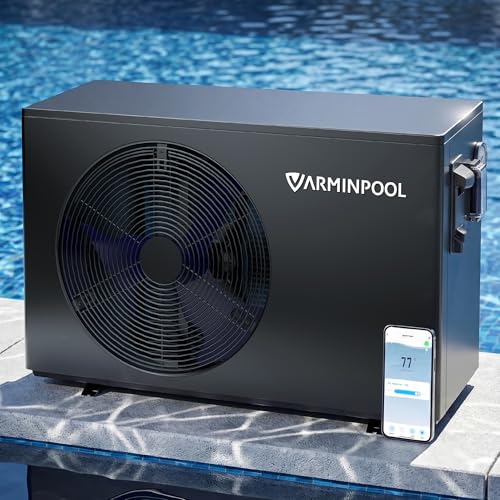
- 120V plug-and-play operation
- Titanium heat exchanger for saltwater use
- WiFi control plus heating and cooling modes
Best For: Small above-ground pools needing easy smart control
Heavy-Duty Titanium Option
240K BTU Salt Water Heat Exchanger

- Titanium build for saltwater use
- 240,000 BTU heating capacity
- Built-in temperature control
Best For: High-output saltwater systems needing titanium durability
Titanium Saltwater Specialist – 300K Titanium Pool Heat Exchanger
If you need pool heat exchangers for saltwater pools, this titanium model is built for harsh water conditions and larger heating demands. It uses 99.99% purity titanium, so it’s a strong fit for high-chlorine water, seawater, and chemical solutions, while the 300 kBtu/hr rating targets bigger residential or specialty systems.
Best For: Saltwater pool owners who want a corrosion-resistant exchanger for larger-capacity heating.
Pros:
- All-titanium construction is designed for salt water, seawater, and chemical exposure.
- 300 kBtu/hr rating supports up to 23,800 gallons under the listed temperature-difference conditions.
- Lightweight design and manual welding aim for easier installation and a leak-proof seal.
- Same-side ports simplify plumbing with 2″ FPT pool water and 1 1/2″ FPT hot water connections.
Cons:
- Higher-capacity unit may be more than needed for smaller pools.
- Designed around specific port sizes, so it may require matching plumbing.
- Best suited to systems that can take advantage of its large-output design.
This is a practical pick if durability is your top priority in a corrosive environment. The titanium build is the standout here, especially for saltwater applications where stainless options may be less ideal over time.
Compact Stainless Value Pick – 200K Stainless Pool Heat Exchanger
For buyers comparing pool heat exchangers for saltwater pools, this 304 stainless steel model offers a compact, straightforward option. It’s designed to resist rust and saltwater, and its smaller footprint makes it easier to fit into tighter mechanical spaces.
Best For: Homeowners or fitness enthusiasts wanting a space-saving exchanger for pools, spas, or hot tubs.
Pros:
- 304 stainless steel construction is described as rust- and saltwater-resistant.
- Compact design with included stainless steel mounting bracket.
- 200 kBtu/hour output with 30 L/min hot water flow rate and 250 L/min cold water flow rate.
- Compatible with pools, spas, hot tubs, and solar heating setups.
Cons:
- Stainless steel is not as corrosion-proof as titanium in very harsh environments.
- Solar panels are referenced as compatible but not included.
- Lower output than the largest titanium option in this roundup.
This is a sensible pick if you want a practical, smaller exchanger and your application fits the stated capacity. It balances efficiency, versatility, and easier installation without the premium materials of a full titanium unit.
High-Capacity Titanium Workhorse – 360K Titanium Pool Heat Exchanger
If you’re shopping for pool heat exchangers for saltwater pools and need more output, this 360K titanium unit is built for heavy-duty heating. It’s fully made of anti-corrosion titanium and is rated for up to 29,000 gallons under the listed temperature-difference conditions, making it a strong choice for larger systems.
Best For: Large saltwater pools, spa systems, and high-demand heating setups.
Pros:
- Fully titanium construction is designed for salt water and other corrosive applications.
- 360 kBtu/hr capacity supports up to 29,000 gallons under the stated conditions.
- Same-side port layout with 2″ FPT pool water and 1 1/2″ FPT hot water connections.
- Manual welding and lightweight construction are intended to support a leak-proof, easier-to-handle design.
Cons:
- High-capacity output may be unnecessary for smaller pools.
- Manual installation may not suit every plumbing setup.
- More specialized than a general-purpose stainless exchanger.
This model makes sense when corrosion resistance and output both matter. If your saltwater system is large or you want headroom for demanding heating tasks, the titanium build and 360K rating make it a strong contender.
Quiet Heat Pump Option – Raypak WeatherKing Titanium Heat Pump
For buyers comparing pool heat exchangers for saltwater pools, this Raypak WeatherKing heat pump offers a different approach: it combines a titanium heat exchanger with an energy-efficient heat-pump system. It’s aimed at in-ground and above-ground pools, with digital controls and a quiet scroll compressor for more comfortable day-to-day use.
Best For: Pool owners who want an energy-efficient, quieter heating option with titanium durability.
Pros:
- Titanium heat exchanger is backed by a 10-year warranty.
- Quiet scroll compressor is designed for lower sound levels and strong efficiency.
- Digital controls make operation straightforward.
- Can help avoid gas line installation or propane storage tanks.
Cons:
- It’s a full heat pump, not just a standalone heat exchanger.
- Requires more upfront system investment than a simple exchanger-only setup.
- Best suited to buyers prioritizing energy efficiency over a basic plumbing component.
This is the right choice if you want a complete heating solution rather than just a heat exchanger. The titanium component is appealing for durability, while the heat-pump design adds the energy-saving and noise advantages many pool owners want.
Saltwater Titanium Specialist – AB Titanium Salt Pool Heat Exchanger 155kBtu
AB Titanium Salt Pool Heat Exchanger 155kBtu Same Side Ports 1 1/2" & 1" FPT for 11,900 Gallon Pool
Check Price On AmazonIf you need pool heat exchangers for saltwater pools that are built around corrosion resistance, this titanium model is designed for harsh water conditions. It’s rated for up to 11,900 gallons and uses fully titanium construction with manual welding for a leak-resistant build, making it a practical choice for saltwater, seawater, and other chemical applications.
Best For: Smaller saltwater pools, specialty systems, and users who want a lightweight titanium exchanger for demanding water conditions.
Pros:
- Fully made of anti-corrosion 99.99% titanium, including titanium filling material for welding
- Works with high chlorine, salt water, seawater, and chemical solutions
- 155 kBtu/hr heating capacity for pools up to 11,900 gallons
- Same-side port layout with 1 1/2" FPT pool water and 1" FPT hot water connections
Cons:
- Capacity is limited compared with larger pool heating systems
- Best suited to specialized setups rather than simple plug-and-play pool heating
This is a strong pick if corrosion resistance matters more than raw size, especially in saltwater environments. Its lightweight titanium build and precise welding make it a focused solution for owners who need reliable heat transfer in aggressive water conditions.
High-Capacity Copper-Nickel Pick – 240,000 BTU Cupro Nickel Salt Water Heat Exchanger
For larger systems that need pool heat exchangers for saltwater pools, this cupro-nickel unit is built with salt-water compatibility in mind and a much higher BTU rating. It is specifically recommended for pools with salt water chlorine generators, making it a straightforward option when you want a heat exchanger intended for that kind of setup.
Best For: Larger pools or saltwater systems using a chlorine generator and needing higher heating output.
Pros:
- 240,000 BTU output for higher-capacity heating needs
- Recommended for pools with salt water chlorine generators
- Cupro-nickel construction is a familiar choice for pool heat transfer applications
Cons:
- Limited details provided on port sizes, flow requirements, and installation specifics
- No explicit gallon rating is listed in the supplied notes
This model stands out mainly for raw heating capacity and its saltwater-oriented recommendation. If your priority is matching a larger pool or an existing saltwater chlorine generator setup, it offers a simple high-output path to consider.
Efficient All-Season Heater – Hayward HeatPro 140,000 BTU Titanium
If you’re comparing pool heat exchangers for saltwater pools with a broader electric heating solution, this Hayward HeatPro is a strong all-in-one option. It uses heat pump technology to pull heat from the air, includes a titanium heat exchanger for saltwater compatibility, and is designed for medium to large in-ground pools.
Best For: In-ground pool owners who want an energy-efficient electric heater with titanium saltwater compatibility.
Pros:
- Energy-efficient heat pump design with lower operating costs than gas heaters
- 140,000 BTU heating performance for medium to large in-ground pools
- Titanium heat exchanger is described as compatible with saltwater pools
- Quiet operation and pro-grade residential construction
Cons:
- Requires 230V electrical installation
- Heavier, more involved equipment than a compact standalone exchanger
This is the most complete heating system in the group if you want efficient electric heating rather than a standalone exchanger. Its titanium heat exchanger and saltwater compatibility make it a practical fit for owners who value steady performance and lower running costs.
High-Capacity Stainless Choice – 200K BTU 304 Pool Heat Exchanger
If you’re comparing pool heat exchangers for saltwater pools, this 200K BTU 304 stainless steel model is built for indirect heat transfer across pools, spas, and hot tubs. It’s designed to move heat quickly, with the manufacturer noting 200 kBtu/hr output based on a 60°C temperature difference, while the stainless construction is intended for durability and long service life.
Best For: Pools or spas that need a durable, high-output stainless steel exchanger for indirect heating.
Pros:
- 304 stainless steel construction for durability and long service life
- Rated at 200 kBtu/hr for relatively fast heating
- Suitable for pools, spas, hot tubs, and other heat-recovery applications
- Safe indirect heating design with no burning or open-flame operation
Cons:
- Heat output is tied to a temperature difference, so real-world performance will vary by setup
- Uses fixed brackets and FPT ports, so installation must match your plumbing
- Better suited to a circulating hot-water or steam circuit than a standalone electric heater
For buyers who want a rugged exchanger rather than a plug-in heater, this unit offers a straightforward stainless-steel option with broad application flexibility. Its strength is capacity and durability, not convenience features.
Smart Compact Pick – 30,000 BTU WiFi Titanium Heat Pump
Among pool heat exchangers for saltwater pools, this 120V electric pool heat pump is aimed at small above-ground systems up to 7,000 gallons. It combines WiFi control, heating and cooling modes, and a titanium heat exchanger, so it’s designed for homeowners who want easy temperature control and better corrosion resistance in saltwater use.
Best For: Small above-ground pools where plug-and-play convenience and WiFi control matter.
Pros:
- 120V plug-and-play setup with no professional installation needed
- Titanium heat exchanger for saltwater compatibility and corrosion resistance
- WiFi control with heating and cooling modes
- Compact, quiet design at about 52 dB
Cons:
- Only sized for pools up to 7,000 gallons
- Requires a pump over 1500 GPH for recommended setup
- Not intended for larger in-ground pools or high-demand heating jobs
This is a strong fit if you want an easier-to-use heat pump for a smaller backyard pool. It trades raw capacity for convenience, smart controls, and a titanium exchanger that suits saltwater environments.
Heavy-Duty Titanium Option – 240K BTU Salt Water Heat Exchanger
If you need pool heat exchangers for saltwater pools with a focus on corrosion resistance, this 240,000 BTU titanium model is built for that job. The notes confirm a titanium salt-water design with temperature control, plus union and NPT connections for plumbing integration.
Best For: Saltwater pool owners who want a high-output titanium exchanger with temperature control.
Pros:
- Titanium construction suited to salt water environments
- 240,000 BTU output for high-capacity heating applications
- Includes temperature control
- Union connector and NPT thread type for system compatibility
Cons:
- Very little detailed setup information is provided in the notes
- Likely requires careful plumbing integration due to union/NPT connections
- May be more exchanger than needed for smaller pools
This model is the most straightforward saltwater-focused exchanger in the group, with titanium construction and a high BTU rating. It makes sense when durability and capacity are the priority over plug-and-play convenience.
How We Picked the Best Pool Heat Exchangers for Saltwater Pools
We focused on material durability, heat output, port sizing, and intended use. For Pool Heat Exchangers for Saltwater Pools, corrosion resistance matters as much as raw capacity, so titanium and salt-resistant alloys earned extra weight. We also looked for clear fitment details, including FPT port sizes and whether the unit is better suited to pools, spas, hot tubs, or boiler-based systems.
Quick Comparison
Big-capacity titanium units are the safest bet for larger saltwater pools and long-term durability. Stainless steel models can work well for many setups, but they need closer attention to water chemistry and system conditions. Cupro nickel is often chosen for boiler or wood-fired applications where strong heat transfer is the priority. Smaller electric or heat-pump options make more sense for above-ground pools or modest gallon counts.
Key Buying Factors for Pool Heat Exchangers for Saltwater Pools
Material
Titanium is the most corrosion-resistant choice and is usually the best fit for saltwater exposure. Stainless steel can be a value option, but it is not as forgiving if chemistry drifts. Cupro nickel offers good thermal performance in the right system, especially where boiler heat is involved.
Capacity and Pool Size
Match the BTU rating to your pool volume and heating goals. Oversizing can add cost, while undersizing leads to slow warm-up times and poor performance in colder weather.
Port Compatibility
Check inlet and outlet sizes before buying. Many pool heat exchangers use 1", 1 1/2", or 2" FPT ports, and the wrong connection can require extra fittings or limit flow.
System Type
Some exchangers are designed for boilers, wood stoves, or external heat sources, while others are integrated into electric or heat-pump systems. Make sure the unit matches your existing setup before you compare specs.
Who Should Buy Which Pool Heat Exchangers for Saltwater Pools?
If you want the most durable long-term option for a saltwater pool, start with titanium. If you are working within a tighter budget and have a controlled water chemistry routine, stainless steel may be enough. If your heat source is an outdoor boiler or wood-fired system, choose a model built for that application rather than a general-purpose unit. For smaller pools or simpler installs, lower-BTU electric or heat-pump models can be the easiest path to steady heating.
In short, the best choice is the one that fits your pool size, water chemistry, and heat source without forcing compromise on corrosion resistance or connection compatibility.
