Choosing a reliable smoke detector does not have to mean spending hundreds of dollars. The best smoke detectors under $100 cover essential options for apartments, family homes, bedrooms, and replacement installations.
This roundup compares battery-powered, hardwired, interconnected, long-life, and combination smoke-and-carbon-monoxide alarms so you can match the detector to your home’s wiring, layout, and maintenance preferences.
Best 10 Smoke Detectors Under 100 Picks for 2026
Best Value 2-Pack
First Alert Battery Smoke Alarm

- Precision Detection helps reduce cooking nuisance alarms
- Easy battery installation with front-access compartment
- Includes two battery-powered smoke alarms
Best For: Multi-room coverage on a simple battery setup
Best Smoke-and-CO Combo
X-Sense SC07 Smoke and CO Detector

- Detects smoke and carbon monoxide in one unit
- Sealed lithium battery lasts up to 10 years
- LCD display and 85 dB alarm
Best For: Standalone, low-maintenance dual-hazard protection
Best Hardwired Option
BRK First Alert 9120B Smoke Detector

- 120V AC power with 9V battery backup
- Can interconnect with compatible alarms
- Includes test/silence and tamper-resistant features
Best For: Replacing compatible hardwired alarms
Best Low-Maintenance Smoke Alarm
X-Sense SD2J0AX 10-Year Smoke Detector

- Sealed lithium battery lasts up to 10 years
- Photoelectric sensor helps limit nuisance alarms
- No-wire installation with self-test and hush button
Best For: Standalone placement in bedrooms, hallways, and rentals
Best All-in-One Protection

- Smoke and CO protection in one unit
- Precision Detection helps reduce cooking nuisance alarms
- Battery-powered with end-of-life warning
Best For: Homes wanting combined smoke and carbon monoxide coverage
Best for Whole-Home Coverage
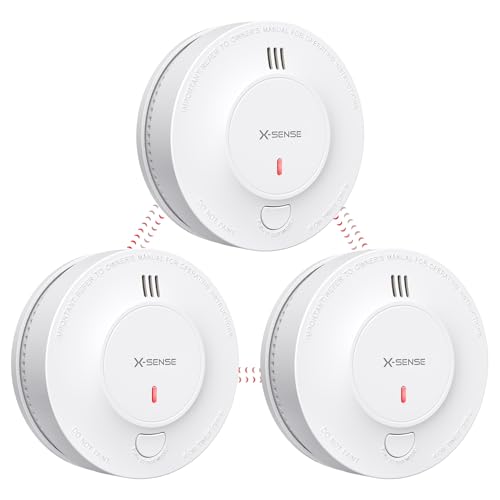
- All connected alarms sound together
- Sealed 10-year batteries need no routine replacement
- Photoelectric sensing helps reduce nuisance alarms
Best For: Multi-room and multi-floor homes needing linked alerts
Best Compact Standalone Pick

- Compact four-inch design for small spaces
- 85 dB alarm with red LED warning
- Includes AA batteries and 10-year limited warranty
Best For: Small spaces and standalone smoke detection
Best with Extra Features
SITERWELL Interconnected Photoelectric Alarm

- Hardwired 120V power with replaceable 9V backup
- Interconnects up to 12 detectors
- 85dB alarm with test/silence button
Best For: Homes needing interconnected hardwired protection
Best Low-Maintenance Pick
X-Sense 10-Year Battery Smoke Detector

- Built-in lithium battery lasts up to 10 years
- No-wire installation with included screws
- Photoelectric sensing helps reduce cooking alarms
Best For: Easy installation with minimal battery maintenance
Best Simple Battery Pick
SITERWELL Compact 9V Smoke Alarm

- Replaceable 9V battery with low-battery warning
- Adaptive sensing helps limit dust-related alarms
- Includes wall and ceiling mounting hardware
Best For: Flexible room-by-room battery protection
Best Value 2-Pack – First Alert Battery Smoke Alarm
For shoppers comparing smoke detectors under 100, the First Alert SMI100 2-pack offers straightforward battery-powered protection with Precision Detection sensing designed to help reduce cooking nuisance alarms. Its front-access battery compartment and test/silence button simplify routine maintenance.
Best For: Homes needing two easy-to-install smoke alarms from an established safety brand.
Pros:
- Precision Detection technology is designed to reduce cooking nuisance alarms.
- Battery operation supports simple installation without hardwiring.
- Front-access battery compartment makes replacements easier.
- End-of-life warning and test/silence button support maintenance.
Cons:
- Uses an ionization sensor rather than a photoelectric sensor.
- The included 9V alkaline batteries will require periodic replacement.
This is a practical option when you need multiple alarms and prefer a conventional battery-powered design. Check the manufacture date shown on the product when planning replacement intervals.
Best Smoke-and-CO Combo – X-Sense SC07 Smoke and CO Detector
Among smoke detectors under 100, the X-Sense SC07 stands out by combining smoke and carbon monoxide detection in one standalone unit. Its sealed lithium battery is designed to last up to 10 years, while photoelectric and electrochemical sensors address two different household hazards.
Best For: Buyers who want long-term smoke and carbon monoxide monitoring without routine battery changes.
Pros:
- Combines photoelectric smoke detection with electrochemical CO detection.
- Built-in sealed lithium battery provides up to 10 years of operation.
- Includes an LCD display and an 85 dB alarm.
- UL 217 and UL 2034 certified, according to the supplied product details.
Cons:
- This basic SC07 model does not support wireless interconnection, Wi-Fi, or a base station.
- It is sold as a single unit.
The SC07 is a strong fit for standalone placement where both smoke and CO protection are priorities. Its no-replacement-battery design reduces maintenance, but buyers seeking interconnected alarms should consider a different model.
Best Hardwired Option – BRK First Alert 9120B Smoke Detector
For homes prepared for a wired installation, the BRK First Alert 9120B provides hardwired smoke detection with a 9V battery backup. It uses an ionization sensor for fast-flaming fires and can connect with compatible BRK or First Alert alarms so linked units sound together.
Best For: Homeowners replacing or adding compatible hardwired alarms with battery backup.
Pros:
- 120V AC power continues monitoring during normal operation.
- 9V battery backup supports operation during power failures.
- Compatible units can be interconnected for simultaneous alerts.
- Includes test/silence controls, tamper-resistant brackets, and universal mounting hardware.
Cons:
- Hardwired installation may require existing wiring or professional electrical work.
- Uses an ionization sensor and requires periodic 9V battery replacement.
- Sold as a single alarm.
This model makes the most sense when your home already has compatible hardwired alarm wiring. It offers useful backup power and interconnection features, but it is less convenient than a fully battery-operated detector for renters or unwired spaces.
Best Low-Maintenance Smoke Alarm – X-Sense SD2J0AX 10-Year Smoke Detector
For shoppers seeking smoke detectors under 100 with minimal upkeep, the X-Sense SD2J0AX uses a sealed lithium battery rated for up to 10 years. Its photoelectric sensor is designed to reduce cooking nuisance alarms, and installation requires no wiring or electrician.
Best For: Bedrooms, hallways, rentals, and family homes needing a simple standalone alarm.
Pros:
- Sealed 10-year battery reduces replacements and low-battery chirps.
- Photoelectric sensing helps reduce cooking- and steam-related nuisance alarms.
- ETL listed to meet the UL 217 safety standard, according to the supplied details.
- One-button self-test and hush controls simplify operation.
Cons:
- Standalone model does not support Wi-Fi, app alerts, base stations, or wireless interconnection.
- Provides smoke detection only, not carbon monoxide detection.
- Sold as a single unit.
The SD2J0AX is a convenient choice when you want to install an alarm quickly and avoid regular battery changes. Its independent operation suits individual rooms, but larger homes may need multiple units and a separate interconnected solution.
Best All-in-One Protection – First Alert Smoke & CO Alarm
If you want smoke detectors under 100 that also monitor carbon monoxide, this First Alert combination alarm offers two types of protection in one battery-powered unit. Its Precision Detection technology is designed to help reduce cooking nuisance alarms while providing an early warning during a fire emergency.
Best For: Homes needing a straightforward, battery-operated smoke and carbon monoxide alarm.
Pros:
- Combines smoke and carbon monoxide detection in one alarm.
- Precision Detection technology is designed to reduce cooking nuisance alarms.
- Battery operation supports easy installation and maintenance.
- Includes an end-of-life warning and test/silence button.
Cons:
- It is sold as a single alarm rather than a multi-pack.
- The supplied specifications list an ionization sensor, which may not suit shoppers specifically seeking photoelectric detection.
This is a practical choice when you want to cover both smoke and carbon monoxide without installing separate devices. The end-of-life alert and test/silence controls also make routine ownership simpler.
Best for Whole-Home Coverage – X-Sense Interconnected 3-Pack
Among smoke detectors under 100, this X-Sense three-pack stands out for interconnected coverage. When one detector senses smoke, all connected alarms sound, helping alerts reach bedrooms, hallways, living areas, and multiple floors.
Best For: Multi-room or multi-floor homes that need linked alarms and minimal battery maintenance.
Pros:
- Interconnected alarms sound together when one detects smoke.
- Sealed 10-year lithium batteries eliminate routine battery replacement during the operating life.
- Photoelectric sensing is designed to reduce nuisance alarms from cooking fumes and steam.
- Can connect with up to 18 compatible X-Sense Link+ alarms.
Cons:
- This is a smoke-only system and does not provide carbon monoxide detection.
- Interconnection features are limited to compatible X-Sense Link+ alarms.
- A three-pack may be more than needed for a small space.
Choose this set if coordinated alerts matter more than having a single standalone detector. Its sealed batteries and wireless installation can reduce maintenance, while the photoelectric sensors suit homes concerned about cooking- or steam-related alarms.
Best Compact Standalone Pick – Kidde 10SDR Smoke Detector
This Kidde model is a compact option among smoke detectors under 100, with a four-inch design suited to homes and small spaces. It uses two included AA batteries, provides an 85-decibel alarm and red LED warning, and is designed to reduce false alarms from cooking or steam.
Best For: Homeowners and property professionals seeking a compact, code-tested standalone smoke alarm.
Pros:
- Compact design is suitable for homes and small spaces.
- Photoelectric sensing helps distinguish smoke from cooking and steam.
- Includes two AA batteries, mounting hardware, and a user guide.
- Backed by a 10-year limited warranty and tested to UL 217 10th Edition and FCC standards.
Cons:
- It detects smoke only and does not include carbon monoxide monitoring.
- Requires periodic replacement of its two AA batteries.
- It is a standalone alarm rather than an interconnected system.
The 10SDR makes sense for a small room, replacement installation, or project where a compact footprint and familiar AA batteries are priorities. Its loud alarm, LED status light, and long limited warranty add practical reassurance.
Best with Extra Features – SITERWELL Interconnected Photoelectric Alarm
For shoppers comparing smoke detectors under 100, this SITERWELL model is a practical choice when you want hardwired power with battery backup. Its photoelectric sensor is designed to detect slow-smoldering fires, while the test/silence button helps with routine checks and nuisance-alarm control.
Best For: Homes that need hardwired installation, backup power, and interconnected coverage.
Pros:
- Uses 120V AC hardwired power with a replaceable 9V backup battery.
- Supports interconnection of up to 12 detectors so linked alarms sound together.
- Includes an 85dB alarm, flashing red LED, and multifunction test/silence button.
- Listed to UL 217 10th Edition according to the supplied product information.
Cons:
- Hardwired installation may require existing wiring or an electrician.
- The package contains one detector.
This is the strongest fit for buyers prioritizing whole-home alerting and continuous operation during outages, provided hardwired installation suits the home.
Best Low-Maintenance Pick – X-Sense 10-Year Battery Smoke Detector
Among smoke detectors under 100, the X-Sense SD2L0AX stands out for shoppers who want simple installation and minimal battery maintenance. Its built-in lithium battery can last up to 10 years, and the photoelectric sensor is designed to help reduce alarms triggered by cooking fumes and steam.
Best For: Bedrooms, hallways, basements, and other areas where no-wire installation is preferred.
Pros:
- Built-in tamper-resistant lithium battery provides up to 10 years of power.
- Installs with included screws without wiring or an electrician.
- Photoelectric sensing helps reduce cooking-related nuisance alarms.
- Includes self-test and one-button test/silence functions.
Cons:
- The built-in battery is not intended for routine replacement.
- This is a single-detector package and does not list interconnection in the supplied details.
Choose this model if convenience is more important than hardwired connectivity. Its long-life battery and straightforward mounting make it a particularly accessible option for renters or individual rooms.
Best Simple Battery Pick – SITERWELL Compact 9V Smoke Alarm
This SITERWELL battery model is a practical contender among smoke detectors under 100 for buyers who want a compact alarm with a replaceable 9V battery. Its adaptive sensing is designed to maintain stable monitoring in dusty areas, while ceiling or wall mounting keeps installation flexible.
Best For: Homes and apartments needing affordable, replaceable-battery alarms for multiple rooms.
Pros:
- Adaptive sensing and redesigned housing help minimize dust-related nuisance alarms.
- Detects smoke from all directions and provides an alarm louder than 85dB.
- Includes a test/mute button and low-battery warning.
- Comes with mounting hardware and a magnetic fastening kit.
Cons:
- Uses a replaceable 9V battery, so ongoing battery changes are required.
- The package contains one alarm and does not list interconnected operation.
- The supplied details recommend weekly testing, which adds routine maintenance.
With its compact design, flexible mounting, and replaceable battery, this alarm suits buyers building room-by-room coverage without hardwired installation.
How We Picked the Best Smoke Detectors Under 100
We focused on practical safety features, installation requirements, maintenance needs, and suitability for common household layouts. The selection includes reputable First Alert, BRK, Kidde, X-Sense, and SITERWELL models across several detector types and price points.
We considered whether each alarm uses photoelectric sensing, provides carbon monoxide detection, supports interconnection, includes a long-life battery, or requires hardwired installation. Certification claims, backup power, battery replacement, alarm testing, and compatibility with typical residential setups also matter when comparing products in this category.
Quick Comparison
| Detector type | Best for | Main advantage | Potential limitation |
|---|---|---|---|
| Battery-powered smoke alarm | Renters and simple replacements | Easy installation | Requires battery maintenance |
| 10-year battery alarm | Low-maintenance households | Long service life with fewer battery changes | Usually replaced when the sealed battery expires |
| Hardwired alarm with backup | Existing wired installations | Permanent power with battery backup | May require electrical work |
| Interconnected alarms | Larger homes and multi-floor layouts | One alarm can alert others | Compatibility and installation requirements vary |
| Smoke and carbon monoxide combo | All-in-one protection | Covers two common household hazards | May provide fewer placement options than separate alarms |
Key Buying Factors for Smoke Detectors Under $100
Choose the Right Power Source
Battery alarms are generally the simplest choice for renters, older homes, and locations without existing wiring. Hardwired models are a better fit when replacing alarms in a wired system, but installation should follow local electrical requirements. A battery backup is important for hardwired units because fires can interrupt household power.
Consider Battery Life and Maintenance
Standard battery-powered alarms need regular testing and timely battery replacement. Sealed 10-year models reduce routine maintenance, although the complete alarm typically needs replacement at the end of its service life. Test every detector regularly and keep vents clear of dust.
Decide Whether You Need Carbon Monoxide Detection
A combination alarm can be convenient for bedrooms, hallways, and homes that use fuel-burning appliances. Smoke and carbon monoxide are different hazards, so check that the product offers the sensing functions and placement guidance your household needs.
Look at Sensing and Connectivity
Photoelectric sensing is commonly favored for detecting smoldering fires, while interconnected alarms can improve warning coverage across floors and rooms. Confirm whether interconnected units are compatible with one another and whether they require a specific wireless or hardwired system.
Who Should Buy Which Smoke Detectors Under 100?
- Renters: Choose a compact battery-powered alarm that can be installed without modifying the property.
- Low-maintenance households: A sealed 10-year battery model minimizes battery-change reminders.
- Homes with existing alarm wiring: Select a compatible hardwired detector with battery backup.
- Large or multi-level homes: Interconnected alarms can provide an earlier audible warning throughout the house.
- Households wanting broader coverage: A smoke-and-carbon-monoxide combination alarm can simplify installation while addressing both hazards.
Regardless of price, install alarms according to the manufacturer’s instructions and local fire-safety guidance. Place detectors outside sleeping areas and on each level, test them regularly, and replace units when they reach the recommended end of service life.