A dependable sump pump can help protect your basement, crawl space, or utility area from water damage when heavy rain, rising groundwater, or plumbing leaks strike.
We selected 10 sump pumps spanning permanent basement installations, high-flow drainage, and portable water removal so you can match pump power, switch design, and construction to your space.
Best 10 Sump Pumps Picks for 2026
Best Heavy-Duty Pick

- 5,100 GPH pumping capacity
- Cast iron and steel construction
- 1-million-cycle vertical float switch
Best For: Heavy rainfall, snow melt, and demanding basement water removal
Best Budget Utility Option

- 1,800 GPH flow rate
- 25-foot maximum lift
- 10-foot cord and hose adapter included
Best For: Light-duty drainage and portable utility pumping
Best High-Capacity Pick

- 5,490 GPH pumping capacity
- 3/4 HP motor with durable construction
- 5-year manufacturer warranty
Best For: Heavy storms and high-volume basement water removal
Best Proven Design
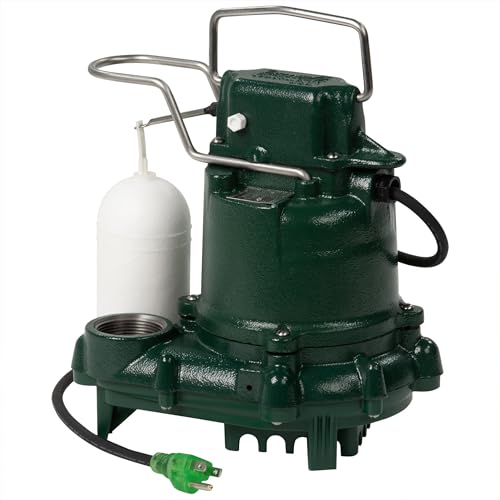
- Automatic float-activated switch
- Non-clogging vortex impeller
- Cast iron motor and housing
Best For: Indoor sump pits needing reliable automatic operation
Best High-Flow Protection
Zoeller M98 Flow-Mate Sump Pump

- Removes up to 4,320 GPH
- Automatic float-switch operation
- Cast-iron housing with vortex impeller
Best For: High-flow indoor basement sump-pit protection
Best Quiet Basement Pick

- Pumps up to 4,600 GPH
- Top-suction design helps limit clogging
- Float switch tested to 1 million cycles
Best For: Indoor basement drainage during rain and snowmelt
High-Flow Pick

- 4,500 GPH flow rate with a 30-foot maximum lift
- Bottom suction removes water to about 1/5 inch
- Includes adapters, 10-foot UL cord, and thermal protection
Best For: Fast, high-volume drainage in basements, pools, and hot tubs
Portable Utility Choice

- 2,450 GPH flow rate with a 31-foot maximum lift
- Oil-filled motor and debris-resistant metal filter
- Compact design with a 10-foot cord and multi-use adapter
Best For: Portable drainage and water transfer around pools, gardens, and basements
Automatic Low-Level Pick

- Automatic start at 1 1/2 inches and shutoff below 1/4 inch
- 2,160 GPH flow with bottom-suction debris filtration
- Includes thermal protection, check-valve adapter, and three-year warranty
Best For: Hands-off drainage for pool covers, hot tubs, and flooded basements
Best Heavy-Duty Pick – Wayne CDU800
For demanding sump pumps applications, the WAYNE CDU800 combines a 1/2 HP motor with durable cast iron and corrosion-resistant steel construction. Its top-suction design helps minimize clogging and air lock, while the vertical float switch supports automatic basement water removal.
Best For: Homeowners who need a durable sump pump for heavy rainfall, snow melt, and regular basement water removal.
Pros:
- Moves up to 5,100 gallons per hour with a 20-foot maximum lift.
- Cast iron and corrosion-resistant steel construction is designed for demanding sump environments.
- Vertical float switch is tested to 1 million cycles.
- Top-suction design helps reduce clogging and air lock without a weep hole.
Cons:
- Its 1/2 HP design may be more pump than needed for lighter-duty water removal.
- The 12-pound construction is heavier than a basic thermoplastic utility pump.
The CDU800 is a strong all-around choice when durability, automatic operation, and high water-moving capacity matter. A 3-year warranty adds useful reassurance for basement protection.
Best Budget Utility Option – Superior Pump 91250
Superior Pump 91250 1800GPH Thermoplastic Submersible Utility Pump with 10-Foot Cord, 1/4 HP
Check Price On AmazonThe Superior Pump 91250 is a compact thermoplastic option for shoppers comparing sump pumps for utility work and emergency water removal. Its 1/4 HP motor pumps up to 1,800 gallons per hour, and the included hose adapter adds flexibility for common drainage tasks.
Best For: Light-duty basement water removal, emergency pumping, lawn irrigation, and construction use.
Pros:
- Lifts water up to 25 feet vertically.
- Includes a 10-foot cord and 3/4-inch garden hose adapter.
- Removable suction screen handles solids up to 1/8 inch.
- Lightweight 6.8-pound thermoplastic design is easy to move.
Cons:
- Its 1,800 GPH capacity is lower than the other pumps in this roundup.
- Thermoplastic construction is less heavy-duty than cast iron models.
- It has a 1-year limited warranty.
Choose the 91250 when portability, a long cord, and versatile utility use are more important than maximum flow. It is a practical lower-capacity pump for occasional or lighter-duty jobs.
Best High-Capacity Pick – Wayne CDU980E
The WAYNE CDU980E is built for homeowners who want high-capacity sump pumps performance during storms, rainy seasons, and snow melt. Its 3/4 HP motor delivers up to 5,490 gallons per hour, while the vertical float switch fits narrow sump pits.
Best For: Heavy basement water removal and flood prevention where high flow and long-term durability are priorities.
Pros:
- Highest listed capacity in this roundup at up to 5,490 gallons per hour.
- Heavy-duty cast iron and stainless steel construction.
- Vertical float switch supports automatic operation in narrow sump pits.
- Top-suction design helps prevent clogging and air lock.
Cons:
- Its 3/4 HP motor may be excessive for smaller or occasional pumping needs.
- The 12-pound pump is less lightweight than the thermoplastic option.
- The supplied details do not list a maximum lifting height.
With its strong flow rate, durable materials, and 5-year warranty, the CDU980E is the most robust choice here for serious basement water protection. It is especially suited to locations that regularly face heavy water loads.
Best Proven Design – Zoeller M53 Mighty-mate
The Zoeller M53 Mighty-mate is a straightforward automatic choice among sump pumps, using a float-activated switch and a non-clogging vortex impeller. Its cast iron motor, switch case, and pump housing are designed for durable indoor basement use.
Best For: Indoor sump pits where automatic float operation and a clog-resistant impeller are key priorities.
Pros:
- Automatic float-activated switch simplifies operation.
- Vortex impeller is designed for non-clogging performance.
- Cast iron motor, switch case, and pump housing provide a durable build.
- Provides a 19.25-foot maximum lift.
Cons:
- Its 1/3 HP motor has less stated power than the Wayne models.
- The supplied details do not list a gallons-per-hour flow rate.
- Product details identify a plastic base and a 9-foot cord.
The M53 is a sensible fit for buyers who value automatic operation and a vortex impeller over maximum published flow. Its cast iron housing components make it a durable option for indoor sump applications.
Best Utility Pick – WAYNE WaterBUG Water Removal Pump
For quick cleanup rather than permanent sump-pit installation, the WAYNE WaterBUG is a versatile option among sump pumps and utility water-removal pumps. Its Multi-Flo design lets you choose top or side discharge, while the pump can move up to 1,350 gallons per hour and remove water down to 1/16 inch.
Best For: Window wells, buckets, flooded basements, flat roofs, yards, boats, hot tubs, and other small water-removal jobs.
Pros:
- Top and side discharge options accommodate tight spaces and flat surfaces.
- Removes water down to 1/16 inch and pumps up to 1,350 GPH.
- Debris-filtering suction strainer helps reduce blockages.
- Non-corrodible outlets fit standard garden hoses, and the pump is assembled in the USA.
Cons:
- Must be unplugged when the water is gone to prevent dry running.
- Designed for utility water removal rather than automatic sump-pit operation.
The WaterBUG stands out for flexibility and shallow water removal. It is a practical choice for occasional flooding and cleanup, but users seeking hands-off basement protection should consider an automatic sump pump instead.
Best High-Flow Protection – Zoeller M98 Flow-Mate Sump Pump
The Zoeller M98 Flow-Mate is a heavy-duty choice for homeowners comparing automatic sump pumps for basement protection. Its 1/2-horsepower motor can remove up to 4,320 gallons per hour, while the built-in float switch provides automatic operation.
Best For: Indoor basement sump pits where high flow, automatic operation, and durable construction are priorities.
Pros:
- Moves up to 4,320 GPH with a 72 GPM flow rate.
- Built-in snap-action float switch enables automatic operation.
- Cast-iron housing supports heat dissipation and long-term durability.
- Vortex impeller passes solids, while stainless steel hardware resists corrosion.
Cons:
- Maximum lifting height is 23 feet, so installation conditions should be checked.
- Its cast-iron construction makes it substantially heavier than compact utility pumps.
- The listed warranty is limited to 12 months from installation or 18 months from manufacture, whichever comes first.
With automatic control, strong flow, a vortex impeller, and rugged materials, the M98 is suited to demanding indoor sump applications. Confirm pit and discharge requirements before installation.
Best Quiet Basement Pick – WAYNE CDU790 Sump Pump
The WAYNE CDU790 is a compact, automatic option for basement sump systems handling rain or snowmelt. Its top-suction design helps minimize clogging and air lock, while the tested vertical float switch starts and stops the 1/3-horsepower pump automatically.
Best For: Indoor basement sump pits needing dependable automatic drainage and a durable, relatively quiet design.
Pros:
- Pumps up to 4,600 GPH for heavy rain and snowmelt conditions.
- Top suction helps reduce air lock and debris-related clogging.
- Vertical float switch is tested to 1 million cycles.
- Corrosion-resistant steel housing, stainless fasteners, and cast-iron volute support durability.
Cons:
- Rated for indoor use only.
- Its maximum lifting height is 20 feet, which may limit some discharge setups.
- Installation suitability depends on the dimensions of the existing sump pit.
The CDU790 combines strong stated flow with automatic operation and a clog-resistant top-suction layout. It is a sensible basement-focused choice, particularly where quiet operation and straightforward installation matter.
High-Flow Pick – AQUASTRONG 1 HP Sump Pump
For demanding sump pumps and water-removal jobs, the AQUASTRONG 1 HP model delivers up to 4,500 GPH and can lift water up to 30 feet. Its bottom-suction design is suited to flooded basements, window wells, hot tubs, pools, and other areas where fast drainage matters.
Best For: High-volume water removal from flooded basements, pools, hot tubs, and garden ponds.
Pros:
- Moves up to 4,500 GPH at a 5-foot lift and supports lifting up to 30 feet.
- Bottom suction removes water down to about 1/5 inch and handles solids up to 1/5 inch.
- Includes a 10-foot UL power cord, multiple adapters, thermal overload protection, and a corrosion-resistant thermoplastic casing.
Cons:
- The 1 HP design may be more capacity than needed for small, occasional jobs.
- Operation requires plugging in and unplugging manually rather than using an automatic sensor.
Choose this AQUASTRONG model when speed and lifting capacity are priorities. It is a strong utility-pump option for substantial water removal, though buyers wanting automatic start and stop may prefer a sensor-equipped design.
Portable Utility Choice – Lanchez 1/2 HP Sump Pump
The Lanchez 1/2 HP sump pump balances portability with useful drainage performance, moving up to 2,450 GPH and lifting water as high as 31 feet. Its thermoplastic body, side inlet, and metal filter make it practical for pools, ponds, basements, hot tubs, and general transfer tasks.
Best For: Portable water transfer and low-suction drainage around homes, gardens, pools, and hot tubs.
Pros:
- Oil-filled motor technology is designed to help manage overload and extend operating life.
- Moves up to 2,450 GPH and provides a 31-foot maximum lift.
- Compact design includes a metal debris filter, multi-use hose adapter, and 10-foot cord.
- Backed by stated three-year technical support and professional assistance.
Cons:
- Its 1/2 HP motor has lower flow than the AQUASTRONG 1 HP model.
- The pump is designed for automatic operation until water drops below about 1/5 inch, but the supplied notes do not specify an adjustable sensor range.
This Lanchez model is a sensible choice when easy movement and storage matter as much as drainage. Its 31-foot lift is useful for elevated discharge routes, while the moderate flow rate fits routine residential transfer jobs.
Automatic Low-Level Pick – Acquaer 1/3 HP Sump Pump
The Acquaer 1/3 HP sump pump is built for convenient automatic water removal. Its electronic sensor starts the pump when water reaches 1 1/2 inches and stops it below 1/4 inch, while the 2,160 GPH flow rate suits pool covers, hot tubs, flooded basements, and similar jobs.
Best For: Automatic drainage where hands-off operation and low remaining water levels are important.
Pros:
- Automatic sensor starts at 1 1/2 inches and shuts off below 1/4 inch.
- Moves up to 2,160 GPH and uses a bottom-suction strainer base to filter debris.
- Built-in temperature control helps protect against dry running, and the strainer base is tool-free to clean.
- Includes a 10-foot three-prong cord, check-valve adapter, and stated three-year warranty.
Cons:
- The 1/3 HP motor and 2,160 GPH flow rate are lower than the larger pumps in this roundup.
- The automatic sensor requires water to reach 1 1/2 inches before starting.
For routine water removal where you do not want to monitor the pump manually, the Acquaer offers the most convenient operating setup of these three sump pumps. Its lower start threshold and thermal protection make it particularly suitable for unattended pool-cover, hot-tub, and basement cleanup tasks.
How We Picked These Sump Pumps
We focused on practical specifications that affect real-world performance: horsepower, flow rate, pump construction, automatic or manual operation, float-switch design, cord length, discharge compatibility, and warranty coverage. The selection includes established basement-pump models as well as portable utility pumps for pools, hot tubs, standing water, and emergency cleanup.
Rated gallons per hour are useful for comparison, but actual output depends on discharge-pipe size, vertical lift, hose length, bends, and backpressure. For a primary basement system, durable materials and dependable automatic switching can matter more than the highest advertised flow rate.
Quick Comparison
| Best for | What to prioritize | Models to consider |
|---|---|---|
| Primary basement protection | Durable housing, automatic float, warranty | WAYNE CDU800, CDU980E; Zoeller M53, M98 |
| High-volume drainage | Higher horsepower and flow capacity | WAYNE CDU980E; AQUASTRONG 1 HP; Zoeller M98 |
| Portable water removal | Compact size, simple setup, utility-pump versatility | WAYNE WaterBUG; Superior Pump 91250; Lanchez |
| Moderate-duty replacement | Balanced capacity and installation fit | WAYNE CDU790; Acquaer 1/3 HP |
Key Buying Factors for Sump Pumps
Horsepower and Flow Rate
Choose capacity based on how much water typically enters the pit and how far it must travel upward. A 1/3-horsepower pump may suit many average installations, while a 1/2- or 3/4-horsepower model can provide more reserve for heavy inflow or greater lift. Avoid choosing solely by the maximum GPH number; check performance at your required lift height.
Automatic Operation and Float Design
For primary basement protection, an automatic pump is generally more convenient and safer than one that requires manual activation. Vertical floats work well in narrower pits, while tethered floats may need more room to swing. Confirm that the switch moves freely and that the basin is large enough for the pump and float.
Construction and Maintenance
Cast-iron and stainless-steel components can offer useful durability and stability, while thermoplastic pumps are often lighter and easier to move. Look for corrosion-resistant hardware, a removable intake or screen, and an accessible design that makes cleaning straightforward.
Installation and Backup Planning
Verify the outlet size, discharge plumbing, power requirements, and cord length before buying. A check valve can help prevent discharged water from flowing back into the pit. If flooding could cause serious damage, consider a battery backup, water-powered backup, high-water alarm, or a second pump on an independent circuit.
Who Should Buy Which Sump Pumps?
Choose a durable primary basement pump if the unit will remain installed in a sump basin and protect finished living space. The WAYNE CDU series and Zoeller models are the most relevant options to compare for this role.
Choose a high-capacity model if your area experiences heavy inflow, a high discharge lift, or frequent storms. Compare the WAYNE CDU980E, Zoeller M98, and AQUASTRONG 1 HP while accounting for actual plumbing conditions.
Choose a portable utility pump for occasional standing water, hot tubs, pools, window wells, or emergency cleanup. The WAYNE WaterBUG, Superior Pump, Lanchez, and similar compact models are easier to transport but may not replace a permanently installed primary sump system.
Before finalizing your purchase, measure the basin, inspect the existing discharge line, and compare the manufacturer’s performance chart at your required lift. Proper installation and regular testing are just as important as the pump’s headline specifications.