Tankless water heaters can deliver hot water on demand while using less space than traditional storage tanks. The right model depends on your household’s flow rate, electrical capacity, fuel source, and installation location.
This roundup compares 10 options for whole-home service, multi-fixture use, and point-of-use installation so you can narrow your choices by performance, size, and project requirements.
Best 10 Tankless Water Heaters for Home Use Picks for 2026
Smart Electric Pick
Westinghouse 11kW WiFi Tankless Water Heater

- WiFi, app, and voice control with temperature memory
- 3-second heating and up to 98% thermal efficiency
- Requires a dedicated 60A circuit and is suited to one water point
Best For: Smart homes needing compact, single-point hot water
Whole-Home Gas Choice
ThermoMate CZ422NG 5 GPM Natural Gas Heater

- Up to 5 GPM and 113,000 BTU for multi-point use
- Designed to support two simultaneous showers
- CSA-certified safety features and indoor diagnostic display
Best For: Natural-gas homes needing higher-flow residential hot water
High-Capacity Electric Pick
Rheem RTEX-18 18kW Tankless Heater

- 18kW output with flow up to 4.4 GPM
- Self-modulates to match hot-water demand
- External digital control with one-degree accuracy
Best For: Homes seeking a higher-output electric unit with simple controls
Compact Point-of-Use Value
ThermoMate 11kW Electric Tankless Heater

- 2.15 GPM at a 35°F temperature rise
- Self-modulating design with stated 99% efficiency
- Compact choice for bathrooms and other low-flow applications
Best For: Localized hot water where space and efficiency are priorities
Best High-Power Pick
14kW Electric Tankless Water Heater
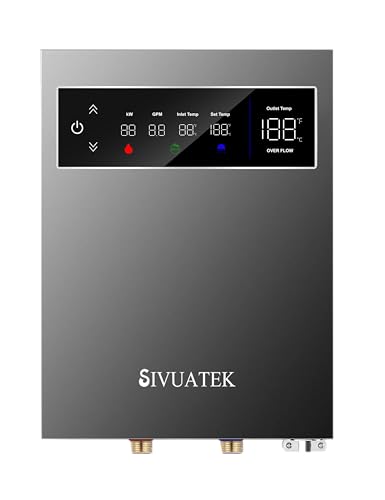
- 3.3 GPM flow rate for up to two usage points
- 1-degree LED temperature control
- Requires 240V power and a 60-amp breaker
Best For: Multi-fixture kitchen and bathroom use
Best Established Brand Option
Rheem 11kW Multi-Fixture Heater
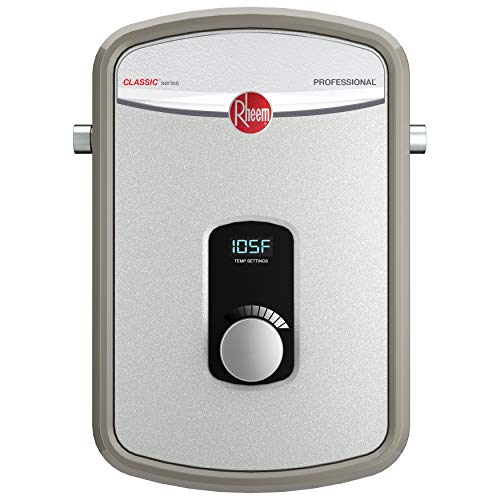
- Up to 2.68 GPM for multiple fixtures
- 80°F–140°F digital temperature range
- No venting required, but electrical planning is essential
Best For: Compact whole-home electric applications
Best Point-of-Use Pick
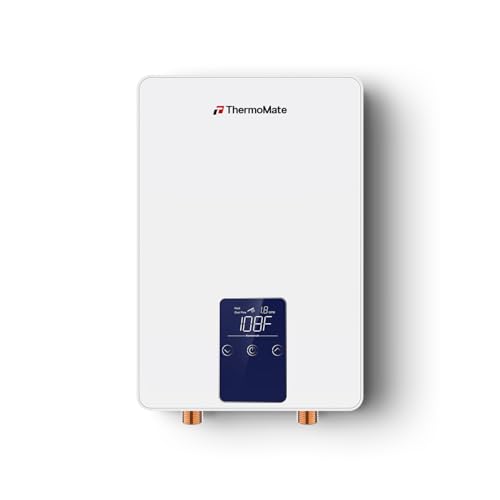
- About 1.07 GPM at a 35°F rise
- Compact design for under- or over-sink mounting
- Requires 240V hardwiring and a 30-amp breaker
Best For: Single-sink and localized hot-water needs
Best with Extra Features

- Thermostatic temperature control
- Compact wall-mounted design
- 1.5 GPM flow at 240V
Best For: Point-of-use sinks and fixtures needing consistent hot water
Best Under-Sink Control

- Digital temperature display
- Self-modulating power control
- Compact 0.66 GPM design
Best For: Single-sink installations with available hardwiring
Best Compact 110V Option

- 110V point-of-use operation
- LED display and safety protections
- Compact wall-mounted design
Best For: Small sinks in kitchens, apartments, RVs, and similar spaces
Smart Electric Pick – Westinghouse 11kW WiFi Tankless Water Heater
For homeowners comparing tankless water heaters for home use, the Westinghouse 11kW model combines compact wall-mounted installation with app and voice controls. It is designed for a single water point, such as a shower, and requires a substantial dedicated electrical circuit.
Best For: Smart-home users needing on-demand hot water for one shower or another single water point.
Pros:
- WiFi, Alexa, and Google Home compatibility with temperature memory.
- Heats water in about 3 seconds and offers up to 98% thermal efficiency.
- ETL certified with leakage, overheat, dry-fire, and over-voltage protection.
- Compact wall-mounted design takes no floor space.
Cons:
- Requires a dedicated 60A double-pole breaker and 8 AWG wire.
- Its listed 2.6 GPM performance is based on a specific inlet and outlet temperature combination.
- Best suited to a single point of use rather than simultaneous whole-home demand.
This is a practical choice when connected-home features and a compact footprint matter most. Confirm the electrical requirements and expected flow before installation.
Whole-Home Gas Choice – ThermoMate CZ422NG 5 GPM Natural Gas Heater
Among tankless water heaters for home use, the ThermoMate CZ422NG stands out as an indoor natural-gas model with up to 5 GPM flow. Its capacity is intended for multi-point use, while built-in diagnostics and extensive safety protections support everyday residential operation.
Best For: Homes with compatible natural-gas service that need hot water for multiple fixtures, including two simultaneous showers.
Pros:
- Up to 5 GPM and 113,000 BTU output for multi-point heating.
- CSA certified with freeze, flame-out, overheat, dry-combustion, and other protections.
- Up to 98% thermal efficiency with a stated 0.81 UEF.
- Compact 21-by-13-by-7-inch indoor design with a diagnostic LED display.
Cons:
- Requires natural gas, indoor venting, and compatible plumbing and electrical connections.
- Installation should account for the 3-inch vent connection and gas inlet requirements.
- Its multi-fixture performance depends on inlet temperature and household demand.
With higher flow than the electric options here, this model is a strong fit for gas-equipped homes seeking whole-house, on-demand service. Verify venting, gas supply, and local installation requirements first.
High-Capacity Electric Pick – Rheem RTEX-18 18kW Tankless Heater
The Rheem RTEX-18 is a higher-output electric option for shoppers evaluating tankless water heaters for home use. Its self-modulating controls adjust power to demand, while the external digital thermostat provides one-degree temperature adjustment and a clear LED display.
Best For: Households wanting a wall-mounted electric heater with higher output and simple digital temperature control.
Pros:
- 18kW output and flow rate of up to 4.4 GPM.
- Self-modulation adjusts power according to hot-water demand.
- Digital thermostatic control offers one-degree accuracy.
- Copper immersion heating elements are field serviceable.
Cons:
- Requires 240V electrical service suitable for an 18kW appliance.
- Actual flow varies with incoming-water temperature and desired outlet temperature.
- It lacks the WiFi features listed for some competing models in this roundup.
This Rheem balances strong electric output with straightforward controls and serviceable heating elements. It is worth considering when your electrical system can support the installation and you prefer a conventional digital interface.
Compact Point-of-Use Value – ThermoMate 11kW Electric Tankless Heater
The ThermoMate 11kW is a compact point-of-use option for tankless water heaters for home use. It uses self-modulation to respond to water temperature and flow, and its separated heating chamber is designed to reduce leakage, scale, and corrosion concerns.
Best For: Bathrooms, small sinks, office break rooms, and other low-flow applications needing localized hot water.
Pros:
- Supports up to 3 faucets and lists 2.15 GPM at a 35°F temperature rise.
- Self-modulating operation and stated 99% heating efficiency.
- Cast aluminum heating chamber separates the heating element from water lines.
- ETL certified with overheating, no-water, and leakage protection.
Cons:
- Requires a 50A double-pole breaker and 6 AWG wire at 240V.
- Its point-of-use design is better suited to low-flow demand than broad simultaneous household use.
- Maximum listed temperature is 131°F.
This model makes sense where space is limited and hot water is needed close to a specific fixture. Check the electrical requirements and temperature-rise conditions to ensure its flow meets your application.
Best High-Power Pick – 14kW Electric Tankless Water Heater
For homeowners comparing tankless water heaters for home use, this 14kW electric model is designed for steady hot water at one or two simultaneous usage points. Its compact wall- or under-sink-friendly design, precise controls, and 3.3 GPM flow rate make it a versatile option, provided your electrical system can support the installation.
Best For: Kitchens and bathrooms needing on-demand hot water for up to two simultaneous fixtures.
Pros:
- 14kW output and up to 3.3 GPM flow rate for multi-fixture use.
- LED display with temperature adjustment from 86°F to 131°F in 1-degree increments.
- Compact design, 99.8% thermal efficiency, and multiple safety protections.
Cons:
- Requires a 240V supply and one 60-amp circuit breaker.
- Maximum temperature is 131°F, which may not suit every application.
This is a strong choice when higher electrical capacity is available and you want compact, instant heating without standby energy loss. Confirm wiring, water connections, and household demand before purchase.
Best Established Brand Option – Rheem 11kW Multi-Fixture Heater
The Rheem RTEX-11 is a practical contender among tankless water heaters for home use when you want compact, on-demand electric heating for multiple fixtures. It delivers up to 2.68 GPM, uses digital 1-degree controls, and requires no venting, but its electrical requirements should be checked before installation.
Best For: Homes seeking a compact electric unit for multiple fixtures with professionally planned 240V installation.
Pros:
- Provides up to 2.68 GPM for multiple-fixture applications.
- Digital thermostatic controls adjust from 80°F to 140°F in 1-degree increments.
- Compact design is described as 90% smaller than traditional tank heaters and requires no venting.
Cons:
- Requires a 50-amp double-pole breaker, #8 AWG copper conductors, and a recommended 100-amp household panel.
- Lower flow rate than the 14kW model in this roundup.
Rheem’s model balances a small footprint with multi-fixture capability and broad temperature control. It is best considered after verifying that your home’s panel and wiring can accommodate the specified requirements.
Best Point-of-Use Pick – ThermoMate 6kW Sink Heater
For a sink, bar, or other single point of use, this ThermoMate model is a compact option among tankless water heaters for home use. Its 6kW system provides about 1.07 GPM at a 35°F temperature rise, while self-modulating operation and a digital control panel help simplify everyday use.
Best For: Under-sink or over-sink installations where a compact heater is needed for one faucet.
Pros:
- Compact 10.96-by-7.4-by-2.52-inch design fits tight spaces.
- Self-modulating operation and up to 99.8% efficiency heat water on demand.
- Touch controls provide 1-degree temperature adjustments from 85°F to 131°F.
Cons:
- Designed for point-of-use service rather than multi-fixture demand.
- Requires 240V hardwiring, a 30-amp breaker, and at least 10 AWG wire.
This unit makes the most sense when you need localized hot water without reserving space for a tank. Its roughly 1 GPM output is better suited to a sink than to simultaneous shower or whole-home use.
Best with Extra Features – Rheem RTEX-06T
For homeowners comparing tankless water heaters for home use, the Rheem RTEX-06T is a compact 240V point-of-use model designed to provide consistent hot water at a sink or other nearby fixture. Its thermostatic controls continuously monitor temperature and flow, while the wall-mounted design takes up far less space than a traditional tank.
Best For: Point-of-use installations where compact size, temperature consistency, and 1.5 GPM flow are priorities.
Pros:
- Thermostatic control helps maintain the selected temperature within 1 degree.
- Compact wall-mounted design is about 90% smaller than traditional tank heaters.
- Heats water only when it is in use to help reduce energy waste.
- Provides up to 1.5 GPM flow and a maximum temperature of 140°F.
Cons:
- Requires a 240V electrical supply.
- Its 1.5 GPM flow rate is better suited to point-of-use service than whole-home demand.
- Installation may require appropriate electrical work.
The RTEX-06T is a practical choice for adding dependable hot water close to a fixture without installing a bulky storage tank. Its 6.5kW output and thermostatic operation make it especially appealing for focused, controlled applications.
Best Under-Sink Control – ThermoMate 3.5kW
The ThermoMate ET035 is a small, hardwired option for shoppers seeking tankless water heaters for home use under a kitchen or bathroom sink. It delivers 0.4 to 0.66 GPM on demand, uses self-modulating power to respond to changing flow and inlet temperature, and includes a digital display with one-degree adjustment.
Best For: Under-sink or over-sink faucets that need localized hot water in a compact installation.
Pros:
- Compact 7.9-by-6.4-by-2.5-inch design fits tight spaces.
- Digital temperature display allows adjustment in 1°F increments.
- Self-modulating operation helps prevent overheating as conditions change.
- Separated cast-aluminum heating elements and a SUS 304 stainless steel water tube help limit scale and corrosion buildup.
Cons:
- Must be hardwired; it does not use a plug.
- Requires a 32A double-pole circuit breaker, minimum 10 AWG wire, and 1/2-inch NPT connections.
- Its maximum 0.66 GPM flow is intended for a single faucet rather than a shower.
With its small footprint and precise display, the ThermoMate is well matched to a single sink where immediate hot water matters. Confirm the electrical and plumbing requirements before buying, since this model requires a dedicated hardwired installation.
Best Compact 110V Option – 3000W Under-Sink Heater
This 3000W model is a compact choice for shoppers looking at tankless water heaters for home use in kitchens, apartments, bathrooms, RVs, or camping setups. It provides on-demand hot water with an LED display, multiple safety protections, and a wall-mounted form factor, but its stated flow range is not intended for showers.
Best For: Compact point-of-use applications requiring 110V operation and hot water for a sink or similar fixture.
Pros:
- Compact wall-mounted design helps conserve space.
- LED display supports Fahrenheit or Celsius temperature settings.
- Includes dry-boil, leakage, overheat, inactivity, and IPX4 protection features.
- Supports 1/2-inch NPT connections and is ETL-standard qualified.
Cons:
- Not suitable for showers, which normally require at least 1.8 GPM.
- Must be installed vertically; horizontal installation can cause malfunction.
- Requires wiring of at least 2.5 square millimeters and a trip switch over 32A.
This heater makes sense when space is limited and the goal is quick hot water at a single fixture. Its 110V configuration and safety features add flexibility, but buyers should carefully follow the specified wiring, vertical mounting, and connection requirements.
How We Picked the Best Tankless Water Heaters for Home Use
We organized these Tankless Water Heaters for Home Use around the factors that most affect real-world performance: heating capacity, fuel type, maximum flow, installation format, temperature controls, and intended point of use. The selection includes electric models ranging from compact 120V and 110V units to higher-output 240V heaters, plus a natural-gas option for households that need greater continuous flow.
Because product specifications and installation requirements vary, treat advertised flow rates as starting points rather than guarantees. Incoming water temperature, desired outlet temperature, plumbing layout, and simultaneous demand all influence performance.
Quick Comparison
- Point-of-use: Compact 110V, 120V, 6kW, and 6.5kW models suit sinks, handwashing stations, and other single fixtures.
- Sink-and-shower service: 11kW to 14kW electric heaters may work for limited demand when the home has adequate 240V electrical capacity.
- Multi-fixture electric use: An 18kW unit offers more heating power, but still requires careful load and flow-rate planning.
- Higher-flow whole-home potential: The natural-gas model can be a better fit where gas service and venting are available.
Key Buying Factors for Tankless Water Heaters
Electrical or Gas Requirements
Check whether the heater uses 110V, 120V, or 240V power and confirm the amperage, breaker, and wire requirements with an electrician. High-output electric models may require substantial dedicated circuits. Gas units need compatible supply lines, approved venting, combustion air, and professional installation.
Flow Rate and Temperature Rise
Estimate how many fixtures may operate at once and add their flow rates together. A heater must also raise incoming water to your target temperature; colder groundwater reduces the available flow. A unit advertised for a specific gallons-per-minute rating may deliver less in a cold-climate installation.
Installation Location and Controls
Measure the available wall space and verify clearance, plumbing connections, and service access. Point-of-use heaters are convenient near a sink, while central units need a suitable location and may require plumbing modifications. Digital displays, thermostatic controls, self-modulation, and Wi-Fi can simplify monitoring, but they do not replace correct sizing.
Safety, Certification, and Maintenance
Look for appropriate certification, built-in safety protections, and clear installation documentation. Electric tankless heaters commonly need periodic descaling in hard-water areas. Gas models require additional attention to venting and combustion safety. Follow the manufacturer’s maintenance schedule and local code requirements.
Who Should Buy Which Tankless Water Heaters for Home Use?
Choose a compact point-of-use model for a kitchen sink, bathroom handwashing station, workshop, or other single fixture where minimizing standby heat loss and installation size matters most.
Choose an 11kW to 14kW electric model for limited sink-and-shower demand when your electrical panel can support the required 240V circuit. These are practical for smaller homes, additions, and carefully managed usage.
Choose a higher-output electric model when several fixtures may run together and the home has sufficient electrical service. Confirm capacity before purchase rather than assuming a larger kilowatt rating will work with existing wiring.
Choose a natural-gas tankless heater when you need stronger continuous flow, already have suitable gas infrastructure, and can meet venting and installation requirements. When in doubt, have a licensed plumber or electrician verify sizing and compatibility before ordering.