A good thermal camera can reveal heat loss, overloaded circuits, moisture problems, and HVAC issues before they turn into expensive repairs. The best models balance image clarity, temperature range, portability, and ease of use.
In this roundup, we focused on options that make sense for both first-time buyers and professionals, including handheld units and smartphone-compatible tools.
Best 10 Thermal Camera Picks for 2026
Field-Ready Thermal Inspections
TOPDON TC004 3.5-inch thermal camera

- 3.5-inch screen for easier viewing
- 256×192 IR with TISR up to 512×384
- 64GB storage plus Wi‑Fi reporting
Best For: Technicians wanting a rugged handheld thermal camera for inspections and reporting
Phone-Powered Thermal Scanning
TOPDON TC001 Max phone thermal camera

- Dual-lens thermal plus visible-light imaging
- USB-C and Lightning plug-and-play connection
- Compact design with app-based analysis
Best For: Phone users needing a portable thermal camera for diagnostics
Detailed PC Analysis
FOXWELL RT280 thermal camera with PC tools

- 320×240 LCD with TISR enhancement
- Windows software for 2D/3D analysis
- 8GB storage and rugged IP54 build
Best For: Inspectors who need handheld thermal imaging plus Windows report analysis
iPhone Thermal Inspection
Flir One USB-C iPhone thermal camera

- USB-C plug-in for iPhone 15 and newer
- 240×180 super resolution from 80×60 IR
- MSX blending and guided inspection app
Best For: iPhone users who want a compact thermal camera for inspections
Dual-Mode Everyday Inspector

- Thermal imaging plus thermometer mode.
- Weighs just 240g with easy controls.
- 14-hour battery life and temp alarms.
Best For: Home inspections, HVAC checks, and quick point-and-scan temperature work.
Report-Ready Compact Pick
Flir C3-X Compact Thermal Imaging Camera
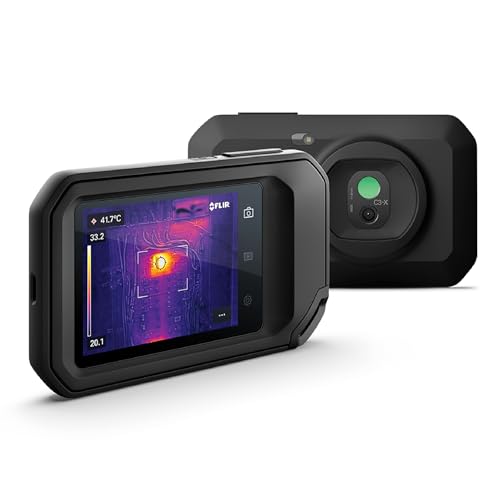
- MSX enhances 128 × 96 thermal images.
- Wi-Fi and FLIR Ignite support sharing.
- Compact 6.72-ounce handheld design.
Best For: Fast troubleshooting and easy report creation.
High-Detail Pocket Scanner
TOPDON TC004 Mini Thermal Imaging Camera

- TISR boosts 128x128 imaging to 240x240.
- Automatic alerts can capture photos on threshold breaches.
- 15-hour runtime with IP54 protection and drop resistance.
Best For: Portable inspections where image clarity and durability matter.
Phone-Mounted Thermal Pick

- USB-C thermal camera for compatible Android phones
- Upscales IR to 240x180 with MSX detail blending
- Includes inspection guides for home fault checks
Best For: Android users needing a compact phone-based thermal camera
Rugged Handheld Analyzer
Firecore 320x240 Thermal Imager

- Handheld thermal camera with 320x240 super resolution
- 32GB storage plus Windows report-generation software
- Rugged build with IP54 resistance and 6+ hour battery
Best For: HVAC and inspection users who need a standalone thermal imager
Cross-Platform Thermal Clip-On
REVASRI 320x240 Thermal Camera
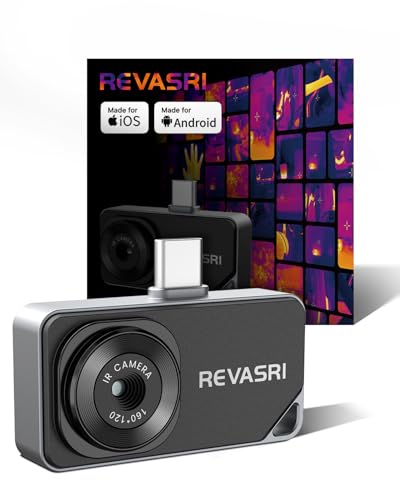
- USB-C thermal camera for iOS, Android, and Windows
- 320x240 super resolution with 25Hz refresh and 9 color modes
- Powered by the connected device, no separate battery required
Best For: Cross-platform users wanting a compact plug-in thermal camera
Field-Ready Thermal Inspections – TOPDON TC004 3.5-inch thermal camera
If you want a thermal camera for everyday inspections, the TOPDON TC004 focuses on visibility, storage, and ruggedness. Its 3.5-inch display, 256×192 IR resolution with TISR up to 512×384, and built-in laser pointer make it easier to spot and confirm hot areas quickly.
Best For: Technicians and inspectors who want a rugged handheld thermal camera with a larger screen and solid documentation features.
Pros:
- 3.5-inch display gives a wider, more comfortable viewing experience
- TISR-enhanced thermal output improves detail for spotting subtle temperature differences
- 64GB built-in storage supports thousands of images and videos
- Wi‑Fi transfer to the TopInfrared app helps speed up reporting
Cons:
- Handheld design is bulkier than phone-mounted options
- Best suited to field inspections rather than pocket carry
The TC004 is a practical choice when you need a thermal camera that can handle real-world work, store plenty of evidence, and stand up to dust, splashes, and drops.
Phone-Powered Thermal Scanning – TOPDON TC001 Max phone thermal camera
The TOPDON TC001 Max is a compact thermal camera built for users who prefer phone-based inspection tools. It combines infrared and visible-light imaging, plugs into USB-C or Lightning devices without pairing, and uses TISR to sharpen thermal detail for faster issue identification.
Best For: Smartphone users who want a pocket-size thermal camera for electrical, HVAC, and general diagnostic work.
Pros:
- Dual-lens design adds visible-light context to thermal images
- USB-C and Lightning support enables true plug-and-play use
- 256×192 IR resolution enhanced to 512×384 with TISR
- TopInfrared and TopView apps add analysis, graphs, and color palettes
Cons:
- Depends on a compatible phone or Windows device
- Small form factor means less built-in handling than a standalone handheld unit
For buyers who want a highly portable thermal camera that travels in a pocket and works directly from a phone, the TC001 Max offers strong flexibility and useful app-based analysis.
Detailed PC Analysis – FOXWELL RT280 thermal camera with PC tools
The FOXWELL RT280 is a handheld thermal camera aimed at users who want clear on-device viewing plus deeper computer analysis. Its 2.8-inch LCD, 320×240 screen, and TISR-enhanced thermal output help show fine temperature differences, while PC software adds more advanced reporting tools.
Best For: Users who want a rugged thermal camera with built-in storage and Windows-based analysis tools.
Pros:
- 320×240 LCD and TISR help present clearer thermal detail
- Windows software supports point, line, area, and 2D/3D analysis
- 8GB eMMC stores over 20,000 images and videos
- IP54 rating, 6.6-foot drop resistance, laser pointer, and LED light improve field use
Cons:
- PC analysis is not compatible with Mac
- Smaller screen than some larger handheld rivals
If you want a thermal camera that balances rugged portability with serious post-inspection analysis, the RT280 is a strong fit for organized, report-driven work.
IPhone Thermal Inspection – Flir One USB-C iPhone thermal camera
The Flir One is a phone-mounted thermal camera made for iPhone 15 and newer devices with USB-C. It uses Vivid IR super resolution and MSX visual blending to improve detail, while the app includes inspection guides that can make common home checks easier to follow.
Best For: iPhone users who want a compact thermal camera for home inspections and everyday troubleshooting.
Pros:
- Plugs directly into USB-C iPhones with no wireless setup
- Super resolution boosts the image to 240×180 from 80×60 native IR
- MSX technology merges thermal and visual detail in real time
- App includes step-by-step inspection guides for common faults
Cons:
- Made specifically for iPhone 15 and newer USB-C models
- Native IR resolution is low before upscaling
The Flir One stands out if you want a thermal camera that stays extremely compact and leans on app guidance for practical home and light commercial inspections.
Dual-Mode Everyday Inspector – GT14S Thermal Imaging Camera
If you want a thermal camera that can handle both quick spot checks and broader thermal scans, the GT14S is built for flexible everyday use. It combines full-screen thermal imaging with a separate thermometer mode, so you can review moving scenes in real time or grab exact point readings when accuracy matters.
Best For: Homeowners, DIY users, and technicians who want a lightweight thermal camera for mixed inspection tasks.
Pros:
- Dual mode design supports thermal imaging and thermometer readings.
- Lightweight 240g body with a non-slip grip for easier extended use.
- NETD < 50mK and a -4°F to 1022°F range suit many inspection jobs.
- 50° field of view, adjustable emissivity, and temperature alarms help with faster anomaly detection.
Cons:
- Less specialized than higher-end tools for advanced reporting workflows.
- No cloud-sharing or report-building features mentioned.
- Best suited to practical inspections rather than highly technical documentation needs.
The GT14S stands out if you want a simple, portable thermal camera that balances broad scanning with direct temperature measurement. Its long battery life and easy controls make it a strong fit for routine inspections around the house, kitchen, or equipment.
Report-Ready Compact Pick – Flir C3-X Compact Thermal Imaging Camera
The FLIR C3-X is a compact thermal camera designed for fast troubleshooting and simple documentation. Its true thermal image is paired with MSX image enhancement, which overlays visual detail to make hot spots and problem areas easier to interpret during inspections.
Best For: Users who need a pocketable thermal camera for diagnostics, image sharing, and customer-ready reporting.
Pros:
- 128 × 96 true thermal imaging with MSX for clearer-looking images.
- Wi-Fi and FLIR Ignite support make it easy to upload and share images.
- Measures temperatures from -20 to 300°C (-4 to 572°F).
- Very light at 6.72 ounces and built for handheld use.
Cons:
- Fixed focus design may be less flexible than adjustable-focus cameras.
- Lower thermal resolution than some higher-detail competitors.
- Best value is strongest when you need documentation, not just viewing.
If your priority is quick diagnostics and polished image sharing, the C3-X is a practical choice. It is especially appealing for professionals who want a thermal camera that can move from inspection to reporting without extra steps.
High-Detail Pocket Scanner – TOPDON TC004 Mini Thermal Imaging Camera
The TOPDON TC004 Mini is a pocket-friendly thermal camera built to deliver sharper image detail in a compact form. It starts with 128×128 thermal imaging and uses TISR technology to enhance output to 240×240, which helps when you need a clearer look at electrical, plumbing, or home inspection issues.
Best For: Users who want a portable thermal camera with better image clarity and simple automatic alerts.
Pros:
- 240×240 enhanced resolution with TISR for improved thermal clarity.
- 40° x 30° field of view and 25Hz refresh rate for smooth scanning.
- Automatic warning and photo capture when temperatures exceed presets.
- Long 15-hour runtime, IP54 rating, and 2-meter drop resistance.
Cons:
- Built-in storage is limited to 512MB eMMC, though it supports up to 8,000 photos.
- Includes a charging cable but no charging head.
- Manual is provided digitally rather than as a paper booklet.
The TC004 Mini is a strong fit if you want a small thermal camera that still offers useful detail and practical alert features. It combines portability with enough durability and runtime for regular inspection work.
Phone-Mounted Thermal Pick – FLIR One USB-C Thermal Camera
If you want a compact thermal camera for quick inspections, the FLIR One is built around phone convenience. It plugs into USB-C Android devices and uses MSX and Super Resolution to make thermal detail easier to read for home checks, air leaks, and moisture spotting.
Best For: Android users who want a lightweight phone-based thermal camera for basic home and jobsite inspections.
Pros:
- USB-C design works with compatible Android phones, including Samsung Galaxy and Google Pixel.
- Super Resolution upsamples IR imagery to 240×180 for better detail.
- MSX overlays thermal and visual images to improve context in real time.
- Built-in inspection guides help with common home fault checks.
Cons:
- Native IR resolution is 80×60 before upscaling.
- Rated for about 1 hour of battery average life.
- Only for USB-C Android devices, so it is not a broad cross-platform option.
This is a practical entry-level thermal camera if you value portability and guided inspections over standalone hardware. It looks especially useful for quick troubleshooting where a phone-based workflow is enough.
Rugged Handheld Analyzer – Firecore 320×240 Thermal Imager
The Firecore thermal camera is aimed at users who want a self-contained handheld imager with more analysis tools built in. Its 320×240 super resolution output, dual-camera modes, and Windows reporting support make it well suited for inspections that need documentation as well as clear thermal detail.
Best For: HVAC, electrical, plumbing, and home inspection users who want a rugged handheld thermal camera with PC analysis.
Pros:
- 320×240 super resolution with 160×120 native IR helps improve thermal clarity.
- Includes Thermal, Visible Light, Picture-in-Picture, and Thermal Mix image modes.
- Built-in 32GB storage can hold over 30,000 thermal images.
- Windows software supports image analysis and professional report generation.
Cons:
- PC analysis software is not compatible with Mac.
- At 2.4 inches, the display is compact for extended review sessions.
- It is a handheld unit, so it is less pocketable than phone-attached options.
This is a strong choice if your thermal camera needs go beyond casual checks and into repeatable field work. The storage, alarms, and rugged design make it a better fit for more serious inspection workflows.
Cross-Platform Thermal Clip-On – REVASRI 320×240 Thermal Camera
The REVASRI thermal camera is a simple plug-and-play clip-on option for users who want thermal imaging across phones, tablets, and computers with USB-C. Its 320×240 super resolution, 25Hz refresh rate, and temperature tools make it a practical choice for fast troubleshooting in the field.
Best For: Users who want a compact USB-C thermal camera that works across iPhone, Android, and Windows devices.
Pros:
- Compatible with USB-C phones, tablets, and computers across iOS, Android, and Windows.
- 320×240 super resolution with 25Hz refresh rate supports smooth thermal viewing.
- Includes high/low alarms, temperature tracking, and 15x electronic zoom.
- Powered directly by the device, so no separate battery is needed.
Cons:
- Requires the dedicated Camera+ app for operation.
- Not a standalone imager, so it depends on a connected device.
- Best suited to users comfortable with app-based control and setup.
This thermal camera stands out for flexibility and portability, especially if you need one tool that can move between devices. It is a smart fit for quick diagnostics where convenience and cross-platform compatibility matter.
How We Picked the Best Thermal Camera
We prioritized temperature range, thermal resolution, display quality, portability, battery life, and overall usability. For mobile models, compatibility and app performance mattered as much as image quality. We also looked for practical features like multiple color palettes, spot measurement, and fast startup.
Quick Comparison
Handheld Thermal Cameras are usually the best choice for inspections where you want a built-in screen, faster handling, and more reliable field use. Smartphone-based options are more compact and often more affordable, making them a smart fit for occasional use or travel kits. Higher-resolution models are better for identifying small hot spots, while lighter, simpler units work well for basic diagnostics.
Key Buying Factors for a Thermal Camera
Resolution and Image Detail
Resolution affects how clearly you can separate hot and cold areas. Higher native resolution generally means easier troubleshooting, especially when checking electrical panels, insulation gaps, or mechanical components.
Temperature Range and Accuracy
Make sure the camera covers the temperatures you actually need. Home energy and building inspections do not require the same range as automotive, industrial, or electrical work. Accuracy and repeatability matter just as much as the max range.
Form Factor and Connectivity
Choose handheld if you want a dedicated tool with fewer setup steps. Choose a smartphone Thermal Camera if you want something compact and easy to carry. USB-C support is especially useful for modern iPhone and Android devices, but compatibility should be checked carefully before buying.
Software, Storage, and Sharing
Features like WiFi, app support, photo saving, and report export can save time if you document jobs regularly. If you only need quick spot checks, a simpler interface may be the better value.
Who Should Buy Which Thermal Camera?
DIY homeowners should look for a balanced Thermal Camera with clear imaging, simple controls, and enough range for routine inspections. Electricians, HVAC techs, and maintenance teams may prefer higher-resolution handheld models with stronger measurement features. Mobile-first users and occasional inspectors should consider smartphone-compatible options for convenience and portability. If you need a tool for regular field work, pay extra for better ergonomics and a more dependable display; if you want a backup or entry-level diagnostic tool, a lighter, less expensive model can be the smarter buy.
