Choosing among water filters for home use depends on your water quality, available space, household size, and the contaminants you want to reduce. The right system can improve taste and odor while providing a more targeted filtration solution.
This roundup compares 10 options across pitchers, faucet-mounted, under-sink, countertop, gravity, reverse osmosis, and whole-house designs, so you can match features and maintenance requirements to your home.
Best 10 Water Filters for Home Use Picks for 2026
Best Alkaline RO System

- NSF/ANSI 58-certified six-stage RO system
- Alkaline remineralization for balanced-tasting water
- 75 GPD capacity with broad contaminant reduction
Best For: Households wanting comprehensive under-sink RO filtration
Best Everyday Pitcher

- 10-cup refrigerator-friendly capacity
- Reduces chlorine taste and odor plus select metals
- No installation or power required
Best For: Renters and small households wanting simple pitcher filtration
Best High-Capacity Under-Sink Filter

- 750-gallon filter capacity
- Triple-layer filtration for 70-plus listed contaminants
- DIY installation designed for 15–20 minutes
Best For: Households seeking long-lasting under-sink filtration
Best Large-Family Dispenser
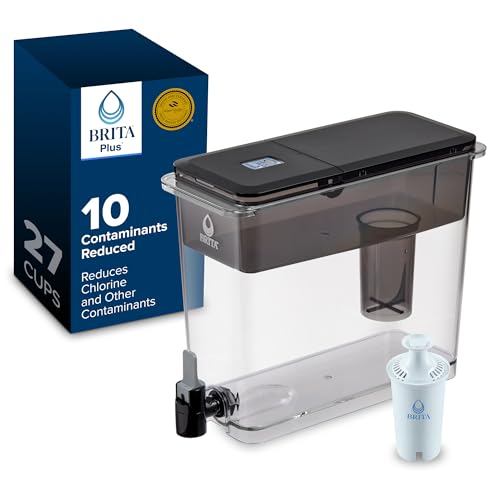
- 27-cup countertop or refrigerator dispenser
- BritaPlus filter reduces twice as many contaminants as Standard
- Spigot and change indicator improve convenience
Best For: Families needing a large, easy-access supply of filtered water
Best Countertop RO System
DREO 7-in-1 Reverse Osmosis Filter

- Install-free countertop reverse osmosis design
- Two autofill pitchers and 5-liter capacity
- TDS meter, filter-life indicator, and self-cleaning
Best For: Homes wanting convenient countertop RO filtration
Best Large-Capacity Dispenser
ZeroWater 32-Cup 5-Stage Filter
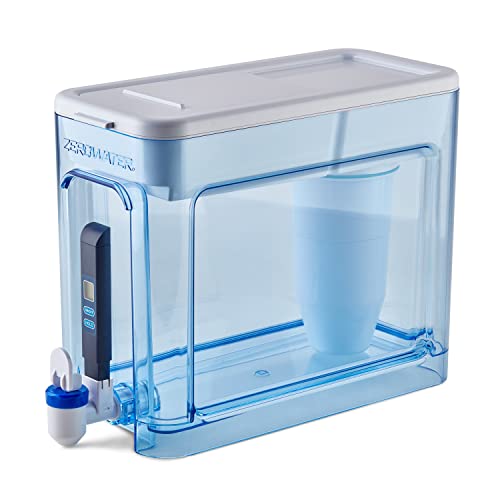
- Large 32-cup countertop capacity
- Five-stage ion-exchange filtration
- Included TDS meter with change-at-006 guidance
Best For: Families needing high-capacity, unpowered filtration
Best Under-Sink Value
Waterdrop 10UA Under-Sink Filter

- Compact filtration for municipal cold water
- NSF/ANSI 42 certified
- Twist-and-lock design with up to 12-month service life
Best For: Homes and rentals wanting clear countertop space
Best Faucet-Mount Pick

- Tool-free installation on most standard faucets
- Certified lead and microplastics reduction
- 100-gallon capacity with change indicator
Best For: Homes wanting convenient filtration at one faucet
Best Whole-Home Coverage
3-Stage Whole House Filter System

- Three filtration stages for chlorine, odors, and sediment
- Nine included cartridges for up to 1.5–2 years
- Built-in shut-off and bypass valves
Best For: Families seeking filtration throughout the home
Best Non-Electric Countertop Option

- No electricity or plumbing connection required
- 0.01-micron three-stage filtration
- 2.25-gallon stainless-steel countertop design
Best For: Countertop, apartment, or off-grid filtration
Best Alkaline RO System – iSpring RCC7AK-BN
For homeowners seeking comprehensive water filters for home use, the iSpring RCC7AK-BN combines six-stage reverse osmosis filtration with alkaline remineralization. Its under-sink design reduces a broad range of listed contaminants, while the transparent first-stage housing makes filter monitoring easier.
Best For: Households wanting high-capacity under-sink RO filtration with remineralized water.
Pros:
- NSF/ANSI 58 certified for the entire RO system.
- Reduces listed contaminants including fluoride, lead, PFAS, chlorine and up to 93–98% of TDS.
- Includes a natural mineral alkaline stage and a 75-gallon-per-day capacity.
- Top-mounted faucet fastener and DIY-oriented installation materials simplify setup.
Cons:
- Under-sink installation requires more space and effort than a countertop pitcher.
- Replacement filter sets are needed on schedules ranging from six months to three years.
This is a strong choice when filtration breadth and remineralization matter more than portability. Lifetime technical support and visible first-stage monitoring add practical convenience, though the system is more involved than basic pitcher-style water filters.
Best Everyday Pitcher – Brita Large 10-Cup Pitcher
The Brita Large 10-Cup Pitcher is a simple, space-conscious option among water filters for home use. Its granular activated carbon filter reduces chlorine taste and odor along with mercury, copper, zinc and cadmium, without requiring installation or power.
Best For: Individuals and small households wanting convenient refrigerator-ready filtration.
Pros:
- 10-cup capacity can fill three 24-ounce reusable water bottles.
- Compact design fits refrigerator shelves and includes an easy-fill locking lid.
- Uses replaceable Standard or Longlast filters.
- Manual operation requires no plumbing or electricity.
Cons:
- Standard filters last about two months or 40 gallons.
- Capacity is smaller than a large countertop dispenser or under-sink system.
- Filtration is focused on the listed contaminants rather than broad RO-style reduction.
Choose this Brita when affordability, portability and straightforward daily use are priorities. It is especially practical for renters or anyone who wants better-tasting tap water without modifying a sink.
Best High-Capacity Under-Sink Filter – Epic Smart Shield MAX
The Epic Smart Shield MAX is a high-capacity under-sink choice for water filters for home use, using a triple-layer CoreXchange design. Its filter combines nano fiber, carbon fiber block and granular resin to target microplastics, pathogens, chemicals, heavy metals, fluoride and arsenic.
Best For: Households wanting long-lasting under-sink filtration with a relatively quick DIY installation.
Pros:
- Independently certified to remove up to 99.99% of more than 70 contaminants.
- 750-gallon filter capacity can replace more than 5,000 single-use plastic bottles.
- Triple-layer filtration targets several contaminant categories.
- Designed for DIY installation in approximately 15–20 minutes, with components included.
Cons:
- Requires under-sink space and connection to household water pressure.
- Only one filter is listed in the included components.
- Does not provide the alkaline remineralization feature found in some RO systems.
This system balances broad filtration and low replacement frequency without the storage tank associated with the listed RO model. It is a practical fit for buyers comfortable with basic under-sink installation and looking to reduce ongoing bottled-water use.
Best Large-Family Dispenser – Brita UltraMax 27-Cup
The Brita UltraMax 27-Cup dispenser suits families who need accessible water filters for home use without installing a dedicated system. Its BritaPlus carbon-block filter reduces twice as many contaminants as the Standard filter, while the spigot makes dispensing convenient from a countertop or refrigerator.
Best For: Families and shared households that need a large supply of filtered water.
Pros:
- Large 27-cup capacity supports frequent household use.
- BritaPlus filter reduces chlorine, mercury, cadmium, copper and zinc.
- Filter helps retain naturally present minerals and electrolytes.
- WQA and NSF/ANSI certified, with a change indicator for maintenance reminders.
Cons:
- Requires filter replacement approximately every 40 gallons or two months.
- The larger footprint may be less convenient for small refrigerators or counters.
- Manual dispensing is less portable than a standard pitcher.
With its high capacity and built-in spigot, the UltraMax is more convenient for serving several people than a conventional pitcher. It is a good middle ground for households that want substantial filtered-water storage without under-sink installation.
Best Countertop RO System – DREO 7-in-1 Reverse Osmosis Filter
For shoppers comparing water filters for home use, the DREO countertop system is a convenient reverse-osmosis option that requires no plumbing installation. It includes two autofill pitchers, a built-in TDS meter, filter-life monitoring, and a self-cleaning function. The manufacturer says it reduces 99.9% of possible contaminants, including PFOA, PFOS, chlorine, and fluoride, and reports testing by SGS to NSF/ANSI 58 standards.
Best For: Households wanting an install-free countertop RO system with pitcher filling and on-device monitoring.
Pros:
- Countertop design avoids permanent installation.
- Includes two autofill pitchers for convenient water storage.
- Built-in TDS meter and filter-change indicator help track operation.
- 5-liter capacity and self-cleaning feature suit everyday home use.
Cons:
- Requires countertop space and weighs 10.8 pounds.
- Reverse osmosis produces drain water, even with its stated 3:1 pure-to-drain ratio.
- Its listed 15.7-inch height may not fit under every cabinet.
This DREO model is a strong fit when convenience and broad RO filtration matter more than a built-in under-sink installation. Its monitoring features make routine maintenance easier, while the countertop format keeps setup straightforward.
Best Large-Capacity Dispenser – ZeroWater 32-Cup 5-Stage Filter
The ZeroWater 32-cup dispenser is a practical choice among water filters for home use when you want substantial countertop capacity without powered equipment. Its five-stage ion-exchange filtration is designed to remove virtually all total dissolved solids, and the integrated TDS meter provides a simple way to monitor when the filter reads 006 and should be changed.
Best For: Families and shared spaces that need a large, unpowered dispenser with TDS monitoring.
Pros:
- 32-cup, 7.5-liter dispenser reduces frequent refilling.
- Five-stage filtration is IAPMO certified to reduce PFOA/PFOS, lead, chromium, and mercury.
- Included TDS meter gives an immediate filter-change reference.
- BPA-free construction and compatibility with ZeroWater replacement filters add convenience.
Cons:
- Large countertop footprint may be inconvenient in smaller kitchens.
- Unpowered dispenser requires manual filling and dispensing.
- Reducing virtually all TDS also removes dissolved minerals from the water.
Choose this ZeroWater dispenser if capacity and measurable TDS reduction are your priorities. It is especially useful for households that prefer a straightforward countertop setup and do not need a plumbed or electrically powered system.
Best Under-Sink Value – Waterdrop 10UA Under-Sink Filter
For a more permanent approach to water filters for home use, the Waterdrop 10UA mounts under the sink and connects to a cold-water line. It is NSF/ANSI 42 certified, designed for municipal tap water, and offers a tested flow rate of 0.75 gallons per minute at 60 psi. The twist-and-lock design and push-to-connect fittings are intended to simplify installation and replacement.
Best For: Homes, rentals, offices, or RVs seeking compact under-sink filtration for municipal cold water.
Pros:
- Under-sink installation keeps the countertop clear.
- Compact system is suitable for kitchens, bathrooms, RVs, and offices.
- Twist-and-lock filter design supports quick replacement, with a maximum 12-month service life on municipal water.
- 3/8-inch connections and upgraded outlet are designed for efficient water flow.
Cons:
- Not suitable for well water or hot water.
- Requires compatible female-threaded faucet or the appropriate connector fitting.
- NSF/ANSI 42 certification does not indicate reverse-osmosis-level TDS reduction.
The 10UA makes the most sense when you want filtered water at the sink without occupying counter space. Confirm your plumbing connections and municipal-water compatibility before buying, and note that the system retains essential dissolved minerals rather than targeting TDS reduction.
Best Faucet-Mount Pick – PUR Plus Faucet Water Filter
For shoppers comparing water filters for home use, the PUR Plus is a convenient option for improving water directly at a standard kitchen faucet. Its 3-in-1 filter is certified to reduce lead, microplastics, chlorine, and numerous other chemical and physical substances, while the filter-change light helps simplify maintenance.
Best For: Households seeking an easy-to-install faucet filter for drinking and cooking water.
Pros:
- Installs without tools on most standard faucets.
- WQA certified to reduce lead and NSF certified to reduce microplastics and chlorine.
- Filters up to 100 gallons or about three months, with a change indicator.
Cons:
- Not designed for pull-out or handheld faucets.
- Faucet-mounted filtration does not treat water throughout the entire home.
The PUR Plus is a practical choice when you want filtered water at one sink without installing an under-sink or whole-house system. Confirm faucet compatibility before buying and plan on replacing the filter approximately every three months.
Best Whole-Home Coverage – 3-Stage Whole House Filter System
For broad water treatment, this 3-stage system is designed for water filters for home use at the main line, under a sink, or in a utility room. It uses sediment, granular activated carbon, and CTO filtration to reduce chlorine, odors, sediment, and other impurities while preserving natural minerals rather than lowering TDS.
Best For: Families wanting cleaner water at multiple taps, including kitchen, bathroom, and laundry fixtures.
Pros:
- Includes three complete sets of cartridges—nine filters total.
- Built-in shut-off valves and a bypass valve support easier filter changes.
- Works with well water and city water and supports flow rates up to 15 gallons per minute.
- Standard 3/4-inch plumbing connections are included.
Cons:
- Does not reduce TDS levels.
- Installation may require suitable plumbing access and space.
This system makes sense when whole-home coverage matters more than compact, faucet-level installation. Its included replacement cartridges can reduce near-term maintenance costs, but verify your plumbing layout and installation location before purchase.
Best Non-Electric Countertop Option – Purewell Gravity Water Filter
The Purewell gravity system offers a portable approach to water filters for home use without electricity or a plumbing connection. Its stainless-steel countertop design uses a 0.01-micron hollow-fiber UF membrane, silver-ion membrane, and activated carbon block to reduce chlorine, rust, sediment, organic matter, and heavy metals.
Best For: Homes, apartments, or off-grid settings that need countertop filtration without electricity.
Pros:
- Operates by gravity with no electricity required.
- NSF/ANSI 42 and 372 certifications are listed for the filter system.
- Includes two filters, a stainless-steel housing, spigot, and stand.
- 2.25-gallon capacity and approximately four-gallon-per-hour flow rate support everyday use.
Cons:
- Does not lower TDS levels.
- The upper chamber should not be refilled when the lower chamber is full because leakage can occur.
- Filters should be replaced about every six months for optimum performance.
Choose the Purewell when portability and no-power operation are priorities. It provides a sizable countertop reservoir and long stated filter capacity, but users should follow the filling instructions and remember that TDS remains unchanged.
How We Picked These Water Filters for Home Use
We selected systems representing the main ways households filter drinking and tap water: portable pitchers, faucet attachments, under-sink units, countertop reverse osmosis systems, gravity filters, and whole-house filtration. We considered stated certifications, contaminant-reduction claims, capacity, flow rate, installation needs, replacement-filter availability, maintenance, and overall fit for different household sizes.
Certification language matters. NSF/ANSI standards can address specific performance claims, but a certification does not mean a filter removes every contaminant. Always check the manufacturer’s performance data against your local water report and the substances you want to reduce.
Quick Comparison
- Best for simple, low-cost filtering: A Brita or PUR pitcher or faucet-mounted filter.
- Best for large households: A high-capacity pitcher, dispenser, or whole-house system.
- Best for targeted under-sink filtration: Waterdrop or Epic-style systems that preserve counter space.
- Best for broad contaminant reduction: Reverse osmosis systems from iSpring or DREO.
- Best without permanent plumbing: A countertop RO unit or gravity-fed stainless steel system.
Key Buying Factors for Water Filters for Home Use
Contaminants and Certifications
Start with the problem you are solving. Taste and chlorine concerns may require less filtration than lead, PFAS, fluoride, nitrates, or dissolved solids. Look for independently verified claims where possible, and compare the exact model and filter cartridge rather than relying on broad marketing language.
Capacity and Speed
Pitchers and dispensers are convenient but need regular refilling. Check capacity alongside filtration speed, especially for families. Reverse osmosis systems typically produce water more slowly and may send some water to the drain, while larger storage tanks or countertop reservoirs can improve convenience.
Installation and Maintenance
Faucet and pitcher filters are usually the easiest to install. Under-sink and whole-house systems may need plumbing tools, shutoff access, or professional installation. Factor in cartridge replacement intervals, replacement cost, filter availability, cleaning, and any required remineralization or storage-tank maintenance.
Space and Operating Cost
Measure the intended location before buying. Under-sink systems use cabinet space, countertop units need clearance and an outlet, and whole-house filters require a suitable main water line. Compare the purchase price with annual filter costs and, for RO systems, water usage.
Who Should Buy Which Water Filters for Home Use?
Apartment renters and occasional users should favor pitchers or faucet-mounted filters that install quickly and travel easily. Small households wanting cleaner drinking water without countertop clutter may prefer an under-sink system.
Families and high-volume users should look for larger dispensers, high-capacity pitchers, or a properly sized whole-house system. Households concerned about dissolved solids or a wider range of contaminants may benefit from reverse osmosis, provided they accept slower production, installation, and ongoing maintenance.
People avoiding permanent plumbing changes can choose countertop RO or gravity filtration. Whichever style you select, replace cartridges on schedule and use current local water-quality information to confirm that the system matches your needs.
