Winter puts extra demands on a battery: cold temperatures reduce available capacity, charging becomes more sensitive, and weak systems can fail when you need them most.
These 10 deep cycle batteries for winter use cover compact AGM models, high-capacity LiFePO4 batteries, and practical options for RVs, boats, mobility devices, and backup power.
Best 10 Deep Cycle Batteries for Winter Use Picks for 2026
Best Long-Life Lithium Upgrade
12V 100Ah LiFePO4 Group 24 Battery

- Up to 15,000 cycles at 60% depth of discharge
- 21-pound Group 24-compatible design
- Low-temperature protection and five-year warranty
Best For: Lightweight RV, marine, trolling motor, and solar setups
Best Two-Battery AGM Pack
12V 35Ah AGM Batteries, 2-Pack
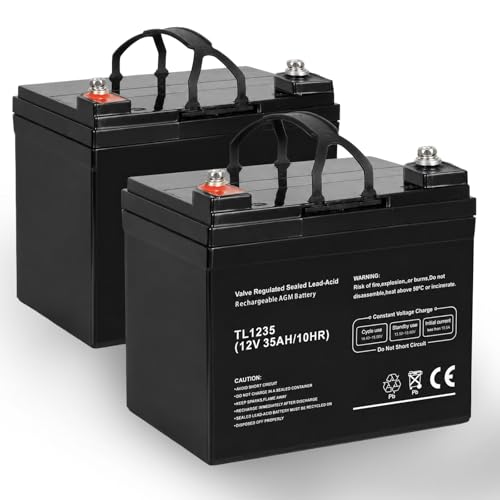
- Two sealed 12V 35Ah AGM batteries
- Maintenance-free and leak-proof construction
- Suitable for camping, UPS, RV, and solar use
Best For: Compact backup and off-grid systems needing two AGM batteries
Best High-Capacity Winter Setup

- 280Ah capacity with up to 3,584Wh
- Metal case with mounting feet
- Bluetooth monitoring and low-temperature protection
Best For: High-demand RV, camper, and off-grid power systems
Best Mobility AGM Battery
Interstate 12V 35Ah SLA Deep Cycle

- Designed for mobility and heavy-demand deep cycling
- Sealed, spill-proof, maintenance-free AGM design
- Compact Group U1/GT9L insert-terminal format
Best For: Compatible wheelchairs, scooters, trolling motors, and RV accessories
Long-Range Lithium Upgrade

- Two 100Ah LiFePO4 batteries
- Up to 15,000 cycles at 60% DOD
- BMS low-temperature cutoffs
Best For: High-capacity RV, solar, and marine setups
Compact AGM Workhorse

- Maintenance-free AGM construction
- 400A maximum five-second discharge
- Compact 40Ah light-vehicle battery
Best For: Scooters, wheelchairs, e-bikes, and go-karts
Portable Weather-Ready Power

- Lightweight 5.95-pound design
- IP67 water and dust protection
- 5,000+ charge cycles
Best For: Portable camping, emergency, and small backup power
Best High-Capacity Winter Bank
2-Pack 150Ah LiFePO4 Batteries

- 300Ah in parallel or 24V/150Ah in series
- Charging cutoff below 32°F
- Expandable up to 4S4P
Best For: Large RV, solar, and off-grid storage banks
Best 24V Marine Option
100Ah LiFePO4 Trolling Motor Battery

- 2,560Wh of rated energy
- Charging cutoff below 32°F
- Expandable to 20.48kWh with eight batteries
Best For: 24V marine, RV, and off-grid systems
Best Compact AGM Backup

- Compact 12V, 20Ah AGM design
- Maintenance-free and leak-proof
- Up to 600 charge and discharge cycles
Best For: Small UPS, alarm, emergency, and backup-power systems
Best Long-Life Lithium Upgrade – 12V 100Ah LiFePO4 Group 24 Battery
For shoppers comparing deep cycle batteries for winter use, this 12V 100Ah LiFePO4 battery combines low weight, long cycle life, and a battery-management system designed for temperature-related protection. Its Group 24 dimensions also make it a practical upgrade for many existing battery boxes.
Best For: RVs, boats, trolling motors, solar systems, and other 12V setups where low weight and long service life matter.
Pros:
- Rated for up to 4,500 cycles at 100% depth of discharge and up to 15,000 cycles at 60% depth of discharge.
- Weighs 21 pounds and fits the BCI Group 24 footprint; it is also compatible with larger Group 27 and 31 boxes.
- Includes low-temperature additives, waterproof construction, a 100A BMS, and a five-year manufacturer warranty.
Cons:
- The BMS stops discharge at -4°F and charging at 32°F, so charging in freezing conditions requires temperature awareness.
- It requires activation after the BMS places the battery into sleep mode.
This is a strong winter-ready choice when you want lithium efficiency and extended cycle life, provided the battery is protected from charging below its stated temperature cutoff.
Best Two-Battery AGM Pack – 12V 35Ah AGM Batteries, 2-Pack
This two-pack offers a straightforward AGM option for deep cycle batteries for winter use, with sealed construction, low self-discharge, and no routine maintenance. The 35Ah capacity suits smaller backup, camping, and off-grid systems.
Best For: Camping, RV backup, UPS systems, marine equipment, medical devices, and compact solar installations.
Pros:
- Includes two rechargeable 12V 35Ah sealed lead-acid AGM batteries for flexible installation.
- Leak-proof, vibration-resistant ABS casing is designed for demanding environments.
- Maintenance-free design with low self-discharge and M6 bolt terminals.
Cons:
- Lead-acid AGM chemistry is heavier than the lithium alternatives in this roundup.
- The supplied notes do not specify a low-temperature cutoff or winter-specific heating feature.
- The warranty is limited to one year.
Choose this pack when dependable, sealed lead-acid power and a two-battery configuration are more important than minimum weight or maximum cycle life.
Best High-Capacity Winter Setup – ECO-WORTHY 12V 280Ah LiFePO4
For high-demand applications, this 280Ah LiFePO4 model stands out among deep cycle batteries for winter use with a metal case, Bluetooth monitoring, and built-in low-temperature charging protection. Its large capacity is aimed at extended RV, camper, and off-grid runtimes.
Best For: RVs, campers, travel trailers, vans, and off-grid systems that need substantial stored energy and installation protection.
Pros:
- Provides 280Ah of capacity and up to 3,584Wh of stored energy.
- Metal enclosure, mounting feet, and internal cell holders support fire resistance and shock and vibration protection.
- Bluetooth monitoring, a safety switch, and a 200A BMS provide convenient control and protection.
- Built-in low-temperature protection automatically stops charging in cold conditions.
Cons:
- Its large capacity and metal enclosure may require more installation space than smaller batteries.
- It requires a 14.6V LiFePO4-compatible charger and specified solar-controller settings.
- The manufacturer warranty is three years.
This is the most capable option here for extended winter power demands, especially when remote monitoring, physical protection, and cold-weather charging safeguards are priorities.
Best Mobility AGM Battery – Interstate 12V 35Ah SLA Deep Cycle
This Interstate AGM battery is a specialized choice among deep cycle batteries for winter use, particularly for mobility equipment and compact backup applications. Its sealed, spill-proof design requires no routine maintenance and uses insert terminals with included hardware.
Best For: Electric wheelchairs, scooters, compatible trolling motors, RV accessories, and other devices using a Group U1 or GT9L-style 35Ah battery.
Pros:
- Professional-grade 12V, 35Ah AGM battery designed for heavy-demand deep-cycle use.
- Sealed, spill-proof, rechargeable, and maintenance-free VRLA construction.
- Compact Group U1 or GT9L size with insert terminals and terminal hardware included.
- Backed by a 12-month performance warranty.
Cons:
- At about 10.4 kg, it is relatively heavy for a 35Ah battery.
- The supplied notes do not identify a specific low-temperature performance rating.
- It is not intended as a replacement for golf cart batteries.
Verify the terminal style, dimensions, and compatibility guide before buying. For mobility equipment and similarly sized devices, this is a dependable sealed AGM replacement rather than a general-purpose high-capacity battery.
Long-Range Lithium Upgrade – 12V 100Ah LiFePO4 2-Pack
For shoppers comparing deep cycle batteries for winter use, this two-battery LiFePO4 package stands out for its large capacity, lightweight design, and stated low-temperature protections. Its BMS cuts off charging at 32°F and discharge at -4°F, so winter users should plan charging and storage accordingly.
Best For: RVs, solar systems, trolling motors, and other 12V setups needing substantial capacity and long cycle life.
Pros:
- Two 12.8V, 100Ah LiFePO4 batteries provide high-capacity storage.
- Rated for 4,500 cycles at 100% depth of discharge and up to 15,000 cycles at 60% depth of discharge.
- Lightweight 21-pound Group 24-size design with waterproof construction.
- Includes a BMS with protection against abnormal temperature, over-voltage, and short circuits.
Cons:
- The BMS stops charging below 32°F and discharging below -4°F.
- Requires activation if the BMS places the battery into sleep mode.
- Its 100Ah capacity and two-battery format may be more than small devices need.
This is the strongest capacity-and-longevity option in the group, especially for users upgrading from Group 24 lead-acid batteries. In genuinely cold conditions, however, its low-temperature charging cutoff makes temperature-aware charging essential.
Compact AGM Workhorse – VEVOR 12V 40Ah AGM Battery
This VEVOR AGM battery is a practical choice among deep cycle batteries for winter use when you need a compact, sealed lead-acid design for light electric equipment. It offers maintenance-free operation and a high short-duration discharge rating, but the supplied specifications do not state a minimum operating temperature.
Best For: Mobility scooters, electric wheelchairs, go-karts, e-bikes, and other light-duty electric vehicles.
Pros:
- Maintenance-free AGM construction avoids liquid top-ups.
- 40Ah capacity in a compact 7.8-by-6.5-by-6.7-inch package.
- Can deliver up to 400A for five seconds to support device startup.
- Designed for low self-discharge and high-temperature resistance.
Cons:
- Professional charging equipment is required, according to the product notes.
- At 40Ah, it offers less capacity than the 100Ah lithium option.
- The supplied information does not specify cold-weather charging or discharge cutoffs.
Choose this model when compact AGM construction and strong startup current matter more than maximum capacity. For winter use, verify the equipment and charger guidance before relying on it in freezing conditions.
Portable Weather-Ready Power – GOLDENMATE 12V 20Ah LiFePO4
For portable deep cycle batteries for winter use, this GOLDENMATE LiFePO4 model combines a low 5.95-pound weight with IP67 water and dust protection. Its low self-discharge supports storage for up to one year, although the supplied notes do not specify a winter temperature cutoff.
Best For: Emergency lighting, camping, small UPS systems, fish finders, kayaks, alarms, and compact solar or backup projects.
Pros:
- Lightweight 20Ah design weighs just 5.95 pounds.
- IP67 rating protects against dust and water exposure.
- Built-in 20A BMS protects against overcharging, over-discharging, over-current, and short circuits.
- Rated for more than 5,000 charge cycles and storage of up to one year with low self-discharge.
Cons:
- 20Ah capacity is best suited to smaller loads and compact systems.
- Continuous discharge is limited to 10A.
- Requires a compatible LiFePO4 charger, MPPT solar setup, or generator for recharging.
This is the most portable and weather-resistant choice here for modest power demands. Its sealed IP67 construction is useful outdoors, but winter buyers should confirm operating-temperature requirements because no cold-weather cutoff is listed.
Best High-Capacity Winter Bank – 2-Pack 150Ah LiFePO4 Batteries
For shoppers comparing deep cycle batteries for winter use, this two-battery LiFePO4 pack combines substantial capacity with built-in cold-temperature protection. Each 12V, 150Ah battery has a 100A BMS, and the pair can be wired in parallel for 300Ah or in series for 24V/150Ah.
Best For: RVs, solar sheds, tiny homes, marine house banks, and off-grid systems needing expandable storage through freezing weather.
Pros:
- Two 150Ah batteries provide 300Ah when connected in parallel.
- Independent BMS protection covers overcharge, over-discharge, over-current, short circuit, and temperature extremes.
- Low-temperature protection stops charging below 32°F and permits discharge down to -4°F.
- Supports expansion up to a 4S4P configuration, according to the supplied specifications.
Cons:
- Intended for energy storage, not engine starting or golf-cart propulsion.
- The two-battery setup weighs about 86 pounds combined.
- Requires compatible charging equipment and proper system wiring.
This is the strongest fit here for large winter-ready storage banks. Its automatic low-temperature charging cutoff is particularly useful in cold climates, while the 5-year warranty adds reassurance for long-term off-grid or backup use.
Best 24V Marine Option – 100Ah LiFePO4 Trolling Motor Battery
This 24V, 100Ah LiFePO4 battery is a practical candidate among deep cycle batteries for winter use when a boat or compatible RV system needs compact, rechargeable energy storage. It provides 2,560Wh of rated energy and includes a 100A BMS with low-temperature charging and discharge protection.
Best For: Compatible 24V trolling motors, marine house power, RVs, solar storage, and off-grid installations.
Pros:
- Provides 2,560Wh of rated energy in one enclosure.
- 100A BMS includes cell balancing, over-current, over-voltage, and temperature protection.
- Charging pauses below 32°F, while discharge protection activates below -4°F.
- Can expand to as many as eight matching batteries for up to 20.48kWh of rated energy.
Cons:
- Designed for auxiliary power and energy storage, not engine cranking.
- Requires a LiFePO4-compatible charger, controller, or DC-DC charging setup.
- Its 24V configuration is not a direct replacement for a 12V battery system.
For winter boating or a 24V off-grid setup, this battery offers a useful balance of capacity, expansion potential, and cold-weather safeguards. Confirm system voltage, charger compatibility, and available installation space before ordering.
Best Compact AGM Backup – UPLUS 12V 20Ah AGM Battery
For smaller backup systems, this compact AGM model offers a simpler alternative to lithium deep cycle batteries for winter use. The 12V, 20Ah sealed lead-acid battery uses an AGM design, has low self-discharge, and is rated for up to 600 charge and discharge cycles.
Best For: UPS systems, emergency lighting, alarms, small solar setups, mobility equipment, and other compact standby applications.
Pros:
- Compact 7.14 × 3.01 × 6.59-inch form factor for space-limited installations.
- Maintenance-free, leak-proof AGM construction.
- Standard F3 nut-and-bolt terminal supports listed replacement applications.
- Suitable for standby power, small solar systems, scooters, trolling motors, and portable power stations.
Cons:
- Its 20Ah capacity is much lower than the two LiFePO4 options.
- The supplied notes do not specify a dedicated low-temperature cutoff or winter operating range.
- Rated for up to 600 cycles, less than the 15,000-plus cycles claimed by the larger lithium pack.
This UPLUS battery makes the most sense when compact size, familiar AGM charging, and standby service matter more than maximum capacity or specialized cold-weather controls. Verify the dimensions and terminal style before purchasing.
How We Picked the Best Deep Cycle Batteries for Winter Use
We focused on battery chemistry, rated capacity, intended application, terminal style, protection features, and installation practicality. The selection includes AGM lead-acid batteries for simple, economical setups and LiFePO4 models for lower weight, deeper usable capacity, and longer cycle life.
Because cold-weather performance depends on more than the advertised amp-hour rating, we also considered battery management systems, charging requirements, enclosure durability, and whether each format suits common winter applications such as RVs, trolling motors, mobility equipment, and off-grid systems.
Quick Comparison
| Type | Best For | Main Advantage | Important Consideration |
|---|---|---|---|
| LiFePO4 | Frequent cycling and portable power | Light weight and long service life | Needs a compatible charger and cold-temperature charging protection |
| AGM | Budget installations and standby use | Simple charging and sealed construction | Heavier, with less usable capacity than lithium |
| 20–40Ah batteries | Mobility devices and small electronics | Compact size | Limited runtime for large loads |
| 100Ah or larger batteries | RV, marine, and off-grid systems | More energy reserve | Requires stronger mounting and suitable wiring |
Key Buying Factors for Deep Cycle Batteries for Winter Use
Cold-Weather Charging
LiFePO4 batteries generally should not be charged below freezing unless the battery has low-temperature charge protection or an internal heater. Confirm the manufacturer’s charging range before installing one in an unheated compartment. AGM batteries are usually simpler in cold conditions, but their capacity and starting performance still decline as temperatures fall.
Usable Capacity and Voltage
Compare usable watt-hours rather than amp-hours alone. A 12V 100Ah battery is approximately 1,200 watt-hours nominally, but actual runtime depends on discharge limits, inverter losses, temperature, and the device load. Check whether your equipment requires 12V or 24V, and avoid mixing batteries without manufacturer approval.
Protection and Durability
A quality BMS can protect lithium batteries from overcharge, over-discharge, excessive current, and temperature problems. For marine or outdoor use, look for sealed construction, secure terminals, and an appropriate water-resistance rating. Correct fusing and cable sizing remain essential.
Size, Weight, and Installation
Measure the battery compartment and verify terminal orientation before ordering. Large lithium batteries may provide substantial capacity at lower weight, while AGM batteries can require stronger supports because they are considerably heavier.
Who Should Buy Which Deep Cycle Batteries for Winter Use?
Choose a compact 20Ah to 40Ah AGM or LiFePO4 battery for mobility scooters, small electronics, alarms, and lightweight backup systems. For RVs, trolling motors, and off-grid loads, a 100Ah model is a more versatile starting point. Choose a 150Ah or 280Ah battery when extended runtime matters more than size and budget.
AGM is the straightforward choice for buyers who prioritize lower upfront cost, broad charger compatibility, and minimal configuration. LiFePO4 is usually better for frequent cycling, weight-sensitive installations, and long-term value—but only when its cold-weather charging limits are properly managed.