Choosing dependable battery storage is one of the most important decisions when building an off-grid cabin power system. The right battery affects how long you can run lights, refrigeration, pumps, electronics, and other essential loads between solar charging cycles.
These 10 options include traditional AGM batteries and high-capacity LiFePO4 models in 12V and 24V configurations. We compare their usable capacity, battery-management features, cycle life, installation needs, and value so you can match your storage bank to your cabin’s energy demands.
Best 10 Deep Cycle Batteries for Off Grid Cabins Picks for 2026
Reliable AGM Reserve

- Maintenance-free AGM design
- Below 3% monthly self-discharge
- Cold-weather discharge performance
Best For: Simple 12V cabin solar storage
Long-Life Lithium Workhorse

- 3,840Wh rated energy
- 200A protective BMS
- Series and parallel expansion
Best For: High-capacity, expandable 12V cabin systems
Smart Rack-Mount Storage
24V 100Ah WiFi LiFePO4 Battery

- 2.56kWh usable energy
- CAN/RS485 and optional WiFi
- Up to 16 units in parallel
Best For: Expandable, monitored 24V cabin solar systems
Compact High-Capacity Choice

- 3,840Wh storage capacity
- 55.1-pound compact design
- 200A BMS with low-temperature protection
Best For: Space-conscious 12V off-grid cabin systems
Efficient 24V Cabin Power

- 2.56kWh capacity with 2,560W continuous output
- 100A BMS and IP65 protection
- Expandable up to 2S4P with a 5-year warranty
Best For: 24V solar storage and off-grid cabin systems
High-Capacity 12V Option
Techex 12V 320Ah LiFePO4 Battery

- 320Ah capacity with high peak-discharge capability
- 200A smart BMS and Bluetooth monitoring
- Supports 4S4P expansion and 6,000+ cycles
Best For: High-capacity 12V cabin and DIY solar systems
Compact Expandable Storage
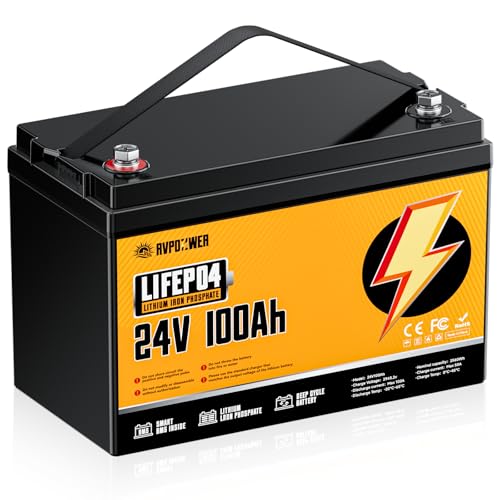
- 2,560Wh capacity in a 41.9-pound package
- 100A BMS with IP65 protection
- Expandable to 20.48kWh with 4P2S connections
Best For: Compact, scalable 24V cabin solar storage
Lightweight Long-Life Pick

- 24-pound Group 31 form factor
- 100A Smart BMS with cold-charge cutoff
- Up to 15,000 cycles and 4S4P expansion
Best For: Cabin solar banks and expandable 12V systems
Compact Capacity Choice

- 1280Wh stated storage in a 24-pound package
- 100A BMS and three charging options
- Expandable to 4P or 4S configurations
Best For: Compact cabin solar and backup-power installations
All-Weather System Pick

- Cold-charge cutoff below 32°F
- 1280Wh rating with 100A Smart BMS
- Supports up to 4S4P expansion
Best For: Seasonal cabins and expandable off-grid solar banks
Reliable AGM Reserve – 12V 200Ah AGM Battery
For shoppers comparing deep cycle batteries for off grid cabins, this Renogy AGM battery offers a straightforward 12V, 200Ah lead-acid option. Its maintenance-free AGM construction, low self-discharge rate, and cold-weather performance make it practical for stationary solar storage where weight and size are manageable.
Best For: Cabins needing a maintenance-free 12V AGM battery for dependable, low-complexity energy storage.
Pros:
- AGM construction avoids acid leakage and routine maintenance.
- Self-discharge is rated below 3% per month at 77°F.
- Designed for stable discharge performance below 32°F.
- Provides 200Ah capacity at the C20 reference rate.
Cons:
- At 127.9 pounds, it is substantially heavier than the listed lithium alternatives.
- The manufacturer recommends upright installation and prohibits upside-down mounting.
- Cycle life varies with depth of discharge, temperature, discharge rate, and charging method.
This is a sensible choice when a cabin system values simple AGM operation over minimum weight. Confirm that the battery’s 12V configuration, 20.5-by-9.4-by-8.8-inch footprint, and 127.9-pound weight suit the installation.
Long-Life Lithium Workhorse – 12V 300Ah LiFePO4 Battery
This 12.8V, 300Ah LiFePO4 battery is a strong capacity-focused option among deep cycle batteries for off grid cabins. It provides 3,840Wh, includes a 200A BMS, and supports series or parallel expansion for systems that may grow over time.
Best For: Off-grid cabins, RVs, and solar systems needing high 12V capacity, long cycle life, and expandable storage.
Pros:
- Rated for 3,840Wh and 300Ah of capacity.
- Claims up to 4,000 cycles at 100% depth of discharge and up to 15,000 at 60%.
- 200A BMS protects against overcharge, over-discharge, over-current, over-voltage, and short circuits.
- Up to four batteries can be connected in series or parallel.
Cons:
- Its 25.54 kg weight and approximately 20.47-by-8.7-by-9.32-inch size require planning.
- System compatibility should be checked before connecting it to a cabin inverter or charger.
- The supplied specifications identify the battery type as “Lithium Metal,” so buyers should verify the listing and documentation for chemistry details.
With its large capacity and expansion flexibility, this battery suits cabins with substantial daily loads. Check the inverter, charger, wiring, and available mounting space before building the bank.
Smart Rack-Mount Storage – 24V 100Ah WiFi LiFePO4 Battery
For a 24V cabin power system, the Dyness DL2.5 combines 2.56kWh of usable energy with rack-mount installation and smart monitoring options. It is particularly relevant to buyers seeking deep cycle batteries for off grid cabins that can integrate with a compatible low-voltage inverter and expand later.
Best For: 24V off-grid solar installations that benefit from rack mounting, remote monitoring, and modular expansion.
Pros:
- Grade-A LiFePO4 cells are rated for 6,000-plus deep cycles and a 10-year design lifespan.
- Built-in 100A smart BMS provides multiple safety protections.
- Supports CAN/RS485 communication and optional WiFi monitoring.
- Up to 16 units can be connected in parallel for expansion to 40.96kWh.
Cons:
- Its 25.6V architecture is not a direct replacement for a 12V battery system.
- Compatibility with the cabin’s inverter and communication setup must be confirmed.
- The listed battery weight is approximately 50.7 to 58 pounds, depending on the specification shown.
This is a compelling fit for an organized 24V or rack-based installation, especially when remote status checks matter. Verify inverter compatibility, mounting arrangements, and whether the optional WiFi module is included or required.
Compact High-Capacity Choice – RENOGY REGO 12V 300Ah LiFePO4
The RENOGY REGO 12V 300Ah battery is designed for buyers who need substantial storage without the bulk of a comparable lead-acid bank. For deep cycle batteries for off grid cabins, its compact footprint, 3,840Wh capacity, low-temperature protections, and 5-year service guarantee make it a practical premium lithium option.
Best For: Cabins needing compact 12V lithium storage with high capacity, cold-weather safeguards, and future expansion.
Pros:
- Weighs 55.1 pounds and is designed to be more space-efficient than other 12V 300Ah LiFePO4 batteries.
- 200A BMS protects against charging, discharging, current, and short-circuit issues.
- Low-temperature protections pause charging below 32°F and use below -4°F.
- Supports over 5,000 cycles at 80% depth of discharge and up to 4S4P expansion.
Cons:
- Charging and use are restricted in very low temperatures by the protection system.
- Its 12V configuration may require multiple units for higher-voltage cabin systems.
- The 300Ah capacity and 200A output may be more than a small, lightly loaded cabin needs.
This battery stands out when installation space and weight are important but the system still needs 3,840Wh of storage. Match it with compatible charging equipment and use the stated 15.11-by-7.63-by-9.78-inch dimensions when planning the battery compartment.
Efficient 24V Cabin Power – 24V 100Ah LiFePO4 Battery
For deep cycle batteries for off grid cabins, this 24V 100Ah LiFePO4 model offers 2.56kWh of energy while keeping current lower than a comparable 12V setup. Its 100A BMS, lightweight design, and expandable configuration make it a practical option for solar storage and recurring cabin use.
Best For: Off-grid cabins, solar storage, RVs, boats, and home backup systems that use a 24V battery bank.
Pros:
- Provides 2.56kWh of energy with up to 2,560W continuous output.
- Built-in 100A BMS helps protect against overcharge, over-discharge, overcurrent, high temperature, and short circuits.
- Supports up to 2S4P expansion and weighs about 41.7 pounds.
- Includes IP65 protection, low-temperature cutoff protection, certifications, and a 5-year warranty.
Cons:
- Requires a compatible 29.2V LiFePO4 charger.
- Charging should be kept at 5°C (41°F) or above.
- Its 24V configuration may require compatible cabin equipment or an inverter.
This battery is a strong fit when a cabin system benefits from 24V efficiency, moderate storage capacity, and future expansion. Confirm charger compatibility and available installation space before buying.
High-Capacity 12V Option – Techex 12V 320Ah LiFePO4 Battery
Among deep cycle batteries for off grid cabins, the Techex 12V 320Ah model stands out for its high stated capacity and strong power-delivery capability. Bluetooth monitoring, low-temperature charging protection, and support for larger battery-bank configurations add flexibility for demanding off-grid installations.
Best For: Cabins using 12V equipment, high-capacity solar storage, RVs, trolling motors, and DIY battery systems.
Pros:
- Uses 320Ah of stated capacity and supports up to 300A peak discharge for 10 seconds.
- 200A smart BMS provides protection and automatic overload recovery.
- Built-in Bluetooth enables real-time monitoring from a smartphone.
- Supports 4S4P configurations and is rated for more than 6,000 deep cycles.
Cons:
- At 72 pounds, it is heavier than the 24V alternatives in this roundup.
- Its 12V format may require more current for the same power output than a 24V system.
- Fast charging requires a compatible 14.6V charger, and charging is cut off below 0°C (32°F).
The Techex is best suited to buyers who prioritize substantial 12V storage, monitoring, and high startup power. Its weight and charging requirements should be considered during cabin installation planning.
Compact Expandable Storage – 24V 100Ah LiFePO4 Battery
This 24V 100Ah battery is a practical contender among deep cycle batteries for off grid cabins, combining 2,560Wh of energy with a compact, lightweight design. Its 100A BMS, IP65 protection, and support for series-parallel expansion suit cabins that need dependable solar storage without a bulky lead-acid footprint.
Best For: Space-conscious off-grid cabins, solar systems, RVs, boats, and home backup storage.
Pros:
- Delivers 2,560Wh and is rated for 4,000–20,000 deep cycles.
- Weighs 41.9 pounds and is described as smaller and lighter than traditional lead-acid batteries.
- Supports expansion up to 20.48kWh through 4P2S connections.
- Includes a 100A BMS, IP65 protection, CE and RoHS certification, and a 5-year warranty.
Cons:
- Its 24V design requires compatible charging and system components.
- The supplied specifications describe a 100Ah battery, so larger cabin loads may require multiple units.
- Series-parallel expansion requires careful system planning and compatible connections.
Choose this model when installation space and scalable storage are priorities. It offers a useful balance of 24V efficiency, portability, and expansion potential for a growing cabin power system.
Lightweight Long-Life Pick – Group 31 LiFePO4 Battery
For deep cycle batteries for off grid cabins, this 12V 100Ah LiFePO4 model offers a practical balance of low weight, long service life, and expandable storage. Its Group 31 dimensions can simplify replacement in compatible battery compartments.
Best For: Cabin solar banks, RV power systems, and users who need a lightweight 12V battery with scalable capacity.
Pros:
- 100A Smart BMS provides overcharge, over-discharge, over-current, and short-circuit protection.
- Automatic low-temperature charging cutoff below 32°F helps protect the cells.
- 24-pound Group 31 design and up to 15,000 cycles at 60% depth of discharge.
- Supports up to 4S4P expansion for systems up to 51.2V and 400Ah.
Cons:
- Charging below 32°F is disabled, so cold-weather cabins need appropriate battery placement or heating.
- A suitable LiFePO4 charger or charge controller is required.
This is a strong fit for an off-grid cabin where daily cycling, easy installation, and future expansion matter more than a compact emergency-only battery. Confirm the Group 31 dimensions and charging equipment before purchase.
Compact Capacity Choice – 1280Wh Mini LiFePO4 Battery
When choosing deep cycle batteries for off grid cabins, this 12V 100Ah LiFePO4 battery provides 1280Wh of stated storage in a compact Group 31-sized package. It can be charged from a LiFePO4 charger, solar controller, or alternator.
Best For: Small cabin solar systems, backup lighting, and installations needing a compact 12V battery with series or parallel expansion.
Pros:
- Delivers a stated 1280Wh of usable energy with up to 100A continuous discharge.
- Built-in 100A BMS helps protect against overcharging, over-discharging, and over-current.
- Compact 24-pound design fits a BCI Group 31 battery box.
- Can expand to 4P or 4S for up to 400Ah or 51.2V.
Cons:
- The manufacturer recommends a 14.6V 20A charger for the advertised five-hour charging time.
- Only a two-year manufacturer warranty is listed.
- Users must verify the 12.9 by 6.69 by 8.5-inch dimensions before installation.
Its compact size and expansion options make it useful for a modest cabin power setup that may grow over time. Compare the battery’s 100A output with the cabin’s inverter and appliance requirements.
All-Weather System Pick – Smart BMS Group 31 Battery
For deep cycle batteries for off grid cabins exposed to seasonal temperature changes, this 12V 100Ah Group 31 LiFePO4 battery combines low-temperature charge protection with a 100A Smart BMS. Its 1280Wh rating and expandable architecture suit a range of cabin solar applications.
Best For: Seasonal cabins, off-grid solar storage, and users planning a larger 12V or 48V battery bank.
Pros:
- Low-temperature cutoff prevents charging below 32°F, helping protect the battery in cold conditions.
- 24-pound Group 31 form factor is a lightweight replacement for compatible lead-acid setups.
- Rated for up to 15,000 cycles at 60% depth of discharge and a 10-year service life.
- Supports 4S4P configurations up to 51.2V and 400Ah.
Cons:
- Cold-weather charging requires planning because charging is blocked below 32°F.
- Actual system capacity depends on the number of batteries and the compatible charger or solar controller.
This model stands out for cabins that need repeatable daily cycling and a path to higher storage capacity. Its Group 31 dimensions, charging limits, and battery-bank configuration should be checked against the rest of the installation.
How We Picked the Best Deep Cycle Batteries for Off Grid Cabins
We selected these batteries based on the features that matter most in remote power systems: nominal voltage, amp-hour capacity, estimated energy storage, chemistry, cycle-life claims, battery-management protection, temperature safeguards, monitoring options, and expandability. We also considered whether each model is better suited to a compact cabin, a larger solar bank, or a backup system with occasional use.
Product specifications can vary by configuration, so verify the manufacturer’s charging, wiring, and installation requirements before building a battery bank. A qualified installer should review systems with high continuous loads or multiple parallel and series connections.
Quick Comparison
| Battery type | Typical strengths | Best fit |
|---|---|---|
| AGM lead-acid | Lower upfront cost, simple setup, proven technology | Budget systems and occasional cabin use |
| 12V LiFePO4 | Light weight, high usable capacity, efficient cycling | Small to medium cabins and modular banks |
| 24V LiFePO4 | Lower current at the same power, efficient larger systems | Higher-demand cabins and longer cable runs |
| High-capacity LiFePO4 | More storage in fewer units, reduced wiring complexity | Full-time or heavily equipped off-grid cabins |
Key Buying Factors for Deep Cycle Batteries for Off-Grid Cabins
Capacity and Usable Energy
Battery capacity is commonly listed in amp-hours, but watt-hours are more useful for comparing different voltages. Multiply volts by amp-hours to estimate nominal energy. Lead-acid batteries generally provide less practical capacity because frequent deep discharges can shorten their life; LiFePO4 batteries usually offer a larger usable portion of their rated capacity.
Voltage and System Compatibility
Match the battery bank to the inverter, solar charge controller, and cabin wiring. A 12V system can work well for modest loads, while 24V systems reduce current and voltage drop as power requirements increase. Do not mix incompatible voltages, chemistries, ages, or battery models without explicit manufacturer approval.
Protection and Cold-Weather Operation
Built-in battery-management systems can help protect lithium batteries from overcharge, over-discharge, excessive current, and temperature extremes. Low-temperature charging protection is especially important for unheated cabins. AGM batteries also require appropriate ventilation and charging settings, despite being sealed.
Cycle Life, Charging, and Maintenance
Consider how often the cabin is occupied and how deeply the bank will be discharged. LiFePO4 typically offers longer cycle life and less maintenance, while AGM may cost less initially. Confirm that your solar controller and inverter have settings designed for the selected chemistry.
Who Should Buy Which Deep Cycle Batteries for Off Grid Cabins?
Choose AGM if you need a lower-cost solution for light, seasonal, or backup use and can accommodate greater weight. Choose a 12V LiFePO4 battery for a compact cabin, RV-style setup, or modular system where lower weight and efficient daily cycling matter. A 24V LiFePO4 battery is a stronger choice for larger inverters, substantial appliances, and longer cable runs. For high-demand or full-time cabins, high-capacity 300Ah-plus models can simplify the bank and provide more reserve, provided the inverter, charger, fusing, and wiring are correctly sized.