The right pipe cutter can make plumbing repairs, irrigation work, and DIY installations faster and cleaner than a hacksaw. This roundup compares 10 capable options for cutting plastic, PEX, copper, aluminum, steel, and multilayer tubing.
Use the buying guide below to match cutting capacity, tool design, access, and material compatibility to the projects you actually plan to tackle at home.
Best 10 Pipe Cutters for Home Use Picks for 2026
Best Overall Ratchet Pick
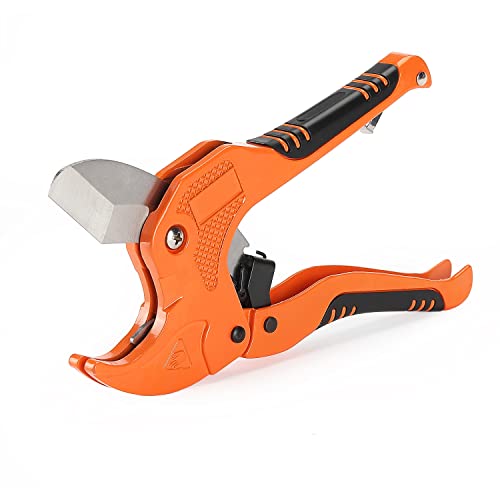
- Ratchet action supports quick, low-effort cuts
- Handles common plastic pipes and multilayer tubing
- Folding lock improves storage and safety
Best For: Home plastic-pipe repairs up to 1-5/8 inches
Best for Angled Cuts

- Makes 30- and 45-degree angled cuts
- Spring-loaded for quick one-hand positioning
- Cuts tubing and hoses from 1/8 to 1-5/8 inches
Best For: Household tubing, hoses, and angled cord-cover cuts
Best Single-Stroke Option

- Single-stroke action simplifies plastic-pipe cutting
- Reversible blade offers extended blade life
- Lifetime defect warranty from RIDGID
Best For: PVC and other compatible plastic pipe up to 1-5/8 inches
Best for Large-Diameter Pipe

- Cuts plastic pipe up to 2-1/2 inches
- Ratchet and self-locking design support controlled cuts
- Includes a spare SK5 steel replacement blade
Best For: Large-diameter plastic pipe and demanding DIY repairs
Compact Auto-Feed Pick
RIDGID Model 118 2-in-1 Cutter

- AUTOFEED helps advance the cutter
- Cuts 1/4- to 1-1/8-inch metal tubing
- Compact design for close quarters
Best For: Small-diameter metal tubing in tight spaces
Quick-Adjust Precision Pick

- QuickLock enables single-handed adjustment
- Cuts copper and stainless steel
- Minimal cutting radius for confined spaces
Best For: Small copper or stainless steel pipes
Versatile Close-Quarters Pick

- Cuts four listed tubing materials
- Compact design for tight spaces
- Includes a spare cutter wheel
Best For: General small-tubing home repairs
Versatile Tubing Pick

- Cuts 3/16-inch to 1-1/8-inch tubing
- Works with copper, brass, aluminum, and thin-wall steel
- Includes a fold-away reamer and lifetime warranty
Best For: Home tubing repairs across several common metals
Ratchet-Action Plastic Cutter
RIDGID RC-2375 Ratchet Pipe Cutter
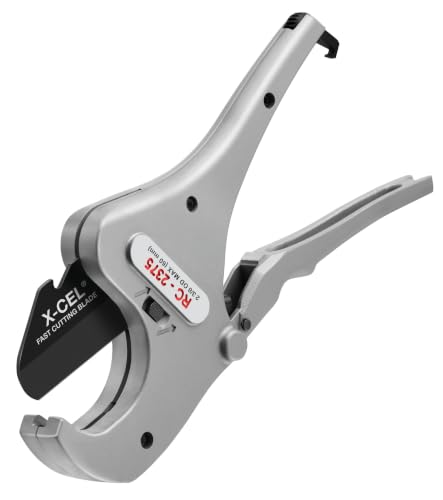
- Cuts plastic and multilayer tubing up to 2-3/8 inches
- Ratchet mechanism helps reduce hand force
- Tool-free quick-change blade system
Best For: Home plumbing projects using PVC, PEX, and related tubing
Best Overall Ratchet Pick – Bates PVC Pipe Cutter
For homeowners comparing pipe cutters for home use, the Bates ratchet cutter offers an accessible design for common plastic tubing. Its ratcheting action, textured grip, and compact locking feature make it practical for quick maintenance tasks.
Best For: Home repairs involving PVC, CPVC, PP, PEX, PE, rubber hose, and multilayer tubing up to 1-5/8 inches.
Pros:
- Ratchet mechanism helps reduce effort and speed up cuts.
- Durable manganese-steel construction with a comfortable rubber-textured handle.
- Safety buckle allows compact storage and helps prevent accidental opening.
- Triangle-edged blade design improves access around the pipe.
Cons:
- Not suitable for 2-inch PVC or metal pipes.
- Its capacity is limited to 1-5/8 inches.
This is a sensible all-around choice for occasional household plumbing and tubing work, especially if easy handling and storage matter more than metal-cutting capability.
Best for Angled Cuts – WORKPRO PEX and Hose Cutter
The WORKPRO stands out among pipe cutters for home use when an angled cut is useful. Its 30- and 45-degree cutting designs, spring-loaded operation, and broad tubing compatibility suit household maintenance and small repair projects.
Best For: Homeowners and plumbers cutting PEX, PPR, PE, PP, and rubber hoses from 1/8 to 1-5/8 inches, including rectangular cord covers.
Pros:
- Supports dedicated 30- and 45-degree cuts for rectangular or square covers.
- Spring-loaded design enables faster positioning and one-hand operation.
- Lightweight aluminum-alloy body helps reduce fatigue.
- 7Cr17MoV blade is designed for even, accurate cuts and rust resistance.
Cons:
- Perfectly straight cuts require support on both sides of the pipe.
- The angled features may be unnecessary for basic round-tube repairs.
Choose this cutter if your projects include cord covers or other angled cuts; for simple straight cuts alone, its specialized stand may offer less benefit.
Best Single-Stroke Option – RIDGID PC-1250 Cutter
For straightforward pipe cutters for home use, the RIDGID PC-1250 focuses on fast single-stroke cutting. Spring-loaded handles help with positioning, while the reversible blade extends service life for compatible plastic pipe and tubing.
Best For: Cutting PVC, CPVC, PP, PEX, and PE pipe with outside diameters from 1/8 to 1-5/8 inches.
Pros:
- Single-stroke design provides an easy cutting action.
- Spring-loaded handles speed up positioning between cuts.
- Reversible blade provides two times the blade life.
- Lifetime warranty covers defects in material or workmanship.
Cons:
- Not suitable for multilayer tubing.
- Designed for plastic materials rather than metal pipe.
- Maximum outside-diameter capacity is 1-5/8 inches.
This is a focused option for users who want a simple plastic-pipe cutter from an established tool brand, provided their projects do not involve multilayer tubing.
Best for Large-Diameter Pipe – VEVOR 2-1/2-Inch Cutter
Among pipe cutters for home use, the VEVOR is the choice for larger plastic pipe. Its ratcheting drive, V-shaped blade, locking mechanism, and 2-1/2-inch capacity are suited to demanding DIY plumbing and repair work.
Best For: Home DIY users, plumbers, and mechanics cutting PVC, CPVC, PP-R, PEX, PE, and rubber hose up to 2-1/2 inches outside diameter.
Pros:
- Large capacity handles pipe up to 2-1/2 inches in outside diameter.
- Ratcheting drive and self-locking design help control the cut and reduce effort.
- SK5 steel blade is Teflon-coated and designed for clean, stable cuts.
- Includes a spare replacement blade for convenient maintenance.
Cons:
- At 1.37 pounds, it is heavier than compact cutters.
- Its larger frame may be excessive for small tubing.
- It is intended for plastic pipe and rubber hose, not metal pipe.
If your projects include larger PVC or PEX, the extra capacity and ratcheting leverage make this a more capable choice than compact home cutters, though it takes up more space.
Compact Auto-Feed Pick – RIDGID Model 118 2-in-1 Cutter
For home use, the RIDGID Model 118 is a compact option for cutting 1/4- to 1-1/8-inch copper, brass, and aluminum tubing. Its close-quarters design and AUTOFEED mechanism are useful when space is limited and you want the cutter to advance with less manual adjustment.
Best For: Home plumbing repairs involving small-diameter metal tubing in confined spaces.
Pros:
- 2-in-1 close-quarters design with automatic feed.
- Handles copper, brass, and aluminum tubing from 1/4 to 1-1/8 inches.
- Compact 2-inch-by-6.9-inch design with an ergonomic grip.
Cons:
- The stated cutting range is limited to 1-1/8 inches.
- Its listed professional use may be more capability than occasional users need.
This is a strong choice among pipe cutters for home use when access is tight and automatic feeding is a priority. Choose it for compatible metal tubing rather than larger pipe work.
Quick-Adjust Precision Pick – KNIPEX TubiX S Pipe Cutter
The KNIPEX TubiX S is a hand-powered choice for home use that combines a minimal cutting radius with a QuickLock mechanism. It cuts copper and stainless steel pipes from 1/8 to 1-1/8 inches, making it suited to precise work where access and quick positioning matter.
Best For: Home users cutting small copper or stainless steel pipes in confined spaces.
Pros:
- QuickLock mechanism supports single-handed adjustment and clamping.
- Spring-loaded cutting wheel enables quick positioning.
- Preset scale accommodates 1/8- to 1-1/8-inch pipe diameters and wall thicknesses up to 2 mm.
Cons:
- It is limited to copper and stainless steel pipes in the supplied specifications.
- No warranty is listed.
- Its 1-1/8-inch maximum diameter will not cover larger pipe jobs.
With its compact 3-inch format and quick adjustment, the TubiX S is a practical contender among pipe cutters for home use. It is best matched to small, compatible pipes rather than broad material versatility.
Versatile Close-Quarters Pick – RIDGID Model 101 Cutter
The RIDGID Model 101 is a lightweight close-quarters cutter for home projects involving 1/4- to 1-1/8-inch tubing. It works with hard and soft copper, aluminum, brass, and plastic, while the knurled feed-screw knob helps control cutting pressure.
Best For: Home repair kits that need one compact manual cutter for several small tubing materials.
Pros:
- Supports hard and soft copper, aluminum, brass, and plastic.
- Close-quarters design suits tight spaces and small diameters.
- Includes a spare cutter wheel for continued use.
- Lightweight steel slide and wheel housing with a lifetime defect warranty.
Cons:
- Manual operation requires setting cutting pressure with the feed screw.
- The maximum stated capacity is 1-1/8 inches.
- Its compact format is intended for small tubing rather than larger pipes.
For shoppers comparing pipe cutters for home use, the Model 101 stands out for material flexibility and its included spare wheel. It is a sensible general-purpose pick when automatic feed is not required.
Heavy-Duty Steel Specialist – QWORK Heavy Duty Pipe Cutter
For home projects involving rigid steel or iron pipe, the QWORK is one of the more substantial pipe cutters for home use. Its 1/8-inch to 2-inch capacity, wide rollers, and long handle are designed for stable tracking and lower-effort operation.
Best For: Cutting iron and steel pipe from 1/8 inch to 2 inches in diameter.
Pros:
- Handles a broad 1/8-inch to 2-inch size range.
- Steel ball thrust bearing feed system supports controlled, square, burr-free cuts.
- Long handle provides extra leverage, while wide rollers help maintain alignment.
- Includes a replacement blade.
Cons:
- Not suitable for aluminum or copper pipe.
- Its heavy-duty steel-pipe focus may be more tool than needed for lighter tubing tasks.
The QWORK is a practical choice when material compatibility and cutting capacity matter more than compactness. Confirm that your pipe is iron or steel before buying.
Versatile Tubing Pick – RIDGID 32920 Model 15 Cutter
The RIDGID 32920 is a compact option among pipe cutters for home use when you need clean cuts on smaller tubing. It covers 3/16 inch to 1-1/8 inch and includes a fold-away reamer for preparing the tube after cutting.
Best For: Cutting copper, brass, aluminum, and thin-wall steel tubing from 3/16 inch to 1-1/8 inch.
Pros:
- Works with copper, brass, aluminum, and thin-wall steel.
- Large ergonomic X-CEL knob is designed for a firm grip.
- Fold-away reamer helps clean the cut for a better connection.
- Covered by RIDGID’s lifetime warranty against material or workmanship defects.
Cons:
- Its 1-1/8-inch maximum capacity is narrower than larger pipe cutters.
- Designed for tubing rather than large rigid pipe.
This is a strong fit for household plumbing and light tubing work where material versatility and a built-in reamer are useful. Check the outside diameter of your tubing before ordering.
Ratchet-Action Plastic Cutter – RIDGID RC-2375 Ratchet Pipe Cutter
For plastic and multilayer tubing, the RIDGID RC-2375 offers a wide capacity and ratcheting operation that reduces hand force. It is a capable choice among pipe cutters for home use when working with PVC, PEX, CPVC, and similar materials.
Best For: Clean cuts on plastic and multilayer tubing from 1/8 inch to 2-3/8 inches outside diameter.
Pros:
- Handles PVC, CPVC, PP, PEX, PE, and rubber hose.
- Ratchet action and blade design reduce required hand force.
- Produces burr-less, square cuts and includes 1/2-inch grip markings for measuring.
- Tool-free X-CEL quick-change blade system simplifies blade replacement.
Cons:
- Not intended for metal pipe or tubing.
- Larger and heavier than a basic small-tubing cutter.
The RC-2375 makes sense for home plumbing projects centered on plastic or multilayer tubing, especially when a broad capacity and reduced hand effort are priorities. Choose another cutter if metal compatibility is essential.
How We Picked the Best Pipe Cutters for Home Use
We focused on practical factors that matter in a home workshop: compatible materials, cutting range, ease of use, access in confined spaces, blade or wheel design, and the type of work each tool is built to handle. The selection includes ratcheting plastic cutters, single-stroke tools, close-quarters tubing cutters, screw-feed models, and heavier-duty options for larger pipe.
Because no single cutter handles every material well, the list balances specialized tools with versatile choices. Always confirm the cutter’s stated capacity and material compatibility before cutting.
Quick Comparison
| Best For | Recommended Type | Why It Matters |
|---|---|---|
| PEX and flexible tubing | Ratchet or angled cutter | Supports controlled cuts without crushing the tubing |
| PVC and plastic pipe | Ratchet or single-stroke cutter | Produces quick, relatively clean cuts |
| Copper and aluminum tubing | Wheel-style tubing cutter | Scores the tube gradually for a square cut |
| Steel pipe | Heavy-duty wheel cutter | Uses a stronger frame and cutting wheel |
| Tight spaces | Close-quarters cutter | Fits around tubing where a full-size tool cannot |
| Large plastic or multilayer pipe | Large-capacity ratchet cutter | Provides leverage for wider outside diameters |
Key Buying Factors for Pipe Cutters for Home Use
Material Compatibility
Choose a cutter designed for the material you will cut most often. Plastic and PEX cutters use blades, while copper, brass, aluminum, and steel tubing typically require cutting wheels. Using the wrong tool can damage the pipe, dull the blade, or create an uneven end.
Capacity and Outside Diameter
Check the maximum outside diameter—not just the nominal pipe size. The products here range from small tubing capacities to tools designed for pipe around 2 inches or more. A cutter that is too small will not close around the workpiece.
Access and Handle Design
For exposed pipe, a standard handle or ratcheting design is usually easiest. For repairs behind cabinets, under sinks, or near fittings, a compact close-quarters cutter can be more useful than a larger model.
Cut Quality and Effort
Ratchet cutters reduce hand force on plastic, while wheel cutters provide controlled, square cuts on metal tubing. Look for an ergonomic grip, a replaceable or durable blade, and smooth adjustment when repeated cuts are required.
Who Should Buy Which Pipe Cutters for Home Use?
For occasional PVC or PEX repairs, choose a compact ratchet cutter with a capacity that covers your common pipe sizes. If you work mainly with copper or aluminum tubing, select a wheel-style tubing cutter, especially one designed for close quarters. DIYers handling several plastic sizes may prefer a larger-capacity ratchet model, while anyone cutting steel should choose a purpose-built heavy-duty pipe cutter. For mixed plastic and multilayer tubing projects, a versatile aluminum or ratchet-action model can reduce the need for multiple tools.