When showers, laundry, and dishes overlap, the right tankless water heater can make daily hot-water demand easier to manage. But a high advertised flow rate does not guarantee the same performance in every home.
These 10 gas models include natural gas and propane options for indoor and outdoor installation. Use the buying guide below to narrow your choices by real-world flow needs, fuel, venting, and installation costs.
Best 10 High Flow Tankless Water Heaters Picks for 2026
Highest Rated Flow
MIZUDO 10.3 GPM Natural Gas Heater

- 10.3 GPM stated maximum; 199,000 BTU
- 0.53 GPM low-flow activation
- Wi-Fi app and Alexa compatibility
Best For: Busy natural-gas households seeking high stated flow and smart controls
Propane Pick

- Propane-powered; 190,000 BTU
- 8.5 GPM stated maximum
- Two-year manufacturer warranty
Best For: Propane-equipped homes with several hot-water outlets
Efficiency-Focused Choice
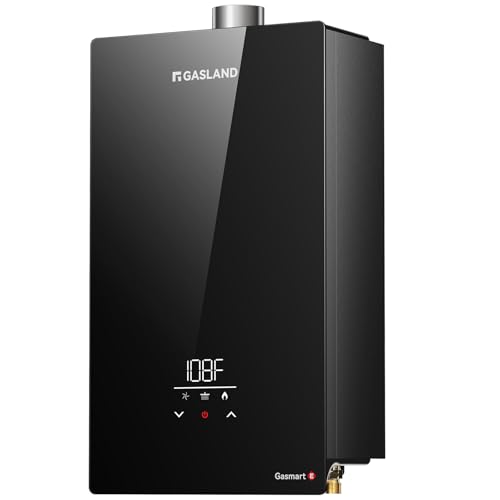
- 7.6 GPM stated maximum; 199,000 BTU
- Listed 0.8 UEF
- CSA certified with listed safety protections
Best For: Natural-gas buyers comparing efficiency ratings and compact dimensions
Specified Temperature-Rise Pick

- 8 GPM at a stated 33°F rise
- 199,000 BTU natural-gas input
- Listed 0.81 UEF
Best For: Buyers evaluating flow against a specified temperature rise
Highest Flow with Recirculation

- Up to 11.1 GPM
- Built-in Smart-Circ pump
- Natural gas or propane
Best For: High-flow households wanting built-in recirculation
Indoor Natural Gas Pick

- 7.0 GPM at 35°F rise
- 160,000 BTU/hr output
- Internal leak detection
Best For: Indoor natural-gas homes with multiple water-use points
Flexible Venting Pick
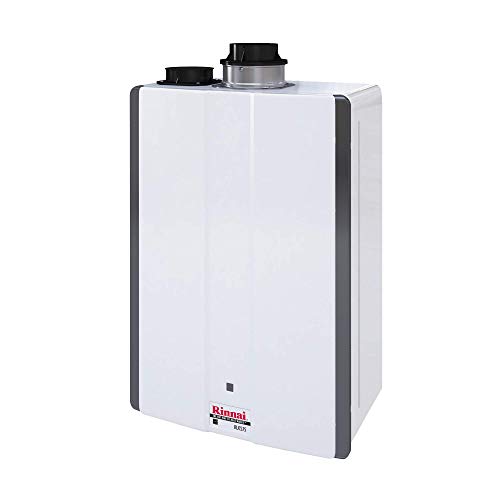
- Up to 7.5 GPM
- Multiple venting options
- Indoor natural-gas model
Best For: Indoor installations prioritizing venting flexibility
Indoor Propane Pick
Rheem RTG 7.0 GPM Propane Tankless Heater

- 7.0 GPM at a 35°F rise
- 160,000 BTU/hr; 0.82 UEF
- Indoor direct-vent installation
Best For: Propane homes needing an indoor heater for multiple outlets
Outdoor Natural Gas Pick
Rheem RTG 7.0 GPM Natural Gas Heater
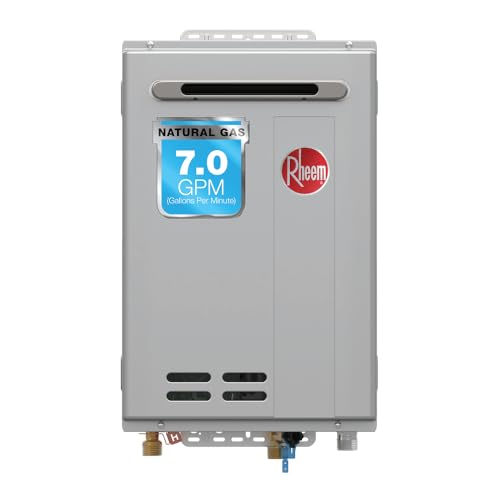
- 7.0 GPM at a 35°F rise
- 160,000 BTU/hr; 0.82 UEF
- Outdoor mounting avoids indoor venting
Best For: Natural-gas homes with a suitable outdoor wall location
Outdoor Propane Pick
Rheem RTG 7.0 GPM Propane Heater

- 7.0 GPM at a 35°F rise
- Outdoor propane installation
- Heat-output figures conflict in listing
Best For: Propane homes with a suitable outdoor mounting location
Highest Rated Flow – MIZUDO 10.3 GPM Natural Gas Heater
Among these high flow tankless water heaters, this indoor MIZUDO has the highest stated maximum flow rate at 10.3 GPM. Its 199,000 BTU input is intended for simultaneous hot-water use across two to three bathrooms and other household fixtures.
Best For: Busy households with natural gas that want high stated flow and app-based controls.
Pros:
- Stated maximum flow of 10.3 GPM with 199,000 BTU input.
- Activates at a stated 0.53 GPM, useful for lower-flow fixtures.
- Wi-Fi app, Alexa compatibility, and adjustable temperature up to 149°F.
Cons:
- Not recommended above 3,000 feet.
- Indoor installation requires a dedicated 3-inch by 5-inch concentric vent kit; professional installation is recommended.
The high flow rating makes this a strong candidate for multiple simultaneous draws, but actual flow will depend on the required temperature rise. Confirm venting and installation requirements before buying.
Propane Pick – Ranein 8.5 GPM Indoor Heater
If your home uses propane, this Ranein model offers an alternative to the natural-gas units in this roundup of high flow tankless water heaters. It pairs a stated 8.5 GPM maximum with 190,000 BTU of heating capacity for multiple hot-water outlets.
Best For: Propane-equipped households planning to serve several fixtures from one indoor unit.
Pros:
- Stated maximum of 8.5 GPM; manufacturer describes it as suitable for four to six outlet points.
- Compact wall-mounted housing measures 24.25 by 15.08 by 8.07 inches.
- LED display and a two-year manufacturer warranty.
Cons:
- Not recommended for locations above 2,000 feet.
- Propane-only model; it is not a match for a natural-gas supply.
Its propane fuel type is the key reason to choose it over the other models here. Check your home’s fuel supply and expected temperature rise when judging whether the stated flow will cover simultaneous use.
Efficiency-Focused Choice – GASLAND Gasmart E 7.6 GPM
The GASLAND Gasmart E brings a stated 7.6 GPM maximum and 199,000 BTU input to shoppers comparing high flow tankless water heaters for indoor natural-gas installation. Its listed 0.8 Uniform Energy Factor (UEF) gives you a concrete efficiency figure to compare.
Best For: Natural-gas households prioritizing a documented efficiency rating and a compact indoor unit.
Pros:
- Listed 0.8 UEF and on-demand heating.
- CSA certified, with listed flame-failure, overheat, and freeze protections.
- Wall-mounted cabinet measures 14.25 by 24.69 by 7.28 inches.
Cons:
- Its 7.6 GPM stated maximum is lower than the other three models in this roundup.
- Listed replacement coverage applies if the heater stops working within one year.
This is worth comparing when efficiency documentation matters more than the highest stated GPM. Size it against your inlet-water temperature and the fixtures you expect to run together.
Specified Temperature-Rise Pick – ThermoMate CZ750NG 8 GPM
The ThermoMate CZ750NG is useful to compare among high flow tankless water heaters because its stated 8 GPM output includes a test condition: a 33°F temperature rise, from 72°F inlet water to 105°F outlet water. Its 199,000 BTU input is intended for whole-house natural-gas use.
Best For: Natural-gas buyers who want a stated flow figure tied to a specified temperature rise.
Pros:
- Up to 8 GPM at a stated 33°F temperature rise.
- Listed 0.81 UEF and up to 98% thermal efficiency.
- Compact 21-by-13-by-7-inch cabinet with 3/4-inch NPT water and gas connections.
Cons:
- The 8 GPM figure is specified at a 33°F rise; colder inlet water may reduce achievable flow at the same outlet temperature.
- Requires indoor venting and a 120V electrical connection.
The published temperature-rise condition makes its flow claim easier to put in context. Compare that condition with your incoming water temperature before counting on simultaneous service for several fixtures.
Highest Flow with Recirculation – Rinnai RXP199iN
Among these high flow tankless water heaters, the Rinnai RXP199iN offers the highest stated flow rate: up to 11.1 GPM. Its built-in pump and Smart-Circ technology schedule recirculation around learned water-use patterns.
Best For: Households seeking high stated flow and built-in recirculation.
Pros:
- Up to 11.1 GPM and 199,000 BTU/hr.
- Supports natural gas or propane and indoor or outdoor installation.
- 0.98 UEF and a Quick Flush feature.
Cons:
- Outdoor installation requires a separate RX-OVC vent cap.
- Wi-Fi control requires a Control-R module that is not included.
This is the feature-rich choice if recirculation matters as much as peak flow. Plan for professional installation and check the outdoor venting or Wi-Fi accessories your setup needs.
For shoppers comparing high flow tankless water heaters for an indoor natural-gas installation, this Rheem RTG model provides a stated 7.0 GPM at a 35°F temperature rise. Its 160,000 BTU/hr output is positioned for two to three simultaneous showers.
Best For: Homes needing an indoor natural-gas unit for multiple water-use points.
Pros:
- 7.0 GPM rating at a specified 35°F temperature rise.
- Digital temperature controls and built-in freeze protection.
- LeakGuard detects internal leaks.
Cons:
- Natural gas and indoor installation only.
- Its 0.82 UEF is lower than the 0.98 UEF listed for the Rinnai RXP199iN.
The specified temperature rise makes the flow rating easier to assess against your local incoming-water temperature. Choose it when its indoor-only, natural-gas configuration fits your installation.
The Rinnai RUCS75iN is an indoor natural-gas option among high flow tankless water heaters, with a stated flow rate of up to 7.5 GPM. Its multiple venting options may help when planning placement.
Best For: Indoor natural-gas installations where venting flexibility is a priority.
Pros:
- Up to 7.5 GPM stated hot-water flow.
- Multiple venting options, including PVC/CPVC with the specified adaptor.
- Wall-mounted design heats water on demand.
Cons:
- Specified for indoor, natural-gas installation.
- PVC/CPVC venting requires an Ubbink Concentric to Twin Pipe adaptor.
This model is worth considering when its venting choices suit your layout. Have a qualified installer confirm the venting plan and whether its available flow meets your household’s demand.
Indoor Propane Pick – Rheem RTG 7.0 GPM Propane Tankless Heater
For shoppers comparing high flow tankless water heaters, this indoor Rheem RTG uses liquid propane and is rated for 7.0 GPM at a 35°F temperature rise. Its 160,000 BTU/hr output is intended to support two to three simultaneous showers, though actual flow depends on the temperature rise your home needs.
Best For: Propane-equipped homes that need an indoor, wall-mounted heater for multiple hot-water outlets.
Pros:
- 7.0 GPM rating at a 35°F rise suits multi-bathroom use.
- 0.82 UEF and on-demand heating help avoid keeping a storage tank hot.
- Digital temperature control, hot-start programming, and built-in freeze protection.
- Listed warranty includes 15 years on the heat exchanger, five years on parts, and one year on labor.
Cons:
- Indoor installation requires direct venting and professional installation.
- Requires liquid propane; it is not the natural-gas version.
Choose this model when indoor placement and propane fuel fit your home. Check your peak water demand and local installation requirements before treating the 7.0 GPM rating as the flow you will always get.
Outdoor Natural Gas Pick – Rheem RTG 7.0 GPM Natural Gas Heater
Among high flow tankless water heaters, this outdoor natural-gas Rheem RTG offers a stated 7.0 GPM at a 35°F temperature rise and 160,000 BTU/hr of output. It is designed for whole-house demand, including two to three simultaneous showers under the stated conditions.
Best For: Natural-gas homes with a suitable outdoor wall location that want to avoid an indoor vent run.
Pros:
- Outdoor installation eliminates the need for an indoor vent system.
- 7.0 GPM rating at a 35°F rise supports multiple hot-water outlets.
- 0.82 UEF, digital temperature control, and hot-start programming.
- Built-in freeze protection and flame-failure protection.
Cons:
- Requires professional installation and a suitable outdoor location.
- The rated 7.0 GPM may be lower when a larger temperature rise is needed.
This is the natural-gas choice of the three if outdoor mounting works for your property. Size it against your incoming water temperature and simultaneous fixture demand rather than the headline flow rate alone.
Outdoor Propane Pick – Rheem RTG 7.0 GPM Propane Heater
If you need high flow tankless water heaters that run on propane but prefer outdoor placement, this Rheem RTG is rated for 7.0 GPM at a 35°F temperature rise. The listing describes it as suitable for two to three simultaneous showers, with actual capacity dependent on the required temperature rise.
Best For: Propane-equipped, multi-bathroom homes with a suitable outdoor mounting location.
Pros:
- Outdoor installation avoids an indoor vent run.
- 7.0 GPM rating at a 35°F rise and a 0.82 UEF.
- Digital temperature control, hot-start programming, and built-in freeze protection.
- Listed warranty includes 15 years on the heat exchanger, five years on parts, and one year on labor.
Cons:
- Requires liquid propane and professional outdoor installation.
- Supplied specifications conflict on heat output: the product bullets state 160,000 BTU/hr, while the details state 180,000 BTU/hr.
This is the outdoor propane counterpart to the indoor model. Confirm the heat-output specification for model RTG-70XLP-3 with the seller or manufacturer before sizing an installation.
How We Picked the Best High Flow Tankless Water Heaters
We focused on gas models marketed for substantial household hot-water demand, then compared the specifications and installation choices shoppers can verify before buying: fuel type, indoor or outdoor placement, advertised flow rate, and stated heating input. The selection includes natural gas and propane units, plus both indoor and outdoor configurations. This is a specification-based comparison, not a claim that every model was independently performance-tested.
Quick Comparison: Where to Start
Start by matching the unit to your available fuel and mounting location. The four Rheem RTG 7.0 GPM versions make those choices straightforward: natural gas or liquid propane, each offered for indoor or outdoor installation. The Ranein 8.5 GPM model is an indoor propane option, while the listed GASLAND, ThermoMate, Rinnai, and other indoor natural gas models suit shoppers with a gas connection and an appropriate installation space.
Use advertised GPM as a screening tool, not a promise of simultaneous shower capacity. Ratings may be measured at different temperature rises; compare each manufacturer’s flow-rate chart at the temperature rise your home actually needs.
Key Buying Factors for High-Flow Tankless Water Heaters
Temperature Rise and Simultaneous Demand
Estimate how much hot water you need at once, then calculate the difference between your incoming cold-water temperature and desired hot-water temperature. Colder inlet water requires more heating, reducing the flow a unit can deliver at the target temperature. Add the flow requirements of fixtures likely to run together, and check the model’s output chart at your required rise.
Fuel, Gas Supply, and Installation
Natural gas and propane models are not interchangeable. Confirm the exact fuel version and have a qualified installer assess gas-line capacity, regulator requirements, water connections, and local code requirements. A high-input heater may require gas-supply upgrades even if an older tank heater already uses gas.
Indoor Versus Outdoor Placement
Indoor units need manufacturer-approved venting and combustion-air arrangements. Outdoor units avoid indoor exhaust vent runs but must be rated for your climate and installed with the required freeze protection. Check clearances, electrical needs, condensate handling on condensing models, and access for servicing. Budget for installation materials and labor alongside the heater price.
Maintenance and Warranty
Hard water can cause scale buildup that reduces performance. Check whether a water-treatment plan and periodic flushing make sense for your supply. Compare heat-exchanger and parts warranties, including any installation or maintenance conditions.
Who Should Buy Which High Flow Tankless Water Heaters?
For a natural gas home with an indoor installation location, begin with the indoor natural gas models and compare their flow charts against your busiest hour. If you use propane indoors, compare the Ranein with the indoor propane Rheem RTG. If indoor venting is impractical, consider the outdoor Rheem RTG version that matches your fuel, provided the site and climate meet its installation requirements. For households with several fixtures running at once, prioritize verified output at your local temperature rise over the largest GPM printed on the box.