A natural gas tankless water heater can free up floor space and deliver hot water on demand, but the right unit depends on more than its advertised gallons per minute. Cold inlet water, simultaneous showers, venting, and gas-line capacity all affect real-world performance.
These 10 options span compact indoor models, higher-output whole-home units, an outdoor model, and condensing designs. Use the guide below to narrow your choices before checking installation requirements with a qualified professional.
Best 10 Natural Gas Tankless Water Heaters Picks for 2026
Highest-Capacity Indoor Pick
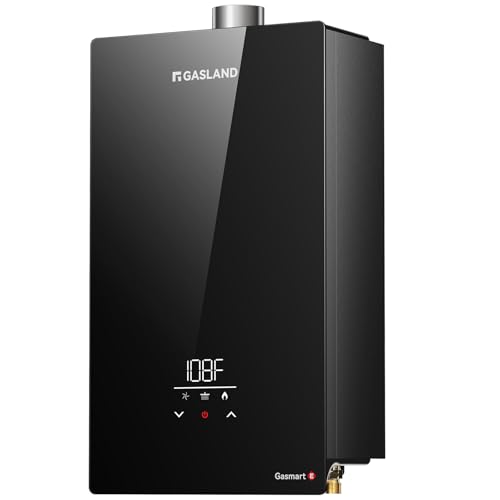
- Up to 7.6 GPM; 199,000 BTU
- CSA certified with multiple protections
- Wall-mounted indoor design
Best For: Homes seeking higher listed indoor flow capacity
Smart-Control Pick
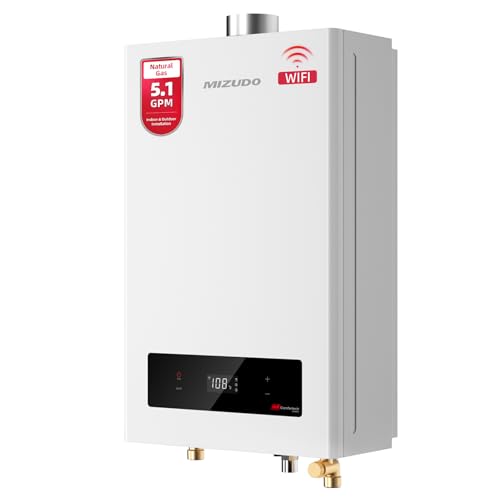
- WiFi app for settings and alerts
- Up to 5.1 GPM; 120,000 BTU
- Outdoor conversion kit sold separately
Best For: Buyers seeking app controls and installation flexibility
Midrange Indoor Pick
- Up to 5.8 GPM; 150,000 BTU
- CSA certified with safety protections
- 6.5-inch-deep indoor unit
Best For: Homes seeking a midrange indoor GASLAND model
Dedicated Outdoor Pick

- Outdoor natural gas installation
- Advertised up to 6.4 GPM
- CSA certified; remote included
Best For: Homes requiring a dedicated outdoor-mounted unit
Compact Pick
APUS 4.42 GPM Indoor Natural Gas Heater
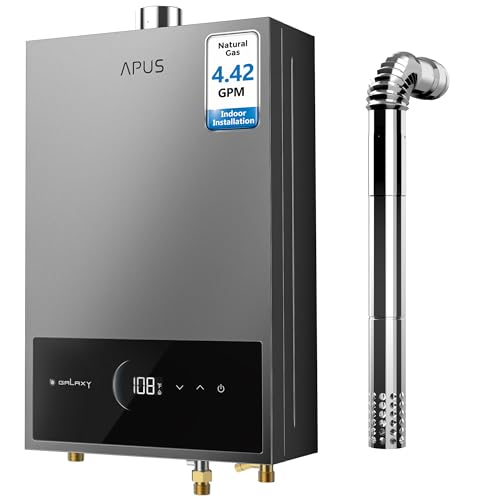
- 95,000 BTU; up to 4.42 GPM
- Activates at 0.66 GPM
- Compact wall-mounted design
Best For: Space-conscious homes with a few simultaneous fixtures
Whole-Home Pick
Rinnai RE199iN 9.8 GPM Indoor Heater

- 199,000 BTU; up to 9.8 GPM
- Indoor, non-condensing design
- LED diagnostics and service reminders
Best For: Indoor whole-home installations serving multiple fixtures
Flexible Installation Pick
Rinnai RX180iN Condensing Heater

- Up to 10 GPM; 0.98 UEF
- Natural gas or propane compatible
- Indoor or outdoor installation
Best For: High-flow homes needing flexible fuel or placement options
Compact Outdoor Pick
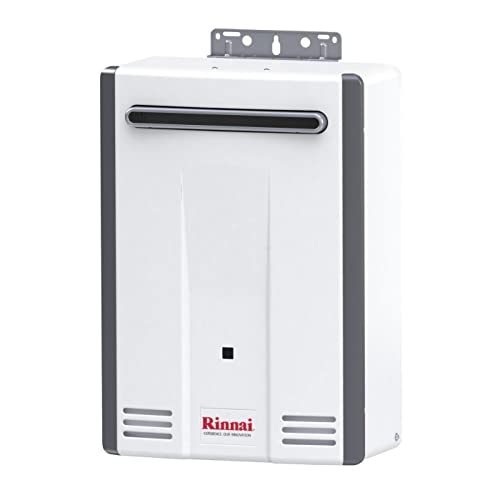
- 5.3 GPM rated flow
- Compact outdoor wall mount
- Heats water on demand
Best For: Space-conscious homes needing an outdoor unit
Condensing Efficiency Pick
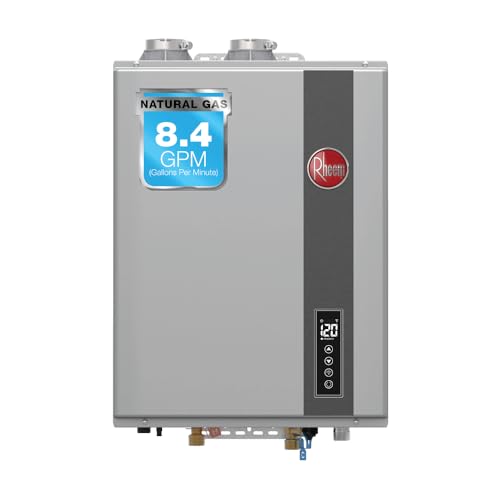
- 8.4 GPM at 35°F rise
- 0.93 UEF condensing design
- Indoor direct-vent installation
Best For: Multi-bathroom homes prioritizing efficiency
High-Flow Indoor Pick

- 9.5 GPM at 35°F rise
- Indoor, non-condensing design
- Professional installation required
Best For: Large homes prioritizing rated hot-water flow
Highest-Capacity Indoor Pick – GASLAND Gasmart E 7.6 GPM
Among these natural gas tankless water heaters, the GASLAND Gasmart E offers the highest listed flow rate: up to 7.6 GPM, backed by a 199,000 BTU rating. It is a wall-mounted, indoor model intended for whole-house hot water.
Best For: Households prioritizing higher listed flow capacity in an indoor unit.
Pros:
- Up to 7.6 GPM and 199,000 BTU.
- CSA certified, with flame-failure, overheat, and freeze protection.
- Compact 14.25-by-24.69-inch wall-mounted design.
Cons:
- Indoor installation only.
- Listed 0.8 UEF; shoppers seeking a higher efficiency rating may want to compare alternatives.
Choose this model when flow capacity matters more than app controls or outdoor placement. Actual hot-water flow will depend on incoming water temperature and the temperature rise required.
Smart-Control Pick – MIZUDO 5.1 GPM WiFi Model
The MIZUDO stands out among natural gas tankless water heaters for its WiFi app controls, which let you adjust temperature, monitor energy use, and receive maintenance notifications. Its listed output is up to 5.1 GPM at 120,000 BTU.
Best For: Buyers who want remote controls and the option to convert an indoor installation to outdoor use.
Pros:
- App-based temperature control and maintenance notifications.
- Manufacturer-claimed temperature stability within 1°F.
- CSA certified; includes a two-year unit warranty and five-year heat-exchanger coverage.
Cons:
- Outdoor conversion requires a separately purchased kit.
- Indoor installation requires the specified 3-inch-OD vent pipe system.
The connectivity and installation flexibility are the main draws. Check the required venting or conversion accessories before purchasing, and size the 5.1 GPM rating against your expected simultaneous use.
Midrange Indoor Pick – GASLAND Gasmart E 5.8 GPM
For shoppers comparing natural gas tankless water heaters for indoor use, this GASLAND Gasmart E offers a middle-ground rating of up to 5.8 GPM and 150,000 BTU. The wall-mounted unit measures 14.25 inches wide, 24.69 inches high, and 6.5 inches deep.
Best For: Households that want an indoor GASLAND model but do not need the brand’s listed 7.6 GPM option.
Pros:
- Up to 5.8 GPM with a 150,000 BTU rating.
- CSA certified, with freeze, flame-failure, and dry-combustion protection.
- Compact wall-mounted footprint and integrated error-code indicator.
Cons:
- Indoor installation only.
- Lower listed flow rate than the 7.6 GPM GASLAND model.
This is the more modestly rated GASLAND option in the roundup. Compare your fixture demands and incoming water temperature with its capacity before selecting it for whole-house use.
Dedicated Outdoor Pick – CAMPLUX 150,000 BTU
The CAMPLUX is the dedicated outdoor choice among these natural gas tankless water heaters. It carries a 150,000 BTU rating and advertises up to 6.4 GPM, while its product notes also cite 5.28 GPM under a stated operating scenario.
Best For: Homes planned around an outdoor-mounted natural gas water heater.
Pros:
- Outdoor installation avoids an indoor vent run.
- CSA certified, with freeze, overheat, dry-fire, and flame-failure protections.
- Includes a remote control and uses 3/4-inch NPT water and gas connections.
Cons:
- Not presented as an indoor-installation model.
- The advertised 6.4 GPM maximum and separately cited 5.28 GPM figure require attention to test conditions.
Its outdoor format is the deciding feature. Confirm the hot-water flow available at your local inlet temperature rather than treating the maximum GPM figure as guaranteed at every temperature setting.
Compact Pick – APUS 4.42 GPM Indoor Natural Gas Heater
Among natural gas tankless water heaters, this APUS model is a compact indoor option rated at 95,000 BTU and up to 4.42 GPM. Its 0.66 GPM activation threshold is useful when you need hot water at a lower-flow fixture.
Best For: Homes seeking a space-saving heater for a few simultaneous fixtures.
Pros:
- Rated for up to 4.42 GPM; the manufacturer says it can serve two showers and a sink.
- Adjustable 95–140°F temperature setting with an LED touchscreen.
- Wall-mounted cabinet measures approximately 20.55 inches high and 5.91 inches deep.
Cons:
- Lower maximum flow than the two Rinnai models here.
- Requires a 120V connection and indoor installation.
Check your required temperature rise and simultaneous fixture demand before relying on the maximum flow rating. Its two-year manufacturer warranty is another point to weigh against longer-coverage alternatives.
Whole-Home Pick – Rinnai RE199iN 9.8 GPM Indoor Heater
If you are comparing natural gas tankless water heaters for multiple bathrooms, the indoor Rinnai RE199iN offers up to 9.8 GPM and 199,000 BTU. Its non-condensing design heats water on demand, without a storage tank.
Best For: Households planning an indoor, whole-home natural gas installation with multiple fixtures.
Pros:
- Up to 9.8 GPM for substantial simultaneous hot-water demand.
- LED display provides diagnostic codes and service reminders.
- Limited residential warranty includes 15 years on the heat exchanger and five years on parts.
Cons:
- Indoor installation requires proper venting and gas-line setup; professional installation is recommended.
- Wi-Fi monitoring requires a separately sold Controlr module; this model does not include built-in recirculation.
Size it using your local groundwater temperature and expected fixture use rather than the peak GPM alone. To receive the stated five-year labor coverage, register within 90 days of installation; otherwise, labor coverage defaults to one year.
Flexible Installation Pick – Rinnai RX180iN Condensing Heater
The Rinnai RX180iN stands out among natural gas tankless water heaters for installation flexibility: its Smart Sense system supports natural gas or propane, and the unit can be installed indoors or outdoors. This condensing model is rated at up to 10 GPM and has a stated 0.98 UEF.
Best For: Buyers who want a high-flow condensing heater with indoor/outdoor and fuel-choice flexibility.
Pros:
- Up to 10 GPM with a 180,000 BTU heat output.
- 0.98 UEF rating and a Quick Flush feature for simplified flushing.
- Supports natural gas or propane and indoor or outdoor placement.
Cons:
- Outdoor installation requires an RX-OVC vent cap.
- Wi-Fi control requires a separately sold Controlr module; professional installation is recommended.
The flexible configuration is appealing, but plan for the accessories your installation needs. The stated five-year labor warranty requires registration within 90 days of installation; without it, labor coverage defaults to one year.
Compact Outdoor Pick – Rinnai V53DeN 5.3 GPM
Among natural gas tankless water heaters, the Rinnai V53DeN is a compact option for outdoor installation. Its 5.3 GPM rated flow and on-demand heating make it worth considering when space is limited and you do not need the higher flow ratings of larger units.
Best For: Homes seeking a space-saving outdoor unit with a 5.3 GPM rated flow.
Pros:
- Heats water on demand rather than maintaining a stored tank.
- Compact, wall-mounted design saves space.
- Rated for up to 5.3 GPM.
Cons:
- Designed for outdoor installation, not indoor placement.
- Professional installation is recommended.
Choose this model for its outdoor footprint and moderate flow rating. Warranty terms in the supplied listing vary, so confirm the applicable coverage before buying.
Condensing Efficiency Pick – Rheem RTGH 8.4 GPM
For shoppers comparing natural gas tankless water heaters for indoor whole-house use, the Rheem RTGH pairs an 8.4 GPM rating at a 35°F temperature rise with a 0.93 Uniform Energy Factor. Its condensing design prioritizes efficiency while offering substantial rated flow.
Best For: Multi-bathroom homes that want an indoor, high-efficiency condensing model.
Pros:
- Rated at 8.4 GPM at a 35°F temperature rise.
- 0.93 UEF condensing design.
- Digital LED temperature control and built-in freeze protection.
Cons:
- Requires indoor direct-vent installation.
- Professional installation is recommended.
This is the efficiency-focused choice of the three. Compare its 35°F-rise flow rating with your household’s expected temperature rise before planning simultaneous use.
High-Flow Indoor Pick – Rheem RTG 9.5 GPM
The Rheem RTG stands out among these natural gas tankless water heaters for its 9.5 GPM rating at a 35°F temperature rise. This indoor, non-condensing model is aimed at whole-house use where several hot-water outlets may run at once.
Best For: Large, multi-bathroom homes prioritizing a high rated flow from an indoor unit.
Pros:
- Rated at 9.5 GPM at a 35°F temperature rise.
- Space-saving wall-mounted design.
- Digital LED temperature control and built-in freeze protection.
Cons:
- Its 0.82 UEF is lower than the supplied condensing Rheem model’s 0.93 UEF.
- Professional installation is required.
Pick this model when rated flow is the priority; if efficiency matters more, weigh its non-condensing design against the condensing alternative. Actual flow depends on the temperature rise your home needs.
How We Picked These Natural Gas Tankless Water Heaters
We organized the selected models around the decisions that matter most to buyers: stated flow rate and BTU input, indoor versus outdoor placement, condensing versus non-condensing design, and features such as app controls. We did not treat a listed maximum GPM as a guarantee of whole-house performance. Actual output depends on the temperature rise required, and installation costs can change which model is the better value.
Quick Comparison: Which Type Fits?
For lighter demand, the APUS 4.42 GPM and MIZUDO 5.1 GPM models are worth comparing against the number of fixtures you expect to run together. The GASLAND 5.8 GPM and outdoor CAMPLUX 6.4 GPM units occupy the middle of the listed range, while the GASLAND 7.6 GPM model targets greater simultaneous demand. Among the Rinnai choices, compare the RE199iN, RX180iN, and V53DeN using their installation manuals and performance charts rather than assuming the model number states usable flow. Rheem lists 8.4 GPM for the RTGH Series option and 9.5 GPM for the RTG Series option; confirm each rating at your required temperature rise.
Key Buying Factors for Natural Gas Tankless Water Heaters
Size for Temperature Rise, Not Maximum GPM Alone
Add up the flow of fixtures likely to operate at once, then determine how much the heater must raise your incoming water temperature. Colder groundwater requires more heating, reducing the hot-water flow available from a given unit. Check the manufacturer’s flow-versus-temperature-rise chart before deciding that one heater can serve multiple showers.
Check Installation and Operating Requirements
Indoor units need approved venting and combustion-air provisions; an outdoor-rated unit must be installed where its instructions and local conditions permit. Have a licensed installer verify gas supply capacity, pipe sizing, electrical needs, clearances, and applicable codes. A condensing model may also require a condensate drain and, where appropriate, neutralization. Plan for descaling and filter cleaning, especially with hard water.
Compare Total Cost and Controls
Look beyond the heater price to vent materials, gas-line work, labor, maintenance, and warranty terms. Wi-Fi controls may be convenient, but they should not outweigh correct sizing, service access, and a suitable installation location.
Who Should Buy Which Natural Gas Tankless Water Heaters?
Choose a lower-output model if your simultaneous hot-water demand is modest and its temperature-rise chart supports your fixtures. Consider the midrange GASLAND or CAMPLUX options when you need more capacity or specifically require an outdoor installation. Compare higher-output GASLAND and Rheem listings for busy households, while weighing the Rinnai and Rheem efficiency options against venting, condensate, and total installed cost. If no single unit meets your peak demand at your local inlet temperature, ask your installer about a larger system or multiple heaters rather than relying on a headline GPM figure.