A propane tankless water heater can provide hot water on demand without dedicating space to a storage tank. But the right size depends on how many fixtures you use at once, your incoming water temperature, and where the unit can be installed.
These 10 options span compact indoor models to higher-output indoor and outdoor units. Use the buying guide below to narrow the field before checking installation requirements and local availability.
Best 10 Propane Tankless Water Heaters Picks for 2026
Best for Higher Demand
Ranein 8.5 GPM Indoor Propane Heater

- 190,000 BTU; up to 8.5 GPM
- Rated for four to six water points
- Not recommended above 2,000 feet
Best For: Larger households seeking higher stated flow
Best for Smart Controls
APUS 6.8 GPM Recirculating Heater

- 140,000 BTU; up to 6.8 GPM
- Tuya app and built-in circulation pump
- Requires 120V AC power
Best For: Homes prioritizing remote control and recirculation
Best for Preset Modes
Ranein 4.3 GPM Indoor Propane Heater

- 100,000 BTU; up to 4.3 GPM
- Four one-touch operating modes
- Vent pipe included
Best For: Households wanting simple preset controls
Best for Smaller Loads
Ranein 3.6 GPM Indoor Propane Heater

- 80,000 BTU; up to 3.6 GPM
- Four presets plus child lock
- Vent pipe included
Best For: Smaller households with modest hot-water demand
Best for Multiple Fixtures

- 95,000 BTU; rated 4.42 GPM
- Starts at 0.66 GPM flow
- LED touchscreen and included vent pipe
Best For: Indoor homes with overlapping fixture use
Best for Smaller Households

- 80,000 BTU; rated 3.6 GPM
- 0.53 GPM low-flow start
- LED display; two-year warranty
Best For: One- or two-person homes with modest demand
Best for Flexible Installation
MIZUDO 120,000 BTU Wi-Fi Heater
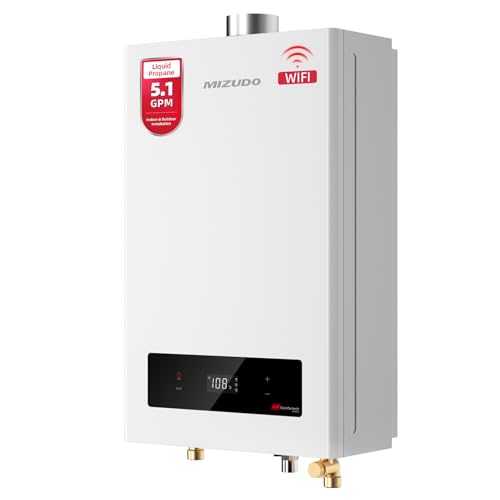
- 120,000 BTU; maximum 5.1 GPM
- Wi-Fi app for controls and alerts
- Indoor or outdoor with required accessories
Best For: Homes seeking flexible placement and app controls
Compact Indoor Pick

- Up to 5 GPM and 113,000 BTU
- Compact indoor wall-mounted design
- LED diagnostics and freeze protection
Best For: Space-conscious homes needing up to two simultaneous showers
Outdoor Whole-Home Pick

- 7 GPM at a 35°F temperature rise
- Outdoor installation avoids indoor venting
- 0.82 UEF; 15-year heat-exchanger warranty
Best For: Multi-bathroom homes with a suitable outdoor installation site
Indoor High-Flow Pick

- 7 GPM at a 35°F temperature rise
- Indoor wall-mounted direct-vent design
- 160,000 BTU/hr; 0.82 UEF
Best For: Multi-bathroom homes needing higher indoor flow
Best for Higher Demand – Ranein 8.5 GPM Indoor Propane Heater
Among these propane tankless water heaters, this Ranein model has the highest listed output: 190,000 BTU and up to 8.5 GPM. It is designed for indoor, wall-mounted installation and is rated by the manufacturer for four to six water points.
Best For: Larger households looking for a high-output indoor propane unit.
Pros:
- Up to 8.5 GPM and 190,000 BTU.
- Variable-speed blower adjusts to wind pressure and water-temperature changes.
- Compact 24.25-by-15.08-by-8.07-inch body with an LED display.
Cons:
- Not recommended for elevations above 2,000 feet.
- Must be drained when left unused for long periods in cold weather.
Choose this model when the higher stated flow capacity matters more than compactness; actual simultaneous hot-water performance will depend on incoming water temperature and your fixtures.
Best for Smart Controls – APUS 6.8 GPM Recirculating Heater
This APUS option stands out among propane tankless water heaters for its built-in circulation pump and Tuya app controls. Its listed 140,000 BTU output and maximum 6.8 GPM target multi-fixture household use, while the recirculation feature is designed to reduce the wait for hot water when installed with the required piping.
Best For: Households that want remote temperature controls and a recirculation option.
Pros:
- Tuya app and LED controls offer a 95–140°F setting range.
- Built-in pump and included zero-cold-water piping accessories support recirculation.
- Vent pipe and installation kit are included.
Cons:
- Pump and controls require 120V AC power.
- Unit must be fully drained if exposed to prolonged temperatures near or below 41°F, or left unused for a long time.
The pump makes this a feature-rich choice, but recirculation requires an appropriate plumbing setup; check that requirement before buying primarily for shorter hot-water waits.
Best for Preset Modes – Ranein 4.3 GPM Indoor Propane Heater
For shoppers comparing midrange propane tankless water heaters, this 100,000 BTU Ranein offers up to 4.3 GPM and four selectable modes: four-season, kitchen, bathtub, and shower. The manufacturer rates it for three to four water points, though simultaneous use depends on demand.
Best For: Households that prefer one-touch temperature presets over app controls.
Pros:
- Adjustable 95–155°F temperature range with a high-temperature lock.
- LED display shows temperature, operating status, and fault codes.
- Vent pipe is included.
Cons:
- Not recommended above 2,000 feet; professional installation is specified.
- Must be drained below 14°F or when unused for long periods.
This is a practical middle ground if its preset modes appeal to you and 4.3 GPM meets your expected load. Confirm venting and propane-installation requirements before ordering.
Best for Smaller Loads – Ranein 3.6 GPM Indoor Propane Heater
This smaller Ranein entry in the propane tankless water heaters lineup delivers a listed 80,000 BTU and up to 3.6 GPM. It is rated for two to three water points and offers dish, fruit, elderly, and infant presets alongside an adjustable 95–149°F range.
Best For: Smaller households with modest simultaneous hot-water demands.
Pros:
- Preset modes and a child lock provide straightforward household controls.
- Dual heating chambers and a copper heat exchanger are listed features.
- Vent pipe is included.
Cons:
- Lower maximum flow than the other units in this roundup.
- Not recommended above 2,000 feet; draining is advised below 23°F or during long periods of nonuse.
Pick this model when its lower stated capacity matches your fixture use. Have a licensed professional assess installation and venting, particularly if more than one outlet will run at once.
Best for Multiple Fixtures – APUS 95,000 BTU Indoor Heater
Among propane tankless water heaters for indoor use, this APUS model offers 95,000 BTU and a rated 4.42 GPM flow. Its 0.66 GPM activation threshold also helps it start when demand is lighter.
Best For: Households looking to run two showers and a sink, subject to incoming water temperature and actual flow needs.
Pros:
- Rated for 4.42 GPM, with a 95–140°F adjustable temperature range.
- Manufacturer-stated temperature regulation within ±1°F.
- Compact wall-mounted cabinet with an LED touchscreen; vent pipe included.
Cons:
- Requires a 120V outlet and properly installed indoor venting.
- Freeze protection does not replace draining the unit during extended cold exposure or non-use.
The higher flow rating makes this the stronger APUS option here for overlapping hot-water use, though real-world output depends on the temperature rise your home requires.
Best for Smaller Households – APUS 80,000 BTU Indoor Heater
For smaller homes comparing propane tankless water heaters, this 80,000 BTU APUS model provides a rated 3.6 GPM and starts heating at a stated 0.53 GPM flow. That low-flow threshold is useful when a sink is running without a shower.
Best For: One- or two-person households seeking indoor hot water for a shower, sink, and occasional additional fixture.
Pros:
- 0.53 GPM activation threshold supports lighter-demand use.
- LED display and manufacturer-stated temperature regulation within ±1°F.
- Wall-mounted design includes a vent pipe and a two-year manufacturer warranty.
Cons:
- Lower rated flow than the 4.42 GPM APUS model may limit simultaneous use.
- Requires 120V power and professionally planned indoor gas and vent installation.
Choose this over a higher-output unit when modest demand and low-flow activation matter most. Confirm the cabinet dimensions before fitting it into a tight space, as the supplied specifications conflict.
Best for Flexible Installation – MIZUDO 120,000 BTU Wi-Fi Heater
This MIZUDO stands out among propane tankless water heaters with its 120,000 BTU rating, maximum 5.1 GPM flow, and Wi-Fi app controls. It can be configured for indoor or outdoor installation, but each setup has specific venting requirements.
Best For: Households prioritizing higher rated flow, app-based controls, and a choice of indoor or outdoor placement.
Pros:
- Maximum 5.1 GPM rating supports multiple usage points, depending on temperature rise.
- App allows remote temperature changes, energy-use monitoring, and maintenance notifications.
- CSA certification and stated two-year unit and five-year heat-exchanger warranties.
Cons:
- Indoor installation needs a specified 3-inch vent system; outdoor conversion requires a separately purchased cap kit.
- Requires 120V power, even when configured for outdoor use.
Its installation flexibility is valuable if your layout is still undecided. Budget for the correct venting or conversion accessories, and size it against your home’s actual simultaneous flow and temperature-rise needs.
Compact Indoor Pick – ThermoMate CZ422LP 5 GPM
Among propane tankless water heaters for indoor installation, the ThermoMate CZ422LP offers a compact, wall-mounted option rated for up to 5 GPM. Its 113,000 BTU output is intended to support two simultaneous showers under the stated 65°F inlet-water conditions.
Best For: Homes seeking a space-saving indoor propane unit for up to two showers at once.
Pros:
- Up to 5 GPM, with a stated ±1°F temperature-control range.
- Compact cabinet measures about 22 inches high and 7 inches deep.
- LED display shows temperature and operating status; built-in protections include freeze and flame-out protection.
Cons:
- Its 5 GPM rating offers less stated flow than the 7 GPM Rheem models in this roundup.
- Indoor setup requires a vent connection and a 120V outlet.
The CZ422LP is the practical choice when indoor space is tight and the stated two-shower capacity fits your household. Check your expected inlet temperature and simultaneous water demand before relying on the maximum-flow figure.
Outdoor Whole-Home Pick – Rheem RTG-70XLP-3 7 GPM
If outdoor installation suits your home, this Rheem is one of the propane tankless water heaters here with a stated 7 GPM flow at a 35°F temperature rise. It is positioned for whole-home use, including two to three simultaneous showers under those conditions.
Best For: Multi-bathroom households that want an outdoor-mounted propane heater without indoor venting.
Pros:
- Rated for 7 GPM at a 35°F temperature rise.
- Outdoor placement eliminates the need for indoor venting.
- 0.82 UEF rating, built-in freeze protection, and a 15-year heat-exchanger warranty.
Cons:
- Requires a suitable outdoor mounting location and professional installation.
- Actual simultaneous flow depends on the needed temperature rise.
Choose this outdoor model if its installation location works for your property and its rated flow matches your peak demand. The listing gives conflicting heat-output figures, so confirm that specification for model RTG-70XLP-3 before purchase.
Indoor High-Flow Pick – Rheem RTG-70DVLP-3 7 GPM
For buyers comparing indoor propane tankless water heaters, the Rheem RTG-70DVLP-3 pairs a stated 7 GPM rating at a 35°F temperature rise with a wall-mounted, direct-vent design. Its 160,000 BTU/hr output is intended for multi-bathroom household demand.
Best For: Households wanting an indoor propane unit sized for two to three simultaneous showers under the stated conditions.
Pros:
- Rated for 7 GPM at a 35°F temperature rise.
- Wall-mounted design saves floor space compared with a tank heater.
- 0.82 UEF rating, digital temperature control, and a 15-year heat-exchanger warranty.
Cons:
- Direct venting and professional installation add setup requirements.
- The 7 GPM figure is tied to a 35°F temperature rise; colder inlet water can reduce available flow.
This is the stronger indoor-flow option in this group when a direct-vent installation is feasible. Size it against your home’s actual inlet temperature and the fixtures you expect to run together.
How We Picked These Propane Tankless Water Heaters
We organized these 10 models around their listed BTU inputs, advertised maximum flow rates, and indoor or outdoor installation design. The selection spans 80,000 to 190,000 BTU models and advertised outputs from 3.6 to 8.5 GPM, giving shoppers options for different hot-water demands. We also considered practical distinctions, such as the MIZUDO model’s advertised Wi-Fi/app features and the choice between indoor and outdoor Rheem RTG configurations. Listed maximum GPM is a comparison point, not a guarantee of flow at your preferred shower temperature.
Quick Comparison: Which Size Fits?
For lighter demand, start with the 3.6 GPM Ranein or APUS models, then compare the 4.3 GPM Ranein and 4.42 GPM APUS options. For a potential step up, look at the ThermoMate CZ422LP (up to 5 GPM), MIZUDO (up to 5.1 GPM), or APUS 140,000 BTU (up to 6.8 GPM). The indoor and outdoor Rheem RTG models are both listed at 7.0 GPM, while the indoor Ranein 190,000 BTU model has the highest advertised maximum here at 8.5 GPM. Treat these figures as a starting point: actual hot-water flow falls as the required temperature rise increases.
Key Buying Factors for Propane Tankless Water Heaters
Flow Rate at Your Temperature Rise
Add up the flow rates of fixtures you expect to run together, then determine how much the heater must raise incoming water temperature. Cold groundwater demands more heating than warm groundwater; a unit’s advertised maximum GPM may therefore overstate what it can deliver during winter or simultaneous showers. Request the manufacturer’s flow-versus-temperature-rise chart before sizing.
Installation Location and Utilities
Choose an indoor model only if you can meet its specified venting, combustion-air, clearance, and condensate requirements, where applicable. An outdoor-rated model avoids indoor vent routing but still needs an approved location and protection appropriate to your climate. Check the propane supply line and regulator, water pressure, electrical needs, and applicable local codes. Gas and venting work should be assessed by a qualified installer; installation costs can outweigh a small difference in heater price.
Operating Details
Compare minimum activation flow if you often use a single low-flow faucet. Check freeze-protection requirements, service access, warranty terms, and maintenance needs such as descaling in hard-water areas. App control may be convenient, but it should not take priority over adequate hot-water output and a workable installation.
Who Should Buy Which Propane Tankless Water Heaters?
For one shower at a time or a small, low-demand home, compare the 80,000 to 100,000 BTU indoor models after verifying their output at your required temperature rise. Households with moderate overlapping use should examine the roughly 5 to 6.8 GPM options and their sizing charts. For heavier simultaneous use, start with the 7.0 GPM Rheem configurations or the 8.5 GPM Ranein, but confirm real-world output before buying. Choose between indoor and outdoor Rheem units based on installation suitability, not the shared advertised GPM. If your home has many bathrooms or very cold inlet water, have an installer size the system rather than relying on the largest headline rating.
