Waiting for hot water at a distant sink wastes time and water. A compact, point-of-use heater can help, but its electrical requirements and output need to match the job.
These 10 options range from lower-power 110–120V models to higher-output 240V units. Here’s how to narrow the field before you buy.
Best 10 Small Tankless Water Heaters Picks for 2026
Compact Sink Pick
Jflapil 3000W Under-Sink Heater

- 4.5-by-7.7-inch wall-mounted body
- Digital °F/°C temperature display
- 0.3–0.5 GPM; not for showers
Best For: Handwashing and light kitchen sink tasks
RV Sink Pick

- Designed for compact RV and kitchen sinks
- Switchable °C/°F digital display
- Requires 13 AWG wiring and ≥32A breaker
Best For: Low-flow RV or compact kitchen sinks
Quick Sink-Use Pick

- 3000W on-demand sink heating
- Compact wall-mounted design
- Not designed for showers
Best For: Quick handwashing and light sink tasks
Thermostatic Pick
Rheem RTEX-06T 240V Point-of-Use Heater

- 6.5kW, 240V point-of-use model
- Thermostatic temperature control
- Specified 1.5 GPM flow rate
Best For: 240V point-of-use installations needing temperature control
Higher-Output Sink Pick
ThermoMate 6kW Point-of-Use Heater
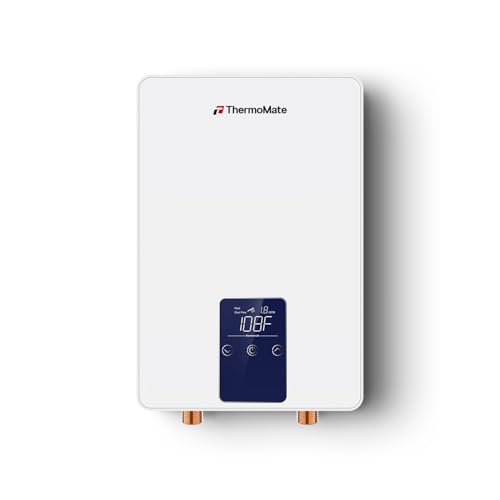
- About 1 GPM at a 35°F rise
- Digital 1° temperature adjustments
- Needs 240V hardwiring and a 30A breaker
Best For: A single sink with a suitable 240V circuit
Compact Under-Sink Pick
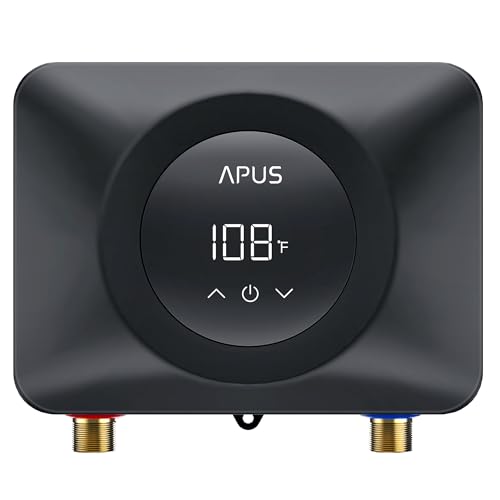
- About 8.7" × 6.5" × 2.6"
- Adjustable 85°F–131°F LED controls
- Dedicated 220–240V circuit required
Best For: One low-flow sink in a tight cabinet
120V Point-of-Use Pick
- 120V, 3.5kW point-of-use model
- Up to 0.5 GPM for one fixture
- Requires a 30A breaker and #10 AWG wiring
Best For: One modest-flow sink with suitable 120V electrical service
Best for a Single Sink
CAMPLUX 4.5kW 120V Point-of-Use Heater

- 4.5kW output for one sink
- Activates at 0.26 GPM
- Requires hardwired 120V, 40A circuit
Best For: One sink with limited installation space
Best Low-Flow Option

- 3000W on-demand heating
- Digital display and safety protections
- Vertical mounting only; not for showers
Best For: A low-flow sink with suitable wiring
Best for Two Sink Outlets
8kW 240V Self-Modulating Heater
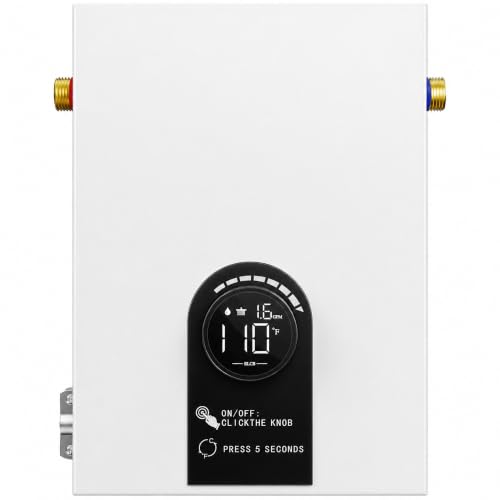
- 8kW output for one or two sinks
- LED display, dial, and remote
- Needs 240V, 40A hardwired circuit
Best For: One or two sinks with a suitable 240V circuit
Compact Sink Pick – Jflapil 3000W Under-Sink Heater
Among small tankless water heaters for a single sink, this 110V Jflapil unit stands out for its compact 4.5-by-7.7-inch wall-mounted design. Its display shows the water temperature, while output depends on flow rate.
Best For: Handwashing and light kitchen sink tasks where space is tight.
Pros:
- Heats on demand without a storage tank or preheating.
- Digital display switches between Fahrenheit and Celsius.
- Includes IPX4 water resistance, dry-burn protection, and overheating protection.
Cons:
- Not suitable for showers; the stated flow range is 0.3–0.5 GPM.
- Requires vertical mounting and wiring of at least 2.5 mm² with a 32A-or-higher breaker.
The small footprint is useful under a sink, but check the electrical requirements and expected flow before buying.
RV Sink Pick – LFEVTZ 110V Mini Heater
This LFEVTZ model is one of the small tankless water heaters aimed at tight kitchen, RV, and camping sink setups. The 3000W wall-mounted unit heats on demand, with hotter water available at lower flow rates.
Best For: RV or compact kitchen sinks used for washing hands, food, and dishes.
Pros:
- Compact 4.5-by-8.5-inch wall-mounted format.
- Digital display can switch between Celsius and Fahrenheit.
- Lists IPX4 water resistance, leakage protection, dry-burn protection, and automatic shutoff.
Cons:
- Not suitable for showers; its stated heating range corresponds to 0.3–0.5 GPM.
- Requires 13 AWG (2.5 mm²) wiring and a breaker rated at least 32A.
It is a practical space-saving choice for a low-flow sink, provided your electrical setup meets the specified requirements.
Quick Sink-Use Pick – DOYXC 110V Under-Sink Heater
For shoppers comparing small tankless water heaters for quick sink tasks, this 110V DOYXC unit offers a wall-mounted, on-demand option. It is intended for washing hands, dishes, or food rather than supplying a shower.
Best For: A small-space sink where an on-demand heater and digital readout are priorities.
Pros:
- Compact 4.5-by-8.5-inch wall-mounted design.
- Digital temperature display switches between Celsius and Fahrenheit.
- Lists IPX4 water resistance, leakage protection, dry-burn protection, and automatic shutoff.
Cons:
- Not designed for shower use.
- Requires a breaker rated at least 32A, despite its 110V plug-in description.
Its sink-focused feature set is straightforward; confirm the circuit requirements before treating it as a simple plug-in upgrade.
Thermostatic Pick – Rheem RTEX-06T 240V Point-of-Use Heater
The Rheem RTEX-06T takes a different approach from the 110V models in this group of small tankless water heaters. This 240V, 6.5kW point-of-use unit uses thermostatic control and monitored flow to hold water temperature within one degree of the selected setting, according to Rheem.
Best For: A point-of-use installation with 240V power where consistent selected temperature matters.
Pros:
- Thermostatic control is designed for consistent outlet temperature.
- Specified flow rate is 1.5 GPM.
- Compact wall-mountable body measures 10.88 by 5.88 by 3 inches.
Cons:
- Requires a 240V electrical setup rather than 110V.
- Its 6.5kW power demand calls for checking electrical compatibility before purchase.
Choose this model for its thermostatic point-of-use design, not as a direct replacement for a lower-power 110V sink heater.
Higher-Output Sink Pick – ThermoMate 6kW Point-of-Use Heater
Among small tankless water heaters for a single sink, this ThermoMate offers 6kW of heating power in a slim, wall-mounted body. Its stated output is about 1 GPM at a 35°F temperature rise, so check your incoming water temperature and desired flow before buying.
Best For: A dedicated kitchen or bathroom sink where a 240V circuit is available.
Pros:
- Digital touch controls adjust the set temperature in 1° increments from 85°F to 131°F.
- Self-modulating operation heats water on demand rather than maintaining a storage tank.
- Compact 10.96″ × 7.4″ × 2.52″ body fits tight under-sink spaces.
Cons:
- Requires 240V hardwiring, a 30A breaker, and at least 10 AWG wire.
- Its stated flow and temperature rise suit a point-of-use faucet, not several fixtures at once.
This is the higher-wattage choice of these three, but its output still depends on flow and inlet temperature. Verify the electrical circuit and 1/2″ NPT plumbing connections before installation.
Compact Under-Sink Pick – APUS 4500W Electric Heater
If cabinet space is scarce, the APUS is one of the smaller small tankless water heaters here, measuring about 8.7″ × 6.5″ × 2.6″. Its 4500W heating system is intended for one low-flow outlet, with hot water reaching the outlet in about three seconds under suitable conditions.
Best For: A single bathroom, kitchen, or handwashing sink with limited mounting space.
Pros:
- LED touch display provides an adjustable 85°F–131°F temperature range.
- Self-modulating, on-demand operation avoids storage-tank standby heating.
- Includes over-temperature, dry-burn, and leakage protection.
Cons:
- Requires a dedicated 220–240V hardwired circuit, 30A double-pole breaker, and 12 AWG copper wire.
- Not intended for whole-house or multiple-bathroom use.
Choose this model for its particularly small footprint, not for high-volume hot water. The three-second claim depends on inlet temperature and flow, and installation should follow local codes.
120V Point-of-Use Pick – Rheem 3.5kW RTEX-04T
The Rheem RTEX-04T stands out among these small tankless water heaters because it uses 120V power rather than 240V. Its 3.5kW rating and stated output of up to 0.5 GPM make it a practical candidate for one modest-flow fixture, such as a basement or workshop sink.
Best For: A single low-flow sink where a properly sized 120V circuit can be installed.
Pros:
- Digital thermostatic controls adjust from 80°F to 140°F in 1° increments.
- Compact, wall-mounted design needs no gas venting.
- Listed warranty covers leaks for five years and parts for one year.
Cons:
- Up to 0.5 GPM is limiting for fixtures needing higher flow.
- 120V does not mean plug-in: it requires a 30A single-pole breaker and #10 AWG copper conductors with ground.
This is the option to consider when 240V is impractical and your hot-water demand is low. Confirm the required wiring and recommended minimum 100A household service panel before purchase.
Best for a Single Sink – CAMPLUX 4.5kW 120V Point-of-Use Heater
Among small tankless water heaters, this CAMPLUX model is a compact option for supplying hot water at one sink. Its 4.5kW heating output, touch controls, and LED temperature display suit an under-sink installation where space is limited.
Best For: A single kitchen, bathroom, or utility sink with a suitable dedicated electrical circuit.
Pros:
- Activates at a flow rate as low as 0.26 GPM.
- Self-modulating design adjusts power to flow and temperature settings.
- Wall-mounted, slim housing includes a digital temperature display.
Cons:
- Designed for one sink, not multiple simultaneous outlets.
- Must be hardwired to a 120V, 40A circuit; it has no plug.
The key buying check is electrical capacity: the specified installation calls for 10 AWG wire and 1/2-inch NPT water connections. At 1.0 GPM, the stated temperature rise is 50°F, so incoming water temperature matters.
Best Low-Flow Option – 3000W 110V Under-Sink Heater
This 3000W model is aimed at shoppers comparing small tankless water heaters for low-flow sink use. It heats on demand, has a digital display, and mounts on a wall to keep the area beneath a sink clear.
Best For: A low-flow kitchen or bathroom sink where vertical mounting and the specified electrical connection are available.
Pros:
- Compact wall-mounted design with a digital display.
- Includes dry-boil and overheat protection.
- Uses standard 1/2-inch NPT water connections.
Cons:
- Not suitable for showers, according to the product notes.
- Vertical installation only.
- Calls for wiring of at least 2.5 mm² and a trip switch rated over 32A.
Its 3000W output makes flow rate especially important: expect better results at a modest sink flow than at a high-demand fixture. Check the installation requirements before treating its 110V rating as a sign of plug-in convenience.
Best for Two Sink Outlets – 8kW 240V Self-Modulating Heater
For buyers who need more capacity from small tankless water heaters, this 8kW, 240V model is specified for one or two sink outlets. It combines self-modulating heating with an LED display, rotary dial, and included wireless remote.
Best For: One or two sink outlets where a dedicated 240V electrical installation is practical.
Pros:
- Up to 1.9 GPM stated flow capacity, subject to incoming water temperature and flow conditions.
- Dial and remote offer convenient temperature adjustments.
- CSA certified, with dry-heating shutoff, overheat protection, and leakage detection.
Cons:
- Requires hardwiring to a 240V, 40A double-pole breaker with 8 AWG copper wire.
- Performance across two outlets depends on water temperature and flow rate.
This is the stronger-output choice of the three, but it is still framed around sink service rather than a guaranteed shower supply. Verify your electrical panel and expected simultaneous flow before buying.
How We Picked These Small Tankless Water Heaters
We focused on compact electric models marketed for point-of-use applications, particularly sinks. The selection spans 110–120V and 240V units rated from roughly 3kW to 8kW, so shoppers can compare installation needs as well as output. Features such as thermostatic control, digital displays, and stated certifications may matter, but none replaces checking the manufacturer’s specifications. We did not treat wattage alone as proof of a particular flow rate or temperature rise.
Quick Comparison: Start with Power and Purpose
The 3kW, 110V listings are candidates for a single, low-flow handwashing sink where incoming water is relatively warm. The Rheem 3.5kW 120V model sits in a similar point-of-use category. The 4.5kW APUS and CAMPLUX models and the approximately 6kW ThermoMate and Rheem RTEX-06T offer higher stated power, but their voltage and circuit requirements differ; check each listing carefully. The 8kW 240V option has the highest listed wattage here and may suit greater demand if its specified flow and temperature rise meet your needs. An RV-labeled portable model deserves a separate check for its required power supply and intended installation.
Key Buying Factors for Small Tankless Water Heaters
Temperature Rise and Flow
A heater warms water as it passes through. Colder inlet water or a faster-flowing faucet leaves less heat available per unit of water, so output may feel lukewarm even when the unit is working correctly. Compare the manufacturer’s flow-rate chart at your expected inlet temperature and desired outlet temperature. A low-flow aerator can help a modest heater serve a handwashing sink; a shower or multiple fixtures generally calls for substantially more capacity.
Electrical and Plumbing Fit
Do not choose by voltage label alone. Confirm the required amperage, breaker size, wire gauge, grounding, and whether a dedicated circuit or hardwired connection is specified. Several kilowatts on a 110–120V circuit can exceed what an existing outlet or branch circuit can safely provide. Have a qualified electrician assess the installation where needed. Also check water-pressure limits, fitting sizes, mounting clearances, local code requirements, and any manufacturer restrictions on use with a mixing valve or particular fixture.
Controls and Ownership
Thermostatic controls can help maintain a selected outlet temperature within the heater’s operating limits; a display makes settings easier to see. Look for accessible support information, warranty terms, and any documented listing or certification relevant to your location. Plan for inlet filtration or periodic descaling if your water is hard, following the manual.
Who Should Buy Which Small Tankless Water Heaters?
For occasional handwashing at one sink, start with a lower-power model only after confirming its temperature-rise chart and electrical compatibility. For colder climates or a sink that needs a stronger flow, compare the 4.5–6.5kW options and budget for the required circuit. Consider the 8kW model only if its installation demands and rated output fit the fixture. RV buyers should verify that the vehicle or hookup can supply the required power; a “portable” label does not guarantee plug-in convenience. If you need to serve several fixtures at once, look beyond this point-of-use group.
