Cold incoming water makes a tankless heater work harder: the bigger the temperature rise, the less hot water it can deliver at once. A headline GPM rating alone won’t tell you whether it can handle a winter shower and a running dishwasher.
These 10 options span natural gas, propane, and electric models, including indoor and outdoor installations. Use the guide below to narrow your choice by winter capacity, available utilities, and freeze risk.
Best 10 Tankless Water Heaters for Cold Climates Picks for 2026
Best Outdoor Natural Gas Option
Ranein 8.5 GPM Tankless Heater

- 190,000 BTU; up to 8.5 GPM
- Built-in anti-freeze protection
- Drain during prolonged cold-weather downtime
Best For: Natural-gas homes needing outdoor installation
Best Condensing Propane Pick
Ranein 5.1 GPM Tankless Heater

- 114W anti-freeze heater
- Condensing, 120,000 BTU design
- Up to 5.1 GPM
Best For: Indoor propane setups needing active freeze protection
Best Propane Recirculation Option

- 140,000 BTU; up to 6.8 GPM
- Built-in hot-water circulation
- Drain when extended freezing threatens
Best For: Indoor propane homes prioritizing shorter hot-water waits
Best High-Capacity Indoor Pick
MIZUDO 10.3 GPM Tankless Heater

- 199,000 BTU; up to 10.3 GPM
- 0.53 GPM low-flow activation
- Drain after extended cold-weather nonuse
Best For: Multi-bathroom homes with natural gas
Best Fuel-Flexible Pick
Rinnai RX160iN Condensing Tankless Heater

- 160,000 BTU; up to 9 GPM
- Natural gas or propane
- 0.97 UEF; indoor or outdoor setup
Best For: Homes seeking efficient gas heat with flexible fuel options
Best Vent-Free Electric Pick

- 28.8 kW at 240 V
- No venting required
- Needs three dedicated 40A breakers
Best For: Electrically equipped homes seeking a vent-free option
Best Indoor Gas Pick

- 7.0 GPM at 35°F rise
- Built-in freeze protection
- Natural gas; indoor installation
Best For: Natural-gas homes prioritizing indoor freeze protection
High-Capacity Electric
WINTEMP WN36 36kW WiFi Tankless Heater
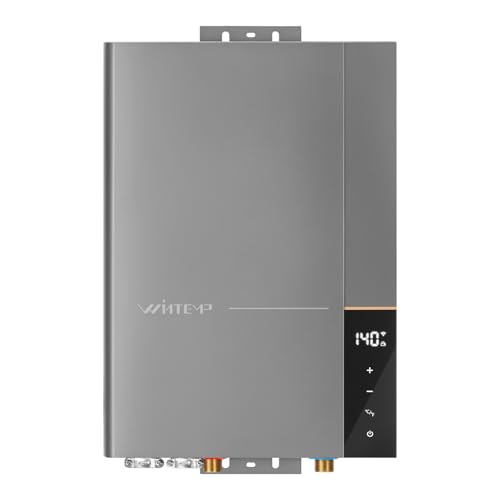
- 36kW self-modulating electric output
- WiFi control and ETL certification
- Recommends 300A household service
Best For: Homes with suitable electrical capacity seeking whole-house electric hot water
Outdoor Propane Pick
Rheem RTG 7.0 GPM LP Tankless Heater

- 7.0 GPM at a 35°F rise
- Built-in freeze protection
- Outdoor liquid propane model
Best For: Propane-equipped homes seeking an outdoor whole-house heater
Best Simple Pick
Rheem RTG 7.0 GPM NG Tankless Heater
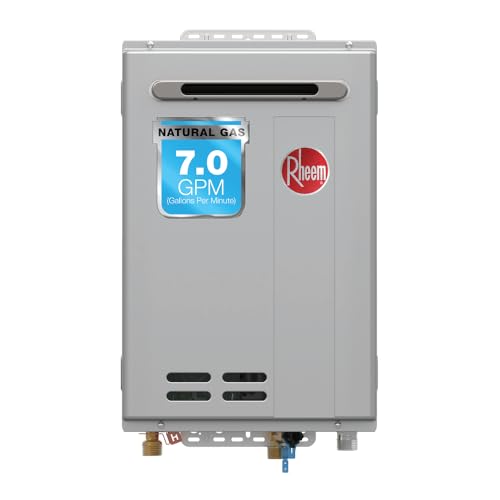
- 160,000 BTU/hr natural gas output
- 7.0 GPM at a 35°F rise
- Freeze protection and self-diagnostics
Best For: Natural-gas homes seeking an outdoor whole-house heater
Best Outdoor Natural Gas Option – Ranein 8.5 GPM Tankless Heater
For shoppers comparing tankless water heaters for cold climates, this outdoor Ranein model pairs a 190,000 BTU burner with built-in anti-freeze protection. Its rated maximum flow is 8.5 GPM, though actual flow depends on how much the incoming water needs to be heated.
Best For: Homes with natural gas that need an outdoor unit serving several hot-water outlets.
Pros:
- 190,000 BTU input and a rated maximum of 8.5 GPM.
- Built-in anti-freeze protection helps protect internal components.
- Bottom-mounted blower adjusts to wind pressure and water-temperature changes.
Cons:
- Must be drained when left unused for an extended period in cold weather.
- Not recommended above 2,000 feet of elevation.
Its outdoor design avoids taking up indoor wall space, but freeze protection is not a substitute for draining an idle unit. Check the required temperature rise before counting on its maximum-flow rating.
Best Condensing Propane Pick – Ranein 5.1 GPM Tankless Heater
Among tankless water heaters for cold climates, this indoor propane model stands out for its integrated 114W anti-freeze heater, which activates below 42.8°F. Its condensing design recovers exhaust heat, while the 120,000 BTU burner provides a rated maximum of 5.1 GPM.
Best For: Propane-powered households seeking an indoor, condensing heater with active freeze protection.
Pros:
- Anti-freeze heater activates automatically below 42.8°F.
- Condensing design reuses heat from exhaust gas.
- Touch controls offer a 95–149°F setting range and seasonal mode.
Cons:
- Requires 120V power for operation and freeze protection.
- Not recommended above 2,000 feet of elevation.
The included vent pipe and condensate drain line help define the installation requirements, but a licensed plumber is recommended. As with any rated maximum flow, confirm capacity against your winter inlet-water temperature and simultaneous fixture demand.
Best Propane Recirculation Option – APUS 6.8 GPM Tankless Heater
For buyers looking at tankless water heaters for cold climates, the APUS adds a circulation feature intended to reduce the wait for hot water at fixtures. This indoor propane unit has a 140,000 BTU burner, a rated maximum of 6.8 GPM, and app-based temperature control.
Best For: Propane households that want indoor installation, hot-water circulation, and phone controls—and can drain the unit when freezing is a risk.
Pros:
- Built-in circulation technology and pump aim to shorten hot-water waits.
- Rated maximum of 6.8 GPM with 140,000 BTU input.
- LED and Tuya app controls offer a 95–140°F setting range.
Cons:
- Must be completely drained if ambient temperature approaches or drops below 41°F for extended periods, or during long downtime.
- Circulation and controls need 120V power.
Choose this model for its circulation features, not as a set-and-forget freeze-protected unit. Its drain requirement deserves particular attention in an unheated installation space.
Best High-Capacity Indoor Pick – MIZUDO 10.3 GPM Tankless Heater
When comparing tankless water heaters for cold climates, this indoor natural-gas MIZUDO offers the highest rated maximum flow in this group: 10.3 GPM from 199,000 BTU of heating input. Its sealed direct-vent design draws combustion air from outdoors, while temperature modulation is intended to keep output steady.
Best For: Natural-gas homes with multiple bathrooms and substantial simultaneous hot-water demand.
Pros:
- 199,000 BTU input and a rated maximum of 10.3 GPM.
- Activates at flows as low as 0.53 GPM.
- Sealed direct vent, Wi-Fi controls, and adjustable temperature up to 149°F.
Cons:
- Residual water should be drained after extended nonuse in cold climates.
- Not recommended above 3,000 feet; requires a dedicated 3-inch × 5-inch concentric vent kit.
The generous rating makes it worth considering for busy homes, but colder inlet water can reduce the flow available at your desired temperature. Plan the direct-vent installation and cold-weather shutdown procedure before buying.
Best Fuel-Flexible Pick – Rinnai RX160iN Condensing Tankless Heater
Among tankless water heaters for cold climates, the Rinnai RX160iN stands out for its 160,000-BTU output and the flexibility to use natural gas or propane. Its listed maximum is 9 GPM, but actual flow depends on how much the heater must raise your incoming water temperature.
Best For: Households that want a high-efficiency gas unit with flexible fuel and installation options.
Pros:
- Smart Sense gas control supports natural gas or propane.
- Rated at a 0.97 UEF, with a Quick Flush feature for simplified maintenance.
- Can be installed indoors or outdoors; outdoor installation requires the RX-OVC vent cap.
Cons:
- The 9 GPM figure is a maximum, not a guaranteed flow rate with very cold incoming water.
- Wi-Fi control requires an optional Controlr module, and professional installation is recommended.
Check Rinnai’s groundwater-temperature guidance and sizing information before treating this as a six-fixture solution in winter. The flexible fuel setup and high efficiency make it appealing when the installation is properly planned.
Best Vent-Free Electric Pick – Stiebel Eltron Tempra 29 Plus
The Stiebel Eltron Tempra 29 Plus is an electric option for shoppers comparing tankless water heaters for cold climates who cannot or do not want to install gas venting. Its 28.8 kW rating makes electrical capacity and cold-water flow requirements essential checks before buying.
Best For: Homes with sufficient electrical service and hot-water demand that fits the unit’s flow capability.
Pros:
- Requires no venting and has a compact wall-mounted design.
- Advanced Flow Control helps manage demand.
- Two temperature memory presets simplify switching between preferred settings.
Cons:
- Requires three dedicated 40-amp breakers, 8-gauge copper wiring, and at least 200-amp residential service.
- Listed flow is 3 GPM; cold incoming water can limit how many outlets it can serve at once.
Its vent-free installation is convenient, but the substantial electrical requirements may rule out some homes. Confirm the expected winter temperature rise and simultaneous fixture demand before choosing it as a whole-home heater.
Best Indoor Gas Pick – Rheem RTG Series 7.0 GPM
For buyers considering tankless water heaters for cold climates, the Rheem RTG Series offers a useful sizing reference: its listed 7.0 GPM output is specified at a 35°F temperature rise. With colder incoming water, expect less flow at the same desired outlet temperature.
Best For: Natural-gas homes needing an indoor, wall-mounted heater and built-in freeze protection.
Pros:
- 160,000-BTU input and a stated 7.0 GPM at a 35°F temperature rise.
- Built-in freeze protection and LeakGuard internal leak detection.
- Digital temperature controls allow adjustments in 1°F increments.
Cons:
- Natural-gas, indoor-only model that requires direct venting.
- Its 0.82 UEF is lower than the condensing Rinnai model in this roundup.
The stated temperature-rise rating makes winter sizing easier to assess than a GPM figure alone. Verify your groundwater temperature and simultaneous shower demand rather than assuming the full 7.0 GPM will be available in the coldest months.
High-Capacity Electric – WINTEMP WN36 36kW WiFi Tankless Heater
Among tankless water heaters for cold climates, the WINTEMP WN36 is an electric option worth sizing carefully: its 36kW output is substantial, but the manufacturer positions it for 3–5 bathrooms in mild to moderate climates. Its advertised 8.7 GPM maximum should not be assumed at a cold-climate temperature rise.
Best For: Homes with adequate electrical capacity whose owners want whole-house electric heating and WiFi temperature control.
Pros:
- Self-modulating power adjusts to incoming water temperature and flow.
- WiFi control and a compact, wall-mounted design.
- ETL certified, with leakage, overheat, and dry-fire protections.
Cons:
- Recommends 300A household service and requires four 40A double-pole breakers.
- Advertised maximum flow may be lower with very cold incoming water.
Check your winter inlet temperature, desired simultaneous flow, and electrical service with a licensed electrician before choosing this unit for a cold-climate home.
Outdoor Propane Pick – Rheem RTG 7.0 GPM LP Tankless Heater
For shoppers comparing tankless water heaters for cold climates, this outdoor Rheem propane model offers a stated 7.0 GPM at a 35°F temperature rise, plus built-in freeze protection. Because colder inlet water requires a greater temperature rise, plan for less flow than that rating under colder conditions.
Best For: Homes with liquid propane service that need an outdoor-mounted whole-house heater and can accommodate professional installation.
Pros:
- Published 7.0 GPM rating specifies a 35°F temperature rise.
- Built-in freeze protection and an outdoor design that avoids indoor venting.
- 0.82 UEF and a 15-year heat exchanger warranty.
Cons:
- Requires liquid propane and professional installation.
- Its 35°F-rise flow rating does not establish winter flow at a greater temperature rise.
This is a practical propane option if outdoor placement suits your home, but have an installer verify winter flow needs and the installation requirements before ordering.
Best Simple Pick – Rheem RTG 7.0 GPM NG Tankless Heater
This natural gas Rheem is another option among tankless water heaters for cold climates, with built-in freeze protection and a specified 7.0 GPM at a 35°F temperature rise. That flow figure is not a guarantee when winter inlet water demands a larger rise.
Best For: Homes with natural gas service that need an outdoor whole-house tankless heater.
Pros:
- 160,000 BTU/hr output and a stated 7.0 GPM at a 35°F rise.
- Built-in freeze protection and an outdoor design that avoids indoor venting.
- Digital temperature control, self-diagnostics, and a low activation flow rate.
Cons:
- Natural gas only; professional installation is required.
- Winter flow at a greater temperature rise is not specified.
If natural gas is already available, compare its rated flow against your actual winter inlet temperature and simultaneous hot-water demand before selecting it.
How We Picked the Best Tankless Water Heaters for Cold Climates
We compared the selected heaters by fuel type, stated heating input or electrical power, advertised flow rate, and indoor or outdoor installation. For Tankless Water Heaters for Cold Climates, we put particular weight on whether a model can meet demand when incoming water is cold—not just on its maximum advertised GPM. Published ratings are a starting point; actual winter output depends on your inlet temperature, target temperature, and installation.
Quick Comparison: Which Type Fits?
Natural gas: A sensible starting point for homes with an existing gas supply and higher hot-water demand. The indoor Rinnai, MIZUDO, and Rheem options and the outdoor Ranein and Rheem options give you different capacities and placement choices.
Propane: Consider the indoor Ranein or APUS models, or the outdoor Rheem, where natural gas is unavailable. Confirm fuel delivery and that the unit is configured for propane.
Electric: The Stiebel Eltron 28.8 kW model and the 36 kW Wi-Fi model avoid gas venting, but may need substantial electrical capacity. In very cold water, expect fewer simultaneous fixtures than an advertised maximum flow might suggest.
Key Buying Factors for Tankless Water Heaters for Cold Climates
Size for Temperature Rise, Not Headline GPM
Subtract your coldest expected inlet-water temperature from your desired hot-water temperature. Then add the flow rates of fixtures you want to run together. For example, heating 40°F inlet water to 120°F requires an 80°F rise. Check the manufacturer’s flow chart at that rise; a unit’s quoted maximum GPM may be measured under easier conditions. If you regularly run two showers at once, size for that use rather than an average day.
Check Fuel, Power, and Installation
Higher-BTU gas models can be useful when a large temperature rise is required, but the gas line, meter or propane supply, venting, and combustion-air provisions must meet the unit’s specifications and local code. Condensing units also need appropriate condensate drainage. For electric models, have a qualified electrician verify panel capacity, circuit requirements, and wiring before you buy; a high-kW heater is not a simple plug-in replacement.
Plan for Freezing and Outages
Follow the manufacturer’s rules for outdoor placement, minimum ambient temperature, piping insulation, and freeze protection. Built-in protection may require electricity and may not protect exposed supply lines. Indoor units still need suitable venting where applicable. In areas with frequent winter outages, ask an installer about backup power or a drain-down plan.
Who Should Buy Which Tankless Water Heaters for Cold Climates?
Busy households with natural gas: Start with the higher-input gas options, then compare their flow charts at your winter temperature rise. Homes using propane: Choose between indoor and outdoor models based on safe, code-compliant placement, then verify cold-water output. Homes without gas: Consider electric only after confirming electrical capacity and realistic simultaneous-use needs. Freeze-prone outdoor installations: Prioritize a workable protection and outage plan over a convenient mounting location.
