The best whole-house tankless water heater is the one that can keep up with your showers and appliances during the coldest months—not simply the model with the largest advertised flow rate.
These 10 options span electric, natural gas, and propane designs. Use the comparisons below to narrow your choices by fuel, hot-water demand, climate, and installation requirements.
Best 10 Whole House Tankless Water Heaters Picks for 2026
Best Outdoor Propane Pick
APUS 8.1 GPM Propane Tankless Water Heater

- 190,000 BTU; up to 8.1 GPM
- Outdoor mounting saves indoor space
- App and wired temperature controls
Best For: Propane homes with several hot-water outlets
Best High-Output Electric Pick
APUS 27kW Electric Tankless Water Heater
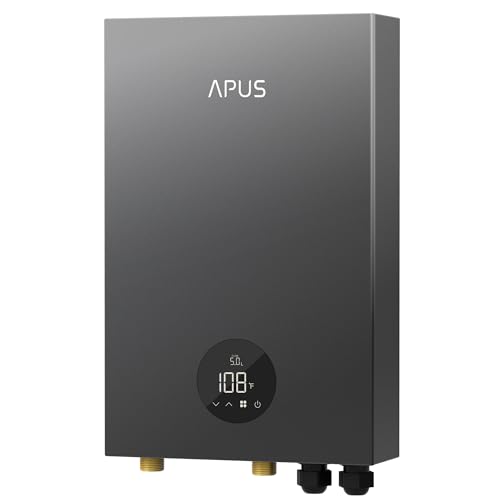
- Up to 6.5 GPM advertised flow
- Self-modulating temperature control
- Needs three 40A breakers
Best For: Electric-only homes with adequate electrical capacity
Best Compact Natural Gas Pick
APUS 4.42 GPM Indoor Tankless Water Heater
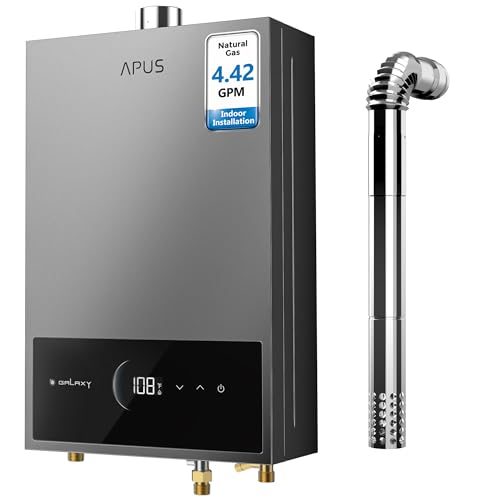
- 95,000 BTU; up to 4.42 GPM
- Starts at 0.66 GPM flow
- Compact indoor wall mount
Best For: Natural-gas homes with moderate hot-water demand
Best Leak-Protection Pick
Rheem RTG Series 7.0 GPM Natural Gas Heater

- 7.0 GPM at a 35°F rise
- LeakGuard internal leak detection
- 0.82 UEF; indoor direct vent
Best For: Natural-gas homes prioritizing leak protection
Best for Moderate Electrical Service
Stiebel Eltron Tempra 24 Trend

- 24kW, 240V electric unit
- 150A minimum service recommended
- 7-year leakage warranty
Best For: Homes suited to a 24kW unit and 150A electrical service
Best for Precise Temperature Control
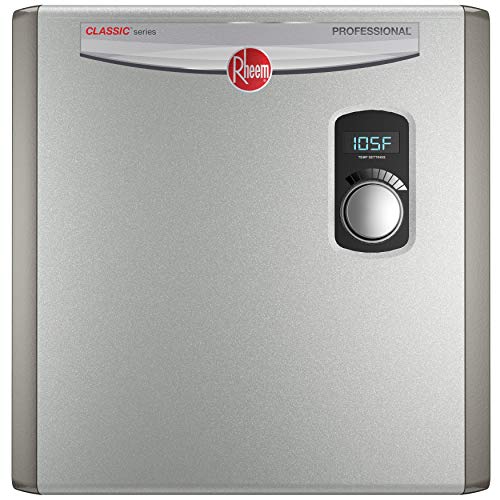
- Up to 5.9 GPM
- 1°F thermostat adjustments
- 200A service recommended
Best For: Homes wanting precise controls with suitable electrical service
Best for Higher Flow Demand
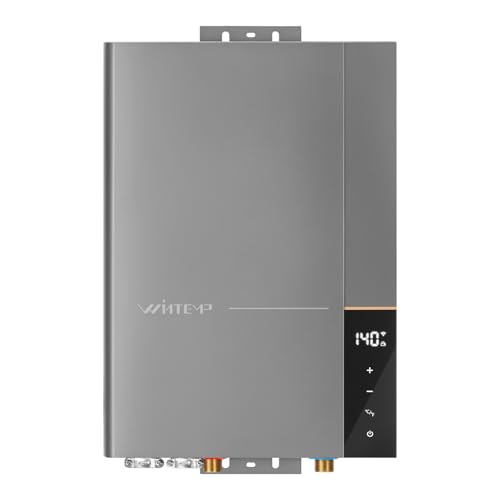
- 36kW; up to 8.7 GPM
- WiFi temperature control
- 300A service recommended
Best For: Larger homes with adequate electrical capacity
Highest Power
27kW Electric Tankless Water Heater

- 27kW, 240V electric model
- Requires three 40-amp breakers
- Adjustable 86°F–131°F temperature
Best For: Homes with ample electrical capacity and multiple hot-water outlets
Wi-Fi Controls
WINTEMP WN18 18kW Electric Heater

- Remote Wi-Fi temperature control
- Up to 4.3 GPM stated output
- Requires two 40-amp breakers
Best For: Buyers wanting remote controls and suitable electrical service
Serviceable Elements
Rheem RTEX-18 18kW Electric Heater
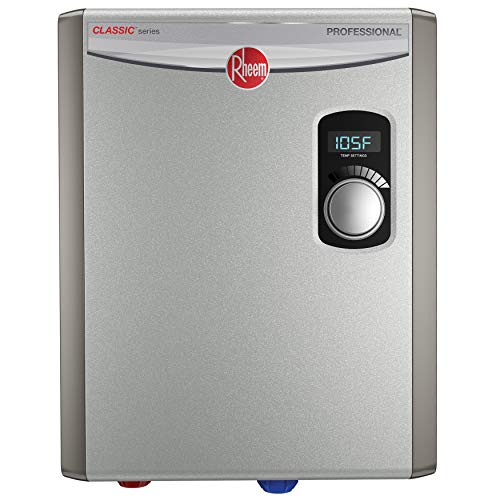
- Up to 4.4 GPM stated flow
- Field-serviceable copper elements
- Digital thermostat with LED display
Best For: Buyers prioritizing serviceable elements and digital controls
Best Outdoor Propane Pick – APUS 8.1 GPM Propane Tankless Water Heater
For homes using propane, this APUS model is one of the higher-output whole house tankless water heaters here. Its 190,000 BTU rating and advertised flow of up to 8.1 GPM make it worth considering when several fixtures may need hot water at once.
Best For: Propane households that want an outdoor-mounted unit for multiple hot-water outlets.
Pros:
- Advertised to supply 5–6 outlets, with a 0.79 GPM minimum activation flow.
- Temperature adjusts from 95°F to 149°F through a wired controller or Tuya-compatible app.
- Outdoor wall-mounted design keeps the unit out of indoor utility space.
Cons:
- Requires an outdoor installation, a propane supply, and 120V power.
- Actual simultaneous flow depends on incoming water temperature and each fixture’s demand.
The app control is a useful differentiator, but size it against your household’s expected temperature rise rather than relying on the maximum GPM alone.
Best High-Output Electric Pick – APUS 27kW Electric Tankless Water Heater
Among electric whole house tankless water heaters, the APUS 27kW stands out for its advertised flow of up to 6.5 GPM and compact indoor footprint. It is intended for multi-point use, though available flow will change with inlet-water temperature and the temperature you select.
Best For: Homes seeking electric, tank-free hot water that can accommodate the unit’s substantial wiring requirements.
Pros:
- Rated at 27kW and advertised for 3–4 simultaneous uses under suitable conditions.
- Self-modulating output and an LED display with 86°F–140°F adjustment in 1°F increments.
- Slim, wall-mounted body measures approximately 17.7 × 11.4 × 3.5 inches.
Cons:
- Requires 240V hardwiring, three 40A breakers, and six 8 AWG conductors as specified in the notes.
- Maximum flow may be lower where incoming water is cold or the desired temperature rise is high.
Check electrical capacity and local installation requirements before buying: the compact heater is only a practical whole-home option if your service can support its 27kW load.
Best Compact Natural Gas Pick – APUS 4.42 GPM Indoor Tankless Water Heater
If your hot-water needs are moderate, this 95,000 BTU APUS is a smaller indoor option among whole house tankless water heaters. Its advertised 4.42 GPM flow and 0.66 GPM activation threshold suit households that need both multi-fixture use and reliable startup at a low flow.
Best For: Natural-gas homes with moderate simultaneous demand and limited space for an indoor wall-mounted heater.
Pros:
- Advertised to serve up to two showers and one sink under suitable conditions.
- Temperature setting spans 95°F–140°F, with an LED touchscreen.
- Compact cabinet measures approximately 20.55 × 13.27 × 5.91 inches.
Cons:
- Its 4.42 GPM advertised maximum leaves less headroom than higher-output models.
- Indoor natural-gas installation requires appropriate venting and a 120V connection.
This is a more measured choice for a smaller household than for heavy peak demand. Confirm the expected flow at your required temperature rise before planning to run multiple showers at once.
Best Leak-Protection Pick – Rheem RTG Series 7.0 GPM Natural Gas Heater
The Rheem RTG Series combines 160,000 BTU output with a stated 7.0 GPM at a 35°F temperature rise, making it a strong candidate among natural-gas whole house tankless water heaters. Its LeakGuard feature is an especially relevant consideration for buyers concerned about internal leaks.
Best For: Natural-gas households wanting multi-shower capacity and built-in internal leak detection.
Pros:
- Rated for 7.0 GPM at a 35°F rise and advertised for 2–3 simultaneous showers.
- LeakGuard is designed to detect internal leaks and help prevent water damage.
- 0.82 UEF, digital temperature controls, and a listed 15-year heat-exchanger warranty.
Cons:
- Indoor gas installation requires suitable direct venting and 120V power.
- Flow will be below the stated 7.0 GPM when a greater temperature rise is required.
Rheem’s published flow figure includes its test temperature rise, which makes planning easier. Compare that rise with your local inlet temperature to judge whether it fits your busiest hot-water periods.
Best for Moderate Electrical Service – Stiebel Eltron Tempra 24 Trend
Among whole house tankless water heaters, the 24kW Tempra 24 Trend is worth considering when you want electric, on-demand hot water without a vent. Check its capacity against your household’s hot-water demand before choosing it.
Best For: Homes suited to a 24kW unit with at least the recommended 150A electrical service.
Pros:
- Self-modulating operation adjusts energy use to demand.
- Compact wall-mounted design needs no venting.
- Digital temperature display and quiet operation.
- Includes 7-year leakage and 3-year parts warranties.
Cons:
- Requires hardwiring, two 50A breakers, and a 100A draw.
- Suitability for simultaneous fixtures depends on incoming water temperature and demand.
The Tempra 24 Trend offers a space-saving whole-home option, but confirm both your electrical capacity and required hot-water output before installation.
Best for Precise Temperature Control – Rheem RTEX-24
The Rheem RTEX-24 stands out among whole house tankless water heaters for its one-degree temperature adjustments from 80°F to 140°F. This 24kW electric model is intended for multiple fixtures, provided it is sized appropriately for the home.
Best For: Households that want adjustable whole-home electric hot water and have the recommended 200A electrical service.
Pros:
- Rated for up to 5.9 GPM.
- Digital thermostat adjusts in 1°F increments.
- Compact wall-mounted design requires no venting.
Cons:
- Requires three 40A double-pole breakers and three sets of #8 AWG copper conductors with ground.
- Recommended minimum 200A household service may require electrical upgrades.
The RTEX-24 is a practical pick when fine temperature control matters, but its maximum flow rating is no substitute for sizing it to your incoming water temperature and fixture use.
Best for Higher Flow Demand – WINTEMP WN36 WiFi
For shoppers comparing whole house tankless water heaters for more simultaneous hot-water use, the 36kW WINTEMP WN36 offers a stated maximum flow of up to 8.7 GPM. Its maker positions it for 3–5-bathroom homes in mild to moderate climates, subject to proper sizing.
Best For: Larger households with electrical service that meets the unit’s substantial installation requirements.
Pros:
- Self-modulating output adjusts to water flow and temperature.
- Built-in WiFi allows smartphone temperature control.
- Wall-mounted design saves floor space.
- ETL certified, with overheat and dry-fire protection.
Cons:
- 300A household service is recommended.
- Requires four 40A double-pole breakers and four 8/2 AWG cables with ground.
The WN36’s higher stated flow and remote controls are appealing, but have a licensed electrician verify the 150A maximum draw and required circuits before buying.
Highest Power – 27kW Electric Tankless Water Heater
Among these whole house tankless water heaters, this 27kW model offers the most heating power. Its compact wall-mounted design and 3/4-inch NPT connections are practical, but confirm that your electrical panel can support three 40-amp breakers before buying.
Best For: Households with sufficient electrical capacity that need a higher-output electric model for multiple hot-water outlets.
Pros:
- 27kW output; the manufacturer describes it as suitable for four to five simultaneous usage points.
- LED controls adjust the set temperature from 86°F to 131°F in 1°F increments.
- Includes leakage, overheating, and automatic shut-off protections.
Cons:
- Requires three 40-amp breakers, making electrical capacity a key purchase consideration.
- Actual simultaneous-use performance depends on incoming water temperature and demand.
This is the higher-power option in the group, but its electrical requirements matter as much as its 27kW rating. Have a qualified installer check the fit for your home.
Wi-Fi Controls – WINTEMP WN18 18kW Electric Heater
If remote temperature adjustment is a priority when comparing whole house tankless water heaters, the WINTEMP WN18 adds Wi-Fi control to an 18kW, 240V electric design. Its stated maximum output is 4.3 GPM; check how that figure fits your incoming water temperature and simultaneous-use needs.
Best For: Homes seeking an 18kW electric heater with Wi-Fi controls and adequate electrical service.
Pros:
- Wi-Fi control lets you adjust the temperature remotely.
- Self-modulation adjusts power use according to flow and incoming water temperature.
- ETL certified, with leakage, overheat, and dry-fire protection.
Cons:
- Requires two 40-amp double-pole breakers and two 8/2 AWG wiring runs; the manufacturer recommends 150-amp household service.
- Its 4.3 GPM stated maximum may limit simultaneous use, particularly with colder inlet water.
The WN18 stands out for its controls rather than raw output. Consult a qualified electrician before purchase, as the manufacturer recommends.
Serviceable Elements – Rheem RTEX-18 18kW Electric Heater
The Rheem RTEX-18 is an 18kW option among whole house tankless water heaters, with a stated flow rate of up to 4.4 GPM. Its digital thermostat, self-modulating power, and field-serviceable copper heating elements make it worth considering if straightforward controls and element access matter to you.
Best For: Buyers who want an 18kW electric model with digital temperature control and serviceable heating elements.
Pros:
- Digital thermostatic control with an LED display and stated ±1-degree accuracy.
- Self-modulation adjusts power to match hot-water demand.
- Two field-serviceable copper immersion heating elements and bottom 3/4-inch NPT connections.
Cons:
- At 18kW, simultaneous-use suitability depends on inlet temperature and household demand.
- Electrical installation requirements should be verified for your home before purchase.
Choose this Rheem for its serviceable elements and conventional digital controls; size it against your expected flow needs rather than relying on the whole-home designation alone.
How We Picked These Whole House Tankless Water Heaters
We compared the listed fuel types, power ratings, advertised flow rates, and indoor or outdoor configurations, then considered the installation demands each category typically brings. The lineup includes compact 18kW electric units, higher-output 24–36kW electric models, and gas or propane choices rated from 95,000 to 190,000 BTU. Advertised gallons per minute (GPM) are a starting point, not a promise: actual flow depends heavily on incoming water temperature and the temperature you set.
Quick Comparison: Which Type Fits?
Electric: No gas line or combustion venting, but whole-home models can require substantial electrical capacity. The 18kW options suit more limited simultaneous use; 24–27kW models offer a middle ground; the listed 36kW unit targets higher demand where the electrical service can support it.
Natural gas: Consider the 95,000-BTU APUS for lighter demand or the 160,000-BTU Rheem when you need more capacity, subject to the flow each can deliver at your required temperature rise. Both listed models are indoor units.
Propane: The 190,000-BTU APUS is an outdoor option for homes with suitable propane supply and an approved installation location. Confirm local freeze-protection requirements before choosing an outdoor heater.
Key Buying Factors
Temperature Rise and Simultaneous Flow
Count the fixtures you expect to run at once, then estimate their combined GPM. Subtract your coldest incoming water temperature from your desired hot-water temperature to find the required temperature rise. Check the manufacturer’s flow chart at that rise; a headline GPM figure may be measured under easier conditions. In cold climates, one high-flow shower plus another hot-water draw can challenge a unit that looks ample on paper.
Fuel and Installation Capacity
For electric models, have an electrician verify the available service capacity, dedicated breakers, wiring, and panel space before you buy. A higher kW rating is useful only if your home can supply it. For gas and propane models, verify fuel-line sizing, required venting or outdoor clearances, and local code requirements with a qualified installer. Installation upgrades can materially change the total price.
Water Quality and Ongoing Care
Hard water can cause scale buildup that reduces performance. Check the manufacturer’s maintenance instructions, plan for periodic flushing where needed, and consider appropriate water treatment if your water is very hard. Also compare warranty terms and local service availability before committing.
Who Should Buy Which Whole House Tankless Water Heaters?
Choose an 18kW electric model only if its cold-weather flow chart covers your actual usage. Look at 24–27kW electric units for moderate demand with adequate electrical capacity, or the 36kW electric option if you need more output and can accommodate its power requirements. For heavier simultaneous use, compare the 160,000-BTU natural gas and 190,000-BTU outdoor propane options against your temperature-rise needs and available fuel. The 95,000-BTU natural gas model is worth considering for lower-demand homes. When in doubt, size for your busiest realistic hot-water period—not the number of bathrooms alone.
