When safe tap water is unavailable, the right filter can make questionable water sources more useful for drinking, camping, evacuation, and emergency preparedness.
We compared 10 water filters for emergencies across portability, filtration capacity, ease of use, and backup value to help you choose a practical match for your household or go-bag.
Best 10 Water Filters for Emergencies Picks for 2026
Best Lightweight Straw
LifeStraw Personal Water Filter
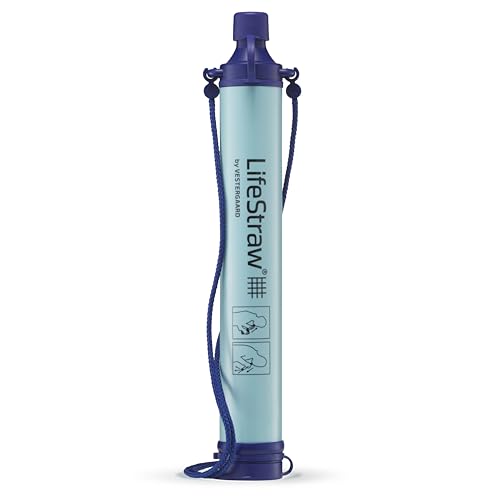
- Removes bacteria, parasites, and microplastics
- Filters up to 1,000 gallons
- Compact, BPA-free personal design
Best For: Solo emergency kits and lightweight outdoor use
Best Gravity Kit
Practical Survival Gravity Water Filtration System

- Two 6-liter hanging bags support group use
- Filters bacteria, parasites, and microplastics
- 1,800-gallon capacity with included accessories
Best For: Families, groups, and basecamp hydration
Best Certified Straw
Membrane Solutions Personal Water Filter S1
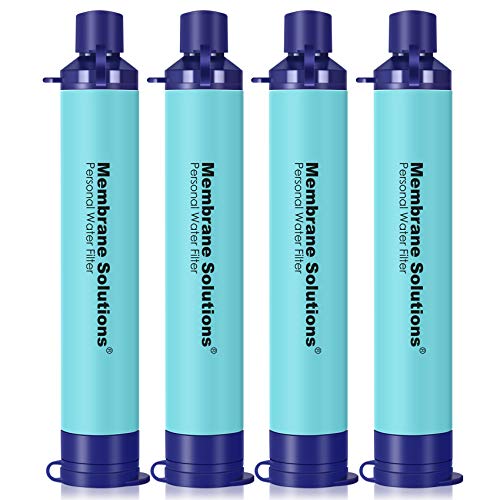
- Five-stage filtration with three NSF certifications
- Fits 28 mm bottles and gravity setups
- Up to 5,000 liters of listed capacity
Best For: Portable emergency, travel, and hiking kits
Best Pump Purifier
Survivor Filter PRO Portable Water Filter

- Three-stage filtration with a 0.01-micron ultra filter
- Supplied claims include tested virus and bacteria removal
- Manual 500 ml-per-minute flow with reusable components
Best For: Preparedness kits and backpacking from freshwater sources
Best Gravity-Bag Filter
Waterdrop 0.1-Micron Gravity Straw
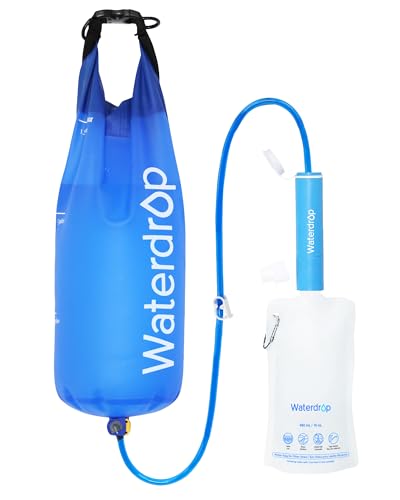
- Includes a 1.5-gallon gravity-fed water bag
- Filters up to 700 milliliters per minute
- Rated for up to 1,400 gallons with backwashing
Best For: Emergency kits, camping groups, and shared water needs
Best Two-Pack Value
Practical Survival Reusable Filter Straws

- Includes two lightweight personal filters
- Rated to filter down to 0.1 micron
- Each filter includes a backflushing plunger
Best For: Paired emergency kits, vehicles, and lightweight travel gear
Best Multi-Pack
LifeStraw Personal Filters, 5 Pack
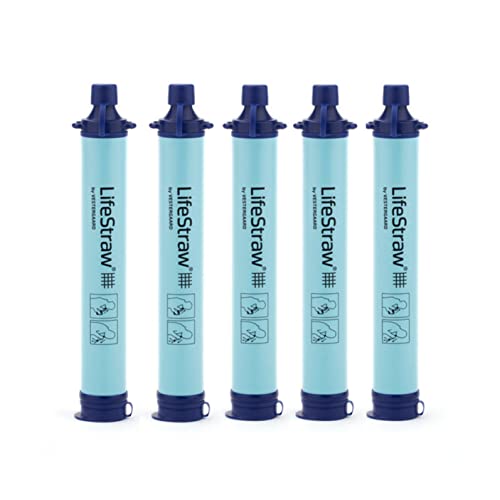
- Includes five personal hollow-fiber filters
- Rated for 4,000 liters per filter
- Needs no electricity or batteries
Best For: Households and distributed emergency preparedness kits
Best High-Volume Pick
Trailgo Pro Emergency Water Filter

- Pumps up to 1.5 liters per minute
- Three-stage filtration for outdoor water sources
- Rated for up to 3,000 liters
Best For: Families, group camping, and off-grid emergency water needs
Best Proven Personal Option

- Removes listed bacteria and parasites
- Filters microplastics and reduces turbidity
- Each straw is rated for up to 4,000 liters
Best For: Personal emergency kits, hiking, travel, and family distribution
Best Family Value Pack
Triple Pure 5-Pack Straw Filters

- Includes five individual personal filters
- Compact design for bags and vehicles
- Comes with syringes, clips, pouch, and tubing
Best For: Families, road trips, group camping, and distributed emergency kits
Best Lightweight Straw – LifeStraw Personal Water Filter
For a compact addition to a bug-out bag, the LifeStraw Personal Water Filter is one of the simplest water filters for emergencies. It is designed for direct drinking from freshwater sources and removes bacteria, parasites, and microplastics without requiring batteries or pumping.
Best For: Solo hikers, travel kits, and lightweight emergency preparedness supplies.
Pros:
- Removes 99.999999% of waterborne bacteria and 99.999% of waterborne parasites, according to the supplied testing claims.
- Filters microplastics down to 1 micron and reduces turbidity down to 0.2 microns.
- Provides up to 4,000 liters (1,000 gallons) of filtration capacity.
- Compact, BPA-free, and lightweight at approximately 0.04 kg.
Cons:
- Designed as a personal straw rather than a group or bulk-water system.
- The supplied notes do not indicate virus removal or a chemical-contaminant reduction rating.
This is a straightforward choice when portability matters most. Its personal-use design makes it less suitable for filling containers or supplying several people, but it fits easily into emergency and outdoor kits.
Best Gravity Kit – Practical Survival Gravity Water Filtration System
The Practical Survival Gravity Water Filtration System is a useful option for households, basecamps, and group emergency planning. Its two 6-liter hanging bags let gravity move water through the filter without electricity, pumping, or complicated setup.
Best For: Families, groups, basecamps, and emergency supplies that need more than personal drinking capacity.
Pros:
- Two oversized bags provide a combined 12 liters of listed bag capacity for dirty and filtered water.
- Removes over 99.99% of stated waterborne bacteria and parasites and filters microplastics down to 0.1 micron.
- The 1,800-gallon filter capacity supports extended use without frequent replacement.
- Includes bags, connectors, a cleaning plunger, and a carry bag; setup is designed to take about 60 seconds.
Cons:
- Requires a place to hang the dirty-water bag during use.
- At approximately 1.5 pounds, it is less minimal than a personal straw filter.
- The supplied notes do not list virus removal.
Among water filters for emergencies, this kit stands out for shared use and hands-off filtration. Choose it when storage and group hydration are more important than the smallest possible packed size.
Best Certified Straw – Membrane Solutions Personal Water Filter S1
The Membrane Solutions S1 combines a pocket-sized straw with a five-stage filtration design. For people comparing water filters for emergencies, its NSF/ANSI 42, 372, and 401 certifications, threaded-bottle compatibility, and support for gravity-fed setups add flexibility beyond direct sipping.
Best For: Travelers, hikers, and emergency-kit users who want a personal filter with multiple connection options.
Pros:
- Supplied claims report up to 99.9999% reduction of total coliforms, including E. coli and other listed organisms.
- Triple NSF certification addresses chlorine and taste, lead-free materials, and microplastics or particulate reduction.
- Compact 7.1-inch, 2-ounce design fits 28 mm threaded bottles and can be used with pouches or gravity-fed setups.
- Offers up to 1,320 gallons (5,000 liters) of use and a listed flow rate of up to 500 ml per minute.
Cons:
- It does not lower TDS, so dissolved minerals remain in the water.
- It is primarily a personal filter and is not presented as a large-volume household system.
- The supplied notes do not claim virus removal.
This straw is a versatile middle ground for emergency and travel kits. Its connection options make it more adaptable than a basic direct-drinking straw, while its capacity remains oriented toward personal or small-group use.
Best Pump Purifier – Survivor Filter PRO Portable Water Filter
The Survivor Filter PRO is a manual pump purifier for users who want broader filtration claims than a basic straw. Its three-stage system targets tested viruses, bacteria, protozoa, heavy metals, and chemicals, while the included hoses and cup support direct use from a freshwater source.
Best For: Preparedness users and backpackers who prefer a pump system with replaceable, reusable filter components.
Pros:
- The supplied testing claims report removal of 99.999% of tested viruses, Staph, bacteria, and protozoa.
- Three-stage filtration includes a 0.1-micron pre-filter, carbon filter, and 0.01-micron ultra filter.
- Provides a listed flow rate of 500 ml per minute without charging or electricity.
- Includes hoses, cup, filters, carrying case, back-washing syringe, and a lifetime manufacturer defect warranty.
Cons:
- Manual pumping requires more effort than a gravity-fed system.
- At 12.8 ounces, it is heavier than a simple personal straw.
- Replacement filters are part of the long-term ownership plan.
This is the most feature-rich option in the group for users prioritizing a pump purifier and multi-stage filtration. It makes sense for emergency kits that may encounter varied freshwater sources and need reusable components.
Best Gravity-Bag Filter – Waterdrop 0.1-Micron Gravity Straw
For emergencies or outdoor use, the Waterdrop Gravity Water Filter Straw combines a 1.5-gallon water bag with a non-electric, gravity-fed filtration system. Its 0.1-micron hollow-fiber membrane and multistage filtration help reduce particulates, sediment, chlorine, unpleasant tastes, and odors.
Best For: Emergency kits, camping groups, and users who want a larger gravity-fed water supply rather than a drink-through straw.
Pros:
- Includes a 1.5-gallon gravity-fed water bag plus a 16-ounce pouch.
- Filters at up to 700 milliliters per minute.
- Rated for up to 1,400 gallons and supports backwashing to help maintain flow.
- Can connect to compatible water bags or threaded water bottles.
Cons:
- The included setup is larger than a simple personal straw.
- The listed warranty is limited to 30 days.
- The maximum supported TDS level is 300 ppm.
This is a practical choice among water filters for emergencies when you need to process and store more water at once. The gravity-bag design is particularly useful for shared drinking water, while the backwash feature may extend usability during extended trips or preparedness situations.
Best Two-Pack Value – Practical Survival Reusable Filter Straws
The Practical Survival reusable emergency water filter straws offer a compact two-filter setup for bugout bags, vehicles, and outdoor gear. Each hollow-fiber filter is rated to remove over 99.99% of listed waterborne bacteria and parasites, including organisms such as E. coli, Legionella, Giardia, and Cryptosporidium.
Best For: Families, paired emergency kits, or anyone who wants two lightweight filters with individual backflushing plungers.
Pros:
- Two 8-inch filters weigh about 2 ounces each.
- Rated to filter down to 0.1 micron and remove listed microplastics.
- Each filter includes its own backflushing plunger.
- Designed for camping, travel, disasters, and emergency preparedness.
Cons:
- It is a personal straw-style system rather than a gravity-fed group filter.
- The supplied details list different capacity figures, including 1,100 and 1,800 gallons.
- The product requires backflushing maintenance to help preserve performance.
As water filters for emergencies, these straws stand out for portability and redundancy. Keeping one in a car and another in a home or outdoor kit gives you two separate filtration options without adding much weight.
Best Multi-Pack – LifeStraw Personal Filters, 5 Pack
The LifeStraw five-pack is a straightforward option for distributing personal filters across emergency kits, family members, or travel bags. Its hollow-fiber membrane is rated to remove 99.999999% of listed bacteria, 99.999% of listed parasites, and microplastics down to 1 micron without electricity or batteries.
Best For: Households and preparedness planners who want five individually usable personal filters with a long 4,000-liter rated capacity.
Pros:
- Five personal filters are included in one pack.
- Rated for 4,000 liters, or 1,000 gallons, with proper use and maintenance.
- Independent testing claims reference EPA, NSF, and ASTM testing protocols.
- Requires no electricity or battery power.
Cons:
- These are personal drinking straws, not a system for filtering water into a container.
- The listed product shelf life is five years.
- Water must be consumed through the straw, which may be less convenient for group use.
For households comparing water filters for emergencies, the five-pack offers broad coverage in a compact format. It is best suited to individual users who need a simple, no-power option for drinking from an available water source.
Best High-Volume Pick – Trailgo Pro Emergency Water Filter
For households, base camps, and group outings, the Trailgo Pro is one of the more practical water filters for emergencies. Its hand-operated pump produces up to 1.5 liters per minute without batteries or electricity, while the three-stage system is designed for stream, lake, well, or rain-barrel water.
Best For: Families, group camping, off-grid use, and emergency preparedness kits that need higher daily water output.
Pros:
- High flow rate of up to 1.5 liters per minute for groups.
- Three-stage filtration includes a 5-micron pre-filter, PP cotton, and ultrafiltration membrane.
- Includes tubing, clamps, a carry bag, and reusable pre-filter components.
- Rated for up to 3,000 liters, with replacement cartridges available.
Cons:
- At about 4 pounds, it is heavier than personal filter straws.
- Hand pumping requires more effort than gravity-fed or sip-through designs.
- The listed maximum supported TDS level is 100 ppm.
The Trailgo Pro makes the most sense when several people need treated water rather than when portability is the only priority. Its pump-based design and included accessories make it a capable backup for camps, cabins, RVs, and household emergency storage.
Best Proven Personal Option – LifeStraw 4-Pack
The LifeStraw Personal Water Filter 4-Pack is a lightweight choice for individual emergency kits, hiking packs, and travel bags. Each straw uses a hollow-fiber membrane and requires no electricity or batteries, making it straightforward to use when treated water is unavailable.
Best For: Individuals, families who want separate personal filters, hikers, and compact emergency or travel kits.
Pros:
- Removes 99.999999% of listed waterborne bacteria and 99.999% of listed parasites, according to the supplied product claims.
- Filters microplastics down to 1 micron and reduces turbidity down to 0.2 microns.
- Each filter is rated for up to 4,000 liters with proper use and maintenance.
- Very light at 1.6 ounces for the four-pack and needs no battery or electricity.
Cons:
- Designed for personal drinking rather than producing larger quantities of stored water.
- It is a sip-through straw, so users must drink directly through the filter or use a compatible setup.
- The supplied details do not identify chemical contaminant or virus removal.
For compact water filters for emergencies, this four-pack is easy to distribute across backpacks, vehicles, and household kits. It is especially useful when each person needs an individual filter, but less suitable for filling containers for a whole group.
Best Family Value Pack – Triple Pure 5-Pack Straw Filters
The Triple Pure five-pack provides a simple way to spread water filters for emergencies across a family, vehicle, or several bags. These lightweight straw filters use a sediment prefilter and 0.1-micron hollow-fiber membrane, and the package includes syringes, rope clips, a water pouch, and silicone tubing.
Best For: Families, group camping, road trips, and preparedness setups that benefit from multiple individual filters.
Pros:
- Five individual filters help avoid sharing during group outings or emergencies.
- Compact, lightweight design fits pockets, daypacks, hydration bags, and bug-out bags.
- Includes accessories for cleaning, carrying, and connecting the filters.
- Uses BPA-free, food-grade materials according to the supplied product notes.
Cons:
- Its listed maximum flow rate is 0.2 gallons per minute, slower than a pump-based group filter.
- Personal straw filters are less convenient for producing larger quantities of water in advance.
- The supplied claims do not specify removal of viruses or chemical contaminants.
This five-pack is a practical distribution-focused option: keep one filter in a car, one in a backpack, and extras at home. Choose it for portability and quantity, rather than for fast container filling or centralized household filtration.
How We Picked the Best Water Filters for Emergencies
We focused on the features that matter when water access is disrupted: filtration design, portability, stated capacity, setup requirements, and the number of people each system can reasonably support. The selection includes compact personal straws, reusable multipacks, gravity-fed kits, and pump-style portable filters.
Because product specifications and certifications can vary, check the current manufacturer listing for exact contaminant claims, replacement-filter availability, flow rate, and rated capacity before buying. No filter should be assumed to remove every chemical, salt, toxin, or microorganism unless its documentation specifically says so.
Quick Comparison
| Type | Best For | Main Advantage | Trade-Off |
|---|---|---|---|
| Personal filter straw | Individual emergency kits and hiking | Small, lightweight, and simple | Usually filters one person at a time |
| Gravity system | Families, base camps, and shelter-in-place use | Can process larger batches with little effort | Bulkier and requires hanging or elevation |
| Pump-style purifier | Flexible outdoor and emergency use | Works with many source containers | Manual pumping takes time and effort |
| Multi-pack straws | Households and distributed go-bags | Provides individual backups | May not supply convenient stored water |
Key Buying Factors for Water Filters for Emergencies
Filtration Claims and Source Water
Match the filter to the likely water source. Look for clearly stated pore size, microorganism reduction claims, and independent certification or testing where available. Cloudy water may require pre-filtering, and visibly polluted or chemically contaminated water may need a different treatment method entirely.
Capacity and Replacement Parts
Rated gallons are useful for comparing longevity, but real-world life depends on sediment and water quality. A filter with available replacement cartridges is generally easier to maintain than a sealed product with no service path. Store spare components and follow the manufacturer’s backwashing or cleaning instructions.
Speed, Effort, and Storage
Personal straws are convenient for immediate drinking but are less practical for filling bottles or serving several people. Gravity systems reduce manual work, while pump filters offer control but require more effort. Consider where the unit will be stored, how quickly you need water, and whether you can keep the intake and clean-water containers separate.
Safety and Preparedness
Filtering is only one part of emergency water planning. Keep treated water in clean containers, prevent cross-contamination, and follow local public-health guidance during a disaster. A filter should complement—not replace—stored water, boiling, or chemical disinfection when those methods are recommended.
Who Should Buy Which Water Filters for Emergencies?
Choose a personal straw if you need the lightest option for one person, a hiking pack, or a compact vehicle kit. A multipack makes more sense for families who want separate filters in several bags. Select a gravity system when multiple people need regular access to treated water and you have a stable place to operate it. A pump-style purifier is a stronger fit for users who want versatility across streams, campsites, and emergency scenarios and do not mind manual operation.
For most preparedness plans, the most dependable setup combines stored drinking water with one primary filter and a backup treatment method. Whichever of these Water Filters for Emergencies you choose, verify its limits, practice using it before an outage, and replace worn parts on schedule.
