Choosing solar panels for home use means balancing available roof or ground space, energy demands, battery storage, and installation complexity. The right system can reduce grid dependence, support backup power, or run an entirely off-grid property.
Our selection includes individual high-output panels, compact 12V and 24V kits, portable power-station bundles, and complete off-grid packages. Use the guide below to match panel performance and system design to your household’s actual needs.
Best 10 Solar Panels for Home Picks for 2026
Best Complete Off-Grid Kit

- 2,340W bifacial panel array with two lithium batteries
- 10KW inverter provides 120V/240V split-phase output
- Professional installation recommended
Best For: Homes, cabins, farms, and substantial off-grid backup projects
Best High-Wattage Panel Pair

- Two 550W panels deliver 1,100W total rated output
- 23% efficiency with bifacial rear-side generation
- Panels only; other system components are separate
Best For: High-output home, farm, RV, marine, and off-grid installations
Best Plug-and-Play Backup
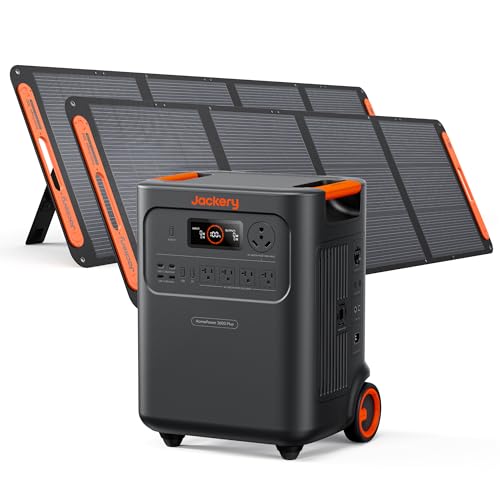
- 3,584Wh capacity with 3,600W AC output
- Includes two 200W solar panels
- Portable, wheeled design with four charging methods
Best For: Convenient home outage backup and movable solar-powered energy
Best Durable Panel Pair
850W N-Type Bifacial Solar Panels

- Two panels provide 850W total rated output
- 25% efficiency with N-type 16BB bifacial cells
- Weather-rated construction and stated 30-year warranty
Best For: Durable residential, RV, farm, boat, and off-grid installations
Practical Off-Grid Pick

- Two 400W monocrystalline panels provide 800W of rated power.
- Long MC4 leads and fewer connections simplify array installation.
- Designed for 12V/24V systems and outdoor off-grid use.
Best For: 12V or 24V battery banks, cabins, sheds, and patio installations
Whole-Home Power System

- Combines 2,950W of panels with a 10kW split-phase inverter.
- Includes a 48V 314Ah LiFePO₄ battery with about 16.1kWh capacity.
- Supports monitoring, dual MPPT charging, and 120V/240V output.
Best For: Large off-grid household systems requiring integrated storage and split-phase power
High-Yield Array Upgrade
Callsun 450W Bifacial Solar Panels

- N-type 16BB cells provide 450W per panel.
- Bifacial design can use reflected light for added production.
- IP68 double-glass construction is built for demanding outdoor use.
Best For: High-voltage MPPT arrays, open ground mounts, and reflective installations
Best DIY 12V/24V Solar Panel Set
ECO-WORTHY 400W N-Type 4-Panel Kit

- Four 100W N-type panels deliver 400W total
- Up to 25% efficiency with 16BB cell technology
- Pre-drilled holes and MC4 connectors simplify installation
Best For: DIY home, shed, RV, boat, and off-grid 12V/24V systems
Best High-Efficiency Bifacial Option
Callsun 400W N-Type 2-Panel System

- Up to 25.6% efficiency from N-type 16BB cells
- Bifacial panels can collect light from the front and rear
- Dual-module design helps limit partial-shade losses
Best For: Portable power stations, RVs, vans, rooftops, and marine systems
Best Complete Starter Kit
ECO-WORTHY 200W Solar Panel Kit
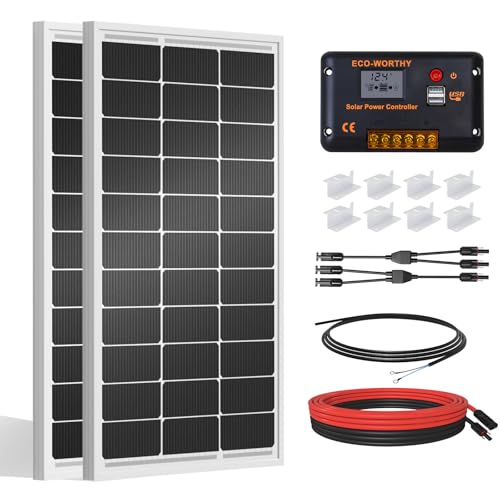
- Includes two 100W panels and a 30A PWM controller
- Comes with brackets, cables, and MC4 connectors
- Supports series or parallel wiring for 24V or 12V systems
Best For: RV, camper, cabin, shed, boat, and small off-grid setups
Best Complete Off-Grid Kit – 10KW Home Solar System
For shoppers seeking solar panels for home use as part of a complete off-grid setup, the ECO-WORTHY kit combines 2,340W of bifacial N-type panels with a 10KW 120V/240V inverter and two 48V 100Ah lithium batteries. The manufacturer estimates up to 9.36kWh per day under four hours of full sunshine, though actual output depends on conditions and installation.
Best For: Homes, cabins, farms, sheds, and backup systems needing split-phase power and substantial battery storage.
Pros:
- Includes panels, batteries, inverter, mounting brackets, and accessories.
- Supports 120V/240V output for compatible high-power appliances.
- Panels feature N-type cells, bifacial generation, IP68 protection, and a stated 30-year lifespan.
- Battery monitoring supports Bluetooth and Wi-Fi through a mobile app.
Cons:
- Professional installation is recommended and not included.
- Actual daily energy production will vary with sunlight, shading, orientation, and system losses.
- The complete kit is a substantial installation rather than a portable solution.
This is the most comprehensive option here for building an off-grid home power system, especially if you need split-phase output and expandable inverter capacity. Its size and installation requirements make it better suited to planned projects than casual backup use.
Best High-Wattage Panel Pair – 1100W Bifacial Solar Panels
This JJN two-panel set is a straightforward way to add high-output solar panels for home or off-grid systems. Each rigid bifacial module is rated at 550W, for 1,100W total, and the transparent backsheet can capture reflected light from the rear when the installation provides suitable conditions.
Best For: Roof, ground, RV, farm, marine, and off-grid installations where a high rated output per panel is useful.
Pros:
- Two 550W panels provide 1,100W of combined rated capacity.
- 23% efficiency and bifacial construction can support strong production in appropriate conditions.
- Pre-drilled holes and MC4 connectors help with system installation.
- Weather-resistant construction is designed for outdoor use.
Cons:
- Panels only are included; an inverter, charge controller, batteries, and mounting hardware may be needed separately.
- Each panel is large and heavy, at about 89.61 by 44.65 inches and 123.4 pounds according to the supplied details.
- Performance depends on installation conditions, including available reflected light for bifacial gain.
Choose this pair when panel wattage and reduced panel count matter more than an all-in-one kit. Confirm roof space, structural capacity, voltage compatibility, and the requirements of the rest of your solar system before buying.
Best Plug-and-Play Backup – Jackery HomePower 3600 Plus
The Jackery HomePower 3600 Plus offers a simpler alternative to a permanently installed array for shoppers comparing solar panels for home backup. This portable power station includes two 200W solar panels, a 3,584Wh battery, and 3,600W AC output, with charging options that include solar, AC, hybrid AC+DC, and a gas generator.
Best For: Homeowners wanting movable outage backup with solar charging and no complex installation.
Pros:
- 3,600W output can support many household loads, with 7,200W available in parallel according to the supplied notes.
- Supports 120V output and dual-voltage operation when units are used in parallel.
- Plug-and-play design, wheels, and a telescoping handle improve portability.
- Offers a stated 6,000-cycle rating, 10-year lifespan, and five-year manufacturer warranty.
Cons:
- The included solar input is 400W from two 200W panels, considerably less than a full rooftop array.
- At 77.2 pounds, the power station is portable but not lightweight for lifting.
- Long-duration or high-demand loads may require additional capacity or parallel units.
This system is a strong fit for convenient emergency power rather than a permanent whole-home solar installation. Its rolling design and multiple charging methods make it practical when ease of setup and flexible placement are priorities.
Best Durable Panel Pair – 850W N-Type Bifacial Solar Panels
These JJN panels provide 850W of combined rated capacity in a two-panel package for solar panels for home, RV, farm, boat, and off-grid applications. Their N-type 16BB cells and transparent backsheets are designed to collect light from both sides, while the corrosion-resistant frames and weather-rated connectors support outdoor installation.
Best For: Residential rooftops and off-grid systems that need a rugged, high-efficiency panel pair.
Pros:
- 25% stated efficiency with bifacial generation and N-type 16BB cells.
- Black corrosion-resistant aluminum frames are rated for 2,400Pa wind and 5,400Pa snow loads.
- IP65 junction boxes and IP68 connectors provide weather protection.
- Includes a stated transferable 30-year power output warranty.
Cons:
- This package contains PV panels only; the rest of the solar system must be purchased separately.
- The two-panel package weighs 94.6 pounds according to the supplied details.
- Bifacial gains depend on rear-side light and the mounting environment.
Compared with the higher-wattage JJN pair, this package emphasizes N-type cell technology, load ratings, and a long stated warranty. It is a sensible component choice for buyers who already have compatible mounting and power-conversion equipment.
Practical Off-Grid Pick – DOKIO 800W Solar Panel 2-Pack
For shoppers comparing solar panels for home use in a shed, cabin, patio, or other off-grid setting, this DOKIO package provides two 400W monocrystalline panels for 800W of rated power. Its long MC4 leads and sealed junction boxes simplify array planning, but the total output requires a properly sized controller or inverter.
Best For: Homeowners building a 12V or 24V off-grid array with AGM, Gel, or LiFePO₄ batteries.
Pros:
- Two 400W panels provide 800W of rated STC power with fewer connections than an eight-panel 100W setup.
- Tempered glass, an aluminum frame, and IP65-rated waterproof junction boxes support year-round outdoor use.
- Each panel includes a 9.84-foot MC4 lead for more flexible installation.
Cons:
- The panels are large and heavy, with listed dimensions of 67.8 by 44.6 inches and a package weight of 44.45 kg.
- A suitable PWM or MPPT controller and inverter must be selected to handle the system’s output and wiring configuration.
This is a practical choice when you want substantial panel capacity without assembling a large number of smaller modules. Use parallel wiring for typical 12V applications, and confirm controller compatibility before installation.
Whole-Home Power System – ECO-WORTHY 10kW Off-Grid Kit
For a more complete solar panels for home solution, this ECO-WORTHY kit combines five 590W panels, a 10kW split-phase inverter, and a 48V 314Ah LiFePO₄ battery. It is designed for substantial household power support, but its pallet delivery, high-voltage equipment, and installation requirements make professional planning especially important.
Best For: Homeowners seeking a complete 120V/240V off-grid system with integrated energy storage.
Pros:
- Includes 2,950W of solar capacity, a 10,000W continuous inverter, and approximately 16.1kWh of battery storage.
- The inverter supports 120V/240V split-phase output, dual MPPT controllers, Wi-Fi monitoring, and up to 20,000W peak output.
- The battery includes a 200A BMS, dual breakers, display, Bluetooth, Wi-Fi, and RS485/CAN communication.
Cons:
- The large panels and battery ship on a pallet by truck, so the delivery location must accommodate freight access.
- The manufacturer recommends professional installation; this is not an ideal beginner-level solar project.
- The listed PV capacity is 2,950W, so actual solar generation depends on sunlight and installation conditions.
This kit stands out as an all-in-one approach for buyers who need both generation and storage rather than panels alone. Its substantial inverter and battery capacity are attractive, but the system should be designed and installed by qualified professionals.
High-Yield Array Upgrade – Callsun 450W Bifacial Solar Panels
These Callsun panels are a strong option for solar panels for home installations where high output per module and long-term outdoor durability matter. The two-pack uses N-type 16BB cells and a bifacial design, making it especially suitable for open, ground-mounted, or reflective locations paired with a compatible high-voltage MPPT system.
Best For: High-capacity residential, ground-mounted, and off-grid arrays with suitable MPPT equipment.
Pros:
- Each panel delivers 450W using N-type monocrystalline cells and a 16BB architecture.
- Bifacial construction can capture reflected and ambient light from the rear in appropriate installations.
- Double-glass construction, an aluminum frame, IP68 rating, and low-iron tempered glass support outdoor durability.
- The product includes 10 years of technical support and a stated 25-year commitment to at least 84.5% output.
Cons:
- Bifacial gains depend on the installation environment, including rear-side exposure and reflective surfaces.
- These high-power panels are intended for high-voltage MPPT solar systems, so existing equipment may not be compatible.
- The larger module output may require careful string, inverter, and mounting design.
Choose this pair when maximizing output per panel and reducing the number of modules are priorities. Its bifacial construction is most useful in an open installation, while a compatible MPPT controller or inverter is essential for proper system design.
Best DIY 12V/24V Solar Panel Set – ECO-WORTHY 400W N-Type 4-Panel Kit
For shoppers comparing solar panels for home, this four-panel ECO-WORTHY set is a practical choice for building or expanding a 12V or 24V system. Its N-type bifacial panels offer up to 25% conversion efficiency, while pre-drilled mounting holes and plug-and-play connectors simplify installation.
Best For: DIY home, shed, RV, boat, garden, and other off-grid 12V/24V projects.
Pros:
- Four 100W N-type monocrystalline panels provide 400W total output.
- 16BB technology and IP68 waterproof junction boxes support durable outdoor operation.
- Pre-installed bypass diodes help limit power loss from shade and low-light conditions.
- Pre-drilled holes and MC4 connectors make installation more approachable for beginners.
Cons:
- The set is shipped in two boxes, which may arrive separately.
- A battery, charge controller, wiring, and mounting hardware beyond the panel features may be needed to complete a system.
Choose this kit if you want a straightforward four-panel foundation with strong efficiency and DIY-friendly installation. It is especially useful when you need flexible 12V/24V battery charging for an off-grid setup.
Best High-Efficiency Bifacial Option – Callsun 400W N-Type 2-Panel System
Among solar panels for home and space-conscious off-grid installations, this Callsun system stands out for its high efficiency, bifacial design, and partial-shade handling. Two 200W panels can be connected in series for 400W output and are designed to work with many portable power stations that support 60V-class solar input.
Best For: Portable power stations, RVs, vans, marine setups, rooftops, and warm-climate off-grid systems.
Pros:
- Up to 25.6% conversion efficiency from N-type 16BB monocrystalline cells.
- Bifacial construction can capture direct, reflected, and diffuse light from both sides.
- Dual-module parallel design helps reduce the effect of partial shading.
- Tempered glass, an aluminum frame, and an IP68 junction box support outdoor use.
Cons:
- Each panel measures 51.3 by 30.3 inches, requiring more mounting space than smaller panels.
- Bifacial gains depend on suitable installation conditions and reflected light.
- Series connection requires a compatible power station or charge system within the stated voltage limits.
This is a strong fit when maximizing output from a compact two-panel arrangement matters. Its bifacial construction and shade-tolerant layout add flexibility, while the stated temperature coefficient supports more stable performance in hot conditions.
Best Complete Starter Kit – ECO-WORTHY 200W Solar Panel Kit
For buyers seeking solar panels for home backup or mobile use without sourcing every component separately, this ECO-WORTHY kit includes two 100W monocrystalline panels and a 30A PWM charge controller. It can be wired for either 12V or 24V operation and includes brackets, cables, and connectors for a more complete installation package.
Best For: RVs, campers, caravans, boats, cabins, sheds, and other small off-grid or backup-power applications.
Pros:
- Includes two 100W panels for 200W total rated power.
- Comes with a 30A PWM charge controller, Z brackets, cables, and connectors.
- Supports series or parallel wiring for 24V or 12V configurations.
- Aluminum frames are rated to withstand 2400Pa wind and 5400Pa snow loads.
Cons:
- PWM charging is less feature-rich than an MPPT-based setup.
- The kit is rated for up to 21.5% efficiency under suitable light conditions.
- Its included 16.4-foot solar cables may not suit every installation layout.
This kit makes sense for first-time buyers who value included accessories and a simpler path to installation. It offers useful wiring flexibility for 12V or 24V systems, though users seeking maximum charging efficiency may prefer a system with an MPPT controller.
How We Picked These Solar Panels for Home
We selected products across the main residential use cases: grid-independent systems, backup power, RV and shed installations, and modular home arrays. We considered rated wattage, voltage compatibility, cell technology, efficiency claims, bifacial construction, included equipment, and whether each option is intended for a single panel installation or a larger system.
Product specifications should be verified against the manufacturer’s current documentation before purchase. Real-world output varies with sunlight, temperature, orientation, shading, wiring losses, and charge-controller or inverter limits.
Quick Comparison
| Type | Best For | What to Check |
|---|---|---|
| Complete off-grid kit | Cabins and whole-home backup | Battery capacity, inverter rating, permitting, and installation requirements |
| High-wattage bifacial panel | Large roof or ground arrays | Mounting height, rear-side light, voltage, and inverter compatibility |
| 12V or 24V panel kit | RV, shed, boat, or small loads | Charge-controller type, battery voltage, and wiring size |
| Portable power station bundle | Emergency and mobile power | Battery capacity, solar input limits, portability, and recharge time |
Key Buying Factors for Solar Panels for Home
System Size and Daily Energy Use
Estimate your daily kilowatt-hour consumption, then account for local sunlight and system losses. A panel’s wattage describes peak output, not guaranteed daily production. Larger homes or high-demand appliances may need multiple panels, substantial battery storage, and a suitably sized inverter.
Voltage, Wiring, and Compatibility
Match panel voltage and array configuration to the charge controller, battery bank, and inverter. A 12V or 24V panel kit is not automatically suitable for a 48V battery system. Confirm open-circuit voltage, operating voltage, maximum current, connector type, and series or parallel limits before connecting equipment.
Monocrystalline, N-Type, and Bifacial Design
Monocrystalline panels are a common choice for residential installations because they provide strong output in a relatively compact area. N-type and high-efficiency designs may produce more power per square foot. Bifacial panels can gain additional output from reflected light, but their advantage depends on reflective surfaces, spacing, and installation angle.
Inverter, Battery, and Installation Needs
Panels alone do not provide usable household power at all times. Review inverter continuous and surge ratings, battery chemistry and capacity, backup-load requirements, and included protection hardware. Whole-home systems typically require professional design, electrical work, grounding, permits, and utility approval.
Who Should Buy Which Solar Panels for Home?
Choose a complete off-grid kit if you need an integrated solution for a cabin, remote property, or substantial backup installation and are prepared to confirm every component’s capacity.
Choose high-wattage bifacial or N-type panels if you have adequate roof or ground space and want to build a scalable array with strong output per panel.
Choose 400W-class or smaller 12V/24V panels for sheds, RVs, boats, workshops, and incremental projects where simpler wiring and manageable loads matter more than whole-home capacity.
Choose a portable power-station bundle when mobility, fast setup, and emergency charging are more important than permanent electrical integration. For any residential system, confirm local code requirements and have a qualified installer review the design before commissioning.
