A tankless heater can deliver hot water on demand in a well-water home, but the heater is only part of the decision. Mineral buildup, sediment, incoming water temperature, and the electrical or gas supply all affect how well it performs.
These 10 options span compact electric units and higher-output gas models. Use the guide below to narrow the field by your household’s hot-water demand and the conditions of your well.
Best 10 Tankless Water Heaters for Well Water Picks for 2026
Compact Electric Pick

- Up to 3.38 GPM rated flow
- 240V/60A breaker required
- Compact design with ETL certification
Best For: Smaller homes with suitable electrical capacity
Flexible Gas Pick
Rinnai RX180iN Condensing Heater

- Up to 10 GPM rated flow
- Natural gas or propane
- Indoor or outdoor installation
Best For: Larger homes seeking flexible gas installation
Connected Natural Gas Pick
MIZUDO 199,000 BTU Indoor Heater

- Up to 10.3 GPM rated flow
- 0.53 GPM low-flow activation
- App control and indoor direct venting
Best For: Natural-gas homes with multiple fixtures
Higher-Power Electric Pick
Stiebel Eltron Tempra 24 Trend

- 24kW electric heating
- No gas venting required
- Two 50A breakers specified
Best For: Homes with ample electrical service
Best for Multi-Bathroom Homes
Rheem RTG 7.0 GPM Natural Gas Heater

- 7.0 GPM at a 35°F rise
- 160,000 BTU/hr natural gas output
- LeakGuard internal leak detection
Best For: Natural-gas homes running multiple hot-water fixtures
Best Vent-Free Electric Option
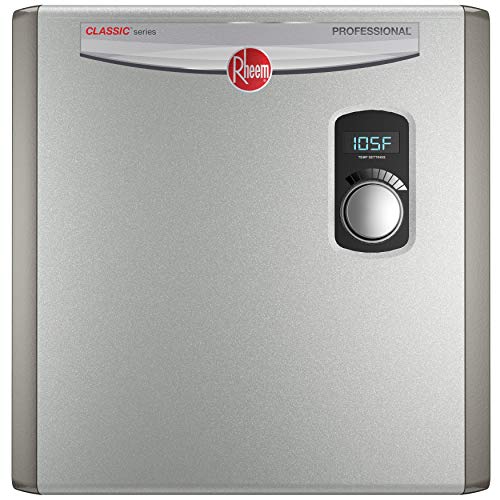
- Up to 5.9 GPM rated flow
- No gas venting required
- Needs three 40-amp double-pole breakers
Best For: Electric homes with sufficient panel capacity
Best Compact Gas Option
ThermoMate CZ422NG 5 GPM Heater

- Up to 5 GPM and 113,000 BTU
- Two-shower claim assumes 65°F inlet water
- LED status display and safety protections
Best For: Compact natural-gas installations with moderate demand
Highest-Flow Pick
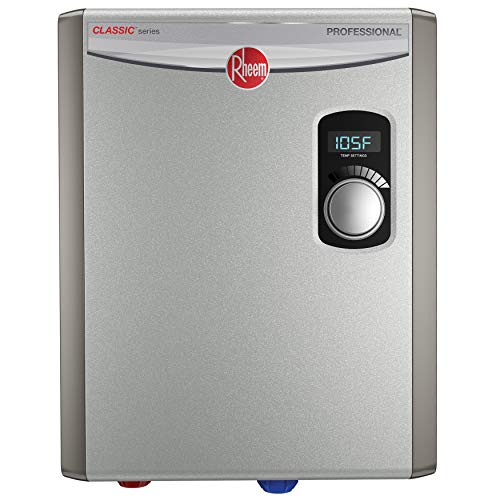
- Up to 4.4 GPM stated flow
- Self-modulating 18kW power
- Field-serviceable copper elements
Best For: Higher flow demand with suitable 240V electrical capacity
Compact Midrange Pick

- 13kW self-modulating heater
- Digital 1°F adjustments
- Confirm conflicting flow figures
Best For: Compact installation with verified temperature-rise needs
Lower-Power Pick
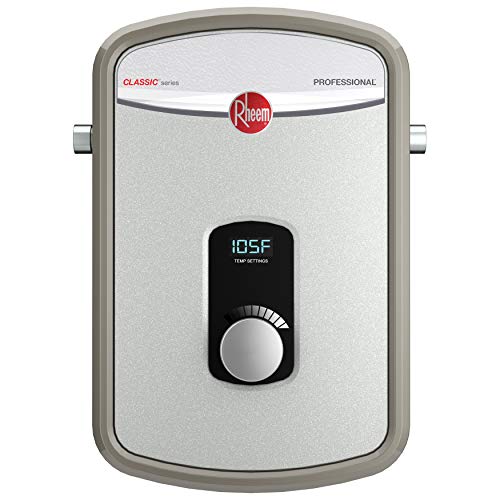
- Up to 2.68 GPM stated flow
- 80°F–140°F digital control
- Requires specified 50-amp breaker
Best For: Modest demand with compatible 240V wiring
Compact Electric Pick – ORBEK 14kW Tankless Heater
Among tankless water heaters for well water, the ORBEK 14kW is a compact electric option for homes with suitable electrical capacity. Its rated maximum is 3.38 GPM, but actual flow at your desired temperature depends on incoming well-water temperature.
Best For: Smaller homes seeking an electric heater for a few nearby fixtures.
Pros:
- Compact, wall-mounted design with a temperature display adjustable from 86°F to 140°F.
- ETL certified, with leakage, over-temperature, and dry-heating protection.
- Includes a filter screen and uses a water-electricity separation design intended to limit scale and corrosion.
Cons:
- Requires a 240V/60A two-pole breaker, 6 AWG wiring, and a panel with at least 150A total capacity.
- The 3.38 GPM maximum may fall at colder well-water temperatures.
Check your well’s water quality and winter inlet temperature before sizing it for multiple simultaneous uses; the included screen does not replace appropriate water treatment.
Flexible Gas Pick – Rinnai RX180iN Condensing Heater
For buyers comparing tankless water heaters for well water, the Rinnai RX180iN offers gas-fuel and installation flexibility. It supports natural gas or propane and indoor or outdoor installation, while its stated 10 GPM maximum should be checked against your coldest incoming well-water temperature.
Best For: Larger households wanting a professionally installed gas heater with flexible fuel and placement options.
Pros:
- Smart Sense gas control supports natural gas or propane.
- Indoor or outdoor installation is possible; outdoor use requires an RX-OVC vent cap.
- Condensing design has a stated 0.98 UEF, and Quick Flush simplifies flushing.
Cons:
- Rinnai recommends professional installation.
- Wi-Fi control requires a separate Controlr module.
Its flushing feature is useful to consider when planning well-water maintenance, but have your installer assess mineral content, treatment needs, and realistic flow for your groundwater temperature.
Connected Natural Gas Pick – MIZUDO 199,000 BTU Indoor Heater
The MIZUDO is a high-output natural-gas contender among tankless water heaters for well water. Its stated maximum of 10.3 GPM and 199,000 BTU input suit buyers planning for multiple fixtures, though colder well water can reduce delivered hot-water flow.
Best For: Natural-gas homes with several hot-water demands and an indoor installation location.
Pros:
- Activates at a stated 0.53 GPM for lower-flow uses.
- Offers app-based monitoring, temperature adjustments, alerts, and Alexa compatibility.
- CSA certified for indoor installation with a sealed direct-vent system.
Cons:
- Requires natural gas and a dedicated 3-inch by 5-inch concentric vent kit.
- Not recommended above 3,000 feet of elevation.
Confirm your well can sustain the flow your fixtures require, then account for groundwater temperature and any water-treatment needs before installation. The manufacturer recommends professional installation.
Higher-Power Electric Pick – Stiebel Eltron Tempra 24 Trend
The Stiebel Eltron Tempra 24 Trend brings 24kW of electric heating to the tankless water heaters for well water conversation. It needs no gas venting, but its ability to serve a whole home depends on groundwater temperature and simultaneous demand.
Best For: Homes with ample electrical capacity that prefer a vent-free electric installation.
Pros:
- Auto-modulation adjusts power use to demand.
- Compact wall-mounted unit operates quietly and has a digital temperature display.
- Includes a seven-year leakage warranty and three-year parts warranty.
Cons:
- Requires 240V power, two 50A breakers, and a recommended minimum 150A electrical service.
- No usable whole-home flow rating at a specified well-water inlet temperature is provided in the supplied details.
Have an electrician verify capacity and size the unit against your coldest well-water temperature. Plan for appropriate water-quality management rather than assuming the heater addresses minerals or sediment.
Best for Multi-Bathroom Homes – Rheem RTG 7.0 GPM Natural Gas Heater
For shoppers comparing tankless water heaters for well water, the Rheem RTG offers substantial whole-home capacity: its rated 7.0 GPM at a 35°F temperature rise is intended to support two to three simultaneous showers. Actual flow will depend on your well water’s inlet temperature and the temperature you set.
Best For: Homes with natural gas and multiple bathrooms that need hot water at several fixtures at once.
Pros:
- 160,000 BTU/hr output and a 7.0 GPM rating at a 35°F rise.
- LeakGuard detects internal leaks, while the digital control adjusts temperature in 1°F increments.
- Wall-mounted indoor design includes direct venting and built-in freeze protection.
Cons:
- Requires natural gas, indoor venting, and a 120V electrical connection.
- The 7.0 GPM figure applies at a 35°F rise; colder incoming water can reduce available flow.
This is the higher-capacity gas option of the three, but its stated flow rating should be checked against your well’s coldest inlet temperature and your household’s peak demand.
Best Vent-Free Electric Option – Rheem RTEX-24 24kW Heater
If you’re considering electric tankless water heaters for well water, the Rheem RTEX-24 avoids gas venting and mounts on a wall. Its stated output is up to 5.9 GPM, but you’ll need to size it for your well water’s inlet temperature and your fixtures’ combined demand.
Best For: Homes that prefer an electric, no-vent installation and have the electrical capacity for a 24kW heater.
Pros:
- Heats on demand without requiring gas venting.
- Digital temperature control adjusts from 80°F to 140°F in 1°F increments.
- Compact, wall-mounted design measures 17.63 inches wide, 18.25 inches high, and 3.5 inches deep.
Cons:
- Requires 240V power, three 40-amp double-pole breakers, and three sets of #8 AWG copper conductors with ground; Rheem recommends at least a 200-amp household service panel.
- The up-to-5.9-GPM figure does not guarantee that flow when incoming well water is cold.
The lack of venting is convenient, but the electrical requirements are substantial. Confirm panel capacity and expected temperature rise before choosing this model for whole-home use.
Best Compact Gas Option – ThermoMate CZ422NG 5 GPM Heater
Among tankless water heaters for well water, the ThermoMate CZ422NG is a compact natural-gas choice for moderate whole-home demand. Its two-shower performance claim assumes 65°F incoming water, so colder well water may reduce the flow available at the same outlet temperature.
Best For: Natural-gas households seeking a compact indoor heater for roughly two simultaneous showers under the stated inlet-water conditions.
Pros:
- Rated up to 5 GPM with 113,000 BTU output.
- 3.5-inch LED display shows operating status and supports 90°F–140°F temperature settings.
- Includes freeze, flame-out, overheat, and other listed safety protections.
Cons:
- Requires natural gas, an indoor vent connection, and 120V power.
- The two-shower claim is based on a 65°F inlet temperature, which may not reflect your well water.
This model offers useful controls in a small wall-mounted unit. Compare its 5 GPM rating with your peak fixture demand, especially if your well supplies colder water.
Highest-Flow Pick – Rheem RTEX-18 18kW Electric
Among these tankless water heaters for well water, the Rheem RTEX-18 offers the highest stated flow rate, up to 4.4 GPM. Its 18kW, 240V design is worth considering when your expected demand calls for more capacity, though actual hot-water flow depends on incoming water temperature.
Best For: Buyers seeking the highest stated flow rate of these three models and able to accommodate an 18kW electrical load.
Pros:
- Self-modulating power adjusts to hot-water demand.
- Digital temperature control has an LED display and stated ±1°F accuracy.
- Two copper immersion heating elements are field-serviceable.
- Bottom 3/4-inch NPT water connections are threaded for installation or replacement.
Cons:
- The 18kW electrical load warrants checking your home’s electrical capacity before purchase.
- The stated 4.4 GPM is an upper-end flow figure, not a guarantee at every incoming water temperature.
This is the capacity-focused option here. If your well water arrives cold, size the heater against your required temperature rise and simultaneous fixture demand rather than relying on the maximum flow figure alone.
The Rheem RTEX-13 is a compact 13kW option among tankless water heaters for well water. Its product bullets state up to 3.17 GPM, while the supplied details list 4.8 GPM, so confirm performance at your well water’s incoming temperature before sizing it for multiple uses.
Best For: Buyers who want a compact, self-modulating electric heater and can verify its flow at their required temperature rise.
Pros:
- Self-modulating power control responds to hot-water demand.
- External digital control adjusts temperature in 1°F increments.
- Two copper immersion heating elements are field-serviceable.
- Includes 1/2-inch NPT adapters for its side compression water connections.
Cons:
- Supplied flow figures conflict: up to 3.17 GPM in the bullets versus 4.8 GPM in the details.
- Requires 240V power and draws a stated 54 amps.
The RTEX-13 sits between the other two models in wattage, but the inconsistent flow specifications make temperature-rise verification especially important for a well-water installation.
Lower-Power Pick – Rheem RTEX-11 11kW Electric
For shoppers comparing tankless water heaters for well water, the Rheem RTEX-11 is the lowest-wattage model in this group at 11kW. Rheem states up to 2.68 GPM and describes it for multiple-fixture applications, but your well water’s incoming temperature and the desired output temperature determine how much flow is practical.
Best For: Homes with modest hot-water demand that can meet the specified 240V wiring requirements.
Pros:
- Digital temperature controls adjust from 80°F to 140°F in 1°F increments.
- Compact wall-mounted design saves floor space.
- Electric operation requires no venting.
- Heats water on demand rather than maintaining a storage tank’s temperature.
Cons:
- Its stated maximum of 2.68 GPM is the lowest of these three models.
- Specified installation calls for a 50-amp double-pole breaker, #8 AWG copper conductors with ground, and a recommended minimum 100-amp household service panel.
Choose this model based on your fixture load and required temperature rise, not the multiple-fixture description alone. Have a qualified installer verify that the electrical setup matches Rheem’s stated requirements.
How We Picked the Best Tankless Water Heaters for Well Water
We focused on the practical differences among these 10 selected models: electric versus natural gas, stated heating capacity, installation demands, and suitability for different levels of simultaneous hot-water use. A well-water home also needs a plan for sediment and mineral scale. No tankless heater eliminates the need to test and, when necessary, treat the incoming water.
Quick Comparison
Start with the energy source your home can support. The electric choices range from an 11kW Rheem to 24kW models from Rheem and Stiebel Eltron; the ORBEK is rated at 14kW, and another Rheem is rated at 18kW. Electric units avoid gas venting but can require substantial dedicated electrical capacity, especially at 24kW.
The natural-gas choices include indoor models from Rinnai, MIZUDO, Rheem, and ThermoMate. They may be a better starting point for higher simultaneous demand if the gas supply and venting can support them. Treat listed GPM figures as comparison clues, not guaranteed shower counts: actual flow at your desired temperature depends on how cold your well water enters the heater.
Key Buying Factors for Tankless Water Heaters for Well Water
Test the Water Before Choosing Treatment
Test for hardness, sediment, iron, manganese, and pH, then compare the results with the heater manufacturer’s water-quality requirements. A sediment filter can help keep grit out of the unit, but it will not prevent hardness scale. Depending on test results, you may need additional treatment and a regular descaling schedule. Check filter and treatment flow ratings so they do not restrict the heater.
Size for Temperature Rise and Real Flow
Subtract the coldest expected inlet-water temperature from your target hot-water temperature to find the required temperature rise. Then add the flow rates of fixtures likely to run together. A heater’s advertised GPM is meaningful only at its stated temperature rise; colder groundwater reduces the flow it can heat to the same outlet temperature. Compare performance data at your calculated rise rather than relying on the largest number on the box.
Confirm Installation and Service Requirements
For electric models, have an electrician verify panel capacity, breaker space, circuit requirements, and wire sizing. For gas models, confirm fuel supply, approved venting, combustion-air needs, and condensate handling where applicable. Check minimum activation flow if you often use low-flow fixtures. Leave room for isolation valves and flushing access, and follow local codes and the manufacturer’s installation instructions.
Who Should Buy Which Tankless Water Heaters for Well Water?
For one bathroom or modest simultaneous use, start by comparing the lower-output electric models, such as the Rheem 11kW or RTEX-13, against your cold-water temperature and fixture flow. The 14kW ORBEK and 18kW Rheem offer intermediate electric choices. If your electrical service can accommodate the load and you need more output, compare the 24kW Rheem RTEX-24 and Stiebel Eltron Tempra 24 Trend.
For households with natural gas and greater overlapping demand, compare the Rinnai RX180iN, MIZUDO 199,000 BTU, Rheem RTG Series, and ThermoMate CZ422NG using their published flow-at-temperature-rise data. Whichever model you choose, budget for any water treatment your test results call for and the maintenance needed to keep it working.
