A basement can be a practical place for a tankless water heater, but the right model depends on more than its advertised gallons per minute. Fuel supply, venting, incoming water temperature, and the number of fixtures you use together all matter.
These 10 indoor models include natural gas, propane, and electric options. Use the buying guide below to narrow the field before confirming installation requirements with a qualified professional.
Best 10 Tankless Water Heaters for Basements Picks for 2026
Best for Smart Control
Westinghouse 7.9 GPM Natural Gas Heater

- 7.9 GPM; 180,000 BTU
- Built-in app and voice control
- 0.53 GPM minimum activation flow
Best For: Natural gas households seeking connected whole-home control
Best for Multiple Outlets
Ranein 8.5 GPM Natural Gas Heater

- 8.5 GPM; 190,000 BTU
- Rated for 4–6 outlet points
- Not recommended above 2,000 feet
Best For: Larger natural gas households with multiple outlets
Best for a Slim Wall Mount
GASLAND Gasmart E Natural Gas Heater
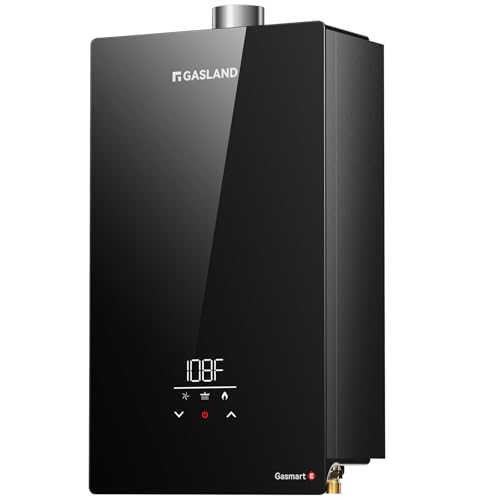
- 7.6 GPM; 199,000 BTU
- 14.25-inch-wide cabinet
- CSA certified; 0.8 UEF
Best For: Natural gas homes with limited basement wall space
Best for Propane Homes

- Liquid propane; 95,000 BTU
- 4.42 GPM stated maximum
- Compact cabinet with LED touchscreen
Best For: Propane homes with moderate hot-water demand
Propane Pick
Novieex 4.3 GPM Indoor Tankless Heater

- 100,000 BTU; up to 4.3 GPM
- Wall-mounted with digital controls
- Propane, power, and venting required
Best For: Propane-equipped homes with a suitable indoor vent route
No-Vent Electric Pick
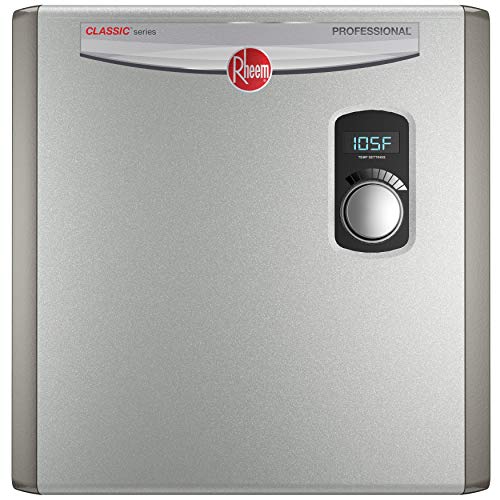
- Up to 5.9 GPM when appropriately sized
- No gas venting required
- Needs three 40-amp double-pole breakers
Best For: Homes with adequate electrical capacity and no desired gas venting
High-Demand Gas Pick

- 199,000 BTU; up to 9.8 GPM
- Indoor wall-mounted design
- Requires natural gas and proper venting
Best For: Larger natural-gas homes with multiple hot-water fixtures
Most Flexible Fuel Choice
Rinnai RX130iN Condensing Tankless Heater

- Natural gas or propane operation
- Up to 7.1 GPM; 0.97 UEF
- Quick Flush maintenance feature
Best For: Efficient basement installs needing gas-type flexibility
Highest Rated Flow
MIZUDO 199,000 BTU Natural Gas Tankless Heater

- Up to 10.3 GPM rated flow
- 0.53 GPM low-flow activation
- Wi-Fi control and sealed direct vent
Best For: Busy natural-gas homes with multiple bathrooms
Leak-Protection Pick
Rheem RTG 7.0 GPM Natural Gas Tankless Heater

- LeakGuard internal leak detection
- 7.0 GPM at 35°F rise
- Indoor direct-vent wall mount
Best For: Basements where built-in leak detection matters
Best for Smart Control – Westinghouse 7.9 GPM Natural Gas Heater
Among tankless water heaters for basements, this indoor Westinghouse model suits households that want whole-home natural gas capacity and remote control. Its 180,000 BTU rating and stated maximum of 7.9 GPM are intended to support up to three showers at once.
Best For: Natural gas homes that want app-controlled hot water for several simultaneous fixtures.
Pros:
- Built-in Wi-Fi supports temperature adjustments, status checks, and fault alerts.
- Self-modulating controls are designed to hold temperature within ±1°F.
- Activates at flows as low as 0.53 GPM and operates at water pressure down to 15 PSI.
Cons:
- Requires natural gas, 120V power, and appropriate indoor installation.
- The complete-unit limited warranty is two years; the heat exchanger is covered for five years.
Choose this one if low-flow operation and connected controls matter as much as capacity. Confirm your basement has a suitable installation location and the required utility connections before buying.
Best for Multiple Outlets – Ranein 8.5 GPM Natural Gas Heater
If you’re comparing tankless water heaters for basements with several bathrooms to serve, the indoor Ranein offers a stated maximum of 8.5 GPM and 190,000 BTU. The manufacturer positions it for four to six outlet points.
Best For: Larger natural gas households planning for multiple hot-water outlets.
Pros:
- High stated flow rate and heating capacity for whole-home use.
- Wall-mounted cabinet measures 15.08 inches wide, 24.25 inches high, and 8.07 inches deep.
- Variable-speed blower responds to changes in external wind pressure and water temperature.
Cons:
- Not recommended by the manufacturer for locations above 2,000 feet.
- Requires a natural gas connection and 120V power.
The strong output makes this a candidate for a busy home, but its altitude restriction is an important screening point. Check installation requirements and your expected simultaneous demand before selecting it.
Best for a Slim Wall Mount – GASLAND Gasmart E Natural Gas Heater
For tankless water heaters for basements where wall space is limited, the indoor GASLAND Gasmart E is worth a look. Its cabinet is 14.25 inches wide and 7.28 inches deep, with a stated maximum output of 7.6 GPM and 199,000 BTU.
Best For: Natural gas homes seeking a slim, wall-mounted whole-house unit.
Pros:
- Compact dimensions help preserve floor space in a basement or laundry area.
- CSA-certified unit includes overheat, flame-failure, and freeze protection features.
- Listed uniform energy factor is 0.8.
Cons:
- Its stated maximum flow rate is 7.6 GPM; assess simultaneous fixture demand before buying.
- Requires natural gas, 120V power, and suitable indoor installation.
This model balances a narrow footprint with substantial rated heat output. Its listed 0.8 UEF gives you an efficiency figure to compare with other options, while actual hot-water flow will depend on operating conditions.
Best for Propane Homes – APUS 4.42 GPM Indoor Heater
Most tankless water heaters for basements in this lineup use natural gas, but the indoor APUS runs on liquid propane. Its 95,000 BTU rating and stated 4.42 GPM maximum make it a smaller-capacity choice; the manufacturer describes it as suitable for two showers and a sink at once.
Best For: Propane-supplied homes with moderate simultaneous hot-water needs.
Pros:
- Compact cabinet is listed at 20.55 inches high and 5.91 inches deep.
- LED touchscreen offers temperature settings from 95°F to 140°F.
- Includes a vent pipe and has a stated 0.66 GPM minimum activation flow.
Cons:
- Lower stated maximum flow than the natural gas models here.
- The manufacturer says to drain the unit if it will be unused for a long period or exposed to prolonged temperatures near or below 41°F.
Consider the APUS if propane availability and a compact wall mount are your priorities. Its freeze-related instructions deserve particular attention in an unheated basement, even though the unit has an anti-freeze feature.
Propane Pick – Novieex 4.3 GPM Indoor Tankless Heater
For shoppers comparing tankless water heaters for basements, this indoor propane model offers a wall-mounted alternative to a storage tank. Its 100,000 BTU output is rated for up to 4.3 GPM, and the included flue pipe helps define the venting plan.
Best For: Homes with propane service that need a compact indoor heater and have a suitable venting route.
Pros:
- Up to 4.3 GPM with adjustable temperature from 95°F to 149°F.
- Wall-mounted design and LED touchscreen save floor space.
- Includes a flue pipe and lists overheating, flame-failure, and freeze protections.
Cons:
- Requires propane, a 110–120V outlet, venting, and professional installation.
- Manufacturer recommends use below 2,000 feet elevation.
The 4.3 GPM rating makes this a candidate for moderate simultaneous demand, but actual flow depends on incoming water temperature and the temperature setting. Confirm local installation requirements before choosing it for a basement.
No-Vent Electric Pick – Rheem RTEX-24 24 kW
Among tankless water heaters for basements, the Rheem RTEX-24 suits buyers who want to avoid gas venting. This wall-mounted 24 kW electric unit is rated for up to 5.9 GPM, provided it is sized appropriately for the home’s water demand.
Best For: Homes with sufficient electrical capacity seeking an indoor, no-venting tankless installation.
Pros:
- No venting required, unlike a gas tankless heater.
- Compact wall-mounted body measures 17.63 inches wide by 18.25 inches high by 3.5 inches deep.
- Digital temperature adjustment in 1°F increments from 80°F to 140°F.
Cons:
- Requires three 40-amp double-pole breakers and three sets of #8 AWG copper conductors with ground.
- Manufacturer recommends at least a 200-amp household service panel.
Its lack of venting can simplify basement placement, but the electrical requirements are substantial. Have a qualified installer verify panel capacity and size the unit for your incoming water temperature and fixture use.
High-Demand Gas Pick – Rinnai RE199iN Natural Gas
For larger households considering tankless water heaters for basements, the indoor Rinnai RE199iN offers a 199,000 BTU natural-gas design rated for up to 9.8 GPM. Its wall-mounted format replaces a bulky storage tank, while its display provides diagnostic codes and service reminders.
Best For: Larger natural-gas households planning a professionally vented, whole-home installation.
Pros:
- Up to 9.8 GPM rating supports planning for multiple fixtures.
- Wall-mounted indoor design with maintenance diagnostics.
- Residential heat exchanger warranty is limited to 15 years.
Cons:
- Requires proper indoor venting and a suitable natural-gas connection.
- Wi-Fi monitoring requires a separately sold Controlr module; built-in recirculation is associated with a different model.
The high output is appealing for busy households, but the published maximum flow is not a guarantee at every groundwater temperature. Check Rinnai’s sizing guidance and have an installer assess gas supply, venting, and local codes.
Most Flexible Fuel Choice – Rinnai RX130iN Condensing Tankless Heater
Among tankless water heaters for basements, the Rinnai RX130iN stands out if you want a wall-mounted gas unit that can operate on natural gas or propane. Its 130,000 BTU input and rated flow of up to 7.1 GPM make it a candidate for homes with several hot-water fixtures, subject to local water temperature and demand.
Best For: Homeowners who want a compact, high-efficiency basement installation with flexibility in gas type.
Pros:
- Smart Sense gas control supports natural gas or propane.
- Condensing design has a stated 0.97 UEF.
- Quick Flush feature simplifies routine flushing; rated flow is up to 7.1 GPM.
Cons:
- Wi-Fi control requires a separate Controlr module.
- Rinnai recommends professional installation.
This is a strong option when fuel flexibility and efficiency matter more than maximum flow. Have an installer confirm venting, gas supply, and expected performance with your basement layout and incoming water temperature.
Highest Rated Flow – MIZUDO 199,000 BTU Natural Gas Tankless Heater
For buyers comparing tankless water heaters for basements with substantial simultaneous demand, this indoor MIZUDO model lists a 199,000 BTU input and flow of up to 10.3 GPM. Its wall-mounted design, sealed direct-vent system, and 120V power requirement are important planning details for a basement installation.
Best For: Natural-gas households with multiple bathrooms that want a high-flow indoor unit and app-based controls.
Pros:
- Rated up to 10.3 GPM for multiple hot-water outlets.
- Activates at a stated 0.53 GPM, useful for lower-flow faucet demand.
- Wi-Fi app control, Alexa compatibility, and temperature settings up to 149°F.
- Sealed direct vent draws combustion air from outdoors.
Cons:
- Natural gas only; requires a dedicated 3-inch by 5-inch concentric vent kit.
- Manufacturer does not recommend use above 3,000 feet elevation.
The high published flow makes this worth considering for a busy household, but actual delivery depends on the required temperature rise. Check the vent route, gas capacity, and local installation requirements with a professional before choosing it.
Leak-Protection Pick – Rheem RTG 7.0 GPM Natural Gas Tankless Heater
The Rheem RTG is a practical choice among tankless water heaters for basements when leak detection is a priority. This indoor, wall-mounted natural-gas model provides a stated 7.0 GPM at a 35°F temperature rise, with 160,000 BTU/hr output and a direct-vent installation.
Best For: Natural-gas households seeking an indoor unit with built-in leak detection and a compact wall-mounted footprint.
Pros:
- LeakGuard is designed to detect internal leaks.
- Rated 7.0 GPM at a specified 35°F temperature rise.
- Digital temperature control, freeze protection, and flame-failure protection.
- Wall mounting frees up floor space compared with a tank heater.
Cons:
- Natural gas only and intended for indoor installation.
- Its 0.82 UEF is lower than the listed condensing Rinnai model’s 0.97 UEF.
LeakGuard adds a useful safeguard in a basement, though it does not replace proper installation and routine inspection. Confirm the venting and size the heater against your home’s peak demand, especially if incoming water is cold.
How We Picked These Tankless Water Heaters for Basements
We focused on indoor-rated models across natural gas, propane, and electric power, with a range of listed heating capacities. That mix gives shoppers options for different fuel supplies and hot-water demands. Published GPM and BTU or kW figures are useful starting points, not guarantees of performance in every home. We did not treat a manufacturer’s maximum flow rating as the flow you will necessarily get during winter.
Quick Comparison: Which Type Fits Your Home?
Natural gas: The broadest choice in this list for homes with a suitable gas connection. Higher-output models may support more simultaneous use, provided the gas line, venting, and water conditions meet their requirements.
Propane: Worth considering when natural gas is unavailable and you already have a propane supply. The listed propane models have lower stated BTU ratings than several gas options here, so check their flow at your required temperature rise.
Electric: The Rheem RTEX-24 avoids combustion venting, but its 24 kW load requires an appropriate 240 V electrical installation. Have an electrician verify panel capacity and circuit requirements before buying.
Key Buying Factors for a Basement Installation
Size for Temperature Rise, Not Just Advertised GPM
Find your coldest likely incoming-water temperature, then subtract it from your desired hot-water temperature. That difference is the temperature rise the heater must deliver. Compare models’ flow-rate charts at that rise, and add up the flow of fixtures you expect to run at once. Colder groundwater can substantially reduce usable GPM.
Confirm Fuel, Venting, and Drainage
Indoor gas and propane units need an approved venting arrangement, adequate fuel delivery, and installation that follows the specific model’s instructions and local code. Condensing and non-condensing units can have different vent and condensate requirements; check the exact model rather than assuming existing venting can be reused. For a below-grade basement, plan where condensate, relief discharge, or a leak would go, and whether a pump or drain is needed.
Account for Space and Maintenance
Check required clearances, access to water and fuel shutoffs, and room to service the unit. Hard water can cause scale buildup, so ask about water treatment and a flushing setup. In a finished basement, consider leak detection and protection for nearby flooring or stored belongings.
Who Should Buy Which Tankless Water Heaters for Basements?
Choose a higher-output natural-gas model if you have natural gas and need to serve multiple fixtures, but verify its flow at your local temperature rise. Consider one of the propane models for a propane-supplied home with more modest simultaneous demand. The electric option suits buyers who want to avoid combustion venting and have sufficient electrical capacity; check its cold-weather flow before expecting whole-house performance. For any of these Tankless Water Heaters for Basements, get an installation quote before purchase: required upgrades can matter as much as the unit price.
