Reliable drinking water is essential on every camping trip, but carrying enough from home quickly adds weight and bulk. The best water purifiers for camping let you treat streams, lakes, and questionable sources with less effort.
This roundup compares portable filters, purifier bottles, gravity systems, pump units, filter straws, and tablets so you can match treatment speed, capacity, packability, and protection to your campsite or route.
Best 10 Water Purifiers for Camping Picks for 2026
Fast Purification Pick
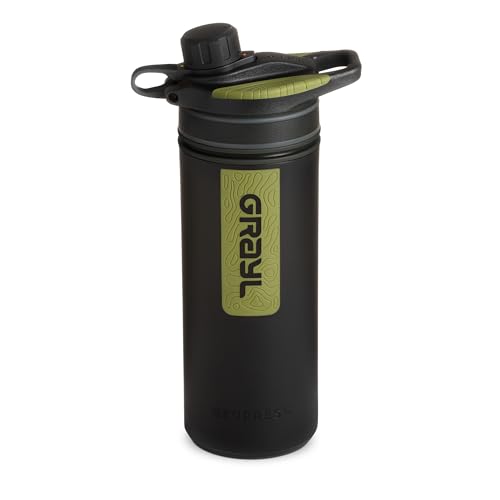
- Purifies 24 ounces in about eight seconds
- Targets viruses, bacteria, protozoa, and chemicals
- Bottle format needs no pump or battery
Best For: Campers wanting fast, broad-spectrum bottle purification
Versatile Lightweight Filter

- 2-ounce filter with two 32-ounce pouches
- Works with bottles, straw, or gravity systems
- Removes bacteria, protozoa, and microplastics
Best For: Campers wanting flexible filtration and low carry weight
Minimalist Drinking Option
LifeStraw Personal Water Filter
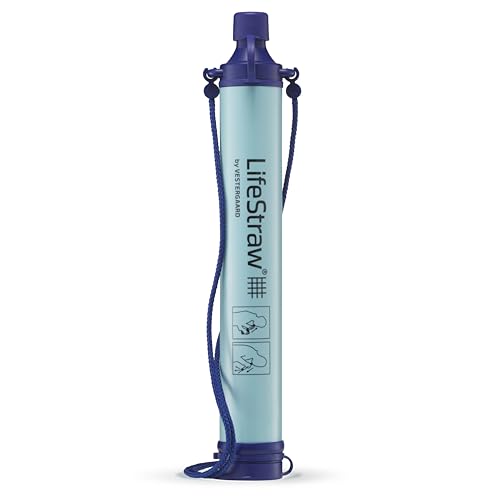
- Filters bacteria, parasites, and microplastics
- Weighs about 0.04 kilograms
- Rated for up to 4,000 liters
Best For: Solo hikers and campers carrying a compact backup
High-Capacity Squeeze Kit
Sawyer Squeeze with CNOC Bladder

- Includes a 2-liter wide-mouth bladder
- Reusable filter rated for up to 100,000 gallons
- Cleaning accessories support backwashing
Best For: Campers needing lightweight, higher-volume water processing
Best Gravity-Fed Option
Waterdrop Gravity Filter Straw
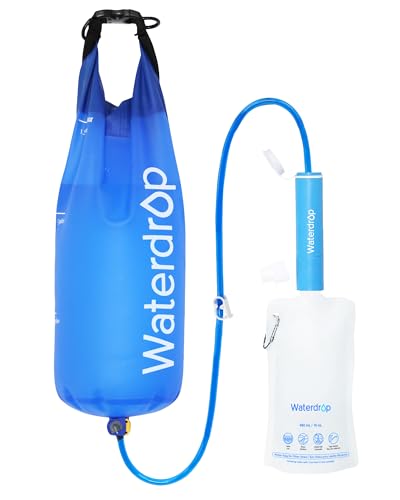
- 1.5-gallon gravity-fed water bag included
- 0.1-micron, five-stage filtration
- Up to 1,400-gallon filter life
Best For: Base camps, group camping, and emergency water storage
Best Ultralight Filter
Sawyer MINI Water Filtration System

- Approximately 2 ounces
- 0.1-micron hollow fiber membrane
- Rated for up to 100,000 gallons
Best For: Ultralight hiking, backpacking, and personal water treatment
Best Compact Backup
Aquatabs Water Purification Tablets

- 100 tablets in a lightweight pack
- Treats up to 4 gallons in 30 minutes
- Listed protection against bacteria, viruses, and cysts
Best For: Emergency kits, bugout bags, and lightweight backup treatment
Best Ultralight Straw
Personal Water Filter Straw S1
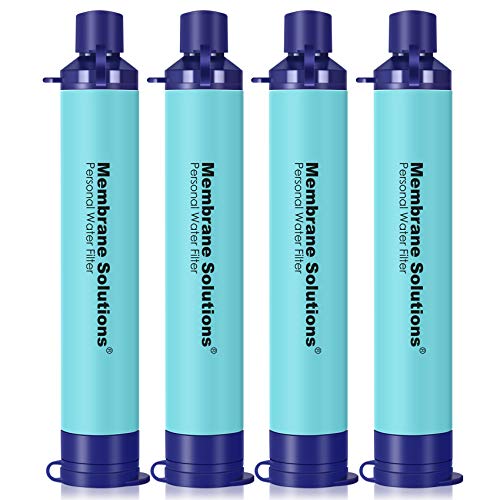
- 2-ounce, pocket-sized design
- Five-stage filtration with 0.1-micron membrane
- Up to 1,320 gallons of rated capacity
Best For: Solo hikers and lightweight emergency kits
Best High-Flow Pump

- Manual pump works without electricity
- Up to 1,400 ml-per-minute flow rate
- Includes tubing, hose clip, and carry bag
Best For: Group camping and emergency water collection
Best Compact Treatment
Aquatabs Water Purification Tablets
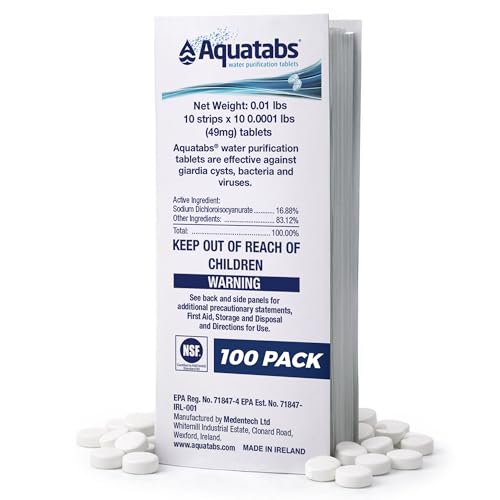
- 100 individually sealed 49mg tablets
- Treats 0.75–2 liters in 30 minutes
- Claims protection against bacteria, viruses, and cysts
Best For: Ultralight backup and emergency kits
Fast Purification Pick – GRAYL GeoPress 24 oz
For campers who want quick, straightforward water purification, the GRAYL GeoPress is a compelling option. This bottle purifies 24 ounces in about eight seconds and targets viruses, bacteria, protozoa, sediment, microplastics, chemicals, and heavy metals without batteries, pumps, or chemical treatments.
Best For: Campers, backpackers, and emergency-preparedness kits needing broad protection in a bottle-based format.
Pros:
- Addresses viruses, bacteria, protozoa, and several chemical contaminants.
- Simple fill-and-press operation with no setup, batteries, or hoses.
- Replaceable cartridge is rated for up to 65 gallons and the bottle has a 10-year warranty.
Cons:
- The 24-ounce capacity is smaller than the reservoirs included with squeeze systems.
- At 15.9 ounces, it is heavier than minimalist personal filters.
The GeoPress stands out among water purifiers for camping when speed and wider contaminant coverage matter more than maximum capacity or minimum pack weight.
Versatile Lightweight Filter – Sawyer SP129 Squeeze System
The Sawyer SP129 is a flexible choice for water purifiers for camping, combining a compact 2-ounce filter with two reusable 32-ounce pouches. It can be used with the included pouches, compatible 28 mm water bottles, a drinking straw, or a gravity setup.
Best For: Campers who want multiple ways to collect, filter, and drink water while keeping pack weight low.
Pros:
- 0.1-micron hollow-fiber filter removes bacteria, protozoa, cysts, sediment, and microplastics.
- Includes two collapsible pouches, a straw, and hydration-pack adapters.
- Manufacturer-listed lifetime warranty covers filter defects.
Cons:
- The system relies on squeezing or gravity rather than instant bottle purification.
- Its listed maximum flow rate is 1.7 liters per minute, so filling takes longer than the GeoPress.
With its adaptable connections and lightweight design, the SP129 is a practical all-around filter for campers who value flexibility and a substantial included water-carrying setup.
Minimalist Drinking Option – LifeStraw Personal Water Filter
The LifeStraw Personal Water Filter is a simple, compact option for water purifiers for camping and emergency kits. It filters water as you drink, removing bacteria, parasites, and microplastics, with a rated microbiological lifespan of up to 4,000 liters.
Best For: Hikers and campers seeking a lightweight personal backup filter for drinking directly from a water source.
Pros:
- Removes 99.999999% of listed waterborne bacteria and 99.999% of listed parasites.
- Filters microplastics down to 1 micron and reduces turbidity.
- Compact 0.04-kilogram design suits minimalist packing and survival kits.
Cons:
- It is a personal straw, not a bottle or reservoir system for filtering larger quantities.
- The supplied notes do not list protection against viruses or chemical contaminants.
- It has a one-year manufacturer warranty.
The LifeStraw is best viewed as a highly portable personal drinking tool rather than a camp water-processing system for groups or bulk storage.
High-Capacity Squeeze Kit – Sawyer Squeeze with CNOC Bladder
The Sawyer Squeeze and CNOC 2-liter bladder make a strong case for campers who need more collection capacity without a bulky pump. The wide-mouth TPU bladder is designed for easy filling, while the reusable hollow-fiber filter can be backwashed and is rated for up to 100,000 gallons.
Best For: Backpackers and camp groups that want a lightweight reservoir for collecting and filtering larger amounts of water.
Pros:
- Includes a 2-liter bladder with a wide opening for faster filling.
- Filter removes bacteria, protozoa, cysts, sediment, and microplastics.
- Includes cleaning coupling and plunger, with a lifetime filter warranty.
Cons:
- Manual squeezing is required, unlike bottle purifiers that use a press mechanism.
- The system is larger than a personal straw filter.
- The supplied notes do not claim virus or chemical removal.
This kit is a practical choice among water purifiers for camping when carrying and processing two liters at a time is more useful than having the smallest possible filter.
Best Gravity-Fed Option – Waterdrop Gravity Filter Straw
For campers who want a larger water supply without electricity, the Waterdrop Gravity Water Filter Straw is a practical choice among water purifiers for camping. Its 1.5-gallon bag supports group or all-day hydration, while the gravity-fed design requires no pumping.
Best For: Car camping, group outings, emergency preparedness, and campers who value a large gravity-fed water capacity.
Pros:
- Includes a 1.5-gallon gravity-fed water bag and 16-ounce pouch.
- Uses a 0.1-micron hollow fiber ultrafiltration membrane with five-stage filtration.
- Rated for up to 1,400 gallons and a maximum flow rate of 700 ml per minute.
- Backwash function can help restore flow and extend usability.
Cons:
- The included setup is bulkier than a compact personal filter.
- It has a 30-day limited filter warranty.
- Designed for water with a maximum supported TDS level of 300 ppm.
The Waterdrop is a strong fit when capacity and hands-off gravity filtration matter more than ultralight packing. Its included bag and backwashable straw make it convenient for base camps and emergency kits.
Best Ultralight Filter – Sawyer MINI Water Filtration System
The Sawyer MINI is a compact, manual filter for hikers and backpackers comparing water purifiers for camping. Weighing about 2 ounces, it can attach to the included pouch, compatible 28 mm disposable bottles, or a hydration pack, and it can also be used with the included straw.
Best For: Ultralight backpacking, hiking, travel, scouting, and emergency kits where low weight is a priority.
Pros:
- Compact 0.1-micron absolute inline filter weighs just 2 ounces.
- Removes 99.99999% of listed bacteria and 99.9999% of listed protozoa.
- Rated for up to 100,000 gallons by the manufacturer.
- Includes a 16-ounce reusable pouch, drinking straw, and cleaning plunger.
Cons:
- Its included pouch holds only 16 ounces.
- Manual operation requires squeezing or drinking directly through the straw.
- It does not provide a gravity-fed large-batch reservoir in the included kit.
The MINI stands out for packability and connection flexibility. Choose it when carrying weight matters most and you want a personal filter that works with several common water containers.
Best Compact Backup – Aquatabs Water Purification Tablets
Aquatabs offer a lightweight chemical-treatment alternative for campers building a backup water system. These 397 mg tablets treat up to 4 gallons in 30 minutes, making them useful when you need compact water purifiers for camping or emergency supplies.
Best For: Bugout bags, emergency kits, RVs, and campers who want a lightweight treatment option for viruses, bacteria, and cysts.
Pros:
- The 100-pack is lightweight and easy to store.
- Each tablet treats up to 4 gallons in 30 minutes.
- Supplied claims cover 99.9999% of bacteria, 99.99% of viruses, and 99.9% of cysts.
- Designed to avoid the bad taste, color, and odor associated with iodine tablets.
Cons:
- Tablets do not remove sediment, so pairing with a filter bag or straw may be useful.
- Chemical treatment requires a 30-minute wait.
- They do not provide the physical filtration of a hollow fiber filter.
Aquatabs are best viewed as a compact treatment layer or backup rather than a sediment filter. Their small size and broad listed disinfection claims make them especially practical for preparedness kits.
Best Ultralight Straw – Personal Water Filter Straw S1
If pack weight and simplicity matter, this personal straw is a compact option among water purifiers for camping. It weighs 2 ounces, fits 28mm threaded bottles, and can be used with cups, pouches, or gravity-fed setups.
Best For: Solo hikers, campers, travelers, and emergency kits where minimal size and weight are priorities.
Pros:
- Five-stage filtration with a 0.1-micron hollow-fiber membrane and activated carbon.
- Independently certified to NSF/ANSI 42, 372, and 401 standards as described by the manufacturer.
- Rated for up to 1,320 gallons and offers a flow rate of up to 500 ml per minute.
- Removable ends support backflushing and extended use.
Cons:
- It is designed for personal drinking rather than quickly treating large quantities of water.
- The manufacturer states that it does not lower TDS or remove dissolved minerals.
This is a strong lightweight pick when you want direct drinking access from a compatible container. Its compact design and claimed long lifespan make it practical for day hikes and backup kits, though it is less convenient for group water needs.
Best High-Flow Pump – Purewell Hand Purifier Pump
For campers who need more water at a time, the Purewell hand pump is a practical choice among water purifiers for camping. Its manual operation, included tubing, and claimed flow rate of up to 1,400 ml per minute suit group camping and emergency use.
Best For: Families, small groups, backpackers, and emergency kits that need faster water processing than a drinking straw provides.
Pros:
- Uses hollow-fiber ultrafiltration, activated carbon, and PP cotton stages.
- Provides a claimed maximum flow rate of 1,400 ml per minute.
- Rated for up to 793 gallons before the reusable carbon component needs replacement.
- Includes tubing, hose clip, carry bag, and a drinking-cup lid.
Cons:
- At about 1 pound, it is heavier and bulkier than a straw-style filter.
- Manual pumping requires more effort during extended use.
- Replacement life depends on source-water quality.
The Purewell is a sensible middle ground for outdoor water needs: portable but faster and more versatile than a personal straw. Choose it when several people may need water, provided you are comfortable carrying and operating a hand pump.
Best Compact Treatment – Aquatabs Water Purification Tablets
Aquatabs offer the lightest and simplest approach to water treatment among these water purifiers for camping. Add one 49mg tablet to 0.75–2 liters of water, wait 30 minutes, and keep the individually sealed tablets in a pack or emergency kit.
Best For: Backpackers, hikers, travelers, and preparedness kits that need an ultra-light backup treatment option.
Pros:
- Individually sealed tablets are compact, lightweight, and easy to store.
- The manufacturer claims reduction of 99.9999% of bacteria, 99.99% of viruses, and 99.9% of cysts including Giardia.
- Each tablet treats approximately 0.75–2 liters after a 30-minute wait.
- Designed to avoid the unpleasant taste, color, and odor associated with iodine-based products.
Cons:
- They require a 30-minute treatment time before drinking.
- Tablets do not physically remove sediment, so the notes recommend pairing them with filtration for sediment-heavy water.
- They are a chemical treatment rather than a pump or direct-drinking filter.
These tablets are especially useful as a low-weight backup or for trips where space is limited. They cannot provide instant drinking water, but their long stated shelf life and simple dosing make them convenient for emergency preparedness and lightweight travel.
How We Picked These Water Purifiers for Camping
We selected options across the main treatment categories campers use: squeeze filtration, gravity filtration, pump systems, personal filter straws, purifier bottles, and chemical tablets. We considered portability, treatment capacity, ease of use, replacement requirements, flow rate, and suitability for solo trips or groups.
Water treatment claims vary by product. A filter may remove bacteria and parasites but not viruses, while chemical purification can provide broader protection when used correctly. Always check the manufacturer’s specifications and local water conditions before relying on a device in the field.
Quick Comparison
| Type | Best For | Main Advantage | Trade-Off |
|---|---|---|---|
| Purifier bottle | Fast personal treatment | Filter and drink from one bottle | Limited capacity per cycle |
| Squeeze filter | Solo hikers and flexible setups | Lightweight and versatile | Requires manual squeezing |
| Gravity filter | Base camps and groups | Hands-free batch filtration | Needs hanging space and setup time |
| Pump filter | Frequent collection from shallow sources | Controlled, direct pumping | More effort and moving parts |
| Personal straw | Emergency kits and minimal carry | Very compact | Usually treats water only as you drink |
| Purification tablets | Backup treatment and ultralight travel | Small, simple, and shelf-stable | Wait time and possible taste |
Key Buying Factors for Water Purifiers for Camping
Filtration and Purification Coverage
Look for clearly stated protection against bacteria, protozoa, and particulates. If viral protection matters, choose a product specifically labeled as a purifier or use a compatible chemical treatment. Filters generally do not remove dissolved chemicals, heavy metals, fuel, or all unpleasant tastes.
Capacity and Flow Rate
Personal straws and bottles work well for individual drinking, while gravity systems and larger squeeze bags are more practical for cooking and group hydration. A faster flow rate reduces waiting, but performance can decline as filter media becomes clogged.
Weight, Packability, and Durability
For backpacking, compare the complete packed weight, including pouches, hoses, adapters, and tablets. Campers traveling by car can prioritize capacity and convenience. Choose a durable design if it will be used in cold, rocky, or frequently changing conditions.
Maintenance and Water Conditions
Backflushable filters are easier to maintain on longer trips. Pre-filter silty water when possible, protect filter elements from freezing, and follow replacement or cleaning instructions. Tablets are low-maintenance but require accurate dosing and the recommended contact time.
Who Should Buy Which Water Purifiers for Camping?
- Solo backpackers: Choose a lightweight squeeze filter, personal straw, or purifier bottle for a compact setup.
- Couples and groups: A gravity system or high-capacity squeeze setup can reduce repeated collection and treatment.
- Emergency-kit users: Keep purification tablets as a compact backup, especially alongside a filter.
- Campers using silty sources: Consider a pump or pre-filtration step to protect the main filter and improve flow.
- Travelers concerned about broader pathogen coverage: Select a clearly rated purifier or combine mechanical filtration with an appropriate chemical treatment.
