A compact 120V tankless heater can bring hot water closer to a remote sink without finding room for a storage tank. The catch is that these small electric units have limited heating capacity: the flow rate and incoming water temperature matter as much as the advertised wattage.
Our 10 picks include plug-in and hardwired point-of-use models. Before choosing one, check the electrical requirements, available space, and how much hot water your faucet actually needs.
Best 10 120v Tankless Water Heaters Picks for 2026
Best Plug-In Option
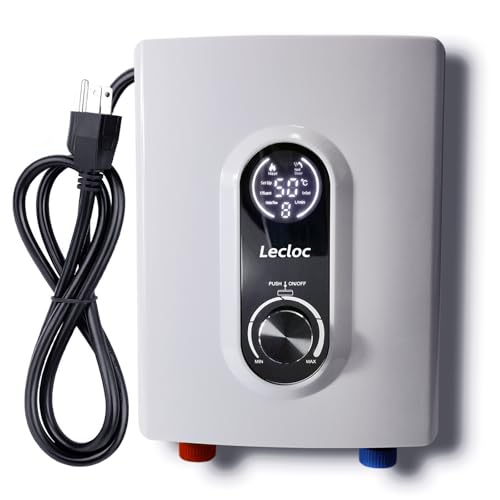
- 120V plug-in design
- Knob-controlled 30–55°C setting
- For one low-flow sink
Best For: A single low-flow sink needing plug-in convenience
Best Higher-Output Sink Pick

- 50°F stated rise at 1.0 GPM
- Starts at 0.26 GPM
- Hardwired; needs 40A breaker
Best For: One sink with a suitable 40A circuit
Best Compact Hardwired Pick

- Compact wall-mounted unit
- 22°F stated rise at 1.0 GPM
- Hardwired; needs 32A breaker
Best For: One sink in a tight space with a suitable circuit
Best Precise Temperature Control

- 1°F temperature increments
- Up to 0.5 GPM
- Needs 30A breaker and #10 copper wire
Best For: A low-flow sink needing precise temperature settings
Simple Knob Control

- 3kW, 120V plug-in design
- Knob control and LED display
- One low-flow sink only
Best For: A single low-flow sink with simple controls
Higher-Output Hardwired Pick

- 4.5kW single-sink heating
- 50°F rise at 1.0 GPM
- Hardwired; 40A breaker specified
Best For: One sink with a suitable hardwired circuit
Large-Knob Alternative
- 3kW, 120V plug-in design
- Large knob and LED display
- Low-flow, single-sink use
Best For: One low-flow sink needing an easy-to-grip control
Best for Simple Controls

- Large knob and LED display
- 30°C–55°C adjustment
- Hard-wired; single low-flow outlet
Best For: A single sink with a suitable hard-wired circuit
Best for Compact Point-of-Use Heating

- 3.5kW on-demand heating
- Rated at 0.8 GPM
- Compact wall-mounted design
Best For: One low-flow fixture with limited space
Best for Remote Adjustment

- Touchscreen plus included remote
- Up to 0.7 GPM under stated conditions
- Five-year replacement warranty
Best For: One faucet where remote controls are convenient
Best Plug-In Option – 3kW Mini Under-Sink Heater
Among 120v tankless water heaters, this 3kW model stands out for its plug-in design and compact, under-sink size. It heats water on demand for one low-flow fixture, with a control knob and LED display for setting the temperature from 30°C to 55°C.
Best For: A single low-flow sink where a plug-in heater is preferred.
Pros:
- Plug-in design avoids the hardwiring required by the other models here.
- Compact 7.1-by-9.8-by-2.8-inch body fits under a sink.
- Includes overheat, leakage, dry-heating, and over-pressure protections.
Cons:
- Not suitable for showers or multiple taps at once.
- Output temperature depends on incoming water temperature and flow rate.
Choose this for convenient warm water at one modest-flow sink, not for a high-demand fixture. Check the electrical requirements before installation.
Best Higher-Output Sink Pick – CAMPLUX 4.5kW TE05N4
If you are comparing 120v tankless water heaters for one sink, the CAMPLUX TE05N4 offers 4.5kW of heating power and a stated 50°F temperature rise at 1.0 GPM. Its touch controls and LED display make temperature settings easy to see.
Best For: One sink where a dedicated hardwired circuit is available and more heating capacity is wanted.
Pros:
- Stated 50°F temperature rise at 1.0 GPM.
- Activates at a flow rate as low as 0.26 GPM.
- Self-modulating operation adjusts power input to flow and temperature settings.
Cons:
- Must be hardwired; it does not have a plug.
- Requires a 40A breaker and 10 AWG wire.
The extra wattage makes this the stronger-heating CAMPLUX option in this group, but confirm your electrical setup and single-sink flow needs before buying.
Best Compact Hardwired Pick – CAMPLUX 3.5kW TE04N3
This CAMPLUX is a compact choice among 120v tankless water heaters for a single sink. Its 3.5kW output has a stated 22°F temperature rise at 1.0 GPM, so incoming water temperature matters when deciding whether it will meet your needs.
Best For: A space-limited, single-sink installation with wiring for a 32A breaker.
Pros:
- Small, wall-mounted design suits tight spaces.
- Self-modulating power input responds to flow and temperature settings.
- Touch controls, a digital display, and listed leakage and overheat protections.
Cons:
- Must be hardwired with 10 AWG wire and a 32A breaker.
- Stated 22°F rise at 1.0 GPM may limit warmth with cold inlet water.
This is a practical option when space is tight and demand is limited to one sink. Size it around your incoming water temperature rather than the maximum temperature setting alone.
Best Precise Temperature Control – Rheem RTEX-04T 3.5kW
For buyers comparing 120v tankless water heaters with adjustable temperature settings, the Rheem RTEX-04T offers digital thermostatic control in 1°F increments from 80°F to 140°F. Rheem describes this 3.5kW model as a point-of-use choice for one small fixture, providing up to 0.5 GPM.
Best For: A low-flow basement, garage, or outdoor-kitchen sink where precise settings matter.
Pros:
- Digital thermostat adjusts in 1°F increments.
- Compact wall-mounted design needs no venting.
- Listed 5-year leak and 1-year parts warranties.
Cons:
- Up to 0.5 GPM limits it to low-flow, single-fixture use.
- Requires a 30A single-pole breaker and #10 AWG copper conductors with ground.
The fine temperature adjustment is useful if your fixture’s flow demand fits the stated output. Verify the circuit and household service requirements before installation.
Simple Knob Control – 3kW Plug-In Under-Sink Heater
Among 120v tankless water heaters, this compact 3kW plug-in model is aimed at one low-flow sink. Its control knob adjusts the 30–55°C temperature setting, while an LED display shows the setting.
Best For: A single low-flow sink where plug-in installation and straightforward controls are priorities.
Pros:
- Plug-in design avoids the hardwiring required by some models.
- Single knob handles power and temperature adjustment.
- Includes listed overheat, leakage, dry-heating, and over-pressure protections.
Cons:
- Not suitable for showers or simultaneous taps.
- Delivered temperature depends on inlet temperature and water flow.
At 7.1 × 9.8 × 2.8 inches, it fits a point-of-use setup, but its 3kW output makes low-flow expectations essential.
Higher-Output Hardwired Pick – CAMPLUX 4.5kW TE05
For shoppers comparing 120v tankless water heaters for one sink, the CAMPLUX TE05 offers 4.5kW of point-of-use heating and a touch panel with an LED temperature display. Unlike a plug-in unit, it must be hardwired.
Best For: A single sink with a suitable dedicated electrical circuit and space for a compact wall-mounted heater.
Pros:
- Specified 50°F temperature rise at 1.0 GPM.
- Activates at a stated minimum flow of 0.26 GPM.
- CSA listed, with stated overheat, dry-heating, and electrical-leakage protections.
Cons:
- Requires hardwiring, a 40A breaker, and 10 AWG wire.
- Intended for one sink, not multiple fixtures.
Check the electrical requirements before buying; its higher output is useful only if your installation can support it.
Large-Knob Alternative – 3kW Plug-In Mini Heater
This option in the 120v tankless water heaters category pairs a 3kW plug-in design with a large control knob and LED display. It is built for one low-flow sink, with an adjustable 30–55°C setting.
Best For: A compact, single-sink setup where a large physical control knob is preferable to small touch buttons.
Pros:
- Large knob controls power and temperature.
- Compact 7.1 × 9.8 × 2.8-inch housing.
- Lists overheat, leakage, dry-heating, and over-pressure protections, plus fault diagnosis.
Cons:
- Not designed for showers or multiple taps at once.
- Water temperature varies with incoming temperature and flow.
Choose it for convenient point-of-use controls, not high-flow demand; the stated 3kW limit calls for restrained flow at the tap.
Best for Simple Controls – Mini 3500W Under-Sink Heater
Among 120v tankless water heaters for a single sink, this compact 3500W model stands out for its large control knob and LED temperature display. It is intended for low-flow, point-of-use applications—not showers or multiple taps.
Best For: A kitchen, bathroom, or utility sink where straightforward temperature adjustment matters and a suitable hard-wired circuit is available.
Pros:
- Large knob handles power and temperature adjustment from 30°C to 55°C.
- Compact 7.1-by-9.8-by-2.8-inch body fits under a sink.
- Includes overheat, leakage, dry-heating, and over-pressure protections.
Cons:
- Requires hard-wiring to a 120V supply with a 30–40A single-pole breaker.
- Designed for one low-flow outlet, not a shower or simultaneous taps.
Check your electrical capacity before ordering. If the circuit is suitable, this is a practical choice for buyers who prefer a physical knob to small touchscreen controls.
Best for Compact Point-of-Use Heating – EcoSmart POU 4T
EcoSmart POU 4T 3.5kW 120v Thermostatic Point of Use Tankless Electric Water Heater
Check Price On AmazonThe EcoSmart POU 4T is one of the 120v tankless water heaters aimed at low-flow, point-of-use hot water. Its 3.5kW design heats water on demand rather than keeping a storage tank hot.
Best For: A single low-flow fixture where saving installation space is a priority.
Pros:
- Rated at 0.8 gallons per minute.
- Thermostatic point-of-use design supplies hot water on demand.
- Wall-mounted unit measures 11 by 7 inches and weighs 4 pounds.
Cons:
- Its low-flow rating makes it a poor match for high-demand or multiple-fixture use.
- Maximum listed temperature is 140°F; actual output depends on operating conditions.
Choose this model when a compact heater near one fixture fits your needs. Compare its 0.8-GPM rating with your faucet’s flow requirements before buying.
Best for Remote Adjustment – GE 3.5kW Point-of-Use Heater
For buyers comparing 120v tankless water heaters with convenient controls, this GE 3.5kW model offers a touchscreen and an included remote. It is designed to provide on-demand hot water at the point of use for one faucet.
Best For: A single faucet where remote temperature adjustment is useful.
Pros:
- Touchscreen and included remote allow setting changes from up to 30 feet away.
- Rated for up to 0.7 GPM under the stated 72°F inlet and 105°F outlet test conditions.
- Includes a five-year replacement warranty.
Cons:
- Its stated performance supports one faucet, not several fixtures at once.
- The 0.7-GPM figure depends on inlet and outlet temperatures; colder incoming water can affect performance.
This is a strong fit if control access matters more than serving multiple outlets. Check your faucet’s flow rate and expected incoming-water temperature against GE’s stated performance conditions.
How We Picked the Best 120v Tankless Water Heaters
We focused on the listed 120V point-of-use models and the differences most likely to affect a purchase: 3 to 4.5 kW power ratings, plug-in versus hardwired connections, thermostatic or digital controls, and compact under-sink installation. Product names and advertised features are a starting point, not proof of real-world flow or electrical compatibility. Confirm specifications in the current manufacturer manual before ordering.
Quick Comparison: What the Power Ratings Mean
The 3 kW plug-in mini heaters in this group are candidates for a single, low-flow handwashing sink where the circuit and receptacle meet the unit’s requirements. The 3.5 kW hardwired models—including options from Rheem, EcoSmart, GE Appliances, and CAMPLUX—offer a modest step up in heating power, with different control approaches. The 4.5 kW CAMPLUX listings have the highest stated output here, but also place the greatest demand on a 120V circuit. Check whether the two 4.5 kW listings represent distinct versions before comparing features or prices.
None should be assumed to deliver a shower-like flow or supply multiple fixtures at once. At a given inlet temperature, asking for more water per minute means a smaller temperature rise.
Key Buying Factors for 120v Tankless Water Heaters
Electrical Supply Comes First
At 120V, a 3 kW heater draws roughly 25 amps, a 3.5 kW heater roughly 29 amps, and a 4.5 kW heater roughly 38 amps at rated output. That is far beyond a standard 15-amp household receptacle. A plug-in label does not mean you can use an ordinary outlet, extension cord, or shared circuit. Read the installation instructions for the required breaker, wire size, receptacle or hardwired connection, and any dedicated-circuit requirements. Have a qualified electrician verify the installation against local code.
Flow, Climate, and Faucet Type
Look for the manufacturer’s flow-rate chart at your expected inlet temperature and desired outlet temperature—not just a headline maximum. Cold incoming water reduces usable hot-water flow. A low-flow faucet may make a small heater practical for handwashing; a kitchen faucet used for filling pots is more demanding. Also check the unit’s minimum activation flow so it will switch on at your faucet’s typical setting.
Fit and Controls
Measure cabinet clearance, plumbing connections, and access for servicing before buying. Thermostatic controls can help target an outlet temperature, while displays and knobs may make adjustments easier; neither creates extra heating capacity. Follow the manual’s guidance on water pressure, filtration or scale maintenance, and any required safety devices.
Who Should Buy Which 120v Tankless Water Heaters?
Choose a 3 kW plug-in model only if its specified outlet and circuit are available and you need modest hot water at one low-flow sink. Consider a 3.5 kW hardwired unit if you prefer a permanently installed point-of-use heater with a little more rated power. Compare the 4.5 kW CAMPLUX options if your electrical setup can support their stated requirements and you need the most heating power among these picks. If you need a full-flow kitchen sink, shower, or several taps at once, look beyond this 120V group to a properly sized higher-capacity system.
