Finding a refrigerant leak quickly can prevent repeat service calls, wasted refrigerant, and expensive compressor damage. The best detectors under $300 balance sensor performance, refrigerant compatibility, battery life, and ease of use.
This roundup compares ten options for HVAC technicians, automotive users, maintenance teams, and careful DIYers. Use the buying guide below to narrow the list based on your work environment and detection needs.
Best 10 Refrigerant Leak Detectors Under 300 Picks for 2026
Best Overall Infrared Pick

- 10-year infrared sensor life
- Sensitivity up to 0.1 oz./year
- TFT screen with leak alerts
Best For: Broad halogenated-refrigerant detection
Proven Heated-Diode Option
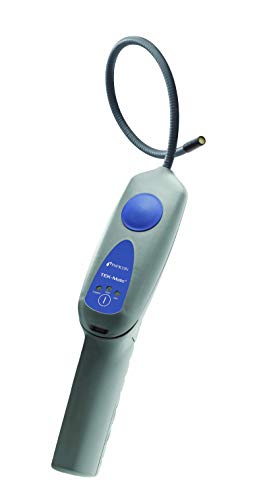
- A2L certified heated-diode sensor
- 0.25 oz./year sensitivity
- Includes rugged carrying case
Best For: Traditional professional HVAC leak checking
Best Quiet-Work Value
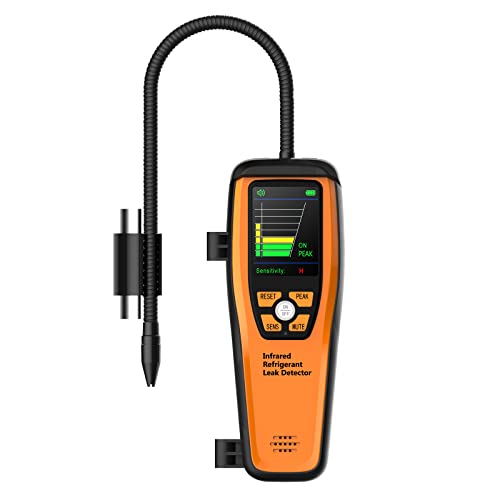
- 10-year infrared sensor life
- Sensitivity up to 0.14 oz./year
- Large screen with peak display
Best For: Visual, low-noise HVAC leak location
Best Dual-Gas Flexibility

- Detects refrigerant and combustible gases
- Up to 24 hours per charge
- Live ppm display and bar graph
Best For: Multi-gas service inspections
Precision Pick
Elitech ILD-100H Heated Diode Detector

- TFT screen with operating details
- Sensitivity up to 0.1 oz/year
- Detects broad halogen refrigerant range
Best For: Technicians seeking detailed readings and high sensitivity
Convenient Choice
Tadeto Rechargeable HVAC Leak Detector

- USB-C rechargeable design
- Audio-visual alerts with digital display
- 11-inch flexible gooseneck probe
Best For: Portable inspections around tight HVAC and AC spaces
Simple Service Tool
Elitech WJL-6000S Freon Detector

- Seven sensitivity levels
- Audible and visual leak alerts
- Flexible 7.9-inch probe
Best For: Routine HVAC and automotive AC service checks
Reliable Traditional Pick
Elitech CLD-100 Refrigerant Leak Detector

- Detects common CFC, HCFC, and HFC refrigerants
- Six sensitivity settings and flexible probe
- Audible and visual alerts; AAA batteries required
Best For: HVAC and automotive A/C leak checks
Most Versatile Professional Option
ALD-200 Refrigerant Leak Detector

- Covers A1, A2L, A3, and tracer gases
- 0.14 oz./yr. stated sensitivity with heat-diode sensor
- TFT display, peak mode, reset, and rechargeable battery
Best For: Professional HVAC and mixed-refrigerant service
Best Rechargeable Display Model
Aituzero Refrigerant Leak Detector

- Japanese sensor with three sensitivity levels
- TFT PPM, funnel, and trend-graph displays
- USB-C rechargeable battery with up to eight hours of use
Best For: Technicians wanting visual tracking and flexible alerts
Best Overall Infrared Pick – Elitech ILD-300
For shoppers comparing refrigerant leak detectors under 300, the Elitech ILD-300 stands out with an infrared sensor designed for a claimed 10-year life, adjustable sensitivity, and a clear TFT display. It is built for HVAC, automotive, and refrigerator troubleshooting.
Best For: Technicians who want broad halogenated-refrigerant coverage and easy-to-read operating information.
Pros:
- Infrared sensor life is rated up to 10 years.
- Adjustable sensitivity reaches 0.1 oz./year.
- TFT screen shows sensitivity, alerts, and battery information.
- Detects a wide range of CFC, HCFC, HFC, HFO, and mixed refrigerants.
Cons:
- It is intended for halogenated refrigerants rather than combustible-gas detection.
- The plastic housing may be less rugged than heavier professional equipment.
The ILD-300 is a well-rounded choice when display clarity, long sensor life, and high sensitivity matter. Its one-year warranty and stated one-second response add practical reassurance for routine service work.
Proven Heated-Diode Option – INFICON TEK-Mate 705
Among refrigerant leak detectors under 300, the INFICON 705-202-G1 offers a proven heated-diode design with A2L certification and automatic background adjustment. It is a straightforward option for technicians who value established detection technology and a rugged carrying case.
Best For: HVAC professionals seeking certified heated-diode detection with simple battery-powered operation.
Pros:
- Detects CFCs, HCFCs, HFCs, and HFOs.
- A2L certified with a sensitivity of 0.25 oz./year.
- Automatic zeroing helps prevent false alarms from soap solutions.
- Includes a carrying case and U.S. technician support.
Cons:
- The heated-diode sensor life is listed at 100 hours.
- Two D-cell alkaline batteries add weight and ongoing replacement needs.
- At 3.1 pounds, it is heavier than the listed Elitech alternatives.
The TEK-Mate is a practical fit for users who prefer a traditional heated-diode sensor and dedicated audible alarm. Its broad refrigerant coverage and included case support regular field service, though battery life and weight are worth considering.
Best Quiet-Work Value – Elitech ILD-200
The Elitech ILD-200 is a strong contender among refrigerant leak detectors under 300 for users who want infrared sensing without stepping up to the ILD-300. Its large screen, peak display, and adjustable sensitivity are useful when narrowing down leaks in busy service environments.
Best For: HVAC and automotive users who want an affordable infrared detector with visual leak guidance.
Pros:
- Infrared sensor is designed for a claimed 10-year service life.
- Adjustable sensitivity reaches 0.14 oz./year.
- Large 2.8-inch screen and peak display help indicate leak direction.
- Detects a broad range of halogenated refrigerants.
Cons:
- It does not list combustible-gas detection.
- The display is described as large, but the product still requires hands-on probe positioning.
The ILD-200 provides many of the core benefits of infrared detection in a compact design. It makes particular sense for buyers who prefer visual feedback and a quiet working environment while locating refrigerant leaks.
Best Dual-Gas Flexibility – SENSYX SFD201
For buyers seeking refrigerant leak detectors under 300 with added versatility, the rechargeable SENSYX SFD201 combines halogenated-refrigerant detection with combustible-gas sensing. Its color LCD provides a live ppm reading and bar graph, while the 2,500mAh battery is rated for up to 24 hours of continuous work.
Best For: Service users who need one handheld detector for refrigerants and selected combustible gases.
Pros:
- Detects halogenated refrigerants plus combustible gases such as methane, propane, and isobutane.
- Rechargeable USB-C battery provides up to 24 hours of continuous operation.
- Live ppm readings and a bar graph help identify the leak location.
- Selectable high and low sensitivity modes support broad-to-close searching.
Cons:
- The metal-oxide sensor requires several hours of initial operation to reach full sensitivity.
- Accurate use depends on controlled technique, including slow probe movement and reduced drafts.
- It is an inspection tool, not a substitute for a listed gas alarm.
The SFD201 is the most flexible choice here if combustible-gas detection and rechargeable power are priorities. Its live concentration display is useful, but buyers should follow the stated warm-up and leak-search procedures carefully.
Precision Pick – Elitech ILD-100H Heated Diode Detector
For shoppers comparing refrigerant leak detectors under 300, the Elitech ILD-100H stands out with a heated diode sensor, TFT display, and adjustable sensitivity. It detects a broad range of halogenated refrigerants and provides a response within one second, making it suitable for systematic HVAC and automotive checks.
Best For: Technicians who want detailed on-screen readings and high sensitivity across multiple refrigerant types.
Pros:
- Heated diode sensor supports accurate detection of halogenated refrigerants.
- TFT screen displays sensitivity, alerts, battery level, and other operating information.
- Adjustable high, medium, and low sensitivity, with sensitivity up to 0.1 oz/year.
- Detects refrigerants including R22, R410A, R134A, R600A, R1234YF, and blends.
Cons:
- Battery-powered operation requires battery management.
- At approximately 1 kg, it is heavier than the other listed options.
The ILD-100H is a feature-rich choice when display feedback and fine sensitivity control matter more than minimizing weight. Its one-year warranty and stated 24/7 service add useful support for regular users.
Convenient Choice – Tadeto Rechargeable HVAC Leak Detector
Among refrigerant leak detectors under 300, the Tadeto emphasizes convenience with USB-C recharging, a digital display, and an 11-inch flexible probe. Its audio-visual alerts and compatibility with common halogen refrigerants make it practical for automotive AC, household refrigeration, and commercial HVAC work.
Best For: Users who want a lightweight, rechargeable detector with flexible access around coils, hoses, and obstructions.
Pros:
- Rechargeable through a universal Type-C charging port.
- Combines audible alarm, light alert, LCD display, and bar-graph readings.
- Flexible 11-inch gooseneck probe reaches difficult leak points.
- Includes a charging cable, user manual, and carry bag.
Cons:
- Requires about 30 seconds for warm-up and automatic calibration.
- Users must move the probe steadily to avoid overlooking small leak signals.
At approximately 300 g, the Tadeto is easy to carry during extended inspections. The rechargeable design and flexible probe are especially useful where access is restricted, provided the operator follows the warm-up and scanning guidance.
Simple Service Tool – Elitech WJL-6000S Freon Detector
For buyers seeking refrigerant leak detectors under 300 with straightforward controls, the Elitech WJL-6000S offers seven sensitivity settings, audible and visual alerts, and a flexible 7.9-inch probe. It detects common refrigerants such as R22, R134A, R404A, R410A, and R1234YF.
Best For: Automotive AC and HVAC users who prefer a simple battery-powered detector with adjustable sensitivity.
Pros:
- Seven adjustable sensitivity levels, reaching up to 0.21 oz/year.
- Audible and visual leakage indicators provide two alert methods.
- Flexible 7.9-inch probe helps reach difficult areas.
- Warms up in six seconds and responds within three seconds.
Cons:
- Battery-powered rather than rechargeable.
- Does not include a digital display for live concentration readings.
The WJL-6000S is a practical option for users who want quick startup and manual sensitivity adjustment without a more elaborate display system. Its broad refrigerant compatibility and flexible probe suit routine service checks.
Reliable Traditional Pick – Elitech CLD-100 Refrigerant Leak Detector
For shoppers comparing refrigerant leak detectors under 300, the Elitech CLD-100 is a straightforward battery-powered option for locating halogenated refrigerant leaks. Its traditional corona sensor, six sensitivity settings, flexible probe, and audible and visual alerts make it practical for HVAC and automotive air-conditioning checks.
Best For: HVAC and automotive A/C users who want a simple, compact detector for common halogenated refrigerants.
Pros:
- Detects CFCs, HCFCs, HFCs, and blends, including R22, R134A, R404A, and R410A.
- Six adjustable sensitivity levels with stated sensitivity of 0.21 oz./yr.
- Flexible 8.26-inch probe helps reach confined areas.
- Audible and visual leak indicators plus battery-status lights.
Cons:
- Requires four AAA batteries, which are not included.
- Uses a traditional corona sensor rather than a newer heat-diode design.
The CLD-100 emphasizes uncomplicated operation and broad halogen refrigerant compatibility. It is a sensible choice when you want adjustable sensitivity and a flexible probe without relying on a rechargeable battery.
Most Versatile Professional Option – ALD-200 Refrigerant Leak Detector
Among refrigerant leak detectors under 300, the ALD-200 stands out for its broad gas coverage and professional-oriented controls. Its upgraded heat-diode sensor, 2.8-inch TFT display, peak mode, reset function, and rechargeable battery are useful for technicians handling different refrigerant classes and demanding job sites.
Best For: HVAC professionals and advanced DIY users working with A1, A2L, A3, and tracer-gas systems.
Pros:
- Supports a wide range of CFC, HCFC, HFC, HFO, hydrocarbon, and blended refrigerants.
- Detects hydrogen/nitrogen tracer gas and offers stated sensitivity up to 0.14 oz./yr.
- Color display shows concentration levels, while alarm frequency increases with leak intensity.
- Peak and reset functions help monitor readings and reduce false alarms.
Cons:
- Requires sensor warm-up and auto-zero calibration before use.
- Its feature-rich design may be more than casual users need.
The ALD-200 is the most adaptable choice in this group when compatibility and micro-leak detection matter. Its oil-resistant, impact-resistant housing and rechargeable battery also suit regular field service.
Best Rechargeable Display Model – Aituzero Refrigerant Leak Detector
For buyers seeking refrigerant leak detectors under 300 with modern usability features, this Aituzero model combines a Japanese semiconductor sensor with a color TFT display and three sensitivity levels. Its vibration, light, and sound alarms, plus USB-C charging, make it convenient for residential HVAC, automotive A/C, and refrigeration work.
Best For: Technicians who value rechargeable operation, visual leak tracking, and multiple alert modes.
Pros:
- Three sensitivity settings and stated sensitivity up to 3 g/yr. (0.1 oz./yr.).
- TFT display provides real-time PPM readings, funnel view, and trend graph view.
- Sound, indicator-light, and vibration alerts can be enabled or disabled independently.
- Built-in 2000mAh battery provides up to eight hours of use and charges via USB-C.
Cons:
- Only three sensitivity levels are provided, compared with some models offering more adjustment.
- Rechargeable operation means the battery must be charged before extended field use.
The Aituzero is a convenient modern alternative for users who prefer rechargeable power and richer on-screen feedback. Its 14.5-inch flexible gooseneck and selectable alerts are particularly helpful in tight or noisy service environments.
How We Picked the Best Refrigerant Leak Detectors Under 300
We focused on detectors designed specifically for HVAC, refrigeration, and automotive refrigerant work, rather than general-purpose gas alarms. The selection considers sensor technology, supported refrigerants, sensitivity controls, alarm features, portability, power options, and the practical value offered below the $300 price point.
Models using infrared, heated-diode, or other dedicated refrigerant sensors can suit different workloads. We also looked for useful features such as visual displays, audible and vibration alerts, flexible probes, rechargeable batteries, and long stated sensor life. Product specifications should still be verified before purchase, especially for newer refrigerants and blends.
Quick Comparison
| Best For | Features to Prioritize | Recommended Detector Type |
|---|---|---|
| Professional HVAC service | High sensitivity, adjustable levels, durable probe | Infrared or professional heated-diode model |
| Automotive air conditioning | Broad refrigerant support, portability, fast response | Handheld halogen detector |
| Occasional home use | Simple controls, rechargeable battery, clear alarms | Affordable rechargeable model |
| Mixed gas troubleshooting | Refrigerant and combustible-gas detection | Dual-purpose detector |
Key Buying Factors for Refrigerant Leak Detectors Under 300
Sensor Type and Sensitivity
Infrared sensors are often valued for longer service life and stable performance, while heated-diode sensors can provide a familiar solution for common halogen refrigerants. Check the stated minimum detection level and whether sensitivity can be adjusted. Multiple levels help prevent nuisance alarms when working around residual refrigerant.
Refrigerant Compatibility
Do not assume every detector recognizes every refrigerant. Confirm support for the gases you service, such as R22, R410A, R134a, R1234yf, R454B, CFCs, HCFCs, and HFCs. Compatibility with newer blends is particularly important when buying a detector for modern systems.
Alarms, Display, and Probe Design
Audible, visual, and vibration alarms make it easier to work in noisy mechanical rooms or tight automotive spaces. A TFT or bar-style display can show changing concentration or sensitivity response, while a flexible probe helps reach coils, fittings, service ports, and concealed joints.
Power and Durability
Rechargeable models reduce dependence on disposable batteries, but consider charging time and expected runtime. For frequent field use, look for a sturdy housing, protective case, replaceable filters or sensors, and a probe that can tolerate routine handling.
Who Should Buy Which Refrigerant Leak Detectors Under 300?
Professional HVAC technicians: Choose a model with strong sensitivity control, broad refrigerant coverage, a durable probe, and a sensor designed for frequent use. Infrared models may be especially appealing for service fleets that value long sensor life.
Automotive technicians: Prioritize compact size, rapid response, and compatibility with automotive refrigerants such as R134a and R1234yf. Clear alarms and a flexible probe are useful around engine bays and evaporators.
Homeowners and occasional users: A straightforward rechargeable detector with three sensitivity levels and multiple alarm modes may offer the best balance of usability and cost. Avoid paying for advanced features you will rarely use.
Maintenance professionals handling varied equipment: Select the broadest verified refrigerant range and consider dual gas detection if combustible-gas troubleshooting is also part of the job. Always follow the manufacturer’s instructions and confirm leaks with appropriate service procedures before repair.