Finding a refrigerant leak quickly can save service time, prevent repeat callbacks, and protect system performance. The right detector should combine dependable sensitivity with a practical probe, clear alerts, and compatibility with the refrigerants you handle most.
This roundup compares 10 heated diode and related refrigerant leak detectors for professional HVAC work, automotive applications, and maintenance use. Use the guide below to narrow your choices by detection technology, sensor life, battery design, and job-site needs.
Best 10 Heated Diode Refrigerant Leak Detectors Picks for 2026
Top-Tier Sensitivity

- Detects leaks below 0.03 oz./year
- Handles many refrigerants and blends
- 18-hour rechargeable battery
Best For: Professional leak detection requiring high sensitivity
Proven Field Simplicity
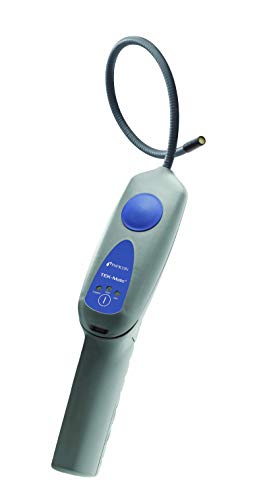
- Detects leaks to 0.25 oz./year
- A2L certified heated diode sensor
- Automatic background adjustment
Best For: Straightforward service work with replaceable batteries
All-Day Rechargeable Workhorse

- Runs up to 15 hours per charge
- Starts in about 30 seconds
- Protective filter handles moisture and oil
Best For: Extended daily leak-hunting sessions
Long-Life Infrared Alternative
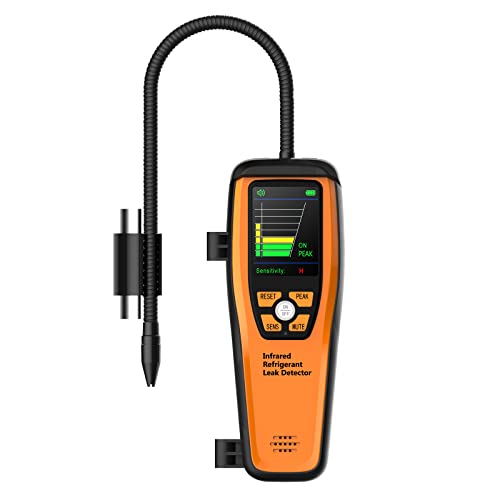
- Infrared sensor resists interference
- Sensitivity reaches 0.14 oz./year
- Large screen with peak indication
Best For: Users seeking an infrared alternative to heated diode sensing
Professional Precision
Testo 316-3 Refrigerant Leak Detector
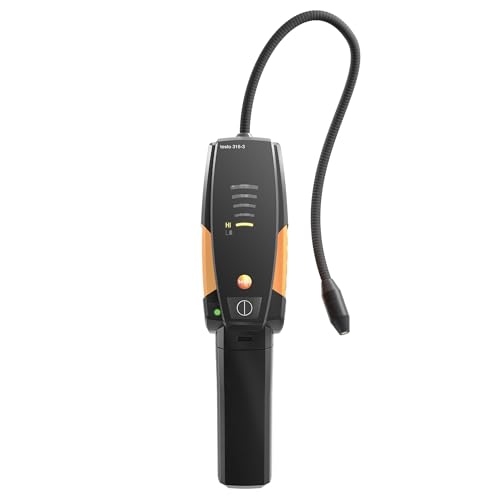
- Heated diode sensitivity down to 0.15 oz./year
- Automatic zeroing for contaminated areas
- Detects many CFC, HFC, and HCFC refrigerants
Best For: Professional HVAC leak detection
Clear Digital Readings
Elitech ILD-100H Heated Diode Leak Detector

- TFT screen shows alerts, settings, and battery level
- Sensitivity reaches 0.1 oz./year
- Detects a broad range of halogen refrigerants
Best For: Technicians wanting display-guided operation
Rechargeable Flexibility
Tadeto Rechargeable Refrigerant Leak Detector

- Type-C rechargeable power and digital display
- 11-inch flexible gooseneck probe
- Audio-visual alerts plus LCD bar graph
Best For: Flexible HVAC and automotive AC inspections
Balanced HVAC Choice
Elitech LD-100 Heated Diode Detector

- Six adjustable sensitivity levels
- Broad halogenated refrigerant coverage
- Fast warm-up and response
Best For: Routine HVAC, refrigeration, and automotive A/C leak checks
Professional All-Gas Coverage
ALD-200 Refrigerant Leak Detector

- Detects A1, A2L, A3, and tracer gases
- 0.14 oz./yr. adjustable sensitivity
- Color display with Peak and Reset modes
Best For: Professional HVAC diagnostics across newer and conventional refrigerants
Maximum Sensitivity Pick
0.05 oz/yr Heated Diode Sniffer

- Stated sensitivity up to 0.05 oz/yr
- Nine-level leak display
- 20-inch flexible replaceable probe
Best For: Locating subtle leaks in HVAC, automotive A/C, and refrigeration systems
Top-Tier Sensitivity – Fieldpiece DR58
For technicians who need highly sensitive heated diode refrigerant leak detectors, the Fieldpiece DR58 is built to identify micro leaks quickly. Its backlit LCD, LED tip, audible alert, and flexible 17-inch probe support accurate leak location in difficult HVACR spaces.
Best For: Professional HVACR technicians prioritizing maximum sensitivity, clear leak feedback, and rechargeable operation.
Pros:
- Detects leaks smaller than 0.03 oz./year.
- Works with HFC, CFC, HCFC, HFO, H2N2 tracer gas, and blends.
- Includes a moisture- and oil-resistant sensor with a stated 300-hour life.
- Offers an 18-hour USB-rechargeable battery and five replacement filter tips.
Cons:
- At 3 pounds, it is heavier than some compact detectors.
- Its extensive sensitivity and display features may be more than occasional users need.
The DR58 stands out for its very low stated detection threshold and technician-friendly indicators. It is a strong choice when pinpointing small leaks and working across varied refrigerant types are priorities.
Proven Field Simplicity – INFICON TEK-Mate 705
The INFICON 705-202-G1 is a straightforward option among heated diode refrigerant leak detectors, combining a proven sensor with automatic background adjustment. It detects common CFC, HCFC, HFC, and HFO refrigerants and comes with a rugged carrying case.
Best For: HVAC technicians seeking a simple, A2L-certified detector with automatic zeroing and conventional battery power.
Pros:
- Detects leaks down to 0.25 oz./year, or 7 g/year.
- Detects CFCs, HCFCs, HFCs, and HFOs.
- Automatic background adjustment helps reduce false alarms from soap solutions.
- Includes two D-cell alkaline batteries, filters, and a carrying case.
Cons:
- Its stated sensor life is 100 hours.
- Battery life is listed at approximately eight hours.
- It uses audible rather than visual alarm feedback.
With A2L certification, automatic zeroing, and a familiar heated diode design, the TEK-Mate focuses on dependable basic leak checking. Its D-cell battery setup may appeal to users who prefer easily replaceable power sources.
All-Day Rechargeable Workhorse – Fieldpiece SRL8
The Fieldpiece SRL8 is designed for extended service days, making it a practical entry among heated diode refrigerant leak detectors. Its rechargeable battery, protective filter system, and automatic or manual zeroing help support repeated leak searches in active HVAC environments.
Best For: Technicians who need long runtime, quick startup, and protection against moisture or oil contamination.
Pros:
- Provides up to 15 hours of rechargeable battery operation.
- Triggers on CFCs, HFCs, HCFCs, and blends.
- Starts up in approximately 30 seconds.
- Filter system helps protect the sensor from moisture and oil.
Cons:
- The notes indicate it is more sensitive to some refrigerants than others.
- The supplied information does not state a specific leak-size sensitivity.
- Its 3.12-pound weight may be noticeable during prolonged use.
The SRL8 favors practical field endurance over highly detailed display features. Its fast warm-up, long battery life, and replaceable filter design make it well suited to technicians tracking leaks throughout a workday.
Long-Life Infrared Alternative – Elitech ILD-200
Although it is not a heated diode model, the Elitech ILD-200 is a useful comparison for shoppers evaluating heated diode refrigerant leak detectors. Its infrared sensor is designed for strong interference resistance, adjustable sensitivity, and a stated service life of up to 10 years.
Best For: Users who prefer infrared sensing, a visual peak display, adjustable sensitivity, and broad halogenated-gas compatibility.
Pros:
- Offers adjustable high, medium, and low sensitivity settings.
- Reaches a stated maximum sensitivity of 0.14 oz./year.
- Detects numerous halogenated gases and refrigerant blends.
- Uses a large 2.8-inch screen with peak indication for quieter operation.
Cons:
- It uses an infrared sensor rather than a heated diode sensor.
- The supplied temperature detail lists an upper rating of 20 °C.
- It is limited by the stated one-year warranty.
The ILD-200 is best viewed as an alternative technology rather than a direct heated diode pick. Its adjustable sensitivity, visual display, and long claimed sensor life may suit users who want fewer interference concerns and less frequent sensor replacement.
Professional Precision – Testo 316-3 Refrigerant Leak Detector
For technicians comparing heated diode refrigerant leak detectors, the Testo 316-3 emphasizes precise sensing, quick measurements, and reliable operation in areas that may already be contaminated. Its automatic zeroing and adjustable sensitivity support efficient HVAC leak detection.
Best For: HVAC professionals who need a rugged, highly sensitive detector for multiple CFC, HFC, and HCFC refrigerants.
Pros:
- Patented heated diode sensor offers sensitivity down to 0.15 oz./year.
- Automatic zeroing supports use in previously contaminated areas.
- Detects a broad range of refrigerants, including R22, R134A, R404A, R410A, R507, and R438A.
- One-button operation, LED indicator, and audible alarm simplify field use.
Cons:
- At 3.48 pounds, it is heavier than some compact alternatives.
- The supplied notes do not mention a rechargeable battery or digital display.
The Testo 316-3 is a strong choice when dependable heated-diode performance and automatic zeroing matter more than minimizing tool weight. Its professional construction and broad refrigerant compatibility make it well suited to regular service work.
Clear Digital Readings – Elitech ILD-100H Heated Diode Leak Detector
The Elitech ILD-100H is one of the more display-focused heated diode refrigerant leak detectors, pairing adjustable sensitivity with a TFT screen. It provides quick visual feedback on leakage alerts, sensitivity, and battery level while detecting a wide range of halogenated gases.
Best For: Technicians who want clear on-screen information, fast response, and flexible sensitivity settings in a battery-powered detector.
Pros:
- Heated diode sensor supports detection of halogenated refrigerants.
- Adjustable high, medium, and low sensitivity, with sensitivity up to 0.1 oz./year.
- TFT screen displays sensitivity, leakage alerts, battery level, and other operating information.
- Two front buttons allow quick sensitivity changes or buzzer muting.
Cons:
- The plastic enclosure may feel less rugged than a heavy-duty metal-bodied tool.
- The supplied notes list an audible alarm but do not specify a visual alarm.
With its strong sensitivity rating and informative TFT display, the ILD-100H is appealing for users who prefer more feedback than a basic alarm-only sniffer provides. Its broad refrigerant coverage also suits varied HVAC and air-conditioning work.
Rechargeable Flexibility – Tadeto Rechargeable Refrigerant Leak Detector
The Tadeto is a practical alternative among heated diode refrigerant leak detectors for users who value rechargeable power and easy-to-read feedback. Its 11-inch flexible probe, LCD, bar graph, and audio-visual alerts are designed to help locate leaks around coils, hoses, and other obstructions.
Best For: Automotive, residential, and commercial HVAC users who want a rechargeable detector with a flexible probe and digital leak indication.
Pros:
- Rechargeable through a universal Type-C charging port.
- 11-inch gooseneck probe bends and holds its shape around difficult access points.
- Combines audible, light, LCD, and bar-graph indications.
- Supports common refrigerants including R22, R134A, R410A, R404A, and R1234YF.
Cons:
- Requires about 30 seconds for warm-up and automatic calibration.
- Users must move the probe steadily; sweeping too quickly can miss small leaks.
- The supplied notes do not specify a heated-diode sensor or a sensitivity rating.
The Tadeto stands out for convenience and access: rechargeable power reduces disposable-battery maintenance, while the flexible probe can reach around common HVAC obstacles. Follow its warm-up and steady-scanning guidance for more consistent results.
Balanced HVAC Choice – Elitech LD-100 Heated Diode Detector
For technicians who want broad refrigerant coverage and straightforward controls, the Elitech LD-100 is a practical option among heated diode refrigerant leak detectors. It warms up in about 30 seconds, responds in about 3 seconds, and provides six adjustable sensitivity levels for different troubleshooting conditions.
Best For: HVAC service, air-conditioning, refrigeration, and automotive A/C work involving common halogenated refrigerants.
Pros:
- Detects a wide range of CFC, HFC, HCFC, HC, HFO, and blended refrigerants.
- Six sensitivity settings and an LED leak-level display support more controlled testing.
- Built-in air pump improves reaction and recovery speed.
- Meets EN14624 and SAE-1627 standards and includes US technician support.
Cons:
- Battery-powered operation requires attention to battery readiness.
- At 1.9 pounds, it may feel less convenient than lighter handheld options.
The LD-100 is a solid all-around detector for users who value wide compatibility, simple button controls, and standards-oriented construction over advanced display features.
Professional All-Gas Coverage – ALD-200 Refrigerant Leak Detector
The ALD-200 stands out among heated diode refrigerant leak detectors for its upgraded heat diode sensor and 3-in-1 detection approach. It covers A1, A2L, and A3 refrigerants along with hydrogen/nitrogen tracer gas, while its color display, Peak Mode, and reset function are designed for detailed field diagnostics.
Best For: HVAC professionals and experienced DIY users working on heat pumps, air conditioners, refrigeration equipment, and automotive A/C systems.
Pros:
- Supports a broad list of refrigerants, including R454B, R32, R290, R600a, and tracer gas.
- Adjustable sensitivity reaches 0.14 oz./yr. for locating small leaks.
- 2.8-inch TFT display, audible alarm, mute function, Peak Mode, and reset function improve usability.
- Rechargeable battery is designed to support a full day of service.
Cons:
- Requires charging, warm-up, and auto-zero calibration before use.
- Its extensive feature set may be more than casual users need.
With broad refrigerant compatibility and useful diagnostic modes, the ALD-200 is the most feature-rich choice here for technicians handling newer A2L and A3 refrigerants as well as conventional systems.
Maximum Sensitivity Pick – 0.05 oz/yr Heated Diode Sniffer
For users prioritizing very small leak detection, this model offers a stated maximum sensitivity of 0.05 oz/yr. Its heated diode sensor, inhalation design, nine-level LED display, and 20-inch flexible probe make it a focused choice among heated diode refrigerant leak detectors.
Best For: Finding subtle halogen refrigerant leaks in automotive and home A/C systems, refrigeration equipment, and other service environments.
Pros:
- Stated 0.05 oz/yr maximum sensitivity helps target micro leaks.
- Detects CFCs, HCFCs, HFCs, HFOs, blends, and halon gases.
- Nine-level leak display and three sensitivity settings provide visual and adjustable feedback.
- 20-inch flexible, replaceable probe supports access around difficult components.
Cons:
- Offers three sensitivity levels rather than the six provided by the Elitech LD-100.
- The supplied notes do not specify a battery type or included support program.
This detector is a strong fit when maximum stated sensitivity and probe reach matter most, while automatic/manual zeroing and mute operation help make field testing more manageable.
How We Picked These Heated Diode Refrigerant Leak Detectors
We selected models based on the features that matter during real leak-finding work: stated sensitivity, sensor technology, refrigerant coverage, response and reset behavior, probe design, display or alarm visibility, power source, and overall serviceability. We also considered whether a detector is aimed at professional HVAC technicians, occasional maintenance, or automotive diagnostics.
Specifications can vary by model and revision, so verify the manufacturer’s current documentation before purchasing—especially for A2L refrigerants, sensor replacement intervals, and approved applications.
Quick Comparison
| What to Compare | Why It Matters |
|---|---|
| Detection technology | Heated diode sensors are common, sensitive, and widely used for halogen refrigerants; infrared designs may offer longer sensor life and reduced cross-sensitivity. |
| Minimum leak rate | A lower stated rate can help locate small leaks, but real-world performance also depends on airflow, contamination, and scan technique. |
| Refrigerant compatibility | Confirm support for the gases used in your shop, including legacy HFCs, HFO blends, and newer A2L refrigerants such as R-454B. |
| Power and controls | Rechargeable batteries simplify daily work, while replaceable cells can be useful when charging access is limited. |
| Alerts and display | Audible, visual, and screen-based indicators make it easier to identify leaks in noisy or poorly lit mechanical spaces. |
Key Buying Factors for Heated Diode Refrigerant Leak Detectors
Sensitivity and Real-World Usability
Do not choose solely by the smallest published leak rate. A detector should also respond quickly, reset reliably after exposure, and let you adjust sensitivity when working around refrigerant residue or ventilation. Flexible probes and a narrow sensor tip are valuable around coils, fittings, service ports, and confined equipment compartments.
Sensor Type, Life, and Maintenance
Heated diode sensors are a practical choice for many technicians, but they may require periodic replacement and can be affected by contaminants. Infrared models may reduce routine sensor replacement, although they can cost more. Check replacement-part availability, warm-up time, calibration requirements, and the manufacturer’s recommended cleaning procedure.
Refrigerant and Safety Coverage
Make sure the detector is rated for the refrigerants in your service area. If you work on newer systems, look specifically for A2L compatibility and follow all required ventilation, ignition-control, and service procedures. A detector is a diagnostic tool, not a substitute for safe refrigerant handling.
Ergonomics and Job-Site Durability
For frequent service calls, prioritize a balanced body, an easy-to-read backlit display, usable controls, a strong probe, and battery life that covers a full shift. A protective case, replaceable filters, and a clear warranty can matter as much as headline sensitivity.
Who Should Buy Which Heated Diode Refrigerant Leak Detectors?
HVAC professionals: Choose a durable detector with adjustable sensitivity, a clear display, broad refrigerant coverage, and readily available replacement sensors or filters.
Technicians working with A2L systems: Put documented A2L support and current safety guidance ahead of price or maximum sensitivity claims.
Automotive and mixed-use users: Favor broad refrigerant compatibility, a flexible probe, and simple controls that work across vehicle and comfort-cooling applications.
Occasional DIY or maintenance buyers: A rechargeable, straightforward model can be more convenient than a feature-heavy professional unit, provided its supported refrigerants and sensitivity meet your needs.