Finding a small refrigerant leak quickly can save service time, prevent repeat visits, and help protect system performance. The right detector should offer dependable sensitivity without becoming difficult to use in tight mechanical spaces.
We compare 10 infrared, heated-diode, and professional refrigerant leak detectors across detection performance, sensor life, power options, display design, and overall practicality for HVAC, automotive, and maintenance work.
Best 10 Infrared Refrigerant Leak Detectors Picks for 2026
Top Infrared Pick

- Detects leaks below 0.03 oz./year
- Supports major refrigerant types, including A2L
- 10+ hour USB-C battery and 10-year sensor
Best For: Technicians needing sensitive, durable infrared detection
Best Control Options

- Four sensitivity settings, including super
- Automatic and manual zero modes
- Includes lithium-ion battery and rugged case
Best For: Technicians wanting adjustable detection controls
Best Heated-Diode Alternative

- Detects leaks below 0.03 oz./year
- Supports refrigerants plus H2N2 tracer gas
- Up to 18 hours of USB-rechargeable use
Best For: Users comparing infrared with heated-diode detection
Best Basic Heated-Diode Tool
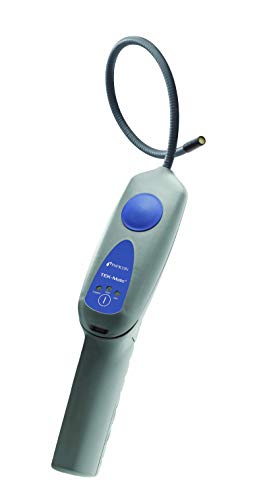
- 0.25 oz./year stated sensitivity
- Automatic background adjustment and A2L certification
- Uses two D-cell batteries and includes a case
Best For: General-purpose leak checking with simple controls
Best Overall
Elitech ILD-200 Infrared Leak Detector
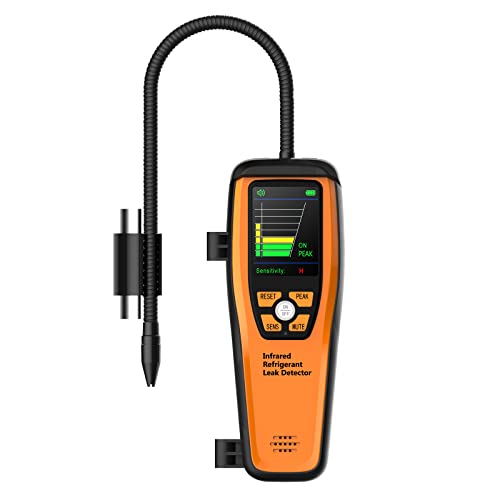
- 10-year infrared sensor life
- Sensitivity down to 0.14 oz./yr.
- Broad halogenated-gas compatibility
Best For: Professional HVAC and automotive leak detection
Best for Clear Readings

- Color TFT status display
- 10-year infrared sensor life
- Case, cable, and filters included
Best For: Technicians who prefer visual feedback and a complete kit
Best Versatility
ALD-200 Professional Refrigerant Detector

- Detects A1, A2L, A3, and tracer gas
- Sensitivity up to 0.14 oz./yr.
- Peak, reset, mute, and color display
Best For: Technicians handling varied refrigerants and tracer-gas checks
Best Rechargeable Pick
VIVOHOME HVAC Refrigerant Leak Detector

- Three sensitivity modes down to 0.03 oz./yr.
- Rechargeable 3000mAh battery with up to six hours of use
- Long probe, reset/peak functions, and broad refrigerant compatibility
Best For: Repeated HVAC and automotive leak checks
Best Long-Life Sensor
Elitech ILD-300 Infrared Leak Detector

- Infrared sensor rated for up to 10 years
- One-second response with three sensitivity levels
- TFT screen displays readings, alerts, and battery status
Best For: Frequent HVAC, automotive, and refrigerator diagnostics
Best Simple Budget-Style Option
Elitech CLD-100 Freon Leak Detector

- Six sensitivity levels and instantaneous response
- Flexible 8.26-inch probe for tight spaces
- Audible/visual alarms and included UV lamp
Best For: Basic HVAC and automotive leak checks
Top Infrared Pick – Fieldpiece DR82
The Fieldpiece DR82 is a strong choice for technicians who need infrared refrigerant leak detectors that can identify very small leaks quickly. Its non-dispersive infrared sensor, long probe, backlit display, and USB-C battery make it practical for routine HVACR service and tight-access work.
Best For: HVACR technicians prioritizing high sensitivity, broad refrigerant compatibility, and long battery life.
Pros:
- Detects leaks smaller than 0.03 oz./year and works with CFC, HCFC, HFC, HFO, and blended refrigerants.
- 17-inch flexible probe, LED tip, audible beep, and backlit LCD help pinpoint leaks.
- IP54-rated construction, replaceable filter tips, and a sensor rated for 10 years support dependable use.
- USB-C battery provides more than 10 hours of operation.
Cons:
- The supplied notes do not specify a detailed sensitivity-control range.
- Its compact display and probe-focused design may be less suitable for users wanting a larger standalone instrument.
With strong sensitivity and durable, technician-friendly features, the DR82 is a well-rounded infrared option for frequent leak detection and demanding service environments.
Best Control Options – INFICON D-TEK 3
The INFICON D-TEK 3 gives technicians flexible control over the search process, with low, medium, high, and super sensitivity settings plus automatic and manual zero modes. It is a capable choice among infrared refrigerant leak detectors for varied HVACR applications and includes a rechargeable battery and carrying case.
Best For: Service professionals who want adjustable sensitivity and zeroing modes for different inspection conditions.
Pros:
- Offers four sensitivity settings, from low through super, for adaptable leak searching.
- Automatic and manual zero modes help accommodate changing background conditions.
- Detects CFCs, HCFCs, HFCs, HFOs, blends, and A2Ls.
- Includes a lithium-ion battery, charger, filters, sensor, and rugged carrying case.
Cons:
- The supplied notes do not state a specific leak-rate sensitivity.
- Audible alarm details are provided, but visual indicator features are not specified.
The D-TEK 3 stands out for adjustability rather than a published sensitivity figure, making it a practical fit when technicians need to tailor detection behavior to the job.
Best Heated-Diode Alternative – Fieldpiece DR58
The Fieldpiece DR58 uses a heated diode sensor to find leaks smaller than 0.03 oz./year. While it is not an infrared model, it is a useful comparison for shoppers evaluating infrared refrigerant leak detectors, especially those who want broad gas compatibility, a long probe, and extended rechargeable operation.
Best For: Technicians who prefer heated-diode detection and need support for refrigerants and tracer gas.
Pros:
- Detects leaks below 0.03 oz./year and supports HFC, CFC, HCFC, HFO, H2N2 tracer gas, and blends.
- 17-inch probe, backlit LCD, LED tip, and beep support pinpointing in tight spaces.
- IP54-rated design and replaceable filter tips help with field use.
- USB-rechargeable battery runs for up to 18 hours.
Cons:
- It uses a heated diode sensor rather than infrared technology.
- The sensor life is listed at 300 hours, substantially shorter than the DR82’s stated sensor life.
- Its listed weight is 3 pounds, which may feel less lightweight during extended use.
The DR58 is a feature-rich alternative when heated-diode technology and tracer-gas compatibility matter more than choosing an infrared sensor specifically.
Best Basic Heated-Diode Tool – INFICON TEK-Mate
The INFICON TEK-Mate is a straightforward heated-diode leak detector with automatic background adjustment and a stated sensitivity of 0.25 oz./year. For shoppers comparing infrared refrigerant leak detectors, it offers a simpler battery-powered design, A2L certification, and a rugged carrying case.
Best For: Technicians seeking a simple, durable leak detector with automatic zeroing and standard battery operation.
Pros:
- Detects CFC, HCFC, HFC, and HFO refrigerants and is A2L certified.
- Automatic background adjustment helps reduce false alarms from changing conditions.
- Runs on two D-cell alkaline batteries and includes a rugged carrying case.
- Made in the United States with technician support by email and phone.
Cons:
- Its 0.25 oz./year sensitivity is less sensitive than the 0.03 oz./year figures listed for the Fieldpiece models.
- The heated-diode sensor has a stated 100-hour life.
- Battery life is listed at approximately 8 hours.
The TEK-Mate favors straightforward operation and serviceability over maximum sensitivity, making it a sensible choice for general leak-checking tasks.
Best Overall – Elitech ILD-200 Infrared Leak Detector
For shoppers comparing infrared refrigerant leak detectors, the Elitech ILD-200 stands out for its adjustable sensitivity, broad halogenated-gas coverage, and infrared sensor designed for extended service life. Its large display and peak indication are practical features for tracing leaks in HVAC and automotive applications.
Best For: HVAC professionals who want broad refrigerant compatibility and a long-life infrared sensor.
Pros:
- Infrared sensor offers strong anti-interference performance and a stated 10-year sensor life.
- Adjustable high, medium, and low sensitivity, reaching 0.14 oz./yr.
- Detects numerous CFC, HFC, HCFC, HC, HFO, and mixed refrigerants.
- Large 2.8-inch screen and peak display help indicate leak direction.
Cons:
- Its professional focus may be more capability than occasional DIY users need.
- Supplied details list a one-year warranty.
The ILD-200 is a well-rounded choice when accurate leak tracing, broad gas support, and infrared sensor longevity matter more than a minimalist design.
Best for Clear Readings – Mastercool 55600 Black Series
The Mastercool 55600 is one of the infrared refrigerant leak detectors to consider if clear feedback and straightforward controls are priorities. Its color TFT screen displays leak, sensitivity, battery, and sensor-fault information, while the peak button records the maximum detected leak.
Best For: Technicians who value an informative color display, simple sensitivity selection, and included accessories.
Pros:
- Infrared sensor is rated for an extended 10-year life.
- High, medium, and low sensitivity settings reach 0.14 oz./yr.
- Color TFT graphics show key operating information at a glance.
- Includes a zippered case, charging cable, and replacement filters.
Cons:
- Supplied details specify a one-year manufacturer warranty.
- Auto-off after 10 minutes may interrupt extended inactive periods.
With standards listed including EN14624 and relevant SAE specifications, the 55600 is a practical option for users who want visual status information and a ready-to-carry kit.
Best Versatility – ALD-200 Professional Refrigerant Detector
The ALD-200 is a versatile alternative among infrared refrigerant leak detectors, although its supplied notes describe an upgraded heat-diode sensor rather than an infrared sensor. It supports A1, A2L, and A3 refrigerants plus hydrogen/nitrogen tracer gas, and combines peak mode, reset calibration, audible alerts, and a color display for field troubleshooting.
Best For: HVAC technicians and advanced DIY users working across newer refrigerants, hydrocarbons, and tracer-gas applications.
Pros:
- 3-in-1 detection covers A1, A2L, A3 refrigerants, and hydrogen/nitrogen tracer gas.
- Adjustable sensitivity reaches 0.14 oz./yr. for micro-leak detection.
- 2.8-inch TFT display, escalating beep, mute, peak mode, and reset functions support practical troubleshooting.
- Oil-resistant and impact-resistant housing with a rechargeable battery for a full day of service.
Cons:
- The supplied notes identify a heat-diode sensor, so it is not an infrared model.
- Proper warm-up and auto-zero calibration are required before use.
- Its extensive gas coverage may be unnecessary for simpler leak-checking tasks.
If your priority is broad refrigerant and tracer-gas coverage rather than infrared technology specifically, the ALD-200 offers a feature-rich, field-ready approach to leak detection.
Best Rechargeable Pick – VIVOHOME HVAC Refrigerant Leak Detector
For shoppers comparing infrared refrigerant leak detectors, the VIVOHOME stands out with adjustable sensitivity, a rechargeable battery, and controls designed to help pinpoint leaks. Its 15.8-inch probe and reset and peak functions are useful when checking difficult-to-reach areas or working around background refrigerant concentration.
Best For: HVAC and automotive users who want rechargeable, feature-rich leak detection with a large display.
Pros:
- Three sensitivity modes with sensitivity up to 0.03 oz./yr.
- Rechargeable 3000mAh battery provides up to six hours of continuous operation.
- Reset and peak functions, audible and visual alarms, and a 15.8-inch probe support faster leak location.
- Compatible with a broad range of refrigerants and meets SAE J2791 and SAE J2913 standards.
Cons:
- The product notes do not specify a warranty.
- Its many controls and display features may be more than needed for occasional basic checks.
Choose this model if convenience and pinpointing features matter more than having the simplest possible instrument. The rechargeable design and long probe make it a practical option for repeated HVAC or vehicle diagnostics.
Best Long-Life Sensor – Elitech ILD-300 Infrared Leak Detector
The Elitech ILD-300 is a strong choice among infrared refrigerant leak detectors for users who prioritize sensor longevity and quick operation. Its independently developed infrared sensor is rated for up to 10 years, while the TFT screen shows sensitivity, alerts, and battery information during testing.
Best For: HVAC, automotive, and refrigerator technicians seeking a long-life infrared sensor and straightforward operation.
Pros:
- Infrared sensor life is rated for up to 10 years.
- Adjustable high, medium, and low sensitivity settings, with sensitivity up to 0.1 oz./yr.
- One-second response time and front-mounted controls support quick adjustments.
- Detects a wide range of halogenated refrigerants and blends.
Cons:
- The listed maximum sensitivity is lower than the VIVOHOME’s stated 0.03 oz./yr.
- The supplied notes do not identify the battery type or continuous runtime.
The ILD-300 is a sensible middle ground for professional or frequent users who want infrared sensing without a complicated interface. Its clear TFT display, rapid response, and long sensor-life rating are its main advantages.
Best Simple Budget-Style Option – Elitech CLD-100 Freon Leak Detector
For buyers who want a straightforward tool alongside more advanced infrared refrigerant leak detectors, the Elitech CLD-100 uses a traditional corona sensor with an updated analogue circuit. It offers six sensitivity levels, a flexible probe, and audible and visual indicators for locating halogenated refrigerant leaks.
Best For: Basic automotive and HVAC leak checks where simple controls and a flexible probe are priorities.
Pros:
- Six adjustable sensitivity levels with sensitivity rated at 0.21 oz./yr.
- Six-second preheating time and instantaneous response after startup.
- Flexible approximately 8.26-inch probe reaches difficult areas.
- Includes a UV lamp and provides audible, visual, and dual-color battery indicators.
Cons:
- Uses a traditional corona sensor rather than an infrared sensor.
- Requires four AAA batteries, which are not included.
- Its stated sensitivity is lower than the other two products in this roundup.
The CLD-100 is best viewed as a practical, uncomplicated leak detector rather than a high-sensitivity infrared instrument. It may suit occasional troubleshooting when flexible access and simple status indicators are more important than rechargeable power or infrared sensing.
How We Picked the Best Infrared Refrigerant Leak Detectors
We evaluated these detectors by focusing on the features that matter during real leak-detection work: sensor technology, stated sensitivity, refrigerant compatibility, response speed, alarm controls, battery runtime, display readability, probe design, and long-term operating cost. Infrared models are especially attractive for frequent service because their sensors typically resist contamination better and can provide a longer service life than traditional sensor designs.
We also considered whether each tool suits professional HVAC technicians, occasional maintenance, automotive work, or general troubleshooting. Product specifications and included accessories can vary by seller, so confirm the current package contents and supported refrigerants before ordering.
Quick Comparison
| What to Compare | Why It Matters |
|---|---|
| Sensor technology | Infrared sensors can offer long life and strong resistance to false alarms; heated-diode models may provide a lower-cost alternative. |
| Sensitivity | Higher sensitivity helps locate very small leaks, particularly in low-charge systems. |
| Power source | Rechargeable batteries reduce disposable-cell costs, while replaceable batteries can simplify field replacement. |
| Display and alarms | A readable backlit screen and adjustable audible or visual alarms improve usability in dark or noisy equipment areas. |
| Supported refrigerants | Compatibility should match the refrigerants used in your service territory, including newer blends where applicable. |
Key Buying Factors for Infrared Refrigerant Leak Detectors
Sensor Life and Maintenance
Check the expected sensor lifespan and replacement cost, not just the purchase price. A long-life infrared sensor may be the better value for technicians who use a detector regularly. Filters, tips, and protective caps should also be easy to replace.
Detection Performance
Look for a clear sensitivity rating, fast response, automatic zeroing, and selectable alarm levels. A flexible probe helps reach coils, fittings, compressor compartments, and automotive engine bays without moving surrounding components.
Ergonomics and Field Operation
A lightweight body, large backlit display, tactile controls, and a stable grip make repeated inspections less tiring. Consider battery runtime, charging method, warm-up time, and whether the tool can operate while connected to a charger.
Refrigerant Coverage
Verify the exact refrigerant list before buying. Systems may contain CFCs, HCFCs, HFCs, HFO blends, or newer alternatives such as R-454B. A detector designed for one group should not automatically be assumed compatible with every refrigerant.
Who Should Buy Which Infrared Refrigerant Leak Detectors?
Professional HVAC technicians and service companies should prioritize durable infrared models with strong sensitivity, long sensor life, adjustable alarms, and dependable battery performance. They cost more initially but can reduce downtime and recurring sensor replacement.
Automotive technicians and mixed-use users should choose a compact detector with broad refrigerant compatibility, a flexible probe, and simple controls. Occasional DIY users can focus on value, clear alarms, rechargeable power, and adequate sensitivity rather than advanced logging or premium ergonomics.
Whichever model you choose, use it alongside visual inspection, pressure testing, electronic isolation procedures, and manufacturer-recommended safety practices. Electronic detectors locate suspected leaks; they do not replace proper repair, evacuation, and verification procedures.