Finding a refrigerant leak quickly can save time, reduce repeat service calls, and help protect an air-conditioning or refrigeration system from avoidable damage. The right detector should match your refrigerant types, sensitivity needs, and working environment.
We selected 10 refrigerant leak detectors spanning heated-diode, infrared, rechargeable, and combination designs. Use the guide below to compare the features that matter before choosing a tool for professional HVAC work, automotive repairs, or occasional home maintenance.
Best 10 Refrigerant Leak Detectors Picks for 2026
Best Ultra-Sensitive Pick

- Detects leaks below 0.03 oz./yr.
- Supports numerous refrigerants and tracer gas.
- 18-hour rechargeable battery with 17-inch probe.
Best For: Frequent professional HVACR leak checks
Best Proven Value
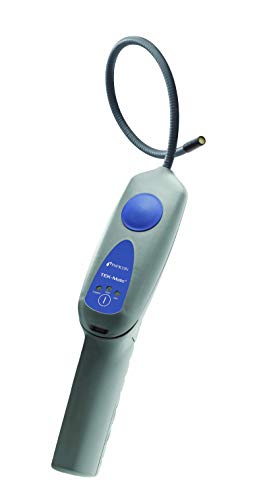
- 0.25 oz./yr. leak sensitivity.
- Automatic background adjustment.
- Includes case, filters, and D-cell batteries.
Best For: Simple, dependable professional leak checks
Best Infrared Design
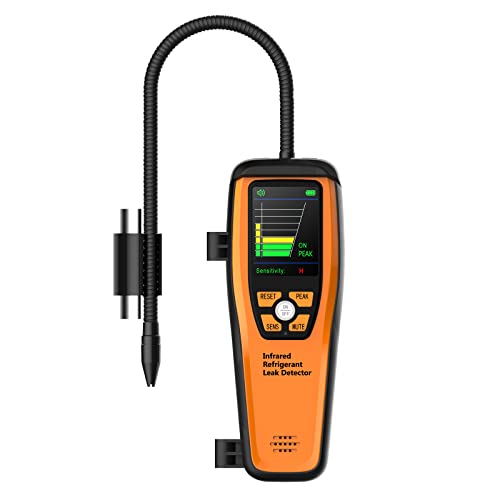
- Infrared sensor with claimed 10-year life.
- Sensitivity adjusts up to 0.14 oz./yr.
- Peak display helps track leak direction.
Best For: Portable HVAC and automotive A/C testing
Best Feature-Packed Budget Option

- Detects A1, A2L, A3, and tracer gases.
- Sensitivity reaches 0.14 oz./yr.
- Color display with peak, reset, and mute functions.
Best For: Versatile HVAC and automotive service work
Best Rechargeable 2-in-1

- Detects halogenated refrigerants and combustible gases
- Up to 24 hours of rechargeable battery life
- Live ppm display with adjustable sensitivity
Best For: HVAC and automotive technicians needing dual-gas detection
Best Heated-Diode Value
Elitech ILD-100H Refrigerant Sniffer

- Heated-diode sensor detects halogenated refrigerants
- Three sensitivity levels, including up to 0.1 oz/year
- TFT screen and quick front controls
Best For: Routine HVAC refrigerant leak inspections
Best for Micro-Leaks
Fieldpiece DR82 Infrared Detector

- Detects leaks smaller than 0.03 oz/year
- Infrared sensor works with major refrigerant families and blends
- Flexible probe with backlit LCD and visual alerts
Best For: Professional HVACR micro-leak detection
Flexible Rechargeable Pick
Tadeto Refrigerant Leak Detector

- Rechargeable USB-C power with LCD and bar-graph readings
- Audible and visual alerts for varied work environments
- 11-inch flexible probe for coils, hoses, and tight spaces
Best For: Technicians wanting a rechargeable, easy-to-position leak detector
Fast-Starting Value
Elitech WJL-6000S Freon Leak Detector

- Seven sensitivity levels for different leak conditions
- Supports common halogenated refrigerants and blends
- Six-second warm-up with audible and visual indicators
Best For: Users seeking a quick, adjustable battery-powered detector
Display-Driven Choice
Aituzero Refrigerant Leak Detector

- TFT display with real-time PPM, funnel, and trend views
- Three alarm modes, three sensitivities, and quick mute
- USB-C battery supports up to eight hours of use
Best For: Technicians wanting detailed readings and configurable alerts
Best Ultra-Sensitive Pick – Fieldpiece DR58
For technicians who need to find very small leaks quickly, the Fieldpiece DR58 is a standout among refrigerant leak detectors. Its heated diode sensor detects leaks below 0.03 oz./yr., while the backlit LCD, LED tip, and audible indication help you locate the source.
Best For: HVAC professionals who want high sensitivity, broad refrigerant compatibility, and a rechargeable tool for frequent field use.
Pros:
- Detects leaks below 0.03 oz./yr.
- Works with HFC, CFC, HCFC, HFO, H2N2 tracer gas, and blends.
- Offers an 18-hour USB-rechargeable battery and a 17-inch probe.
- Includes five replacement filter tips and a blow-molded case.
Cons:
- Heavier and more substantial than a compact basic detector at 3 pounds.
- Replacement filter tips and sensor maintenance remain part of ongoing ownership.
The DR58 combines excellent sensitivity with useful visibility and reach. Its IP54-rated, oil- and moisture-resistant sensor housing and A2L compatibility make it a practical choice for demanding HVACR work.
Best Proven Value – Inficon TEK-Mate 705
The Inficon 705-202-G1 is a straightforward heated-diode option for technicians who prefer a proven, battery-powered design. This refrigerant leak detector has 0.25 oz./yr. sensitivity, automatic background adjustment, and support for common CFC, HCFC, HFC, and HFO refrigerants.
Best For: HVAC technicians seeking a reliable traditional detector with simple operation and a protective carrying case.
Pros:
- Detects leaks down to 0.25 oz./yr.
- Automatic background adjustment helps reduce false alarms from soap solutions.
- A2L certified and compatible with CFC, HCFC, HFC, and HFO refrigerants.
- Includes D-cell batteries, filters, and a rugged carrying case.
Cons:
- Battery life is listed at about eight hours.
- Its 100-hour sensor life is shorter than the service life claimed by some newer alternatives.
With a familiar heated-diode sensor and U.S. technician support, the TEK-Mate emphasizes dependable, uncomplicated leak checking. It is less feature-rich than detectors with color displays or rechargeable batteries, but its automatic zeroing and durable case add practical value.
Best Infrared Design – Elitech ILD-200
The Elitech ILD-200 uses an infrared sensor rather than a heated diode, giving it strong anti-interference performance and a claimed 10-year sensor life. As refrigerant leak detectors go, it offers adjustable sensitivity up to 0.14 oz./yr. and a peak display that helps indicate the leak’s direction.
Best For: Users who want infrared sensing, adjustable sensitivity, and a compact tool for HVAC, automotive A/C, and refrigeration work.
Pros:
- Infrared sensor is designed for faster response and strong resistance to interference.
- Adjustable High, Medium, and Low sensitivity settings.
- Detects a broad range of halogenated gases and refrigerant blends.
- Peak display helps identify the direction of the leak.
Cons:
- The supplied notes do not list battery runtime or charging details.
- Its maximum operating temperature is listed as 20°C, which may limit some hot-environment applications.
The ILD-200 is a compelling alternative to conventional heated-diode instruments, particularly when sensor longevity and interference resistance matter. Its small 14.88-ounce body also makes it convenient for service calls where portability is important.
Best Feature-Packed Budget Option – ALD-200
The ALD-200 packs broad gas compatibility and technician-friendly controls into a professional-grade refrigerant leak detector. Its upgraded heated-diode sensor reaches 0.14 oz./yr. sensitivity, while the 2.8-inch color display, peak mode, reset function, and mute control support more controlled troubleshooting.
Best For: HVAC professionals and capable DIY users who need A1, A2L, A3, and hydrogen/nitrogen tracer-gas detection with an easy-to-read display.
Pros:
- Supports A1, A2L, A3 refrigerants and H2/N2 tracer gas.
- Adjustable sensitivity reaches 0.14 oz./yr.
- Color TFT display, peak mode, reset function, and mute control improve usability.
- Oil-resistant, impact-resistant housing and a rechargeable battery suit field work.
Cons:
- The supplied details do not specify the exact rechargeable-battery runtime.
- Setup requires sensor warm-up and auto-zero calibration before use.
The ALD-200 is attractive when compatibility and operating features matter as much as raw sensitivity. Its broad refrigerant coverage makes it useful across heat pumps, air conditioners, refrigeration equipment, and automotive A/C systems, provided the user follows the calibration procedure.
Best Rechargeable 2-in-1 – SENSYX SFD201 Leak Detector
The SENSYX SFD201 is a versatile choice among refrigerant leak detectors, combining halogenated refrigerant detection with combustible-gas sensing. Its rechargeable battery, live ppm display, and adjustable sensitivity make it practical for technicians who want both broad scanning and more precise leak tracing.
Best For: HVAC and automotive technicians who need refrigerant and combustible-gas detection in one handheld tool.
Pros:
- Detects a broad range of CFC, HCFC, HFC, HFO, and combustible gases.
- 2500mAh rechargeable battery provides up to 24 hours of continuous operation.
- Color LCD displays live ppm concentration and a bar graph for easier pinpointing.
- High and Low sensitivity settings support broad sweeps and close inspection.
Cons:
- The metal-oxide sensor needs several hours of operation to reach full sensitivity when new or stored.
- Proper technique requires a slow probe speed, close positioning, and minimized drafts.
- It is a handheld inspection tool, not a substitute for a listed gas alarm.
With its dual-gas capability and long rechargeable runtime, the SFD201 is especially appealing for service calls involving both refrigerant systems and combustible gases. The live concentration readout adds useful feedback beyond an audible alarm, provided the sensor is prepared and used correctly.
Best Heated-Diode Value – Elitech ILD-100H Refrigerant Sniffer
The Elitech ILD-100H is a straightforward option among refrigerant leak detectors, using a heated-diode sensor to detect halogenated refrigerants. Its TFT screen, three sensitivity levels, and front controls are designed to keep operation clear and uncomplicated during HVAC service work.
Best For: Technicians who want adjustable sensitivity and a readable display for common refrigerant leak inspections.
Pros:
- Heated-diode sensor detects a wide range of halogenated refrigerants and blends.
- Adjustable High, Medium, and Low sensitivity settings support different inspection stages.
- TFT screen shows sensitivity, leakage alerts, battery level, and other operating information.
- Front buttons provide quick sensitivity adjustment and buzzer muting.
Cons:
- It is designed for halogenated refrigerants rather than the broader combustible-gas coverage offered by some dual-purpose detectors.
- The supplied notes identify it as battery powered without specifying runtime or rechargeability.
- The listed upper temperature rating is 20 °C, which may limit use in hotter conditions.
The ILD-100H focuses on accessible controls and broad halogen-refrigerant compatibility. Its stated sensitivity of up to 0.1 oz/year and rapid response make it a sensible fit for routine leak checking where a dedicated refrigerant sniffer is preferred.
Best for Micro-Leaks – Fieldpiece DR82 Infrared Detector
The Fieldpiece DR82 is a premium-focused choice among refrigerant leak detectors, using an infrared sensor to find leaks smaller than 0.03 oz/year. A backlit LCD, visual and audible indicators, flexible 17-inch probe, and USB-C battery make it well suited to detailed HVACR inspections.
Best For: HVACR professionals who prioritize high sensitivity and access to tight spaces when tracking down small leaks.
Pros:
- Ultra-sensitive infrared detection identifies leaks smaller than 0.03 oz/year.
- Works with CFC, HCFC, HFC, HFO, and blended refrigerants.
- Backlit LCD, LED tip, and beep indicate leak size and intensity.
- 17-inch flexible probe and 10-plus-hour USB-C battery support field work.
Cons:
- Its battery life is stated as 10-plus hours, shorter than the 24-hour claim of some rechargeable alternatives.
- The product is focused on refrigerant detection rather than combustible-gas detection.
- Although the sensor is designed for long service life, replacement filter tips are still part of routine use.
The DR82 stands out when sensitivity and pinpointing are more important than dual-gas capability. Its infrared sensor, durable IP54-rated design, and clear leak indicators give technicians useful feedback while working around moisture, oil, and confined HVACR components.
Flexible Rechargeable Pick – Tadeto Refrigerant Leak Detector
For technicians who want rechargeable convenience and clear readings, the Tadeto is a practical refrigerant leak detector for automotive AC, household refrigerators, and commercial HVAC work. It supports common halogen refrigerants and combines audible, visual, and LCD alerts to help locate leaks in cramped or difficult areas.
Best For: HVAC, refrigeration, and automotive AC users who want a rechargeable detector with a flexible probe and digital display.
Pros:
- Supports CFC, HCFC, HFC, HFO, and refrigerants including R22, R134a, R410A, R404A, and R1234yf.
- Combines audible alarm, light alert, LCD readings, and a bar graph.
- USB-C rechargeable design with an 11-inch gooseneck probe and included carry bag.
Cons:
- Requires about 30 seconds for warm-up and automatic calibration.
- Moving the probe too quickly can cause small leak signals to be missed.
The Tadeto stands out for its rechargeable power, ergonomic handle, and long flexible probe. Follow the warm-up and steady-scanning guidance for more dependable results.
Fast-Starting Value – Elitech WJL-6000S Freon Leak Detector
The Elitech WJL-6000S is a battery-powered refrigerant leak detector designed for quick checks on automotive AC and air-conditioning systems. Its seven sensitivity settings, flexible probe, and audible and visual indicators provide useful control when checking different leak sizes and jobsite conditions.
Best For: HVAC and automotive AC users who prioritize quick startup, adjustable sensitivity, and broad halogen-refrigerant compatibility.
Pros:
- Detects halogenated refrigerants including R22, R134A, R404A, R410A, and R1234YF.
- Offers seven adjustable sensitivity levels, with sensitivity up to 0.21 oz/yr.
- Responds within three seconds, warms up in six seconds, and includes a 7.9-inch flexible probe.
Cons:
- Uses batteries rather than a rechargeable power system.
- Does not provide an LCD or digital concentration display in the supplied specifications.
Choose the Elitech when fast readiness and sensitivity adjustment matter more than digital readings or USB-C charging. Its compact probe and dual indicators suit routine service checks.
Display-Driven Choice – Aituzero Refrigerant Leak Detector
The Aituzero combines a Japanese semiconductor sensor, three sensitivity levels, and a full-color TFT display for more detailed refrigerant troubleshooting. As a refrigerant leak detector, it adds sound, light, and vibration alerts plus real-time readings for HVAC, refrigeration, and automotive AC work.
Best For: Service users who want multiple alert modes, trend information, and extended rechargeable operation.
Pros:
- Three sensitivity levels and sensitivity up to 3 g/yr (0.1 oz/yr).
- Sound, indicator-light, and vibration alerts can be enabled or disabled independently, with quick mute.
- USB-C rechargeable 2,000mAh battery provides up to eight hours of use and works with a 14.5-inch flexible probe.
Cons:
- At 1.01 pounds, it is heavier than the Elitech model listed here.
- The extensive display and alert controls may be more than needed for simple leak checks.
This Aituzero is the feature-rich option for users who value visual leak trends and flexible alert configuration. Its long probe and broad refrigerant compatibility are useful when inspecting crowded systems.
How We Picked These Refrigerant Leak Detectors
We focused on the features that most affect real-world leak detection: sensor technology, stated refrigerant compatibility, sensitivity controls, alarm options, display readability, probe design, battery setup, and overall suitability for HVAC or automotive service. The lineup includes professional Fieldpiece and INFICON models alongside more affordable Elitech and general-purpose options.
Because specifications can vary by model and seller, confirm the manufacturer’s supported gases and operating instructions before purchase. Compatibility is especially important when working with newer blends such as R454B, as well as common refrigerants including R22, R410A, R134a, and R1234yf.
Quick Comparison
- Best for professional HVAC technicians: Fieldpiece DR58 or DR82, depending on whether you prefer heated-diode or infrared sensing.
- Best for established professional workflows: INFICON Model 705-202-G1.
- Best for broad refrigerant coverage: Choose a model that explicitly lists the gases you service.
- Best for occasional repairs: A rechargeable Elitech, Tadeto, or comparable detector with adjustable sensitivity.
- Best for mixed applications: A combination refrigerant and combustible-gas detector can add versatility, provided its refrigerant specifications meet your needs.
Key Buying Factors for Refrigerant Leak Detectors
Sensor Type and Sensitivity
Heated-diode sensors are widely used for halogenated refrigerants and can provide responsive detection in service work. Infrared sensors often offer long sensor life and stable performance, while some models are designed to reduce false alarms from common contaminants. Look for adjustable sensitivity so you can locate a small leak without overwhelming the detector in a heavily contaminated area.
Refrigerant Compatibility
Do not assume every detector works with every refrigerant. Check the product’s stated support for legacy CFCs, HCFCs, HFCs, HFOs, and newer blends. If you service both automotive and stationary systems, prioritize a model that specifically lists your refrigerants rather than relying on a generic “freon detector” description.
Alarms, Display, and Probe Design
Audible alarms are useful when you cannot watch the screen, while visual indicators and a backlit display help in dark equipment rooms. A flexible probe makes it easier to reach coils, fittings, and confined compartments. Multiple alarm modes and a clear TFT or LCD screen can improve usability, but they should not replace strong sensor performance.
Power and Durability
Rechargeable batteries reduce ongoing battery costs and are convenient for daily work, but confirm runtime and charging requirements. Professionals should also consider rugged construction, sensor replacement availability, warranty coverage, and whether the detector can withstand frequent transport between jobs.
Who Should Buy Which Refrigerant Leak Detectors?
Professional HVAC technicians should prioritize sensitivity, supported refrigerants, durable construction, and a replaceable or long-life sensor. The Fieldpiece and INFICON options are the strongest choices for demanding service routines.
Automotive technicians should select a detector that explicitly supports common vehicle refrigerants such as R134a and R1234yf, with a flexible probe and easy-to-hear alarm.
DIY users and occasional repairers can save money with a rechargeable detector offering multiple sensitivity levels, a readable display, and clearly stated compatibility. If you work around both refrigerant and fuel or natural-gas systems, consider a combination model—but verify its separate detection capabilities before relying on it for critical repairs.