A small refrigerant leak can reduce cooling performance, increase operating costs, and place extra strain on an air-conditioning system. The right detector helps you locate suspicious areas before deciding whether professional service is needed.
This roundup compares 10 refrigerant leak detectors for home use, from simple bubble solutions to sensitive electronic HVAC tools. We focus on detection technology, refrigerant compatibility, ease of use, power, and practical features for homeowners and DIY users.
Best 10 Refrigerant Leak Detectors for Home Use Picks for 2026
Best Rechargeable 2-in-1

- Up to 24 hours per charge
- Detects refrigerants and combustible gases
- Live ppm display with adjustable sensitivity
Best For: Home users wanting a rechargeable dual-purpose detector
Best Proven Heated-Diode Option
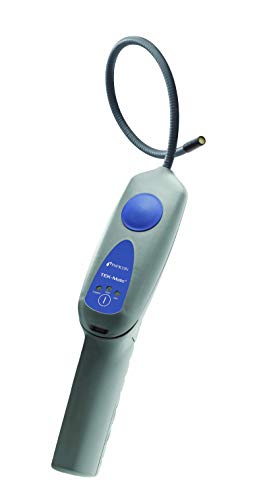
- 0.25 oz./year sensitivity
- Detects CFC, HCFC, HFC, and HFO refrigerants
- Includes case and technician support
Best For: Users seeking a proven heated-diode refrigerant detector
Best Infrared Value
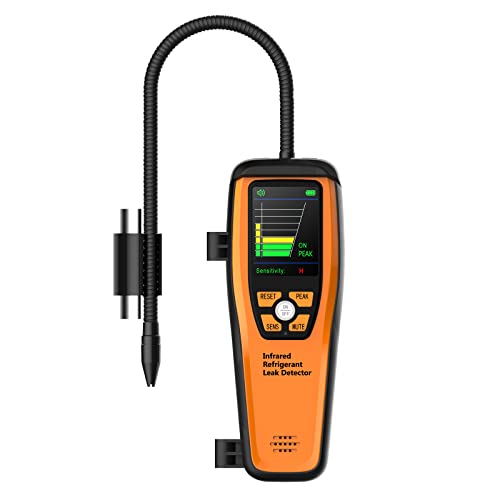
- Infrared sensor with adjustable sensitivity
- Up to 0.14 oz./year sensitivity
- Peak display helps indicate leak direction
Best For: Users wanting visual feedback and broad refrigerant coverage
Best for Tiny Leaks

- Detects leaks below 0.03 oz./year
- 18-hour USB-rechargeable battery
- 17-inch probe with LCD and LED indicators
Best For: Users prioritizing maximum sensitivity and reach
Best Bubble Solution
RectorSeal Better Bubble 65554

- Visual leak locator for refrigerant and other gases
- Works from 20°F to 250°F surface temperatures
- No batteries or electronics required
Best For: Accessible joints, coils, and connections
Most Sensitive Electronic Pick
Fieldpiece DR82 Infrared Detector

- Detects leaks smaller than 0.03 oz./yr.
- Compatible with major refrigerant families and blends
- Flexible 17-inch probe with LCD, LED, and beep alerts
Best For: Detailed HVACR leak tracing
Best Rechargeable Value

- Rechargeable USB-C design with digital bar graph
- Audible, light, and LCD alerts
- 11-inch flexible gooseneck probe
Best For: Home HVAC and refrigerator checks
Versatile Halogen Detection

- Heated diode sensor with response in about one second
- Adjustable sensitivity down to 0.1 oz./yr.
- Supports numerous halogenated refrigerants and blends
Best For: DIY users needing broad refrigerant compatibility
Professional-Style Coverage
ALD-200 Refrigerant Leak Detector

- Covers A1, A2L, A3, and tracer-gas applications
- Detects micro leaks down to 0.14 oz./yr.
- Includes color display, Peak Mode, and Reset function
Best For: Advanced DIY users handling newer refrigerants
Quiet, Flexible Operation
Rechargeable Japanese-Sensor Detector

- Three sensitivity levels with up to 0.1 oz./yr. sensitivity
- Sound, light, and vibration alarm options
- USB-C charging and up to eight hours of use
Best For: Home inspections in tight or noise-sensitive spaces
Best Rechargeable 2-in-1 – SENSYX SFD201
For homeowners who want refrigerant leak detectors for home use without disposable batteries, the SENSYX SFD201 combines halogenated refrigerant and combustible-gas detection in one rechargeable tool. Its live ppm display, bar graph, and adjustable sensitivity help you move from a broad sweep to a more focused inspection.
Best For: Home users who want one rechargeable detector for refrigerant and combustible-gas checks.
Pros:
- Built-in 2500mAh battery provides up to 24 hours of continuous use and charges through USB-C.
- Detects a broad range of CFC, HCFC, HFC, HFO, and selected combustible gases.
- Color LCD shows live ppm concentration and a bar graph, while the buzzer can be muted.
Cons:
- The metal-oxide sensor needs several hours of operation in clean air to reach full sensitivity when new or stored.
- Proper technique requires slow probe movement, close positioning, and minimized drafts.
- It is a handheld inspection tool, not a substitute for a listed gas alarm.
The SFD201 stands out for versatility and long battery life. It is a practical choice when a home toolkit needs both refrigerant and combustible-gas detection, provided you follow the startup and inspection instructions carefully.
Best Proven Heated-Diode Option – INFICON TEK-Mate 705
The INFICON 705-202-G1 is a straightforward choice among refrigerant leak detectors for home use, using a proven heated-diode sensor with 0.25 oz./year sensitivity. Automatic background adjustment helps reduce false alarms from soap solutions during routine leak checks.
Best For: Users who prioritize a proven heated-diode design and broad refrigerant compatibility.
Pros:
- Detects CFCs, HCFCs, HFCs, and HFOs.
- Offers 0.25 oz./year (7 g/year) sensitivity and A2L certification.
- Includes a rugged carrying case, filters, and US technician support by email and phone.
Cons:
- Runs on two D-cell alkaline batteries rather than a rechargeable battery.
- Specified battery life is approximately 8 hours.
- The heated-diode sensor has a listed 100-hour sensor life.
This model favors familiar operation and dependable refrigerant coverage over rechargeable convenience. The included case and technician support also make it a solid option for buyers who want a more established tool package.
Best Infrared Value – Elitech ILD-200
The Elitech ILD-200 is an infrared option for refrigerant leak detectors for home use, with adjustable high, medium, and low sensitivity. Its peak display is designed to indicate leak intensity and direction while helping you work with less reliance on audible alerts.
Best For: Home and automotive users who want infrared sensing, adjustable sensitivity, and a visual peak display.
Pros:
- Infrared sensor is described as faster, more accurate, and more resistant to interference than heated-diode designs.
- Maximum sensitivity reaches 0.14 oz./year.
- Detects numerous halogenated refrigerants, including common blends and gases such as R22, R404a, R410a, R600a, and R1234yf.
Cons:
- The supplied notes identify professional use as the specific intended application.
- The listed upper temperature rating is 20 °C, which may limit use in warmer conditions.
- The product information does not specify rechargeable operation.
The ILD-200 offers useful visual feedback and broad refrigerant coverage in a compact infrared design. It makes the most sense for buyers who value sensitivity adjustment and peak indication, but should be used within its stated temperature and application details.
Best for Tiny Leaks – Fieldpiece DR58
For buyers seeking highly sensitive refrigerant leak detectors for home use, the Fieldpiece DR58 uses a heated-diode sensor rated to find leaks smaller than 0.03 oz./year. Its backlit LCD, LED tip, and audible indication provide several ways to track leak intensity and location.
Best For: Users who want very high sensitivity and a rechargeable detector with a long probe.
Pros:
- Detects all listed HFC, CFC, HCFC, HFO, H2N2 tracer gas, and blend refrigerants.
- IP54-rated sensor design resists moisture and oil, with a stated 300-hour sensor life.
- 17-inch probe, replaceable filter tips, and an 18-hour USB-rechargeable battery support practical inspections.
Cons:
- Its ultra-sensitive design may be more capability than some occasional home users need.
- The supplied product details list a 3-pound item weight and carrying case, making it less compact than a basic handheld tool.
- It uses a heated-diode sensor, so sensor and filter maintenance remain part of ownership.
The DR58 is the strongest fit here for pinpointing very small refrigerant leaks. Its sensitivity, long probe, visual indicators, and rechargeable battery make it especially appealing when access is difficult or leak size is a primary concern.
Best Bubble Solution – RectorSeal Better Bubble 65554
For homeowners looking for refrigerant leak detectors for home use without batteries or complicated electronics, RectorSeal Better Bubble offers a straightforward visual approach. Spray or apply it to suspect connections, coils, tubing, and pressure vessels, then look for bubbles that indicate escaping gas.
Best For: Homeowners who want an easy-to-apply solution for checking HVAC, plumbing, and refrigeration connections.
Pros:
- Detects refrigerant, air, oxygen, natural gas, LPG, and other gas leaks.
- Works across surface temperatures from 20°F to 250°F and varied pressure conditions.
- Requires no power and is formulated not to corrode metal or attack plastic and rubber.
Cons:
- Requires visual inspection rather than providing an audible or digital alert.
- Should not be used on CPVC.
Better Bubble is a practical choice for localized checks, especially when you can access the suspected joint or coil directly. Its broad temperature range and simple application make it useful for basic home troubleshooting, though it does not offer the reach or electronic readout of a sniffer.
Most Sensitive Electronic Pick – Fieldpiece DR82 Infrared Detector
For shoppers comparing refrigerant leak detectors for home use, the Fieldpiece DR82 is the most feature-rich option here. Its infrared sensor is rated to detect leaks smaller than 0.03 oz./yr., while the flexible probe, backlit LCD, LED tip, and audible beep help locate hard-to-see leaks.
Best For: Homeowners who want a sensitive electronic detector for detailed HVACR troubleshooting.
Pros:
- Ultra-sensitive infrared sensor detects leaks below 0.03 oz./yr.
- Compatible with CFC, HCFC, HFC, HFO, and blended refrigerants.
- 17-inch probe, backlit display, LED tip, and beep support pinpointing.
- USB-C battery provides more than 10 hours of use, and the sensor is rated for a 10-year life.
Cons:
- Battery-powered operation requires charging.
- Its HVAC-focused design may be more capability than needed for occasional simple checks.
The DR82 is a strong choice when sensitivity and precise location matter more than simplicity. Its IP54 rating and replaceable filter tips add practicality, while the flexible probe helps reach confined areas around HVAC equipment.
Best Rechargeable Value – Tadeto TDHRD01 Leak Detector
The Tadeto TDHRD01 is a convenient option among refrigerant leak detectors for home use, combining rechargeable USB-C power with an LCD bar graph, audible alarm, and light alert. Its 11-inch gooseneck probe can be shaped around coils, hoses, and other obstructions.
Best For: Home users who want a rechargeable detector with clear visual and audible feedback.
Pros:
- Designed for halogen refrigerants, including R22, R134a, R410a, R404a, and R1234yf.
- Rechargeable via USB-C, with real-time readings and a bar-graph display.
- Combines audible, light, and LCD alerts for use in noisy or dim areas.
- Flexible 11-inch probe and ergonomic handle help reach obstructed leak points.
Cons:
- Requires about 30 seconds for warm-up and automatic calibration.
- Moving too quickly or pausing during inspection can cause small leak signals to be missed.
- The supplied notes do not specify a detection sensitivity threshold.
Tadeto offers a useful balance of portability and feedback for household HVAC, refrigerator, and automotive air-conditioning checks. Allow time for calibration and move the probe steadily to get the most reliable results.
Versatile Halogen Detection – Elitech ILD-100H
For homeowners comparing refrigerant leak detectors for home use, the Elitech ILD-100H offers broad halogen-refrigerant coverage, adjustable sensitivity, and a screen designed to make readings easier to follow. Its heated diode sensor responds within one second and can detect leaks as small as 0.1 oz./yr.
Best For: Homeowners and DIY users troubleshooting air conditioners, refrigeration equipment, or automotive A/C systems that use halogenated refrigerants.
Pros:
- Detects a wide range of CFC, HCFC, HFC, HFO, HC, and mixed refrigerants.
- Three sensitivity settings support different leak sizes and environments.
- TFT screen displays sensitivity, leak alerts, battery level, and other operating information.
- Includes a one-year warranty and stated 7-day, 24-hour service support.
Cons:
- Battery-powered operation requires keeping replacement or charged batteries available.
- The supplied details do not specify included accessories or battery runtime.
The ILD-100H is a straightforward choice when compatibility is the priority. Its wide refrigerant support and adjustable sensitivity make it flexible for occasional household diagnosis, while the display helps make operation less dependent on listening for an alarm alone.
Professional-Style Coverage – ALD-200 Refrigerant Leak Detector
The ALD-200 is a strong contender among refrigerant leak detectors for home use when you want coverage beyond common residential refrigerants. It combines a heat diode sensor, micro-leak sensitivity up to 0.14 oz./yr., a color display, and support for A1, A2L, A3, and hydrogen/nitrogen tracer gases.
Best For: Experienced DIY users or homeowners working with newer A2L refrigerants, heat pumps, air conditioners, refrigeration units, or automotive A/C systems.
Pros:
- Supports an extensive list of refrigerants, including R32, R454B, R410A, R290, R600a, and R1234yf.
- Peak Mode records the maximum reading, while Reset helps reduce false alarms through recalibration.
- 2.8-inch TFT color display provides visual concentration information.
- Rechargeable battery is designed to support a full day of service.
Cons:
- Its calibration and warm-up procedure requires more setup than a basic detector.
- The supplied notes do not provide a precise operating runtime or charging time.
The ALD-200 stands out for homeowners who need modern refrigerant compatibility and more diagnostic controls. Peak and Reset functions can be useful when tracking intermittent or very small leaks, although the broader feature set may be more than needed for occasional checks.
Quiet, Flexible Operation – Rechargeable Japanese-Sensor Detector
For refrigerant leak detectors for home use, this rechargeable model emphasizes convenient operation in tight or noisy spaces. Its Japanese semiconductor sensor offers three sensitivity levels, while sound, light, and vibration alerts provide multiple ways to notice a leak during HVAC or A/C troubleshooting.
Best For: Home users who want rechargeable portability, flexible alerts, and a display for checking leak intensity around coils, valves, fittings, and service ports.
Pros:
- Three sensitivity levels support different leak sizes and working conditions.
- Sound, indicator-light, and vibration alarms can be enabled or disabled independently.
- Color TFT display offers real-time readings, funnel visualization, and trend graphs.
- USB-C rechargeable 2,000mAh battery supports up to eight hours of continuous use.
Cons:
- The supplied notes do not identify the exact Japanese sensor manufacturer.
- It supports many refrigerants, but the notes describe compatibility broadly rather than listing every blend.
This detector is particularly practical for indoor household work because the vibration and visual alerts can reduce reliance on a loud buzzer. Its flexible gooseneck probe and USB-C charging also make it convenient for repeated inspections in confined areas.
How We Picked the Best Refrigerant Leak Detectors for Home Use
We grouped these options by the way they detect leaks and the type of user they serve. Electronic models were evaluated for sensor technology, stated sensitivity, alarm options, display readability, probe flexibility, battery design, and compatibility with common refrigerants. We also considered whether a detector is better suited to occasional home checks, automotive work, or repeated HVAC troubleshooting.
Bubble solutions were judged differently: application speed, visible indication, versatility, and ease of cleanup matter more than electronic sensitivity. Because product specifications can vary by seller and revision, confirm the manufacturer’s listed refrigerant coverage before purchase.
Quick Comparison
| Detector type | Best for | Main advantage | Potential limitation |
|---|---|---|---|
| Infrared | Frequent HVAC troubleshooting | Long sensor life and strong sensitivity | Usually costs more |
| Heated diode | General refrigerant and automotive checks | Proven, responsive detection | Sensor replacement may be needed over time |
| Bubble solution | Confirming a suspected point leak | Simple and inexpensive | Requires access and visual inspection |
| Rechargeable electronic | Homeowners wanting cordless convenience | Easy portability and repeated use | Battery runtime and charging quality vary |
Key Buying Factors for Refrigerant Leak Detectors for Home Use
Sensor Type and Sensitivity
Infrared sensors are attractive for frequent use because they are designed for long service life and can be less affected by some background conditions. Heated-diode detectors remain useful general-purpose choices, particularly when the product supports the refrigerants in your system. Avoid choosing on sensitivity alone: an overly sensitive tool can respond to residual refrigerant, cleaners, or contaminated air.
Refrigerant Compatibility
Check the detector’s specifications against the label on your air conditioner, heat pump, refrigerator, or vehicle. Common designations include R-22, R-410A, R-32, R-134a, R-1234yf, and newer A2L refrigerants such as R-454B. Compatibility is not interchangeable, and a detector that works for one gas may not be appropriate for another.
Controls, Alarms, and Display
Adjustable sensitivity, audible and visual alarms, a backlit display, and a flexible probe make testing easier in dark or cramped equipment compartments. Multiple alarm modes can help when background refrigerant makes a constant alarm difficult to interpret.
Power and Durability
Rechargeable models reduce disposable battery use, but check charging time and expected runtime. For occasional emergency checks, a model with readily available batteries may be more convenient. A protective case, sturdy probe, and clear sensor-replacement process are worthwhile for tools stored in a garage or utility room.
Who Should Buy Which Refrigerant Leak Detectors for Home Use?
Choose an infrared detector if you regularly maintain HVAC equipment or want a durable tool for repeated troubleshooting. A heated-diode model is a practical middle ground for homeowners who need broad refrigerant detection at a moderate price. Select a rechargeable unit if portability and simple operation matter most. For a suspected leak that is already accessible, RectorSeal Better Bubble can provide an inexpensive visual confirmation, but it does not replace an electronic detector for hidden or very small leaks.
Whichever option you choose, treat detection as a diagnostic step rather than a repair. Refrigerant handling, recovery, and system charging may require certified professional service, and suspected leaks should be addressed promptly.